

Contents
- Q: Could alcohol be causing my leg pain?
- Q: How can alcohol affect your legs?
- Q: When can alcohol make underlying vein disease worse?
- Q: What are some other reasons your legs may hurt after drinking?
- Q: When should you see a vein specialist?
- Q: How is vein disease diagnosed?
- Q: Can treating vein disease help?
- Frequently Asked Questions
- Learn What’s Contributing to Your Symptoms
Welcome back to Ask the Doc, an educational series from United Vein & Vascular Centers designed to provide clear, physician-led answers to common questions about vein and vascular health. Each week, a UVVC physician explains everyday symptoms and what they may mean medically.
In this installment, Dr. Kyle Herron explains why some people experience aching, cramping, swelling, or restlessness in their legs after drinking alcohol, and when those symptoms may be connected to an existing vein condition.
Leg pain after drinking may be related to dehydration, muscle cramping, reduced movement, or an existing health condition. Alcohol does not directly cause poor circulation, but it may make vein-related symptoms such as aching, swelling, heaviness, or restlessness more noticeable.
The timing of the pain can provide a helpful clue, but it cannot reveal the cause itself. Where discomfort occurs, how it feels, and whether other symptoms are present can help determine what type of evaluation may be appropriate.
Dr. Herron explains how alcohol may affect the legs, which symptom patterns may suggest vein disease, and when recurring discomfort should be evaluated.
Q: Could alcohol be causing my leg pain?
Dr. Herron:
Alcohol can influence how your legs feel, but the connection is not always straightforward.
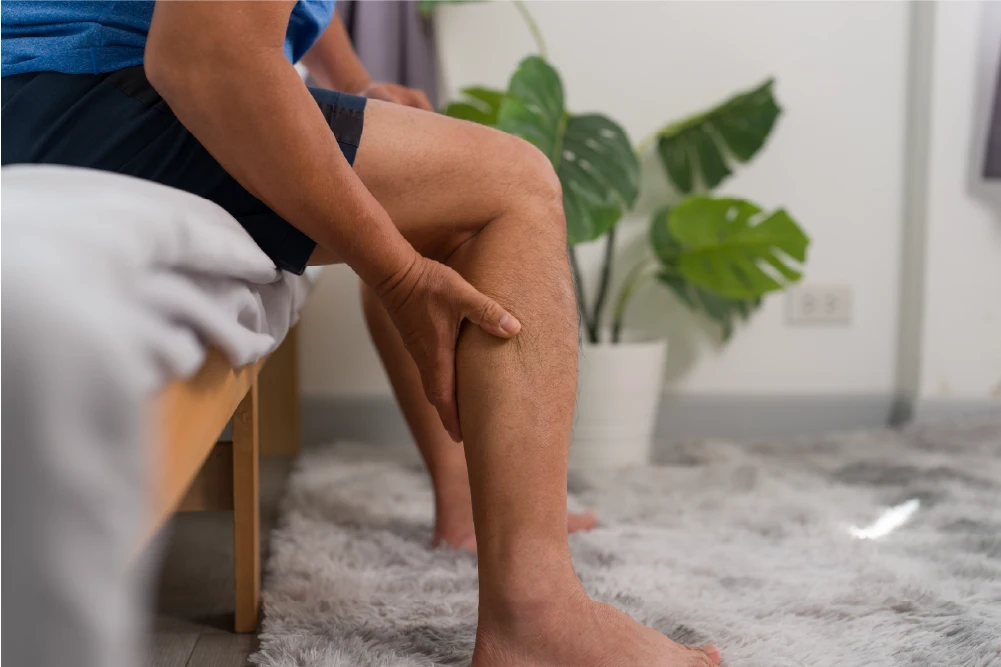
Drinking can increase urination, contribute to mild dehydration, disrupt sleep, interact with certain medications, and affect how the muscles and nerves feel. The circumstances surrounding drinking may also matter. Sitting for several hours, eating salty foods, walking more than usual, or being less active can all influence how the legs feel afterward.
If the pain happens repeatedly, consider where it occurs, how it feels, and whether other symptoms appear with it. Aching, cramping, burning, tingling, swelling, joint pain, and an urge to move the legs may point toward different possible causes.
When patients describe this type of discomfort, I ask whether it affects one or both legs, when it begins, and what makes it better. It is especially helpful to know whether the same aching, swelling, or heaviness occurs when they have not been drinking. That pattern can tell us more than the timing alone.
Q: How can alcohol affect your legs?
Dr. Herron:
Alcohol can affect how your legs feel in several ways. It may contribute to dehydration, disrupt sleep, or make cramping and restless-leg symptoms more noticeable. The activities that often accompany drinking, such as sitting for several hours, eating salty foods, or being less active, can also leave the legs feeling achy or heavy.
What matters most is whether the discomfort is temporary or part of a broader pattern. If your legs regularly ache, swell, throb, or feel heavy at other times, alcohol may simply be making an existing issue more noticeable.
Q: When can alcohol make underlying vein disease worse?
Dr. Herron:
Alcohol does not directly cause chronic venous insufficiency, and experiencing leg pain after drinking does not mean you have vein disease. However, drinking and the activities surrounding it may temporarily make existing vein symptoms more noticeable.
Chronic venous insufficiency, or CVI, develops when valves inside the leg veins become weakened or damaged. Instead of keeping blood moving toward the heart, the affected valves allow some blood to flow backward and collect in the legs. This backward flow is known as venous reflux.
The resulting pressure may contribute to symptoms such as aching, swelling, heaviness, throbbing, cramping, or restless legs. Long periods of sitting, reduced movement, disrupted sleep, dehydration, and salty foods may add to that discomfort after drinking.
When I am considering whether venous reflux may be involved, I look for a consistent pattern that extends beyond drinking. That may include:
- Aching or heaviness that becomes more noticeable later in the day
- Swelling around the ankles or lower legs
- Throbbing, cramping, or nighttime leg discomfort
- Symptoms that worsen after prolonged sitting or standing
- Discomfort that improves with walking or leg elevation
- Visible varicose veins
- Itching, burning, or tenderness near visible veins
- Skin discoloration or texture changes near the ankles
If these symptoms also occur when you have not consumed alcohol, drinking may be making an existing vein condition more noticeable rather than causing the problem itself.
Q: What are some other reasons your legs may hurt after drinking?
Dr. Herron:
Not every type of leg pain is related to the veins. Where the discomfort occurs, what it feels like, and which symptoms accompany it can help determine which type of evaluation may be appropriate.
| Type of discomfort | What it may feel like |
| Muscle discomfort | Soreness, fatigue, or cramping that may be associated with dehydration, activity, or prolonged sitting |
| Nerve-related discomfort | Burning, tingling, numbness, weakness, or shooting pain |
| Joint pain | More concentrated pain with warmth, redness, swelling, or tenderness around a joint |
| Restless-leg symptoms | An urge to move the legs, often with crawling, pulling, or aching sensations during rest |
| Vein-related discomfort | Aching, swelling, heaviness, throbbing, or cramping that often worsens after sitting or standing |
The way the discomfort feels can provide useful clues. Muscle cramps, joint pain, nerve symptoms, and vein-related aching do not always follow the same pattern, so it helps to consider the overall experience rather than assuming alcohol is the sole cause.
Q: When should you see a vein specialist?
Dr. Herron:
A vein screening may be appropriate when leg symptoms occur regularly, continue when you have not been drinking, or follow a pattern commonly associated with venous reflux.
Symptoms that may warrant a vein screening include:
- Recurring leg or ankle swelling
- Aching, throbbing, cramping, or heaviness
- Legs that frequently feel tired or fatigued
- Nighttime cramping or restless legs
- Symptoms after sitting or standing for long periods
- Discomfort that improves with walking or elevation
- Visible varicose veins
- Itching or burning near visible veins
- Skin discoloration near the ankles
- Symptoms that interfere with sleep, work, mobility, or everyday activities
The key is whether these symptoms follow a recurring pattern rather than appearing only after drinking. A vein specialist can evaluate that pattern and determine whether a vein condition may be involved.
Q: How is vein disease diagnosed?
Dr. Herron:
The first step is discussing your symptoms, medical history, and the patterns you have noticed. A provider may ask when the discomfort occurs, what makes it better or worse, whether swelling is present, and whether you have a personal or family history of vein problems.
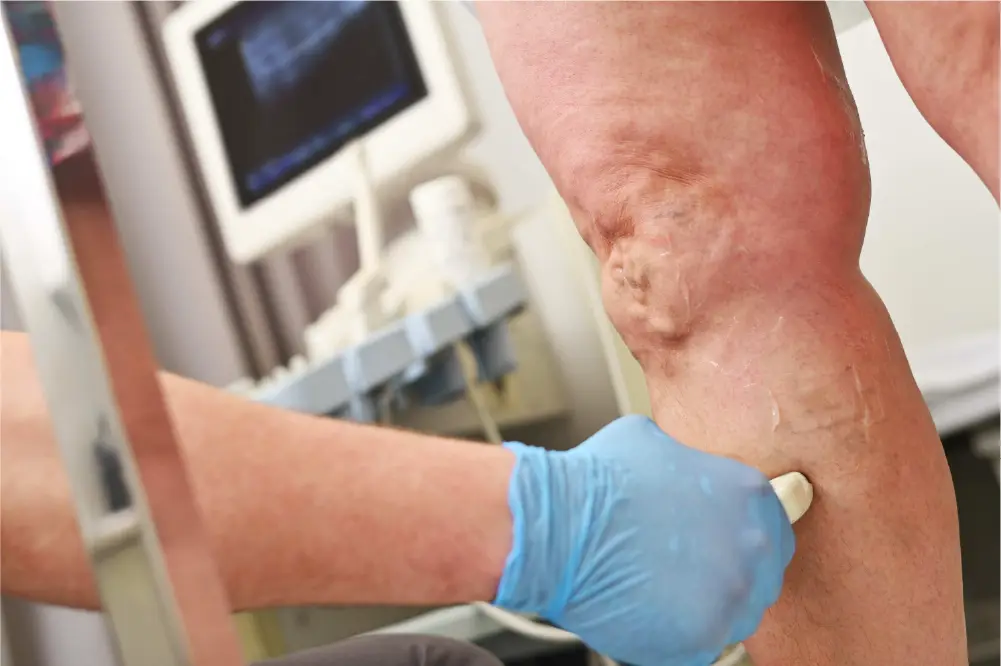
During a vein screening, the provider can look for visible varicose veins, swelling, skin changes, or other signs that may be associated with vein disease.
If additional evaluation is appropriate, a diagnostic duplex ultrasound may be recommended. This noninvasive test uses sound waves to evaluate blood flow, vein anatomy, and how well the valves inside the veins are working. It can help identify venous reflux and show which veins may be affected.
Ultrasound findings are considered alongside the patient’s symptoms, medical history, and physical examination. Finding reflux does not automatically mean that a procedure will be recommended.
Q: Can treating vein disease help?
Dr. Herron:
If evaluation confirms that venous reflux is contributing to the discomfort, treating the affected veins may help reduce symptoms such as aching, swelling, heaviness, throbbing, or cramping.
Minimally invasive vein procedures are designed to close or remove affected veins that are not moving blood properly. Once an affected vein closes, blood naturally reroutes through healthier veins nearby.
The appropriate treatment depends on the patient’s symptoms, medical history, vein anatomy, and ultrasound findings. Options may include radiofrequency ablation, VenaSeal™, Varithena®, ultrasound-guided sclerotherapy, or microphlebectomy.
Vein treatment will not correct dehydration, electrolyte changes, neuropathy, gout, medication interactions, or symptoms caused by heart or liver disease. Identifying the source of the discomfort is essential before determining whether a vein procedure may help.
Frequently Asked Questions
Alcohol may make aching, heaviness, swelling, or throbbing around varicose veins more noticeable, particularly when drinking is combined with prolonged sitting, salty foods, reduced movement, or dehydration. However, alcohol is not the cause of the damaged valves associated with varicose veins.
Alcohol and the habits surrounding drinking may contribute to temporary fluid changes. However, recurring or persistent swelling may also be associated with vein disease, medications, or conditions affecting the heart, liver, or kidneys.e appropriate for some patients with CVI, depending on their symptoms, fitness level, mobility, and overall health. Patients who notice greater pain, swelling, or heaviness during or after running may be more comfortable with walking, cycling, swimming, or another lower-impact activity.
Mild dehydration may contribute to muscle fatigue, soreness, or cramping, but it is not the only possible cause. Significant weakness, numbness, or recurring pain may require evaluation for electrolyte changes, nerve problems, medication effects, or circulation concerns.
It can be, but not necessarily. Vein-related discomfort often includes aching, swelling, heaviness, or throbbing that worsens after prolonged sitting or standing and improves with walking or leg elevation. A vein screening can help determine whether a vein condition may be contributing..
Alcohol does not directly cause CVI. However, drinking alcoholic drinks can causes symptoms to feel worse for people who already have venous insufficiency, even those who are not aware that they have vein disease yet.
Learn What’s Contributing to Your Symptoms
Alcohol may contribute to temporary leg discomfort, but recurring aching, swelling, heaviness, cramping, or restlessness may point to a condition that deserves further evaluation.
A vein screening can help determine whether your symptoms may be related to venous reflux or chronic venous insufficiency and whether additional testing is appropriate.
The Ask the Doc series provides physician-led answers to common questions about vein symptoms, treatment options, and long-term vein health.
If you are experiencing symptoms that may be related to vein disease, schedule a screening with United Vein & Vascular Centers to learn more about what may be contributing to your discomfort.
Next week, Dr. Malik Kutty will explain what the best treatment for poor circulation is and why it works.
Medically reviewed by Dr. Domenic Zambuto, National Medical Director at United Vein & Vascular Centers. Board-certified in vascular and interventional radiology, Dr. Zambuto has more than 20 years of experience treating vascular disease and helping patients manage complex vein and circulatory conditions.