

Contents
- Q: How can untreated vein disease contribute to blood clots?
- Q: How is a superficial blood clot different from DVT?
- Q: What does a blood clot in the leg feel or look like?
- Q: When do leg symptoms need urgent care instead of a vein screening?
- Choosing the Appropriate Level of Care
- Q: How do you check for a blood clot in your leg?
- Q: How is a blood clot in the leg treated?
- Q: How can UVVC address vein disease and help patients understand their clot risk?
- Frequently Asked Questions
- Ongoing Vein Symptoms Deserve a Plan
Welcome back to Ask the Doc, an educational series from United Vein & Vascular Centers where our physicians help patients make sense of symptoms that can be noticeable, uncomfortable, and sometimes difficult to describe. By looking beyond the symptom itself, each installment explores the patterns that may help identify its source and determine when further evaluation is appropriate.
In this installment, Dr. James Estes explains how impaired venous blood flow can contribute to clot formation, what a blood clot in the leg may feel like, and when urgent assessment is needed instead of a scheduled vein screening.
Key Takeaway: Untreated vein disease can allow blood to pool in enlarged or malfunctioning veins, creating conditions that favor clot formation, particularly in superficial varicose veins. However, vein disease does not inevitably lead to a blood clot in the leg, and deep vein thrombosis can develop without visible vein problems. New swelling, pain, warmth, or discoloration needs prompt assessment. Chest pain, unexplained shortness of breath, coughing up blood, or fainting requires emergency care.
Q: How can untreated vein disease contribute to blood clots?
Dr. Estes:
Healthy leg veins work with the calf muscles to return blood toward the heart. One-way valves help prevent backward flow. When those valves do not close effectively, blood can move backward and collect in the legs. This is called venous reflux and may contribute to chronic venous insufficiency.
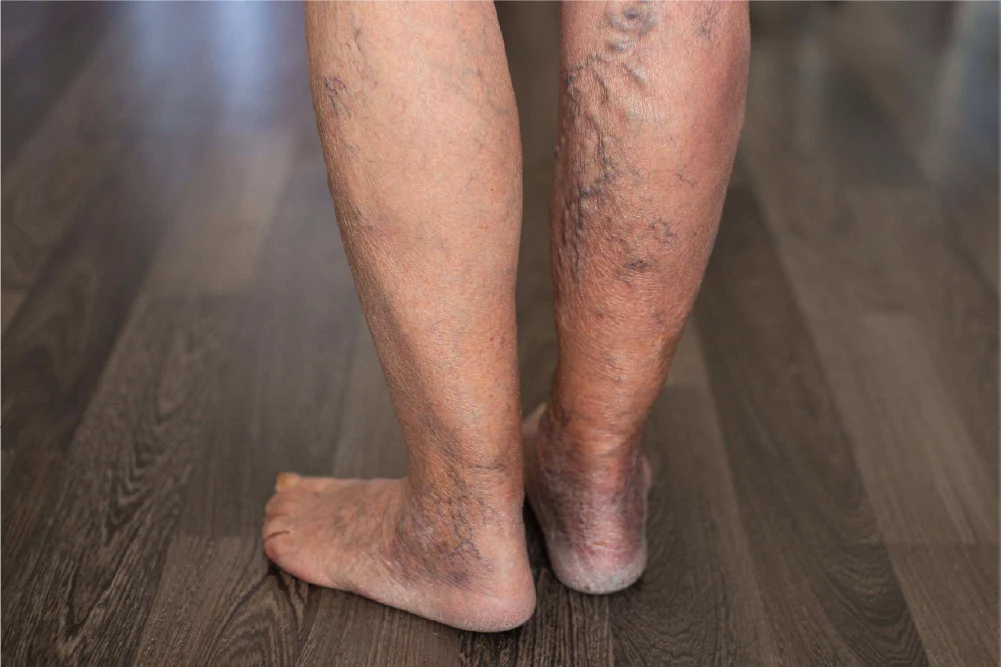
Blood may move more slowly through enlarged varicose veins. Sluggish flow, inflammation, or injury to the vein can create conditions in which a clot is more likely to form. This helps explain why superficial clots commonly occur in varicose veins.
However, a varicose vein is not itself a blood clot. People with varicose veins may have a higher risk of deep vein thrombosis, but having an untreated varicose vein does not mean a deep clot will develop.
Other factors may increase clot risk, including:
- Recent surgery, hospitalization, or a significant injury
- Bed rest, a cast, or another limitation on movement
- Prolonged sitting during travel
- A previous clot, family history, or clotting disorder
- Cancer and certain cancer treatments
- Pregnancy and the period after childbirth
- Estrogen-containing medications
- Older age and obesity
Several factors may be present at once. A patient recovering from surgery may need a different prevention plan than someone with uncomplicated varicose veins who remains active. Clots can also develop without an obvious trigger.
Q: How is a superficial blood clot different from DVT?
Dr. Estes:
Superficial vein thrombosis is a blood clot in a vein just beneath the skin’s surface. If the affected vein also becomes inflamed, the condition is called superficial thrombophlebitis.
Deep vein thrombosis, or DVT, forms in a deeper vein, commonly in the calf, thigh, or pelvis. Its location matters because part of a deep clot can break away and travel to the lungs, causing a pulmonary embolism.
Superficial clots generally carry a lower risk than DVT, but their location and extent still need assessment. A superficial clot can extend toward the deep veins, and both conditions can occur together. A small-looking area on the skin does not reveal how far a clot extends beneath it.
The distinction guides treatment. Some superficial clots can be managed with symptom-relief measures and monitoring, while others require anticoagulation. DVT usually requires a different treatment plan.
Q: What does a blood clot in the leg feel or look like?
Dr. Estes:
A clot may cause aching, cramping, tenderness, tightness, or soreness. Some patients describe a persistent “charley horse,” while others notice swelling before pain.
Possible signs include:
- New swelling or a noticeable increase in the size of one leg
- Calf or thigh pain without an obvious explanation
- Warmth over the affected area
- Redness or another change in skin color
- A newly painful, firm vein near the surface
A superficial clot may produce a hard, tender area along a visible vein. A deep clot cannot be seen through the skin, although it may cause swelling or discoloration. The leg may also look relatively normal.
There is no universal first sign, and symptoms do not always appear together. Muscle injuries, infections, and other conditions can also resemble a clot, so neither appearance nor pain severity can establish the diagnosis.
For patients with ongoing vein symptoms, the most useful warning may be a change from their usual experience. A leg that becomes newly painful, warmer, or substantially more swollen should not automatically be attributed to existing venous insufficiency.

Q: When do leg symptoms need urgent care instead of a vein screening?
Dr. Estes:
A vein screening is appropriate for ongoing symptoms that may reflect chronic vein disease. A suspected new clot needs prompt diagnostic assessment.
Choosing the Appropriate Level of Care
| Level of care | Symptoms or situation | Recommended next step |
| Emergency care | Unexplained shortness of breath, chest pain, coughing up blood, fainting, or collapse | Call 911. These may indicate a pulmonary embolism, even without leg symptoms. |
| Urgent assessment | New or rapidly worsening leg swelling, unexplained calf or thigh pain, warmth, discoloration, or a newly hard and painful vein | Seek same-day medical assessment. If timely evaluation is unavailable, go to an emergency department. |
| Scheduled vein evaluation | Longstanding swelling, aching, heaviness, or visible veins without a new acute change | Schedule a vein screening to discuss the symptoms and whether diagnostic testing is appropriate. |
Possible DVT or superficial clot symptoms should be assessed promptly rather than placed on a routine screening schedule.
Ongoing symptoms still deserve attention even when they are not an emergency. The important distinction is whether the problem follows an established pattern or represents a new, unexplained change.
Q: How do you check for a blood clot in your leg?
Dr. Estes:
A blood clot cannot be reliably confirmed or ruled out at home. Pressing on the calf, flexing the foot, comparing photographs, or checking whether swelling improves does not replace medical testing.
The evaluation includes the symptom history, clotting risk, and examination. Duplex ultrasound is the standard imaging test for suspected DVT. It uses sound waves to examine the veins and identify a clot or blockage.
A D-dimer blood test may help guide testing in selected patients. A negative result can help exclude DVT when the clinical likelihood is low. An elevated result does not confirm a clot because other conditions can also raise D-dimer levels.
Depending on the initial results and level of concern, repeat ultrasound or other imaging may be necessary.
An urgent examination for a suspected clot and a scheduled ultrasound for chronic venous reflux answers different questions. Describe new symptoms when contacting a healthcare provider so the team can direct you to the appropriate assessment.
Q: How is a blood clot in the leg treated?
Dr. Estes:
Treatment depends on the clot’s location, extent, symptoms, and risk of complications, as well as the patient’s bleeding risk and medical history.
DVT is commonly treated with anticoagulants, often called blood thinners. These medications help prevent the clot from growing and reduce the formation of additional clots while the body gradually breaks down the existing clot.
Selected patients with extensive clotting or severe symptoms may need a catheter-based procedure or another intervention. Clot removal is not necessary for every DVT.
For a superficial clot, a provider may recommend appropriate activity, elevation, symptom-relief medication, or selected compression. Anticoagulation may be needed when the clot’s location, extent, or other risk factors raise concern about progression.
Treatment should follow an assessment. Aspirin, compression socks, and home remedies should not be assumed to provide adequate care for a suspected clot.

Q: How can UVVC address vein disease and help patients understand their clot risk?
Dr. Estes:
United Vein & Vascular Centers evaluates ongoing swelling, aching, heaviness, and visible veins to determine whether venous insufficiency may be contributing. A previous clot, recurrent superficial thrombosis, medical conditions, and limitations on movement are also relevant to the care plan.
When appropriate, a diagnostic duplex ultrasound may be scheduled after the initial vein screening. The findings help identify affected veins and determine which treatment options fit the patient’s needs.
For confirmed venous reflux, minimally invasive vein procedures may include:
- Radiofrequency ablation: A thin catheter delivers controlled thermal energy inside a malfunctioning vein. The vein closes, allowing blood to reroute through healthier veins nearby.
- VenaSeal™: A catheter places a small amount of medical adhesive inside an affected vein to seal it without heat. Blood then returns through other functioning veins.
- Varithena®: An injectable microfoam closes certain veins affected by reflux. Ultrasound guidance helps the physician monitor treatment in the targeted vessels.
- Ultrasound-guided sclerotherapy: Ultrasound imaging helps locate selected problem veins beneath the skin and guide an injectable solution or foam into them. The treated veins close, allowing blood to move through healthier pathways.
These procedures address selected unhealthy veins; they do not replace treatment for an acute DVT. For patients with recurrent superficial clots and varicose veins, treatment of the underlying vein problem may be considered after the acute episode has been assessed and managed.
Vein treatment should not be presented as a guarantee against future clots. Procedures have their own risks, and clot prevention may also require a plan for travel, surgical recovery, medication, or other individual factors.
Regular movement and prescribed preventive measures remain important. Recommendations depend on the patient’s history and current risk, particularly after a previous clot.
Frequently Asked Questions
Yes. A clot does not have to cause every typical symptom. Unexplained calf or thigh pain may warrant assessment, particularly after surgery, prolonged immobility, or a previous clot. The absence of swelling does not reliably rule out DVT.
Yes. Some people with DVT have no noticeable symptoms. A pulmonary embolism can also develop without preceding leg symptoms. This is why prevention planning matters for people with known risks and why new, unexplained breathing symptoms require emergency attention.
Yes. DVT can damage vein valves or leave an obstruction that affects blood return. Some patients develop post-thrombotic syndrome, which may cause persistent swelling, aching, heaviness, itching, or skin changes. New or worsening symptoms still require assessment because another clot is possible.
The body can gradually break down a clot, but that does not make waiting without assessment safe. Treatment may be needed to prevent growth, additional clots, or complications while that process occurs. The appropriate approach depends on the diagnosis, not whether the discomfort seems manageable.
Ongoing Vein Symptoms Deserve a Plan
You do not need to wait for a complication to discuss swelling, aching, heaviness, or visible varicose veins. An evaluation can help explain the symptoms, identify venous reflux when present, and establish an appropriate care plan.
Request a vein screening at United Vein & Vascular Centers for ongoing vein concerns.
New symptoms suggesting a clot need same-day medical assessment. Chest pain, unexplained shortness of breath, coughing up blood, or fainting requires a call to 911.
Medically reviewed by Dr. Domenic Zambuto, National Medical Director at United Vein & Vascular Centers. Board-certified in vascular and interventional radiology, Dr. Zambuto has more than 20 years of experience treating vascular disease and helping patients manage complex vein and circulatory conditions.