



Contents
- Skin Discoloration: At a Glance
- Q: What causes skin discoloration on the lower legs?
- Q: Can poor circulation cause brown skin around the ankles?
- Q: Why are my legs purple and blotchy, and how is mottled skin different?
- Mottled Skin and Venous Staining: What Is Different?
- Q: When should I worry about skin discoloration on my legs?
- Q: How is the cause of lower-leg skin discoloration diagnosed?
- Q: What can help protect discolored or irritated skin on the legs?
- Q: How does UVVC treat venous skin discoloration, and will the color improve?
- Frequently Asked Questions
- Give Lower-Leg Skin Changes a Closer Look
Welcome back to Ask the Doc, an educational series from United Vein & Vascular Centers where our physicians help patients make sense of symptoms that can be noticeable, uncomfortable, and sometimes difficult to describe. By looking beyond the symptom itself, each installment explores the patterns that may help identify its source and determine when further evaluation is appropriate.
Skin discoloration can be confusing because similar-looking changes may have different causes. Brown staining around the ankles may develop gradually, while purple or mottled markings may come and go. Understanding those differences helps explain why some changes call for a vein evaluation and others need a closer look at the skin or another aspect of circulation.
In this installment, Dr. Arthur Maydell explains how vein disease can affect the skin, what distinguishes venous staining from mottling, and how evaluation guides treatment.
Skin Discoloration: At a Glance
- Skin discoloration on the lower legs can result from bruising, inflammation, pigment changes, medications, or circulation conditions.
- Chronic venous insufficiency may cause persistent brown ankle staining as increased venous pressure allows red blood cells to leak into surrounding tissue and leave iron-containing pigment behind.
- Purple, blotchy, or netlike mottling differs from typical brown venous staining and may reflect cold exposure or another condition affecting blood flow.
- Treatment depends on the cause. Addressing vein disease may improve related symptoms, but established discoloration can fade slowly or remain.
- Persistent or spreading discoloration deserves evaluation, particularly with swelling, aching, heaviness, itching, or skin breakdown. Abrupt color changes with severe pain, coldness, numbness, or weakness require emergency care.
Q: What causes skin discoloration on the lower legs?
Dr. Maydell:
Skin can change color for several reasons. Sometimes pigment remains after inflammation. In other cases, blood beneath the surface, deposits from broken-down blood cells, or changes in blood flow affect what you see.
Possible causes include:
- Bruising after an injury
- Dark marks remaining after a rash, scratching, or irritation
- Eczema, contact dermatitis, or another inflammatory skin condition
- Capillaritis, which can produce tiny reddish-brown spots and patches
- Medication-related changes
- Chronic venous insufficiency
- Conditions affecting small blood vessels
- Reduced arterial blood flow
The details help separate these possibilities. A bruise following a bump is different from pigmentation that gradually spreads around an ankle. A dry, itchy patch suggests something different from a smooth, netlike pattern that appears in the cold.
Capillaritis is one example of why brown spots do not automatically mean venous insufficiency. It occurs when small amounts of blood leak from capillaries, leaving red-brown dots or patches. It commonly affects the lower legs and may occur without discomfort.
Rather than focusing only on whether the skin is brown, red, or purple, an examination considers where the change occurs, whether the skin’s texture has changed, and what happened before it appeared.
Q: Can poor circulation cause brown skin around the ankles?
Dr. Maydell:
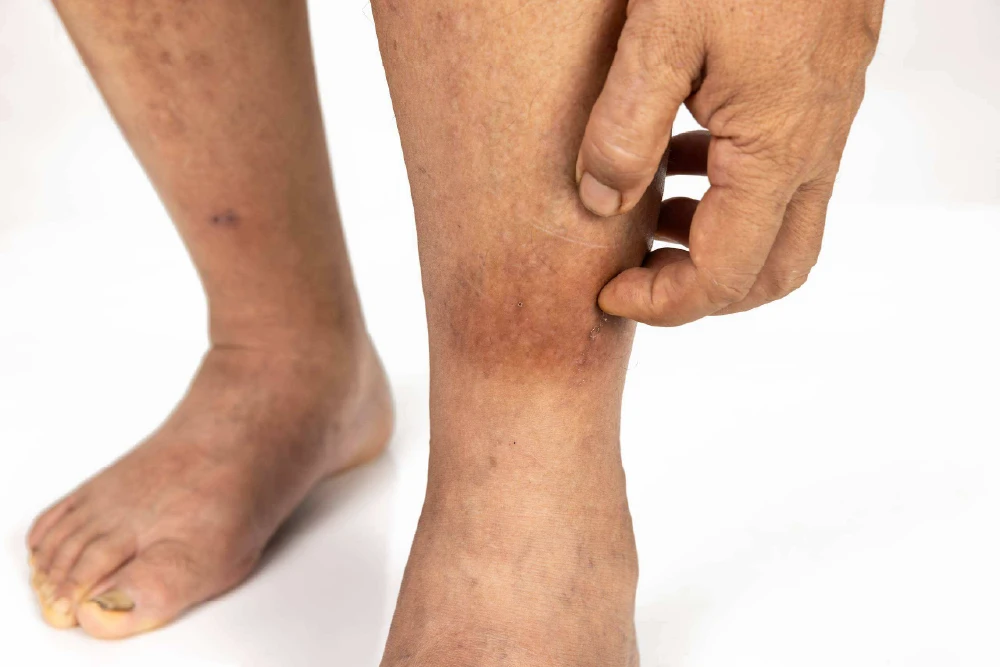
Yes. Chronic venous insufficiency is one possible cause of brown ankle discoloration.
Healthy leg veins contain one-way valves that help blood return toward the heart. The calf muscles assist by squeezing the veins during movement. When the valves do not close effectively, blood can flow backward and increase pressure in the lower-leg veins. This backward flow is called venous reflux.
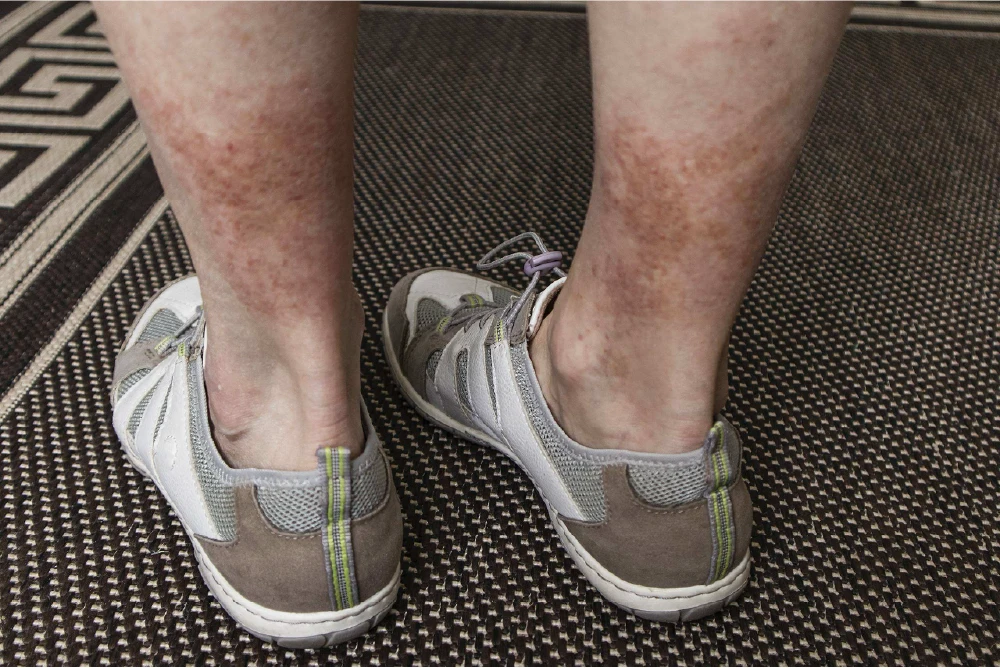
Sustained pressure can allow fluid and red blood cells to move out of small vessels into the surrounding tissue. As those cells break down, they may leave behind an iron-containing pigment called hemosiderin. The resulting staining can look rusty, orange-brown, or dark brown.
It may begin as scattered spots before becoming a larger patch. Patients sometimes say their ankles look “dirty,” even after washing. Pigment beneath the skin will not wash away, and repeated scrubbing can irritate the area.
Venous pressure may also contribute to inflammation known as venous stasis dermatitis, or venous eczema. The skin can become dry, itchy, scaly, sore, or cracked. Over time, some patients develop darker pigmentation and firmer, thicker tissue.
Associated symptoms may include:
- Ankle swelling that builds during the day
- Aching or heaviness after prolonged standing
- Itching or irritation around the inner ankles
- Varicose veins
- Changes in skin texture or areas that break down easily
These findings make a vein evaluation more relevant. Brown staining without this pattern still needs its own explanation rather than being assumed to come from the veins.
Q: Why are my legs purple and blotchy, and how is mottled skin different?
Dr. Maydell:
Purple or blotchy skin can describe several appearances. Mottling usually refers to a marbled, lacy, or netlike pattern, often with reddish-blue or purple areas surrounding paler skin.
Cold can temporarily change blood flow through small skin vessels and produce mottling that gradually fades with warming. Persistent patterns may be associated with medications, autoimmune conditions, clotting disorders, or other blood vessel problems.
This differs from pigment deposited in the skin after prolonged venous pressure.
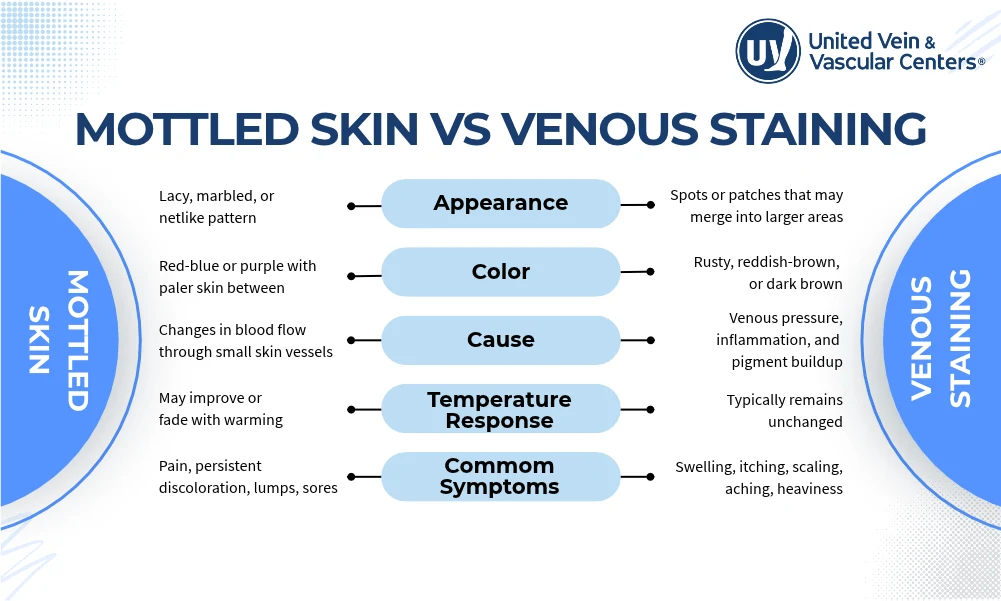
Mottled Skin and Venous Staining: What Is Different?
| Feature | Mottled Skin | Typical Venous Staining |
| Appearance | Lacy, marbled, or netlike markings | Spots or patches that may merge into broader areas |
| Common colors | Red-blue or purple around paler skin | Rusty, reddish-brown, or dark brown |
| Underlying change | Altered blood flow through small skin vessels | Venous pressure, inflammation, and pigment deposits |
| Response to temperature | Cold-related mottling may fade with warming | Established staining generally remains |
| Useful associated findings | Persistence, pain, lumps, or sores | Swelling, itching, scaling, aching, or heaviness |
The distinction helps guide evaluation: mottling should not automatically be attributed to vein disease, and purple blotches may have other explanations, including bruising or a skin condition. A provider can assess the pattern and accompanying symptoms to determine the next step.
Q: When should I worry about skin discoloration on my legs?
Dr. Maydell:
Arrange an evaluation when discoloration is unexplained, spreading, persistent, or accompanied by changes in skin texture. You do not need to wait until it becomes painful.
Cracking, increasing firmness, recurrent inflammation, or an open sore deserves particular attention. Venous skin disease can make tissue more vulnerable to injury, and even a small break may need medical care.
How quickly the change develops also matters. Gradual pigmentation usually follows a different course from a leg that changes color over hours.
Seek more immediate care for:
- New one-sided swelling, pain, warmth, or discoloration: Prompt assessment is needed for a possible blood clot or another acute condition.
- Rapidly spreading inflammation with increasing pain, warmth, or fever: Seek urgent assessment for possible infection.
- Abrupt discoloration with a cold, severely painful, numb, or weak foot: Seek emergency care for possible loss of arterial blood flow.
Call 911 for unexplained shortness of breath, chest pain, coughing up blood, or fainting.
For someone with longstanding ankle staining, a new change in pain, temperature, or swelling should be assessed on its own rather than attributed to the existing condition.
Q: How is the cause of lower-leg skin discoloration diagnosed?
Dr. Maydell:
The evaluation begins with the history of the change. A provider may ask when it started, whether it affects one or both legs, and whether it followed an injury, rash, medication change, or period of swelling.
It is helpful to describe whether the color remains constant or changes with temperature, standing, or elevation. Photographs taken over time can document progression, especially when markings are less noticeable during an appointment.
The examination considers the skin’s distribution and texture, tenderness, swelling, visible veins, temperature, and pulses. Your medical history also matters, including previous clots, vascular conditions, diabetes, and inflammatory diseases.
When venous insufficiency is suspected, a venous Doppler ultrasound, typically performed as part of a duplex examination, may be recommended to assess blood flow and identify reflux.
Other findings may lead to arterial testing, blood tests, allergy testing, or a dermatology assessment. Persistent mottling sometimes requires investigation for an underlying systemic condition. The appearance helps guide that process, but it does not replace testing when testing is indicated.
Q: What can help protect discolored or irritated skin on the legs?
Dr. Maydell:
Care should match the diagnosis. Skin affected by venous inflammation may need help with dryness and irritation as well as management of swelling.
A provider may recommend:
- Gentle cleansing and a suitable fragrance-free moisturizer
- Avoiding harsh scrubs and products that sting or irritate
- Protecting the area from scratching and minor injuries
- Taking movement breaks during prolonged sitting or standing
- Elevating the legs when appropriate for venous swelling
- Using professionally selected compression
- Prescribed topical treatment for active dermatitis
A moisturizer can support the skin barrier, while a prescribed anti-inflammatory medication may help control a flare. Neither corrects venous reflux. Products should be selected carefully because damaged or inflamed skin may react to ingredients that previously caused no difficulty.
Compression can help selected patients, but the pressure and fit should be recommended by a healthcare professional. Reduced arterial blood flow and certain other medical conditions may affect whether it is suitable.
Avoid treating unexplained purple markings with compression or creams simply because they resemble a photograph of vein disease. Mottling and venous dermatitis can require different care.

Q: How does UVVC treat venous skin discoloration, and will the color improve?
Dr. Maydell:
United Vein & Vascular Centers begins by determining whether venous disease is contributing to the skin changes. A vein screening reviews the symptoms, examination findings, and medical history. Diagnostic ultrasound may be scheduled when further evaluation is appropriate.
If symptomatic reflux is confirmed, the treatment plan considers which veins are affected and how the findings relate to the skin changes. A dermatologist may also be involved when inflammation or another skin condition needs separate treatment.
Minimally invasive vein procedures may include:
- Radiofrequency ablation: A thin catheter delivers controlled radiofrequency energy inside a malfunctioning vein. The resulting heat closes the vein, allowing blood to reroute through healthier veins nearby.
- VenaSeal™: A catheter places a small amount of medical adhesive inside an affected vein to seal it without heat. Blood then returns through other functioning venous pathways.
- Varithena®: An injectable microfoam closes certain veins affected by reflux. Ultrasound guidance helps the physician direct and monitor treatment in the selected vessels.
- Ultrasound-guided sclerotherapy: Ultrasound imaging helps locate problem veins beneath the skin and guide an injectable solution or foam into them. The treated veins close so blood can move through healthier pathways.
Recommendations depend on symptoms, imaging, anatomy, medical history, and individual needs.
The skin’s response varies. Swelling and active inflammation may improve while established pigment remains. Brown staining can be difficult to treat, and some discoloration persists even when the underlying condition is controlled.
Treatment should therefore be discussed in terms of comfort, circulation, skin health, and realistic expectations for appearance. A vein procedure does not guarantee that the skin will return to its previous color.
Frequently Asked Questions
The pigment itself is not usually the main concern. What matters is why blood cells leaked into the tissue and whether that process is continuing. Staining associated with persistent swelling, inflammation, or fragile skin warrants evaluation. Hemosiderin deposits can also occur with capillaritis and other conditions, so the finding does not confirm venous insufficiency by itself.
Previous injury, inflammation, and vein disease can affect the legs unevenly. A provider will consider whether the difference developed gradually or appeared recently, along with any changes in temperature, swelling, or comfort. One-sided darkening is not a diagnosis, but an unexplained difference should be assessed.
Yes. Surface appearance does not show how all the veins beneath the skin are functioning. A patient may have signs of venous disease without large, raised veins. An examination and, when appropriate, ultrasound can help determine whether reflux is present.
Some creams treat inflammation or particular pigment conditions, but they do not repair malfunctioning vein valves. The appropriate product depends on the cause and condition of the skin. A dermatologist can advise whether pigment-directed treatment is suitable after the underlying problem has been assessed.
Give Lower-Leg Skin Changes a Closer Look
Skin discoloration can be easy to overlook when it develops slowly. An appointment provides an opportunity to understand the change before choosing a product or assuming it is an unavoidable part of aging.
If discoloration occurs with swelling, aching, heaviness, or visible veins, request a vein screening at United Vein & Vascular Centers. Our care team can determine whether additional vein testing is appropriate and explain the next step.