
Contents
- How Vein Disease Can Affect the Skin
- What Is Venous Stasis Dermatitis?
- When Skin Changes May Signal Chronic Venous Insufficiency
- How CVI Is Diagnosed at United Vein & Vascular Centers of Clearwater, FL
- Treatment Options for CVI and Skin Changes
- Why Earlier Treatment Matters
- Returning to Your Daily Routine
- Frequently Asked Questions
- Request a Vein Screening in Clearwater
Changes in the skin on your lower legs are easy to dismiss at first. Dryness, discoloration, itching, or areas that begin looking shiny or irritated may not seem connected to circulation right away. But for many people in Clearwater, FL, especially those looking to enjoy a sunny day at Clearwater Beach, these symptoms can gradually become more noticeable over time.
Skin changes in the lower legs are sometimes linked to chronic venous insufficiency (CVI), a condition that affects how blood circulates through the veins. In this article, we’ll cover the skin symptoms that may point to vein disease, why they happen, and when it may be time to seek treatment.
If you’ve noticed ongoing skin irritation, discoloration, swelling, or leg discomfort, a vein screening can help determine whether circulation issues may be contributing to those changes and what treatment options may be appropriate.
How Vein Disease Can Affect the Skin
Chronic venous insufficiency develops when the valves inside the veins stop functioning properly, making it harder for blood to circulate back toward the heart.
As blood begins pooling in the lower legs, pressure inside the veins increases. Over time, this can affect the surrounding skin and tissues, leading to noticeable skin changes.
Common skin-related symptoms may include:
- Redness or discoloration near the ankles
- Dry, irritated, or itchy skin
- Shiny or tight-looking skin
- Thickened or hardened areas of skin
- Swelling in the lower legs or ankles
- Tenderness or discomfort
These symptoms often develop gradually and may worsen without treatment.
What Is Venous Stasis Dermatitis?
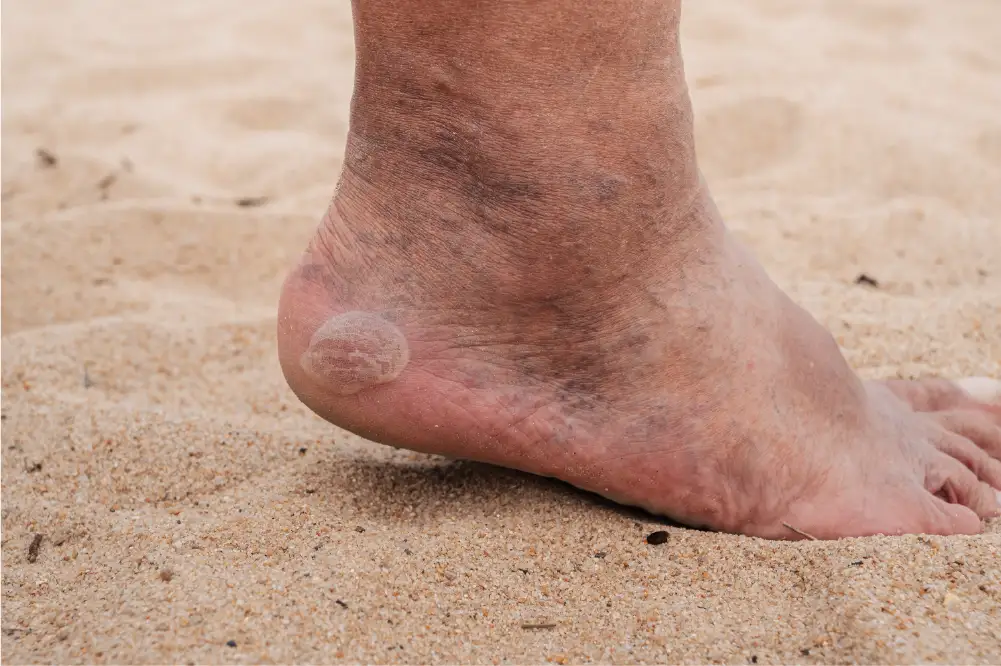
One of the most common skin conditions associated with vein disease is venous stasis dermatitis. This occurs when long-term vein pressure and poor circulation begin affecting the skin in the lower legs.
Patients may notice:
- Brown or reddish discoloration
- Persistent itching or irritation
- Flaking or scaling skin
- Swelling that worsens throughout the day
- Skin that feels tight or sensitive
Without treatment, symptoms may continue progressing and can eventually increase the risk of more serious skin complications.
When Skin Changes May Signal Chronic Venous Insufficiency
Skin symptoms are often accompanied by other signs of vein disease. In many cases, patients also experience:
- Leg heaviness or fatigue
- Aching or throbbing discomfort
- Varicose veins or spider veins
- Cramping or restless legs
- Swelling that worsens after standing or sitting
Because chronic venous insufficiency is progressive, identifying it early may help reduce symptom progression and improve long-term circulation health.
How CVI Is Diagnosed at United Vein & Vascular Centers of Clearwater, FL
At our Clearwater clinic, evaluation begins with a comprehensive review of symptoms, circulation concerns, and vein health.
This often includes a duplex ultrasound, a non-invasive imaging test used to evaluate blood flow and identify areas where vein valves may not be functioning properly.
The evaluation process helps determine whether vein disease may be contributing to skin changes and guides the development of a personalized treatment plan.
Treatment Options for CVI and Skin Changes
Treatment focuses on improving circulation and reducing pressure inside the veins to help relieve symptoms and support healthier skin.
Treatment recommendations may include:
- Compression therapy to support blood flow
- Lifestyle recommendations focused on circulation and movement
- Minimally invasive vein procedures to treat underlying venous insufficiency
These treatments are designed to address the underlying circulation issue contributing to symptoms, not just the visible skin changes.
Why Earlier Treatment Matters
Many patients assume skin changes are simply related to aging, dryness, or irritation. However, when circulation is involved, symptoms may continue worsening without treatment. Over time, untreated chronic venous insufficiency can lead to increased swelling and discomfort, worsening skin discoloration, thickening or hardening of the skin, and a greater risk of skin breakdown. Seeking evaluation earlier may help improve comfort, circulation, and long-term skin health.

Returning to Your Daily Routine
When circulation improves, many patients notice reduced swelling, less heaviness, and improved comfort throughout the day. Skin irritation may also become easier to manage as pressure inside the veins decreases.
Whether you’re spending time near Clearwater Marine Aquarium or enjoying outdoor activities around the St. Petersburg-Clearwater area, improving circulation can help reduce the limitations vein symptoms place on everyday routines.
Frequently Asked Questions
Yes. Chronic venous insufficiency can increase pressure inside the veins, which may lead to brown, reddish, or irritated skin changes near the ankles and lower legs.
Venous stasis dermatitis often appears as red, brown, dry, itchy, or inflamed skin on the lower legs and ankles.
You should consider evaluation if skin changes are persistent, worsening, or accompanied by swelling, heaviness, discomfort, or visible veins.
Treatment may include compression therapy, ultrasound-guided sclerotherapy, and minimally invasive vein procedures designed to improve circulation.
Patients in Clearwater can receive personalized evaluations and minimally invasive vein treatment options through United Vein & Vascular Centers.
Request a Vein Screening in Clearwater
Skin changes in the lower legs may be more than a surface-level concern, especially when paired with swelling, heaviness, or discomfort. At our Clearwater clinic, patients can receive personalized evaluations and minimally invasive treatment options designed to improve circulation and address the underlying cause of vein-related symptoms.
If skin irritation, discoloration, or leg discomfort has become harder to ignore, scheduling a vein screening at United Vein & Vascular Centers in Clearwater can help you better understand what may be contributing to those changes and what treatment options may help improve long-term comfort and vein health.