

Contents
- Q: Can AI diagnose vein problems?
- Q: How can AI help you research vein health?
- Q: What are the limits of AI health information?
- Q: Why can’t vein problems be diagnosed from symptoms alone?
- Q: How can you ask AI better health questions?
- Q: Is it safe to share health information with an AI tool?
- Q: Can AI tell if leg swelling is caused by a blood clot?
- Q: What can a vein screening tell you that AI cannot?
- Q: Should you discuss AI health answers with your physician?
- Frequently Asked Questions
- Turn AI Research into Better Questions About Your Vein Health
Welcome back to Ask the Doc, an educational series from United Vein & Vascular Centers designed to provide clear, physician-led answers to common questions about vein and vascular health. Each week, a UVVC physician explains everyday symptoms and what they may mean medically.
In this installment, United Vein & Vascular Centers Senior Regional Medical Director, Dr. Franchell Hamilton discusses the growing use of artificial intelligence to research leg and vein symptoms. AI tools can make general health information easier to find and understand, but the answers they provide should not be treated as a diagnosis or personalized treatment recommendation.
AI can help explain medical terminology, organize symptoms, and prepare questions for a healthcare provider. However, it cannot examine a patient, evaluate circulation, perform diagnostic testing, or determine what is causing a particular symptom.
Leg swelling, aching, heaviness, cramping, visible veins, and skin changes can have several possible causes. The safest approach is to use AI as a starting point for learning, not as the final authority on what your symptoms mean or how they should be treated.
Q: Can AI diagnose vein problems?
Dr. Hamilton:
No. AI can provide general information about vein conditions and symptoms, but it cannot diagnose a patient.
An AI tool only has access to the information entered by the user. It cannot perform a physical examination, evaluate swelling or skin changes, review the complete medical history, or determine how blood is moving through the veins. It may also be missing important details that the patient does not realize are relevant.
For example, someone may ask an AI tool whether recurring leg swelling means they have chronic venous insufficiency. The response may explain how chronic venous insufficiency can cause swelling, but that does not confirm that vein disease is responsible. Swelling can have several possible causes, and identifying the source requires an individualized evaluation.
AI-generated answers may also sound more certain than the available information allows. A clear or detailed response should not be mistaken for clinical confirmation.
Q: How can AI help you research vein health?
Dr. Hamilton:
AI can be helpful when it is used to support general education. Medical terminology is not always easy to understand, and an AI tool may help explain unfamiliar words or concepts in simpler language.
You might use AI to:
- Learn what terms such as venous reflux, chronic venous insufficiency, varicose veins, or duplex ultrasound mean
- Organize when your symptoms occur and what seems to affect them
- Create a timeline of symptoms or visible changes
- Prepare questions for a healthcare provider
- Learn what generally happens during a vein screening
- Identify topics to research through reputable medical sources
- Simplify general health information that feels overly technical
These uses can help patients feel more prepared for a conversation with their care team. However, AI-generated information should still be verified, particularly before it influences a medical decision.
Pay attention to where the information comes from. Government health agencies, academic medical institutions, recognized medical organizations, and healthcare providers with relevant clinical experience are generally more reliable than an answer with no clear author, review process, or supporting sources.

Q: What are the limits of AI health information?
Dr. Hamilton:
AI cannot reliably determine whether a specific patient has vein disease, how advanced a condition may be, or which treatment would be appropriate. It also cannot evaluate blood-flow direction, vein-valve function, or the anatomy beneath the skin. An AI response may misinterpret an incomplete symptom description, rely on outdated or inaccurate information, or overlook important details such as medications, previous procedures, pregnancy, recent travel, injuries, and other risk factors.
It may also present several possible conditions without explaining how likely they are or provide incorrect information in a way that sounds credible. For someone already worried about a new symptom, this can lead to false reassurance or unnecessary concern without providing a reliable answer.
| AI May Help You | AI Cannot Reliably Do |
| Explain general vein-health terminology | Confirm that symptoms are caused by vein disease |
| Help organize symptoms and questions | Perform a physical examination |
| Summarize general health information | Evaluate blood flow or vein-valve function |
| Suggest topics to discuss with a provider | Rule out a blood clot or another serious condition |
| Direct you toward reputable resources | Perform or interpret diagnostic testing |
| Explain general treatment categories | Select an individualized treatment plan |
AI can make information easier to access, but access to information is not the same as diagnosis.
Q: Why can’t vein problems be diagnosed from symptoms alone?
Dr. Hamilton:
Many symptoms associated with vein disease can also occur with other medical conditions. Swelling, aching, cramping, numbness, weakness, or changes in the skin may be related to venous, arterial, orthopedic, neurological, medication-related, or other concerns.
Visible veins do not provide the full answer either. A photograph may show varicose veins, spider veins, swelling, or discoloration, but it cannot reveal how blood is moving beneath the skin. It also cannot determine whether the vein valves are functioning properly or whether venous reflux is present.
When evaluating possible vein disease, we consider details such as:
- Whether one or both legs are affected
- Where swelling or discomfort occurs
- When the symptoms began
- Whether symptoms worsen later in the day
- Whether prolonged sitting or standing makes them more noticeable
- Whether walking or leg elevation provides relief
- Whether visible veins or skin changes are present
- Whether there is a personal or family history of vein disease or blood clots
- How symptoms affect sleep, mobility, work, or daily activities
Even these details do not create a diagnosis on their own. The symptom pattern, medical history, physical findings, and any appropriate diagnostic testing must be considered together.
Q: How can you ask AI better health questions?
Dr. Hamilton:
When using AI for health research, ask for general education rather than an individualized diagnosis. The wording of the question can help keep the response focused on information you can later discuss with a healthcare provider.
| Instead of Asking | Consider Asking |
| “Do I have vein disease?” | “What symptoms are commonly associated with vein disease, and which ones should be evaluated?” |
| “Is this varicose vein dangerous?” | “What changes involving varicose veins may warrant a vein screening or prompt medical attention?” |
| “What treatment do I need?” | “What questions should I ask a vein specialist about recurring swelling, aching, or heaviness?” |
| “Is my swollen leg a blood clot?” | “Which symptoms require prompt medical evaluation rather than continued online research?” |
| “Tell me what is wrong with my leg.” | “Help me organize when my symptoms occur and what information may be useful to share with a healthcare provider.” |
You can also ask the AI tool to provide sources supporting its explanation, identify what information may be missing, clarify whether the answer is general or specific, and separate established medical information from areas of uncertainty.
It may also help you prepare questions for a healthcare provider instead of recommending a treatment. Better questions may produce more useful educational information, but they do not turn an AI response into a medical evaluation. Do not begin or stop medication, attempt a treatment, or delay care solely because of an AI-generated answer.
Q: Is it safe to share health information with an AI tool?
Dr. Hamilton:
Patients should be cautious about the amount of personal or medical information they enter into a general AI platform. Different tools may collect, store, and use information in different ways, so users should review a platform’s privacy practices before sharing health details.
Avoid entering unnecessary identifying information such as:
- Your full name
- Date of birth
- Home address
- Insurance information
- Medical-record numbers
- Complete medical documents
- Identifiable photographs
You generally do not need to provide those details to ask for a definition, organize general questions, or learn about a medical term.
If you want to discuss personal test results, medications, or changes in your health, use the secure communication method recommended by your healthcare provider. That may include an established patient portal or a direct conversation with the care team.
Q: Can AI tell if leg swelling is caused by a blood clot?
Dr. Hamilton:
No. AI cannot diagnose or rule out deep vein thrombosis, commonly called DVT. Symptoms associated with a blood clot can resemble those caused by an injury, infection, inflammation, or another condition, so determining the cause requires medical evaluation and appropriate testing.
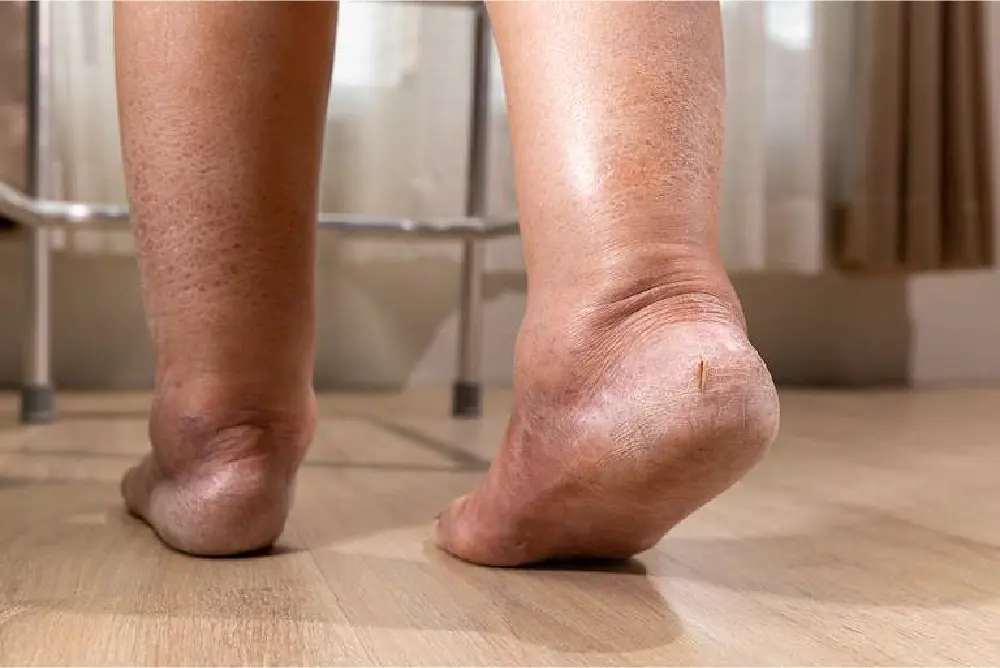
A sudden change in one leg—particularly swelling accompanied by pain, tenderness, warmth, redness, or discoloration—should be evaluated promptly. An AI tool may describe the symptoms commonly associated with DVT, but it cannot examine the affected area or determine whether a clot is present.
A DVT can become life-threatening if part of the clot breaks away and travels to the lungs, causing a pulmonary embolism. Difficulty breathing, chest pain, an unusually fast or irregular heartbeat, coughing up blood, lightheadedness, or fainting requires immediate medical attention. These symptoms should not be entered into an AI tool to decide whether emergency care is necessary.
Q: What can a vein screening tell you that AI cannot?
Dr. Hamilton:
For recurring leg symptoms that do not require emergency care, a vein screening can provide information that an AI tool cannot. A vein screening allows a provider to consider your symptoms within the context of your health history and physical findings. Instead of relying on a written symptom description alone, the provider can ask follow-up questions and evaluate whether there are signs that may be associated with vein disease.
During a vein screening, the provider may review:
- Leg or ankle swelling
- Visible varicose veins
- Skin discoloration or texture changes
- Areas of aching, heaviness, burning, or tenderness
- When symptoms occur and what provides relief
- Relevant medical and family history
- Possible vein disease risk factors
- How symptoms affect daily life
If additional evaluation is appropriate, a diagnostic duplex ultrasound may be recommended. This noninvasive test uses sound waves to assess blood-flow direction, vein valve function, vein anatomy, and whether venous reflux is present.
AI cannot reproduce that information through a description or photograph. It also cannot determine how the findings relate to the patient’s symptoms and overall health.
Not every patient who completes a vein screening will require diagnostic testing or treatment. Recommendations depend on the individual evaluation. The goal is not to confirm what an online search suggested, but to determine what may actually be contributing to the symptoms and whether another step is appropriate.
Q: Should you discuss AI health answers with your physician?
Dr. Hamilton:
Yes. Patients should feel comfortable bringing information or questions from an AI search to their physician. These conversations give us an opportunity to understand what is causing concern, correct inaccurate or incomplete information, and explain whether a particular condition may be relevant.
You might say: “I entered my symptoms into an AI tool, and it suggested chronic venous insufficiency. Could that be related to what I am experiencing?”
That approach opens the door for a productive discussion without assuming the AI-generated answer is correct.
You can also bring:
- A list of symptoms
- Notes about when the symptoms occur
- Questions generated during your research
- Links to information you want clarified
- Concerns about a condition or treatment mentioned by the AI tool
The goal is not to discourage patients from researching their health. It is to help separate useful general information from conclusions that cannot be made without an evaluation. AI may help you ask more informed questions, while your physician provides the clinical context needed to answer them.
Frequently Asked Questions
AI may describe visible features in a photograph, but it cannot evaluate blood flow, vein-valve function, or whether venous reflux is present. A photograph cannot replace a medical history, physical examination, or duplex ultrasound needed for diagnosis.
An AI symptom checker may provide general possibilities, but its response may be incomplete, outdated, or incorrect. It cannot account for every relevant part of your medical history or perform the testing needed to confirm a diagnosis.
AI may define terms included in an ultrasound report, but it may misinterpret how the findings relate to your symptoms, medical history, or care plan. Ask the ordering provider or care team to explain what the results mean for you.
AI can explain general treatment categories, but it cannot determine which treatment is appropriate for a specific patient. Treatment recommendations depend on symptoms, medical history, physical findings, vein anatomy, and diagnostic results.
It may be helpful to note when your symptoms began, whether one or both legs are affected, where the discomfort occurs, what makes it better or worse, whether visible veins or skin changes are present, and how the symptoms affect everyday activities.
Turn AI Research into Better Questions About Your Vein Health
AI can support general research about vein symptoms, but it cannot diagnose vein disease, rule out a blood clot, evaluate circulation, or select an individualized treatment. Its most useful role is helping patients understand basic terminology, organize their concerns, and prepare questions for a healthcare provider.
Recurring leg swelling, aching, heaviness, cramping, visible varicose veins, or skin changes may warrant a vein screening. At United Vein & Vascular Centers, our care team considers each patient’s symptoms, medical history, physical findings, and any appropriate diagnostic results before recommending next steps.
Request a vein screening to learn whether vein disease may be contributing to your symptoms and whether further evaluation is appropriate.
Medically reviewed by Dr. Domenic Zambuto, National Medical Director at United Vein & Vascular Centers. Board-certified in vascular and interventional radiology, Dr. Zambuto has more than 20 years of experience treating vascular disease and helping patients manage complex vein and circulatory conditions.