Contents
- What Is Shiny, Cracked, or Discolored Skin?
- How Circulation Affects Skin Health
- Peripheral Artery Disease and Skin Changes
- Chronic Venous Insufficiency and Skin Changes
- What Causes Shiny and Cracked Skin?
- When Skin Changes Signal a More Serious Issue
- Diagnosing the Cause of Skin Changes
- Treatment Options at United Vein & Vascular Centers
- Treatments for Peripheral Artery Disease
- Treatments for Chronic Venous Insufficiency
- Treatments for Varicose and Hidden Veins
- Frequently Asked Questions
- Find Expert Vein and Vascular Care Near You
Changes in the appearance of your leg skin can be easy to dismiss at first. Maybe your legs look shinier than usual, feel unusually dry, or have developed purple, brown, or reddish discoloration. While these changes may seem cosmetic, they are often signs of an underlying circulation issue.
Shiny, cracked, or discolored skin on the legs is commonly linked to peripheral artery disease (PAD) and chronic venous insufficiency (CVI). Both conditions affect how blood flows through the legs, and over time, that impaired circulation can significantly impact skin health.
Understanding why these changes happen and when to seek care is essential.
What Is Shiny, Cracked, or Discolored Skin?
Healthy skin relies on a steady supply of oxygen and nutrients delivered through the bloodstream. When circulation is compromised, the skin is often one of the first places where changes appear.
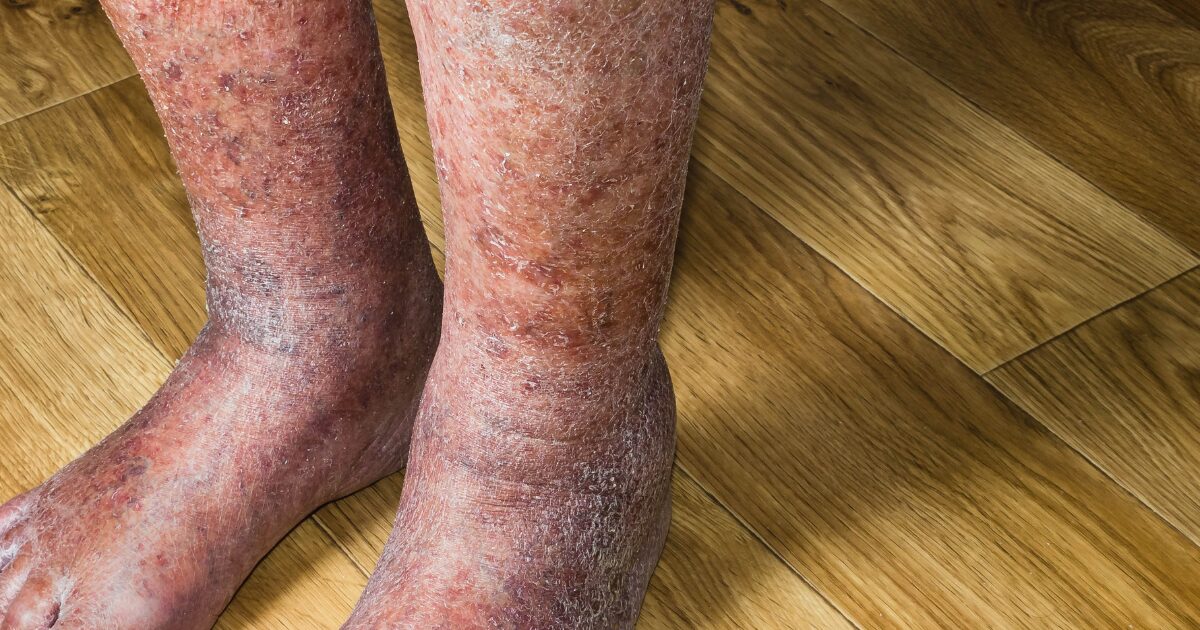
Shiny, cracked, or discolored skin refers to visible and textural changes that may include:
- Skin that appears glossy, tight, or unusually smooth
- Dryness that does not improve with moisturizing
- Cracking or splitting of the skin, especially around the ankles
- Purple, blue, reddish, or brown discoloration
- Darkened patches or uneven skin tone on the lower legs
These changes are not simply cosmetic. They often signal that blood is not flowing properly through the veins or arteries of the legs.
How Circulation Affects Skin Health
Blood plays a vital role in maintaining skin integrity. It delivers oxygen, nutrients, and immune cells that help skin repair itself and stay resilient. When circulation slows or becomes inefficient, the skin becomes fragile, slow to heal, and more prone to visible changes.
PAD and CVI affect circulation in different ways, but both can lead to noticeable skin symptoms.
Peripheral Artery Disease and Skin Changes
Peripheral artery disease occurs when arteries that carry blood from the heart to the legs become narrowed or blocked by plaque. This plaque is made up of cholesterol, fats, and other substances that accumulate over time.
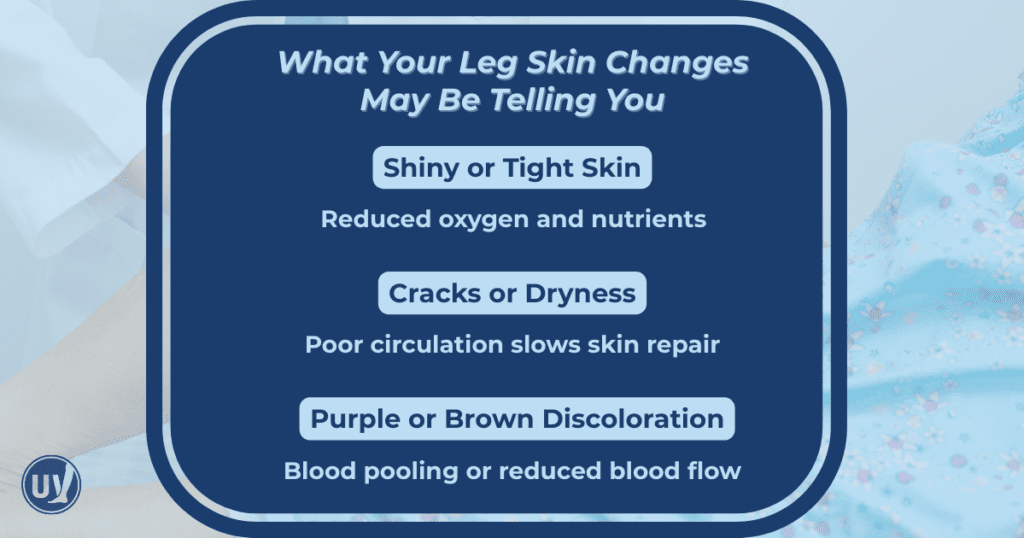
When arteries narrow, less oxygen rich blood reaches the skin and tissues of the legs. This reduced blood supply can cause the skin to appear thin, shiny, or pale. In more advanced cases, discoloration and cracking may develop.
What Causes Legs to Turn Purple or Blue With PAD?
In PAD, discoloration often results from inadequate oxygen reaching the skin. Without enough oxygen, skin may take on a bluish or purplish hue. You may also notice redness or darker patches, particularly when the legs are elevated or at rest.
In some cases, weakened blood vessels may become more fragile, contributing to bruising or uneven coloration. Because PAD restricts blood flow, even small injuries can take longer to heal, increasing the risk of skin breakdown.
Chronic Venous Insufficiency and Skin Changes
Chronic venous insufficiency occurs when the valves inside the leg veins stop working properly. Instead of pushing blood back toward the heart, damaged valves allow blood to flow backward and pool in the lower legs.
This pooling increases pressure inside the veins and surrounding tissues, which can lead to a range of skin changes.
Why CVI Causes Discoloration
When blood pools in the legs, small blood vessels called capillaries can swell and leak. This leakage allows red blood cells to escape into the surrounding tissue. As these cells break down, they leave behind iron deposits that stain the skin.
This process often causes brown or reddish discoloration around the ankles and lower legs. Over time, the skin may appear darkened, uneven, or mottled.
In some patients, small orange brown spots develop first, eventually blending into larger areas of discoloration if CVI progresses.
What Causes Shiny and Cracked Skin?
Shiny or cracked skin often develops when circulation problems deprive the skin of essential nutrients and moisture. In both PAD and CVI, the skin’s ability to repair itself is compromised.
When oxygen delivery is reduced, the skin may become thin, tight, and glossy in appearance. It may also lose elasticity, making it more prone to cracking or splitting. These cracks can be painful and may increase the risk of infection if left untreated.
Dryness associated with poor circulation often does not respond well to topical treatments alone, since the issue originates beneath the surface.
When Skin Changes Signal a More Serious Issue
While mild skin changes may not seem urgent, worsening discoloration, cracking, or texture changes should not be ignored. These symptoms may indicate advanced venous or arterial disease and can increase the risk of complications such as:
- Non healing wounds or ulcers
- Infections
- Chronic pain or swelling
- Reduced mobility
Early evaluation at a vein and vascular center can help prevent progression and protect long term leg health.
Diagnosing the Cause of Skin Changes
Diagnosing the cause of shiny, cracked, or discolored skin begins with a thorough evaluation. Your provider will review your symptoms, medical history, and perform a physical examination of your legs.
If a circulation issue is suspected, diagnostic imaging such as ultrasound may be used to assess blood flow and vein or artery function. This noninvasive test helps identify whether PAD, CVI, or another vascular condition is contributing to your symptoms.
Accurate diagnosis is key to developing an effective treatment plan.
Treatment Options at United Vein & Vascular Centers
Treating skin changes caused by circulation problems requires addressing the underlying vascular condition. United Vein & Vascular Centers offers a range of advanced, minimally invasive treatments designed to improve blood flow and relieve symptoms.
Treatments for Peripheral Artery Disease
For patients with PAD, improving arterial blood flow can help restore oxygen delivery to the skin and tissues. Treatment options may include:
Atherectomy
A procedure that removes plaque from narrowed arteries, helping restore blood flow.
Angioplasty
A minimally invasive procedure that uses a small balloon to open blocked arteries and improve circulation.
These treatments can reduce symptoms and support healthier skin by improving oxygen and nutrient delivery.
Treatments for Chronic Venous Insufficiency
When CVI is the cause, treatment focuses on closing or rerouting blood away from damaged veins so it can flow through healthier ones.
Radiofrequency Ablation (RFA)
Uses heat to close faulty veins, redirecting blood flow.
VenaSeal™
Uses a medical adhesive to seal damaged veins without the need for heat.
Treatments for Varicose and Hidden Veins
Visible and underlying vein issues may be treated with:
Varithena®
A specialized foam treatment for varicose veins.
Microphlebectomy
A procedure that removes varicose veins through tiny incisions.
Ultrasound Guided Sclerotherapy
Targets veins beneath thicker skin using imaging guidance.
In some cases, treatment may also be performed to improve the appearance of the legs once circulation has been addressed.
Frequently Asked Questions
In many cases, treating the underlying circulation problem can prevent further discoloration and improve skin health. Early treatment leads to better outcomes.
Not always, but when shiny skin is accompanied by pain, swelling, discoloration, or temperature changes, it should be evaluated by a vascular specialist.
You should seek care if skin changes are persistent, worsening, or accompanied by leg pain, swelling, or non healing wounds.
Find Expert Vein and Vascular Care Near You
Shiny, cracked, or discolored skin on your legs is more than a cosmetic concern. It may be your body signaling an underlying circulation issue that deserves attention.
UVVC is dedicated to helping patients understand their symptoms and access advanced treatment options that improve comfort, mobility, and quality of life. If you are experiencing changes in your leg skin or other vascular symptoms, schedule a consultation with United Vein & Vascular Centers today and take the first step toward healthier circulation and healthier skin.
Schedule Your Vein & Vascular Consultation
Take the first step toward better circulation and healthier legs. Our board-certified specialists provide minimally invasive treatments for varicose veins, poor circulation, and vascular conditions—most procedures take just 20-30 minutes.