
If you’re living with peripheral artery disease (PAD), winter can bring more than just colder temperatures, it can increase discomfort, worsen leg symptoms, and make daily activities feel more challenging. PAD already limits blood flow to the legs due to narrowed arteries, and cold weather places additional strain on a vascular system that’s already working hard.
By understanding how winter impacts circulation and learning how to manage symptoms, you can protect your vascular health and stay comfortable through the colder months.
What is Peripheral Artery Disease?
Peripheral artery disease occurs when plaque buildup (atherosclerosis) causes the arteries that carry blood to your legs and feet to narrow. This restricts circulation and reduces the amount of oxygen delivered to your muscles and tissues.
Common symptoms include:
- Leg pain or cramping during walking (claudication)
- Numbness or weakness in the legs
- Cold or pale feet and toes
- Slow-healing wounds
- Shiny skin or patchy hair loss on the legs
PAD is a progressive condition, meaning symptoms can worsen without proper care. As circulation declines, everyday activities may become more challenging, and environmental factors like cold weather can trigger more noticeable flare-ups.
How Cold Weather Affects PAD Symptoms
Your body’s natural response to cold is to conserve heat, and it does that by constricting blood vessels. For someone with PAD, whose arteries are already narrowed, this can significantly reduce circulation to the legs and feet.
1. Cold Temperatures Cause Arteries to Constrict
When your arteries tighten, blood flow to your limbs decreases even further. This reduced circulation can make symptoms like cramping, heaviness, and fatigue more noticeable during winter.
2. Decreased Activity Slows Circulation
People tend to move less when temperatures drop. Reduced activity means the calf muscles don’t pump blood upward as effectively, causing the legs to feel stiff, tired, or painful sooner.
3. Blood Becomes Slightly Thicker in the Cold
Cold weather can make the blood a little more viscous, which slows circulation and may worsen claudication symptoms.
4. Reduced Skin and Tissue Oxygenation
With less oxygen reaching the skin, even minor cuts or pressure spots may take longer to heal, which is a serious concern for individuals with PAD.
Why Winter Creates Unique Challenges for PAD
For someone with PAD, cold weather can make the legs tire more quickly, turning even short walks into a challenge. Reduced circulation also means the feet require extra attention, as dryness, cracking, or temperature changes can develop faster and take longer to heal. Even small injuries need closer monitoring since poor blood flow can slow the healing process. The combination of reduced oxygen, limited mobility, and cold-induced vessel constriction makes winter months particularly difficult for individuals managing PAD.
How to Manage PAD Symptoms During Cold Weather
While you can’t control the temperature, you can take steps to keep symptoms manageable and protect your vascular health.
Keep Your Legs and Feet Warm
Dress in layers to avoid excessive constriction from the cold. Thermal socks, insulated footwear, and warm leggings help prevent blood vessels from tightening.
Stay Active
Walking — even indoors — increases circulation and helps your muscles use oxygen more efficiently. Short, frequent walks are ideal.
Hydrate Throughout the Day
Hydration supports healthy blood viscosity. Dry winter air and indoor heating make dehydration more common than most people realize.
Avoid Tight Clothing
Choose items that allow proper blood flow. Tight socks or restrictive waistbands can worsen circulation issues.
Moisturize Daily
Dry, cold air can cause cracking, which increases infection risk, especially for those with impaired circulation.
Monitor Your Feet Carefully
PAD increases the risk of slow-healing wounds. Check your skin daily for cuts, bruises, or color changes.
When Symptoms Could Signal Something More Serious
Seek prompt medical attention if you notice:
- Sudden or severe leg pain
- A foot or toe turning pale, blue, or very cold
- Open sores that do not heal
- Rest pain — aching or burning in the legs even when not walking
- Numbness or loss of sensation
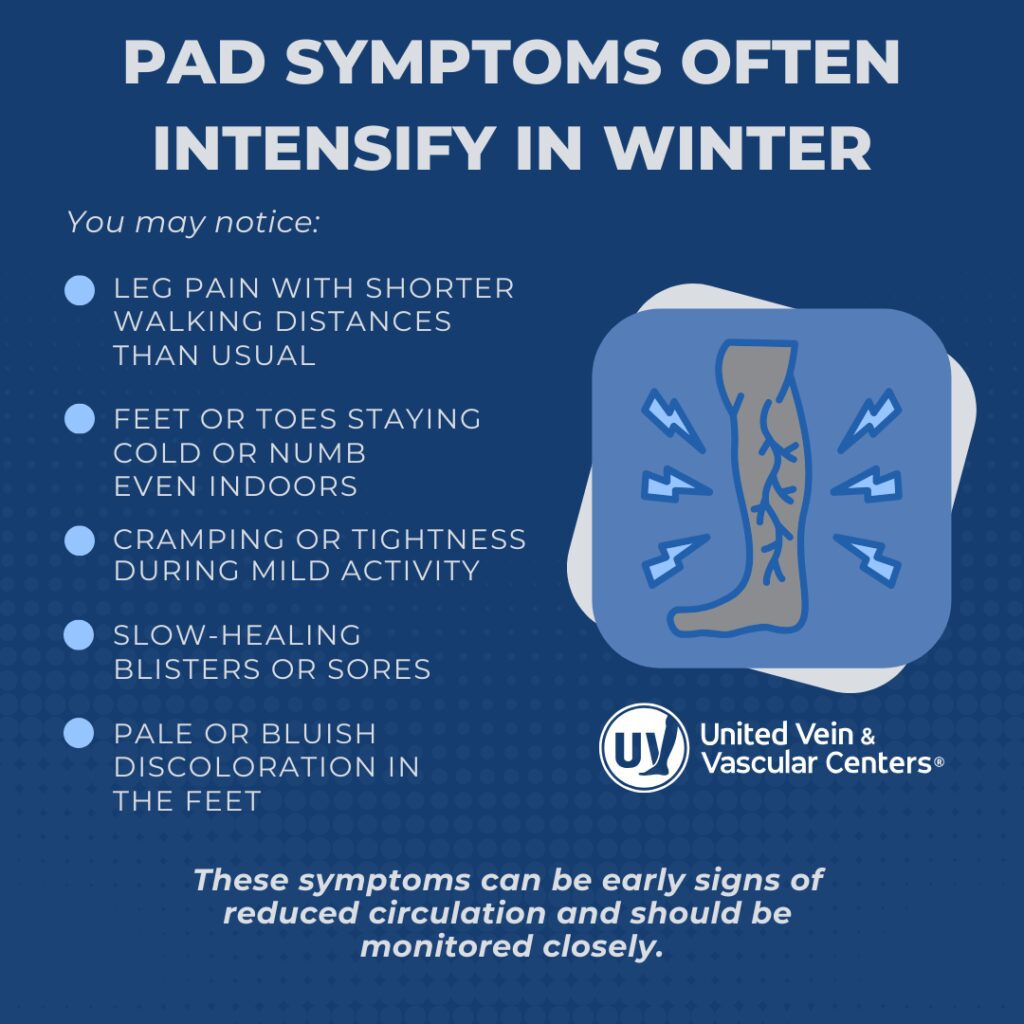
These may be signs of advanced PAD or critical limb ischemia and should be evaluated quickly.
When to Consider Treatment
If winter consistently worsens your symptoms, or if leg pain begins to interfere with daily activities, it may be time to explore treatment options. Restoring blood flow can significantly reduce discomfort and help prevent complications such as ulcers or infections.
At United Vein & Vascular Centers, our specialists offer advanced minimally invasive procedures performed right in our outpatient clinics.
Angioplasty
Angioplasty is a minimally invasive procedure in which a tiny balloon is inserted into the narrowed artery and gently inflated. This widens the artery and restores healthier blood flow to the legs and feet. It’s often performed under local anesthesia, and most patients can walk shortly after the procedure.
Atherectomy
An atherectomy is used when plaque buildup is more significant. During this procedure, a specialized device removes or breaks down plaque from inside the artery, improving circulation and reducing symptoms like pain or cramping. Removing plaque can also make other treatments, such as stenting, more effective.
Stenting
In some cases, after widening the artery with angioplasty, a small mesh tube called a stent is placed inside the artery to keep it open long-term. The stent supports the arterial walls and helps prevent future narrowing, ensuring more consistent blood flow over time.
Frequently Asked Questions
Cold temperatures cause blood vessels to constrict, limiting circulation. For people with PAD, whose arteries are already narrowed, this further reduces oxygen delivery and increases leg pain or cramping.
Yes. Regular walking improves circulation and teaches your muscles to use oxygen more efficiently, even in cold weather.
People with PAD often have cold feet due to reduced blood flow. However, if your feet become painful, pale, or numb, you should contact a specialist.
Stay active, dress warmly, avoid smoking, manage chronic conditions, and follow your vascular specialist’s recommendations.
If leg pain limits your daily routine, or if wounds appear and don’t heal well, minimally invasive treatment may help restore blood flow and improve comfort.
Find a Clinic Near You
Winter doesn’t have to mean worsening PAD symptoms. With the right management and expert vascular care, you can stay comfortable and protect your circulation all season long.
At United Vein & Vascular Centers, we provide comprehensive evaluations and personalized treatment plans designed to improve blood flow and support long-term vascular health.
Find a clinic near you and schedule your consultation today.
Medically reviewed by UVVC National Medical Director, Dr. Domenic Zambuto