


Contents
- “Why does the skin on my lower legs look shiny or tight?”
- Q: What causes shiny or tight skin on the lower legs?
- Q: How does circulation affect skin health?
- Q: Is shiny or tight skin a sign of vein disease?
- Concerned About Shiny Legs and Vein Issues?
- Q: What other symptoms should I watch for?
- Q: When should someone seek medical attention?
- Frequently Asked Questions
- What’s Next in the Ask the Doc Series
Welcome back to Ask the Doc, an educational series from United Vein & Vascular Centers designed to provide clear, physician-led answers to common questions about vein and vascular health. Each week, a UVVC physician explains everyday symptoms and what they may mean medically.
In this installment, Dr. Liza Thalheimer addresses a skin change many patients notice before they realize it may be connected to circulation:
“Why does the skin on my lower legs look shiny or tight?”
Q: What causes shiny or tight skin on the lower legs?
Dr. Thalheimer:
Shiny or tight skin often develops when fluid builds up in the tissues of the lower legs. As swelling increases, the skin stretches, which can make it appear smooth, shiny, or unusually firm.
This can happen for several reasons, including fluid retention, inflammation, lymphatic issues, or circulation problems. When the change is persistent or worsening, it is important to identify the underlying cause.
Q: How does circulation affect skin health?
Dr. Thalheimer:
Healthy circulation helps deliver oxygen and nutrients to the skin while removing excess fluid and waste products from the tissues. When blood flow is not moving efficiently, pressure can build in the lower legs.
Over time, this pressure can affect the skin’s texture and appearance. Skin may become tight, shiny, dry, itchy, discolored, or more fragile as circulation problems progress.
Q: Is shiny or tight skin a sign of vein disease?
Dr. Thalheimer:
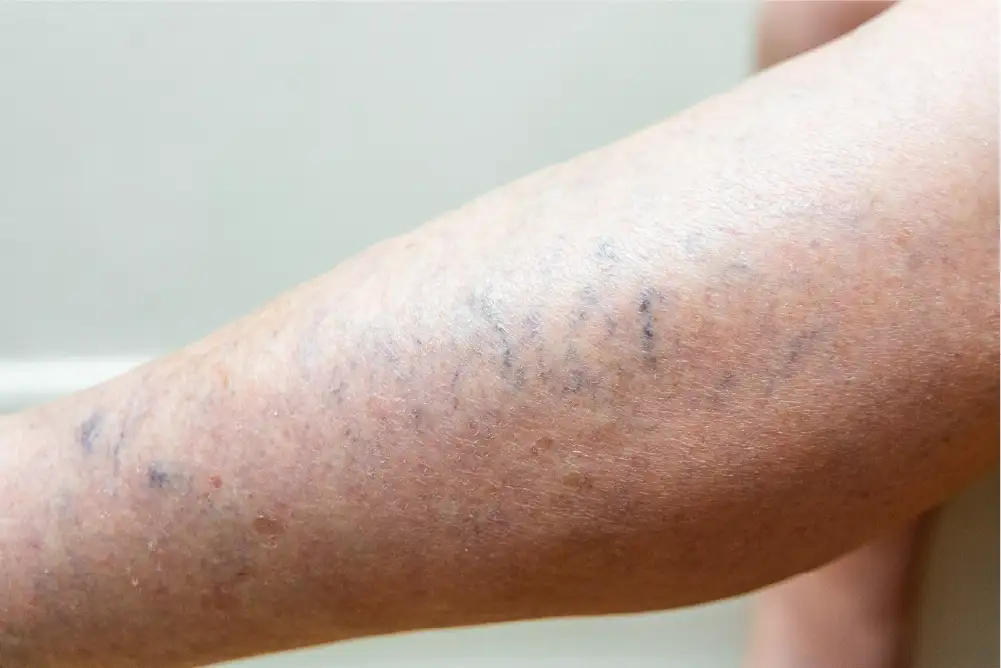
It can be. One common circulation-related cause is chronic venous insufficiency (CVI), a condition where the valves inside the leg veins do not work properly. When this happens, blood can pool in the legs and increase pressure in the surrounding tissues.
That pressure can lead to swelling, inflammation, and skin changes. While shiny or tight skin is not always caused by vein disease, it should be evaluated if it appears with swelling, heaviness, aching, or discoloration.
Concerned About Shiny Legs and Vein Issues?
Requesting a vein screening with our board-certified vein specialists with help you learn if you may have vein disease.
Q: What other symptoms should I watch for?
Dr. Thalheimer:
You should pay attention to shiny or tight skin if it occurs alongside symptoms such as:
- Swelling in the ankles or lower legs
- Leg heaviness or fatigue
- Aching, throbbing, or discomfort
- Itching or dryness near the ankles
- Skin discoloration
- Visible varicose veins
- Slow-healing sores or wounds
These symptoms may suggest that an underlying circulation issue is affecting the health of the skin and surrounding tissue.
Q: When should someone seek medical attention?
Dr. Thalheimer:
You should consider medical evaluation if shiny or tight skin is persistent, worsening, or accompanied by swelling, discomfort, discoloration, or wounds that heal slowly.
A vein specialist can perform a physical examination and may use diagnostic imaging, such as duplex ultrasound, to evaluate blood flow and determine whether vein disease is contributing to the changes.
Frequently Asked Questions
Shiny skin is not always serious, but it can be a sign of swelling, fluid buildup, or circulation problems when it appears on the lower legs.
It depends on the cause and how long the changes have been present. Treating the underlying issue may help reduce swelling and prevent further skin damage.
No. Shiny skin may also be related to swelling, inflammation, lymphatic problems, or other medical conditions. Evaluation helps determine the cause.
Possible causes include chronic venous insufficiency, lymphedema, fluid retention, inflammation, and certain skin or systemic conditions.
You should seek evaluation if shiny or tight skin persists, worsens, or occurs with swelling, pain, discoloration, visible veins, or slow-healing wounds.
What’s Next in the Ask the Doc Series
Skin texture changes can sometimes be an early sign that circulation or swelling is affecting the lower legs. The Ask the Doc series continues to explore how vein and vascular conditions can show up in everyday symptoms patients may not immediately connect to vein health.
In our next installment, Dr. Todd Greer will answer another common question: is venous insufficiency curable? He’ll explain what it means to manage vein disease, how treatment can help improve circulation and symptoms, and why early evaluation matters.
If you notice skin changes, schedule a screening with United Vein & Vascular Centers to identify the cause. Our specialists can assess your circulation, determine whether vein disease may be contributing, and recommend a personalized treatment plan based on your symptoms and diagnostic findings.