


Welcome back to Ask the Doc, an educational series from United Vein & Vascular Centers designed to provide clear, physician-led answers to common questions about vein and vascular health. Each week, a UVVC physician explains everyday symptoms and what they may mean medically.
In this installment, Dr. Kelli Favata addresses a common concern patients bring up during appointments:
“Is leg swelling always caused by a circulation problem?”
Dr. Favata:
No, leg swelling is not always caused by circulation issues. While vein and artery problems are common contributors, swelling can also result from lymphatic conditions, injuries, medications, or other underlying medical concerns.
Understanding the pattern of swelling, and whether other symptoms are present, helps determine the likely cause.
Dr. Favata:
Swelling linked to circulation typically involves problems with blood flow in the veins or arteries.
Vein-related causes may include chronic venous insufficiency (CVI) or varicose veins, where blood pools in the legs because vein valves are not functioning properly. This can lead to:
– Swelling that worsens throughout the day
– Leg heaviness or aching
– Skin discoloration near the ankles
– Visible bulging veins
When swelling follows this pattern, venous disease is often a strong possibility.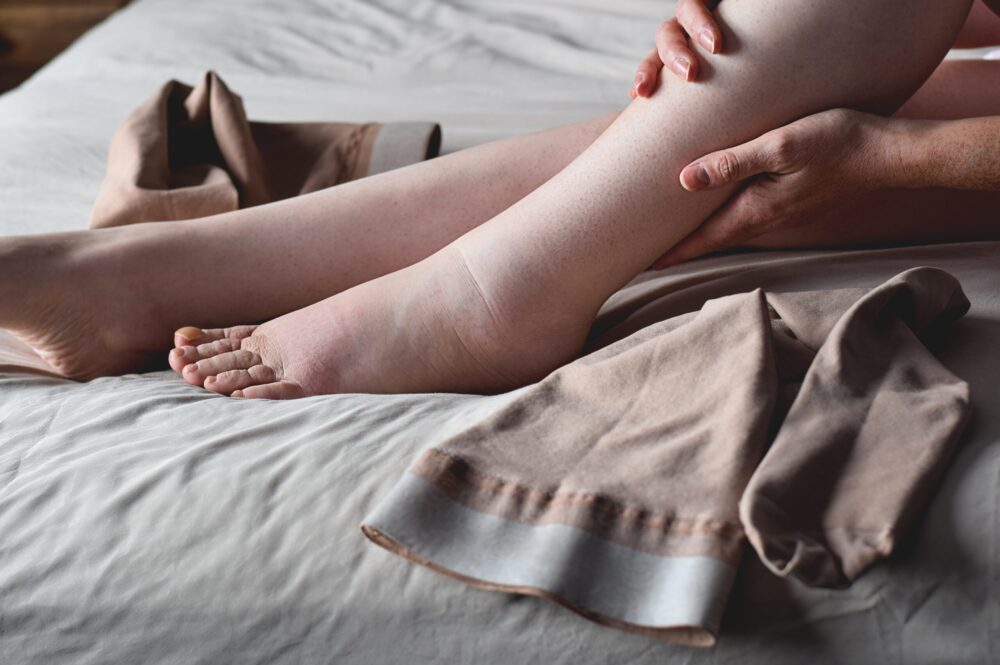
Dr. Favata:
Yes. The lymphatic system helps remove excess fluid from tissues, and when it is not functioning properly, fluid can accumulate and cause swelling, a condition known as lymphedema. Lymphedema-related swelling may affect one or both legs and is often described as a feeling of tightness or heaviness.
Over time, it can also lead to skin thickening or firmness. Because lymphatic swelling behaves differently from vein-related swelling, a proper evaluation is important to determine the cause and guide appropriate treatment.
Dr. Favata:
Yes, swelling can also occur due to:
– Injury or infection
– Side effects of certain medications
– Heart, kidney, or liver conditions
– Prolonged sitting or standing
Since there are many potential causes, ongoing or unexplained swelling should not be ignored. A medical evaluation helps determine whether the issue is vascular, lymphatic, systemic, or temporary.
Dr. Favata:
You should consider a medical evaluation if your swelling does not improve with rest, affects only one leg, or is accompanied by pain, warmth, or redness. Skin changes such as darkening or thickening, as well as swelling that interferes with walking or daily activities, are also important warning signs.
A specialist may use imaging tests, including ultrasound, to assess blood flow and determine whether circulation is contributing to the swelling.
Dr. Favata:
Treatment depends on the underlying cause. If swelling is related to venous circulation, options may include compression therapy to support fluid movement, minimally invasive vein treatments, and lifestyle adjustments such as regular movement and leg elevation.
If swelling is related to lymphedema, specialized therapy and targeted compression strategies may be recommended.
Frequently Asked Questions
Mild swelling can occur after long periods of standing or sitting. Persistent or worsening swelling should be evaluated.
Swelling in one leg may indicate a circulation or lymphatic issue and should be assessed by a medical professional.
Dehydration is not a common direct cause of leg swelling. Swelling is more often linked to fluid balance or circulation problems.
Ultrasound imaging is commonly used to evaluate blood flow in the veins and arteries.
Yes, compression therapy can support circulation and help reduce fluid buildup in many cases.
What’s Next in the Ask the Doc Series
Leg swelling can have many causes, and understanding the difference is the first step toward the right treatment. The Ask the Doc series continues to explore how vein and vascular conditions show up in everyday symptoms that patients often overlook.
In our next installment, Dr. John Eun will address another important question: can vein problems cause skin discoloration? He’ll explain why skin changes sometimes develop around the ankles and lower legs, what those changes may indicate about circulation, and when a medical evaluation is recommended.
If you’re already noticing skin discoloration, swelling, or other leg symptoms, you don’t have to wait, find a United Vein & Vascular Centers clinic near you and schedule an evaluation with one of our specialists.
Medically reviewed by UVVC National Medical Director, Dr. Domenic Zambuto