
Contenido
- Comprender las varices y el flujo sanguíneo
- Varices y presión arterial alta (hipertensión)
- Varices y tensión arterial baja (hipotensión)
- Daily Tips for Managing Varicose Veins and Blood Pressure
- Opciones de tratamiento de las varices
- Preguntas frecuentes
- United Vein & Vascular Centers: Su socio en la salud de las venas y la presión arterial
Varicose veins, those twisted blue or purple veins that bulge beneath the skin, are more than a cosmetic concern. They can cause discomfort, including leg pain, fatigue, itching, and swelling. Many people do not realize that varicose veins may also have a connection to blood pressure, influencing how blood circulates through the body.
Varicose veins affect a large majority of people, with prevalence increasing with age, pregnancy, and genetics. Understanding how these veins impact blood flow and blood pressure can help you take proactive steps to protect your vascular health.
We’ll delve into the science behind this connection and discuss vein treatment options available at United Vein & Vascular Centers to address varicose veins and improve your overall vascular health.
Comprender las varices y el flujo sanguíneo
Healthy veins contain one-way valves that ensure blood flows efficiently from the legs back toward the heart. When these valves weaken or become damaged, blood can pool in the veins, causing them to stretch and bulge. This pooling not only leads to visible varicose veins but can also disrupt normal blood pressure regulation.
Several factors increase the risk of varicose veins, including:
- Genetics and family history
- Age-related valve weakening
- Pregnancy and hormonal changes
- Obesity or excess body weight
- Occupations requiring prolonged standing or sitting
Gravity plays a key role in vein health. Veins in the lower body work against gravity to return blood to the heart. When valves fail, the added strain can lead to leg discomfort and circulation issues.
Varices y presión arterial alta (hipertensión)
Varicose veins can contribute to high blood pressure in certain cases, particularly within the venous system of the legs. Understanding this connection can help patients manage both conditions effectively.
Venous Hypertension
Pooling blood in varicose veins increases pressure in the veins, a condition known as venous hypertension. This pressure can place additional strain on the circulatory system, potentially influencing blood pressure throughout the body, including arteries.
Inflammation and Blood Vessel Function
Varicose veins can trigger inflammation in surrounding tissues. This inflammation may interfere with blood vessel function and contribute to higher blood pressure readings.
Important Considerations
The relationship between varicose veins and high blood pressure is not always straightforward. Factors such as genetics, pregnancy, diet, lifestyle, and existing health conditions often play a larger role in systemic blood pressure levels. Nevertheless, addressing varicose veins can help reduce localized venous pressure and improve overall vascular health.
Varices y tensión arterial baja (hipotensión)
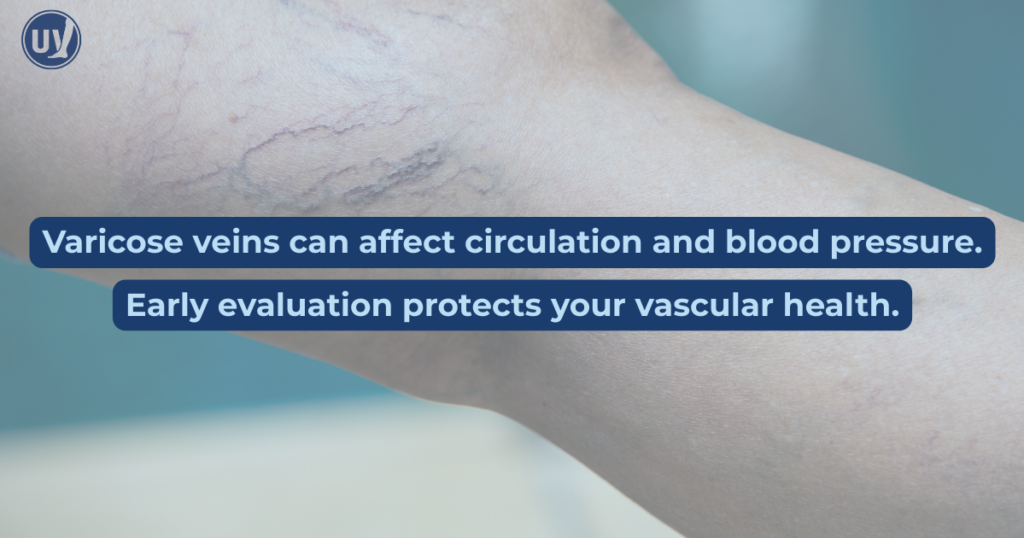
Although less common, varicose veins can also be linked to low blood pressure, particularly a condition called orthostatic hypotension. This occurs when blood pools in the legs due to weak veins, reducing the amount of blood returning to the heart and causing a temporary drop in blood pressure.
Symptoms of Orthostatic Hypotension
- Dizziness or lightheadedness when standing
- Fainting spells, particularly when moving quickly from sitting or lying down
- Fatigue or weakness in the legs
While varicose veins do not directly cause heart problems, they may indicate underlying vein disease that could increase the risk of cardiovascular complications. Early detection and regular vein screenings are essential for maintaining healthy circulation.
Daily Tips for Managing Varicose Veins and Blood Pressure
In addition to professional treatment, there are daily strategies to support vein and artery health:
- Elevate your legs periodically to improve blood flow back to the heart
- Wear compression stockings to reduce pooling and swelling in the legs
- Maintain a healthy weight to reduce pressure on leg veins
- Avoid prolonged sitting or standing by taking breaks to walk or stretch
- Stay active with low-impact exercises such as walking, swimming, or cycling
These habits not only support vein health but can also help regulate blood pressure and reduce the risk of complications.
Opciones de tratamiento de las varices
United Vein & Vascular Centers offers minimally invasive treatments for varicose veins that improve circulation, relieve symptoms, and support overall vascular health. Common procedures include:
- Radiofrequency Ablation: Radiofrequency energy heats and closes diseased veins.
- VenaSeal™ Closure System: A medical adhesive seals diseased veins shut.
- Sclerotherapy: A solution is injected into small varicose veins to shrink and eliminate them.
- Varithena©: A minimally invasive procedure using a thin catheter to deliver treatment, causing affected vein walls to collapse and seal.
These procedures are typically performed on an outpatient basis, with minimal downtime. By treating varicose veins, patients may experience improved leg comfort, appearance, and potentially better blood pressure regulation.
Preguntas frecuentes
No necesariamente. Las venas abultadas no provocan presiones elevadas en las arterias, que es la tensión arterial alta en la que piensa la mayoría de la gente cuando se toma la tensión en la consulta del médico. Las venas abultadas suelen estar causadas por válvulas venosas debilitadas o por permanecer de pie durante mucho tiempo. Las enfermedades de las venas provocan presiones elevadas en las piernas cuando se está de pie, pero esto no está relacionado con la tensión arterial que toma el médico en la consulta. No obstante, los problemas circulatorios deben ser evaluados por un médico especialista en venas varicosas.
Si experimenta dolor, hinchazón, cambios en la piel o úlceras cerca de las venas varicosas, puede indicar una condición más seria. Programe una consulta con United Vein & Vascular Centers para discutir sus opciones de tratamiento.
Afecciones como las varices, los calambres musculares, la celulitis y un quiste de Baker pueden imitar los síntomas de un coágulo sanguíneo. Si tiene hinchazón, enrojecimiento o dolor en la pierna, acuda al médico para descartar un coágulo.
United Vein & Vascular Centers: Su socio en la salud de las venas y la presión arterial
At United Vein & Vascular Centers, our team works closely with patients to develop personalized treatment plans. We provide minimally invasive vein procedures that are safe, effective, and designed to restore optimal blood flow.
Early intervention can prevent worsening vein disease and reduce the risk of complications such as ulcers, pain, or circulatory problems. Our specialists guide each patient through follow-up care and lifestyle recommendations to maintain vein health for years to come.
If you are experiencing varicose veins or have concerns about your blood pressure, scheduling a consultation at United Vein & Vascular Centers is the first step toward healthier veins and improved circulation.