

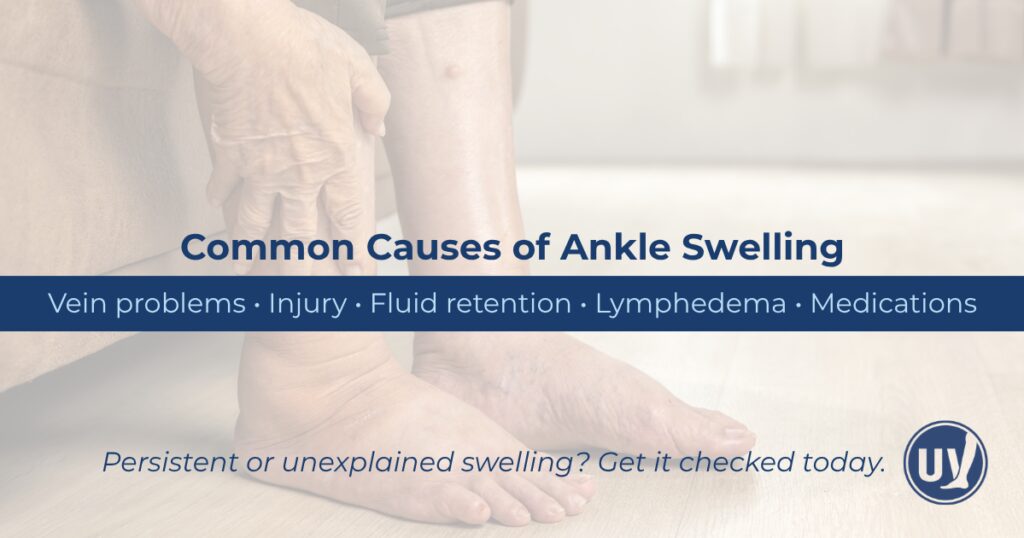
Ankle swelling is often caused by fluid buildup in the tissues, also known as edema. Sitting or standing for long periods, an injury, pregnancy, certain medications, and problems with circulation can all cause swollen ankles. In some cases, ankle swelling may be related to an underlying condition such as chronic venous insufficiency, lymphedema, heart disease, kidney disease, or a blood clot.
While mild swelling may go away on its own, persistent, sudden, or one-sided ankle swelling should not be ignored. Understanding the possible causes can help you know when it may be time to talk with a healthcare provider.
What Causes Swollen Ankles?
Ankle swelling happens when excess fluid collects in the tissues around the ankles and feet. This can happen for several reasons, including changes in blood flow, inflammation, problems with the lymphatic system, or the body’s inability to properly remove excess fluid.
Some of the most common causes of swollen ankles include:
Sitting or Standing for Long Periods
Staying in the same position for an extended period can cause fluid to collect in the lower legs and ankles. This is especially common after long flights or car rides, as well as for people whose jobs require them to sit or stand for most of the day.
Movement helps the muscles in your legs support blood flow back toward the heart. When you are inactive for long periods, fluid can pool in the lower extremities, which may result in swelling.
Insuficiencia venosa crónica
Chronic venous insufficiency is a common cause of swelling in the feet and ankles. It occurs when the valves inside the leg veins do not work properly, making it harder for blood to travel back toward the heart.
As blood begins to pool in the legs, pressure can build inside the veins. Over time, this can contribute to swelling, aching, heaviness, skin changes, and varicose veins.
Ankle swelling that gets worse after standing and improves when you elevate your legs may be associated with a vein problem.
Injury or Inflammation
Ankle sprains, strains, fractures, and other injuries can cause localized swelling. When tissue is damaged, the body’s inflammatory response sends additional fluid to the affected area as part of the healing process.
Swelling caused by an injury is usually concentrated around the affected ankle and may occur alongside pain, bruising, tenderness, or difficulty putting weight on the foot.
Embarazo
Swollen feet and ankles are common during pregnancy. Changes in hormones, increased blood volume, and pressure from the growing uterus can affect circulation and contribute to fluid buildup in the lower legs.
Some swelling during pregnancy can be normal. However, sudden or significant swelling, especially when accompanied by other symptoms, should be discussed with a healthcare provider.
Linfedema
The lymphatic system helps move excess fluid out of tissues. When the lymphatic system is damaged or does not function properly, fluid can accumulate and cause swelling.
Lymphedema can affect one or both legs and may cause a feeling of heaviness or tightness in the affected area. Unlike temporary swelling from sitting or standing, lymphedema can persist without treatment.
Medicamentos
Some medications can cause swelling in the ankles and lower legs as a side effect. Certain blood pressure medications, hormone therapies, and other medications may contribute to fluid retention.
If you notice new ankle swelling after starting a medication or changing your dosage, talk with the healthcare professional who prescribed it. Do not stop taking a prescribed medication without medical guidance.
Heart, Kidney, or Liver Conditions
Swelling in the ankles and legs can sometimes be associated with conditions affecting the heart, kidneys, or liver.
For example, heart failure can affect the body’s ability to circulate blood efficiently and may contribute to fluid buildup. Kidney disease can make it more difficult for the body to remove excess fluid, while liver disease can affect proteins involved in maintaining fluid balance.
Swelling caused by these conditions may affect both legs and can occur alongside other symptoms. If you have unexplained or persistent swelling, a healthcare provider can help determine the underlying cause.
Blood Clots
A deep vein thrombosis, or DVT, is a blood clot that forms in a deep vein, most often in the leg. A DVT can cause swelling, pain or tenderness, warmth, and skin discoloration. It can sometimes occur without obvious symptoms.
Because a blood clot can potentially travel to the lungs and cause a life-threatening pulmonary embolism, symptoms that could indicate a DVT should be evaluated promptly.
Why Is Only One Ankle Swollen?
Swelling in only one ankle or one leg can have several possible causes. An injury, infection, lymphedema, a vein problem, or a blood clot can all cause one-sided swelling.
One-sided swelling that develops suddenly, particularly when accompanied by pain, warmth, redness, or tenderness, warrants prompt medical evaluation. A DVT can cause swelling in one leg and may develop without a known injury.
The pattern of your swelling can provide useful information, but it cannot determine the cause on its own. A healthcare provider can evaluate your symptoms and determine whether additional testing is needed.
When Should You Worry About Ankle Swelling?
Not every case of swollen ankles is an emergency. Temporary swelling after a long day on your feet or an injury may improve with rest and elevation. However, persistent or unexplained swelling should be evaluated to determine why it is happening.
Seek prompt medical attention if your ankle or leg swelling is:
- Sudden or unexplained
- Limited to one leg or ankle
- Associated with pain, tenderness, warmth, or redness
- Severe or getting worse
- Persistent and not improving
- Accompanied by other concerning symptoms
If ankle or leg swelling occurs with sudden shortness of breath, chest pain, dizziness, fainting, rapid breathing, or coughing up blood, seek emergency medical attention. These can be signs of a pulmonary embolism or another serious medical condition.
How Is the Cause of Ankle Swelling Diagnosed?
Because ankle swelling can have many different causes, finding the right treatment starts with identifying what is causing the swelling.
A healthcare provider may ask about:
- When the swelling started
- Whether one or both ankles are affected
- Whether the swelling changes throughout the day
- Recent injuries or periods of inactivity
- Medications you take
- Other symptoms you have noticed
- Your medical history and risk factors
If a vein condition is suspected, a vein specialist may perform a physical examination and recommend diagnostic imaging, such as an ultrasound, to evaluate blood flow and look for problems with the veins.
For example, a duplex ultrasound can be used to evaluate blood flow through the veins and is a standard test used when DVT is suspected.
Can Swollen Ankles Be Treated?
Treatment for ankle swelling depends on the underlying cause. For some people, swelling related to prolonged sitting or standing may improve with regular movement, leg elevation, and other lifestyle measures. Swelling caused by an underlying medical condition may require treatment for that condition.
When swelling is related to a vein condition such as chronic venous insufficiency, a vein specialist can determine whether treatment may help improve blood flow and reduce symptoms.
If you have ongoing ankle swelling, especially when it is accompanied by leg heaviness, aching, varicose veins, or other signs of a vein problem, consider talking with a vein specialist about your symptoms.
Llame para programar su consulta
No espere más: el alivio de las dolorosas venas y afecciones vasculares está a sólo una llamada de distancia. Hable con nuestro equipo para reservar su cita hoy. No se necesita referencia, y la mayoría de los seguros aceptados.
Preguntas frecuentes
Swollen ankles can have many causes, including prolonged sitting or standing, injury, pregnancy, medication side effects, fluid retention, lymphatic problems, and circulation issues. Chronic venous insufficiency is one possible cause, particularly when swelling is worse after standing and occurs with symptoms such as aching, heaviness, varicose veins, or other signs of poor venous circulation.
You should talk with a healthcare provider about persistent or unexplained ankle swelling. Sudden swelling, especially in one leg, or swelling accompanied by pain, warmth, redness, or tenderness may require prompt medical evaluation. If swelling occurs with sudden shortness of breath, chest pain, fainting, or coughing up blood, seek emergency medical attention because these can be signs of a pulmonary embolism.
Yes. Chronic venous insufficiency can cause blood to pool in the legs, increasing pressure in the veins and contributing to swelling in the feet and ankles. Other symptoms may include aching, heaviness, varicose veins, itching, or skin changes. A vein specialist can evaluate your symptoms and determine whether a vein condition may be contributing to your swelling.
Get Your Swollen Ankles Evaluated
Swollen ankles can have many causes, from something as simple as spending too much time sitting or standing to an underlying vein or vascular condition. The important thing is not to assume that persistent swelling is something you simply have to live with.
United Vein & Vascular Centers can evaluate symptoms such as leg and ankle swelling and help determine whether an underlying vein condition may be contributing to your symptoms.
Ready to find out what’s causing your swelling? Book a free vein screening or find a United Vein & Vascular Centers clinic near you.