Contenido
- ¿Qué es la insuficiencia venosa crónica?
- What Is Lymphedema?
- CVI vs. Lymphedema: What’s the Difference?
- What Causes CVI and Lymphedema?
- How Doctors Diagnose CVI and Lymphedema
- What Happens If These Conditions Are Left Untreated?
- Everyday Tips for Managing Leg Swelling
- When Should You See a Vein Specialist?
- Preguntas frecuentes
- Don’t Ignore Persistent Leg Swelling
Leg swelling is common, but it should never be ignored, especially when it becomes persistent, painful, or starts affecting your daily life. Two of the most common conditions behind chronic swelling are chronic venous insufficiency (CVI) and lymphedema. While these conditions can look similar at first, they have very different causes, symptoms, and treatment approaches.
Knowing the difference between CVI and lymphedema is important because getting the right diagnosis can help prevent complications and improve your quality of life. If you’ve noticed ongoing swelling, aching legs, skin changes, or heaviness in your legs, understanding what may be causing your symptoms is the first step toward finding relief.
¿Qué es la insuficiencia venosa crónica?
Chronic venous insufficiency is a condition that develops when the valves inside your leg veins stop working properly. Normally, these one-way valves help push blood back toward the heart. When they become weakened or damaged, blood flows backward and pools in the lower legs, increasing pressure inside the veins.
Over time, this poor circulation can lead to swelling, discomfort, visible vein changes, and skin damage if left untreated.
CVI is one of the most common vein disorders, particularly among older adults, people with a family history of vein disease, and those who spend long hours standing or sitting.
Common symptoms of CVI include:
- Swelling in the ankles or lower legs, especially later in the day
- Aching, throbbing, or heavy legs
- Varices
- Fatiga en las piernas
- Itchy or irritated skin
- Brown or reddish skin discoloration around the ankles
- Venous ulcers or slow-healing wounds in advanced cases
Symptoms often improve after elevating your legs or wearing compression stockings, especially during the early stages of the disease.
What Is Lymphedema?
Lymphedema is a chronic condition caused by a buildup of lymphatic fluid in the body’s tissues. Unlike CVI, which affects the veins, lymphedema occurs when the lymphatic system cannot properly drain excess fluid.
The lymphatic system plays an essential role in your immune system by removing waste, toxins, and excess fluid from tissues. When lymph vessels are damaged or underdeveloped, fluid accumulates and causes persistent swelling.
Lymphedema may be:
- Primary lymphedema, caused by inherited abnormalities of the lymphatic system
- Secondary lymphedema, resulting from surgery, radiation therapy, infections, trauma, or cancer treatment
Although it most commonly affects the arms and legs, lymphedema can develop in other parts of the body.
Common symptoms of lymphedema include:
- Persistent swelling that does not improve with elevation
- A feeling of heaviness or tightness
- Tight-fitting clothing or jewelry
- Reduced flexibility or range of motion
- Thickened or hardened skin
- Frequent skin infections
Without treatment, swelling may gradually worsen and become more difficult to manage.
CVI vs. Lymphedema: What’s the Difference?
Although chronic venous insufficiency (CVI) and lymphedema can both cause swollen legs, they affect different systems in the body and often present with distinct symptoms.
Here are some of the key differences:
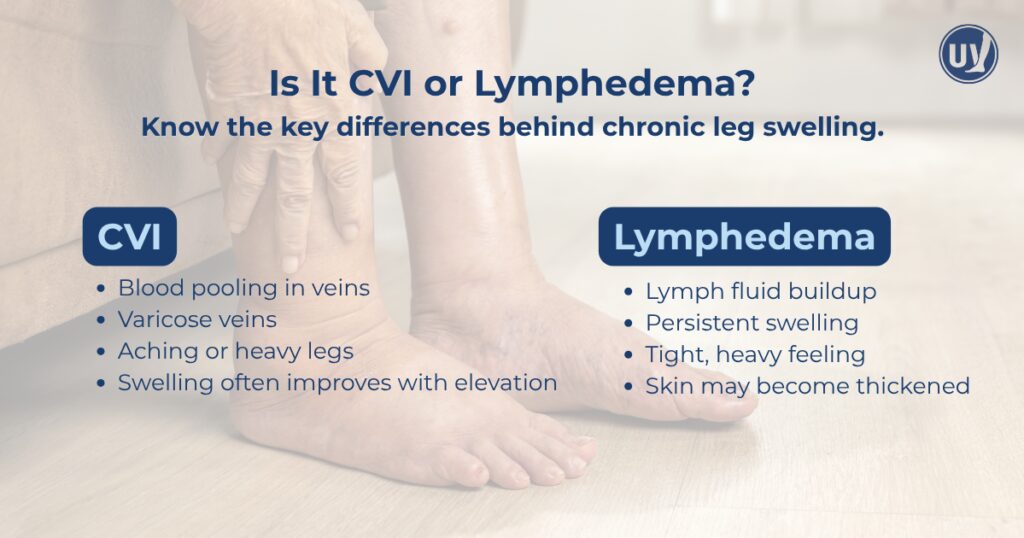
- CVI affects the veins, causing blood to pool in the legs because damaged vein valves can’t efficiently return blood to the heart.
- Lymphedema affects the lymphatic system, causing lymph fluid to build up in the body’s tissues.
- Varicose veins are common with CVI, while people with lymphedema typically do not have visible varicose veins.
- Swelling from CVI often improves with leg elevation or compression, especially in the early stages. Swelling caused by lymphedema is usually persistent and less likely to improve with elevation alone.
- Skin changes differ between the two conditions. CVI commonly causes brown or reddish discoloration around the ankles, while lymphedema often leads to thickened, hardened skin as the condition progresses.
- Untreated CVI can result in venous ulcers, while untreated lymphedema increases the risk of recurrent skin infections and progressive tissue damage.
Because these conditions share similar symptoms, it can sometimes be difficult to tell them apart without a medical evaluation. In some cases, a person may even have both CVI and lymphedema at the same time. Seeing a vein and vascular specialist is the best way to receive an accurate diagnosis and develop the right treatment plan.
What Causes CVI and Lymphedema?
Understanding what contributes to these conditions can help you recognize your risk factors.
Common causes and risk factors for CVI
Several factors can weaken vein valves over time, including:
- Envejecimiento
- Antecedentes familiares de enfermedades venosas
- Embarazo
- Obesidad
- Permanencia prolongada de pie o sentado
- Previous blood clots (deep vein thrombosis)
- Lack of physical activity
People whose jobs require standing for extended periods, such as nurses, teachers, and retail workers, may have a higher risk of developing CVI.
Common causes and risk factors for lymphedema
Lymphedema develops when lymphatic drainage becomes disrupted.
Los factores de riesgo incluyen:
- Cancer surgery involving lymph node removal
- Radiation therapy
- Severe infections
- Trauma or injury
- Congenital lymphatic abnormalities
- Family history
Early diagnosis can help slow disease progression and reduce complications.
How Doctors Diagnose CVI and Lymphedema
Since these conditions require different treatments, obtaining the correct diagnosis is essential.
Your provider will begin by reviewing your symptoms, medical history, and performing a physical examination.
For suspected CVI, the primary diagnostic test is a venous duplex ultrasound, which evaluates blood flow and checks for faulty vein valves or blood clots.
Additional testing may include:
- Venografía
- CT or MRI imaging in complex cases
If lymphedema is suspected, your provider may evaluate:
- Limb measurements
- Tissue texture
- Cambios en la piel
- Medical history
Advanced imaging such as lymphoscintigraphy or other lymphatic imaging studies may also be used to evaluate lymph flow.
Because many symptoms overlap, visiting a vein and vascular specialist is often the best way to determine the underlying cause of chronic leg swelling.
What Happens If These Conditions Are Left Untreated?
Ignoring chronic swelling can allow both conditions to progress.
Complications of untreated CVI
Without treatment, CVI may lead to:
- Chronic pain
- Severe swelling
- Skin thickening
- Úlceras venosas
- Bleeding varicose veins
- Cellulitis
- Movilidad reducida
Venous ulcers can be especially difficult to heal because poor circulation limits oxygen and nutrients reaching the skin.
Complications of untreated lymphedema
Untreated lymphedema may result in:
- Progressive swelling
- Fibrosis (hardening of tissue)
- Recurrent skin infections
- Difficulty walking or using the affected limb
- Permanent tissue changes
Seeking treatment early can help prevent these complications and preserve your long-term health.
Everyday Tips for Managing Leg Swelling
Whether you’ve been diagnosed with CVI or lymphedema, healthy habits can help improve symptoms and support better circulation.
Consider these daily strategies:
- Stay physically active with low-impact exercise like walking or swimming.
- Avoid sitting or standing in one position for long periods.
- Elevate your legs whenever possible.
- Wear compression garments as recommended by your provider.
- Mantener un peso saludable.
- Follow a balanced diet that limits excess sodium.
- Keep your skin clean and moisturized to reduce infection risk.
- Attend regular follow-up appointments with your healthcare provider.
These habits can complement medical treatment and help reduce symptom progression.
When Should You See a Vein Specialist?
Occasional swelling after a long day may not be cause for concern. However, swelling that persists, worsens, or occurs alongside other symptoms should always be evaluated.
Schedule an appointment if you experience:
- Swelling that lasts for several days
- Pain, heaviness, or aching in your legs
- Varices visibles
- Skin discoloration or thickening
- Slow-healing wounds
- Recurrent skin infections
- Swelling in only one leg
- Sudden or severe swelling that develops quickly
Getting an accurate diagnosis early can make treatment simpler and help prevent long-term complications.
Preguntas frecuentes
Yes. Some people develop both conditions simultaneously, particularly if long-term venous disease has affected the lymphatic system. A comprehensive evaluation by a vein specialist can determine whether one or both conditions are contributing to your symptoms.
No. Leg swelling can have many causes, including heart disease, kidney disease, medications, injury, or blood clots. Because persistent swelling can signal a serious medical condition, it’s important to seek a professional evaluation if symptoms continue or worsen.
While CVI is considered a chronic condition, modern minimally invasive vein treatments can effectively improve blood flow, relieve symptoms, and help prevent complications. Many patients experience significant symptom relief after treatment combined with healthy lifestyle habits.
Don’t Ignore Persistent Leg Swelling
While Chronic Venous Insufficiency and lymphedema share similar symptoms, they are different conditions that require different treatment approaches. Understanding what is causing your swelling is the first step toward finding lasting relief.
If you’ve been living with swollen, heavy, or painful legs, don’t wait for symptoms to worsen. Early evaluation can help protect your vascular health, improve your comfort, and reduce the risk of future complications.
At United Vein & Vascular Centers, our experienced vein specialists diagnose and treat chronic venous insufficiency and other vascular conditions using advanced, minimally invasive techniques. Book a free vein screening today or find a UVVC clinic near you to take the first step toward healthier legs and improved circulation.