
Understanding Vein Disease
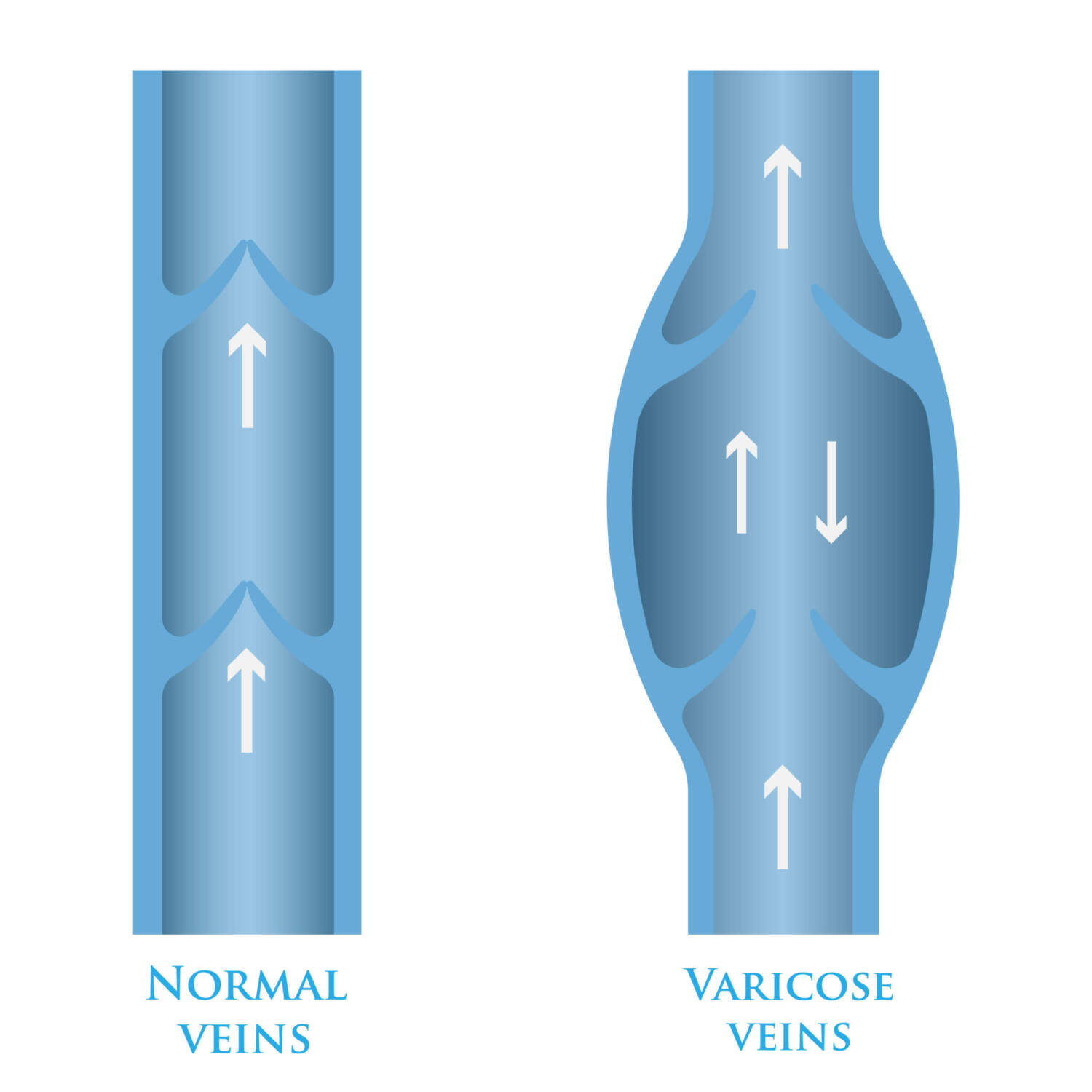
Vein disease occurs when veins have difficulty returning blood toward the heart, most commonly affecting the legs. It often develops when valves inside the veins weaken or become damaged, allowing blood to flow backward and collect. Over time, increased pressure within the veins can contribute to leg discomfort, swelling, visible veins, skin changes, and other complications.
At United Vein & Vascular Centers, our vein specialists evaluate and treat vein disease using minimally invasive treatment options based on each patient’s symptoms, vein anatomy, ultrasound findings, and individual health needs.
Request a Vein Screening
Understanding Your Vein Health
Vein disease can affect people differently depending on which veins are involved and how well blood is circulating through the legs. Learning about symptoms, vein conditions, and available treatments can help you better understand your vein health and when an evaluation may be appropriate.
Vein Disease Symptoms
Leg swelling, aching, heaviness, cramping, itching, skin changes, and visible veins are among the symptoms that may be associated with vein disease. Because these symptoms can also have other causes, an evaluation can help determine whether venous circulation may be contributing to your concerns.
Afecciones venosas
Problems with blood flow and increased pressure within the veins can contribute to conditions including chronic venous insufficiency, varicose veins, reticular veins, spider veins, venous stasis dermatitis, and venous ulcers.
Tratamientos venosos
When treatment is appropriate, minimally invasive procedures can be used to close or remove affected veins so blood can naturally reroute through healthier veins.
How Do the Veins in the Legs Work?
Veins return blood from the body to the heart. Because veins in the legs must move blood upward against gravity, they rely on small, one-way valves that help prevent blood from flowing backward. The calf muscles also help by squeezing the veins during movement and pushing blood out of the lower legs.
The veins in the legs form an interconnected network made up of deep, superficial, and perforator veins.
Deep Veins
Deep veins are located within or alongside the leg muscles and carry most of the blood from the legs toward the heart. Because they perform an essential role in circulation, minimally invasive treatments for superficial vein disease generally do not target healthy deep veins.
A blood clot that forms in a deep vein is called deep vein thrombosis (DVT). DVT is different from chronic superficial vein disease and requires prompt medical evaluation. Sudden pain, swelling, warmth, or redness, particularly in one leg, should not be ignored.
Superficial Veins
Superficial veins are located closer to the skin and collect blood from the skin and surrounding tissues before directing it into the deep venous system.
The great saphenous vein and small saphenous vein are two of the major superficial veins in the legs. When valves within superficial veins do not function properly, increased pressure can contribute to visible veins and other signs of vein disease.
Perforator Veins
Perforator veins connect the superficial veins with the deep venous system. Their valves normally help direct blood inward toward the deep veins.
When perforator vein valves do not function properly, blood may flow back toward the surface, increasing pressure in nearby veins and potentially contributing to swelling, varicose veins, skin changes, or venous ulcers.
How Does Vein Disease Develop?
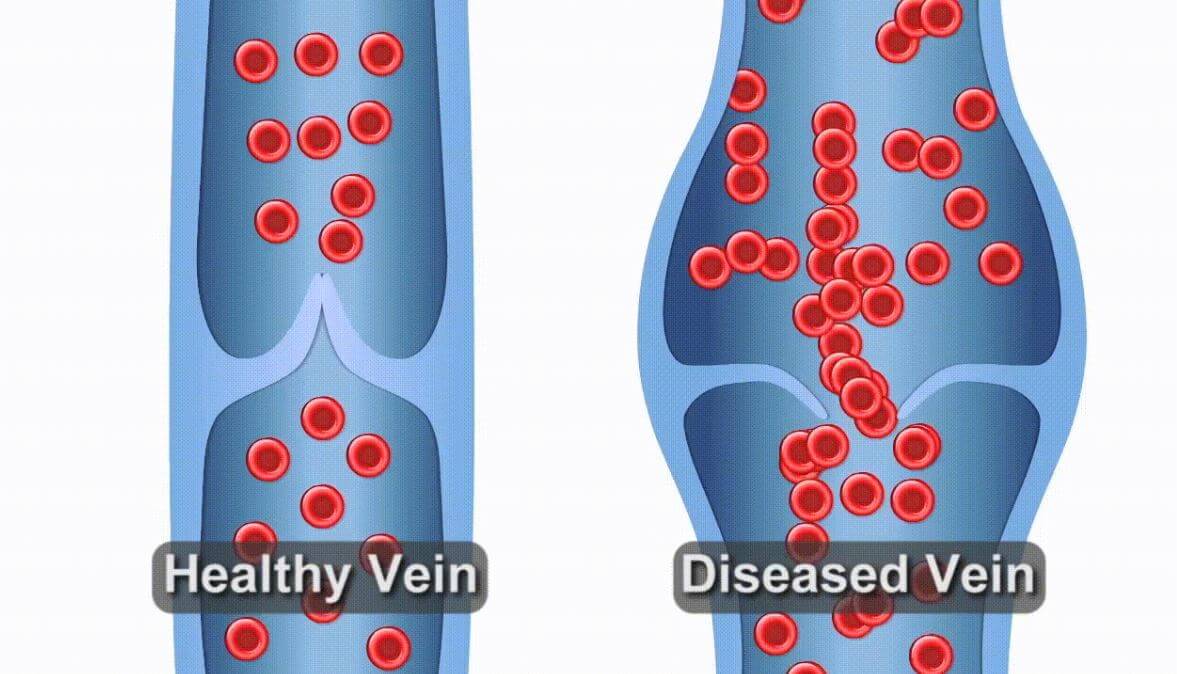
Healthy vein valves help keep blood moving in one direction toward the heart. When these valves weaken or become damaged, blood can flow backward and collect in the legs. This backward flow is known as venous reflux.
Reflux can affect different parts of the venous system. As blood continues to collect, pressure within the veins can increase.
When the veins have ongoing difficulty returning blood efficiently toward the heart, chronic venous insufficiency (CVI) may develop. Over time, increased venous pressure can contribute to persistent swelling, aching, heaviness, visible veins, and changes to the skin and surrounding tissue.
Symptoms may become more noticeable after prolonged sitting or standing because the veins must work against gravity to move blood out of the lower legs.
What Are the Most Common Vein Conditions?
Vein disease can appear in different ways depending on the veins involved, valve function, and the amount of pressure within the venous system.
Insuficiencia venosa crónica
Chronic venous insufficiency occurs when the veins have ongoing difficulty returning blood efficiently from the legs toward the heart. CVI may contribute to swelling, aching, heaviness, skin changes, varicose veins, and other complications.
Learn About Chronic Venous Insufficiency
Varices
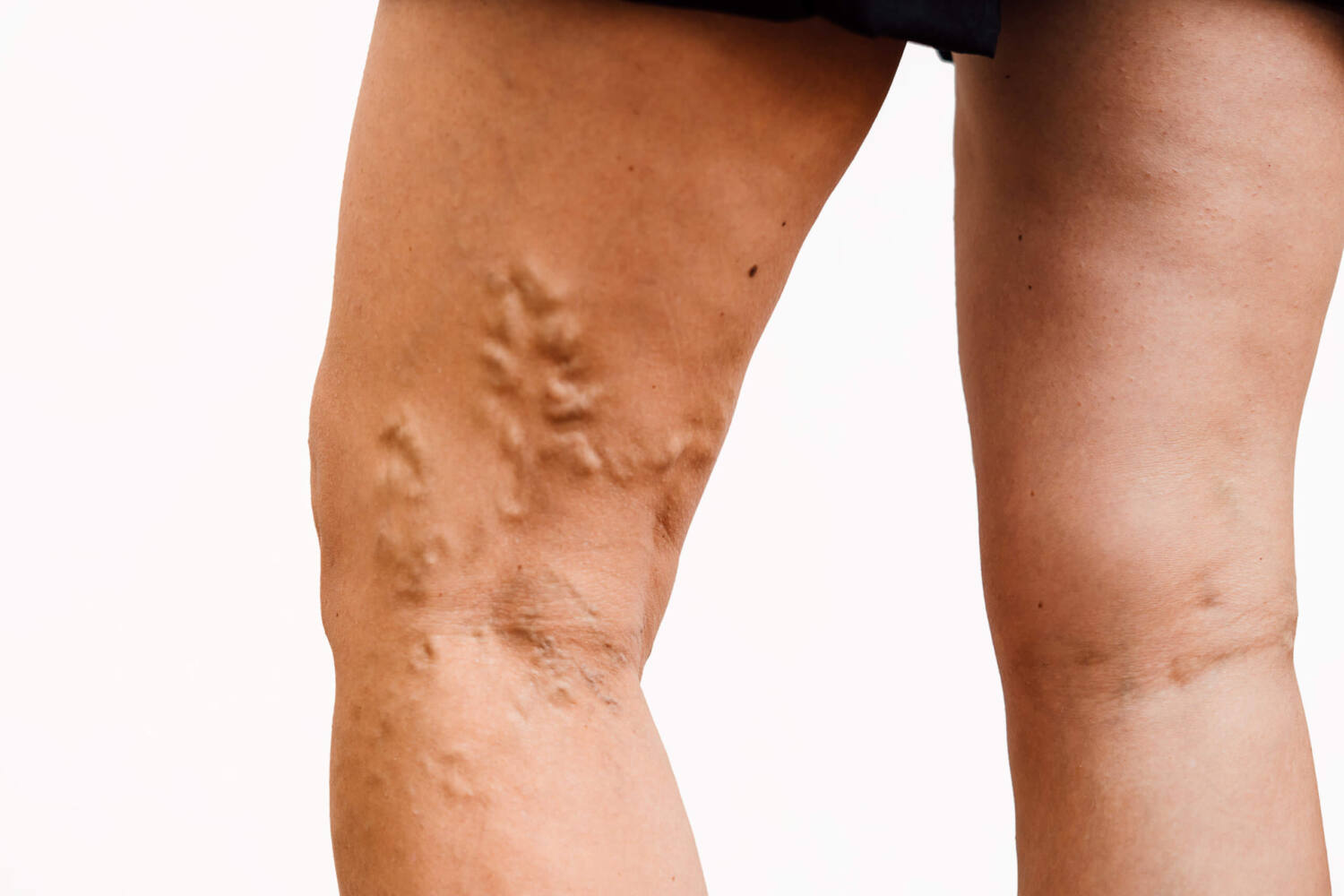
Varicose veins are enlarged, twisted veins that commonly develop in the legs. They may appear raised or rope-like and can be associated with aching, swelling, heaviness, itching, or leg fatigue.
Reticular Veins
Reticular veins are blue or green veins visible beneath the skin. They are generally larger than spider veins but smaller and flatter than varicose veins. Some patients may experience aching, tenderness, or burning around the affected area.
Arañas vasculares
Spider veins are small red, blue, or purple vessels that often appear as thin lines, branches, or web-like patterns near the skin’s surface.
Although appearance may be the first concern, spider veins can occur alongside symptoms or other signs of vein disease. United Vein & Vascular Centers does not treat spider veins for cosmetic purposes alone. A vein screening can help determine whether visible veins may be associated with an underlying vein condition.
Venous Stasis Dermatitis
Venous stasis dermatitis is skin inflammation associated with ongoing venous insufficiency. It may cause itching, dryness, swelling, thickened skin, or reddish-brown discoloration, particularly around the lower legs and ankles.
Learn About Venous Stasis Dermatitis
Venous Ulcers
Venous ulcers are slow-healing wounds that commonly develop near the ankle when prolonged venous pressure damages the skin and surrounding tissue.
United Vein & Vascular Centers evaluates and treats vein disease that may be contributing to a venous ulcer but does not provide wound-care services.

What Increases the Risk of Vein Disease?
Several factors may increase the likelihood of developing venous reflux or chronic venous insufficiency, including:
- A family history of vein disease
- Envejecimiento
- Pregnancy or hormonal changes
- Excess weight
- Permanecer mucho tiempo sentado o de pie
- Limited mobility
- Previous blood clots
- Prior leg injury, trauma, or surgery
- Fumar
Having one or more risk factors does not mean someone has vein disease. An evaluation is needed to determine whether symptoms or visible vein changes may be related to venous circulation.
How Is Vein Disease Evaluated?
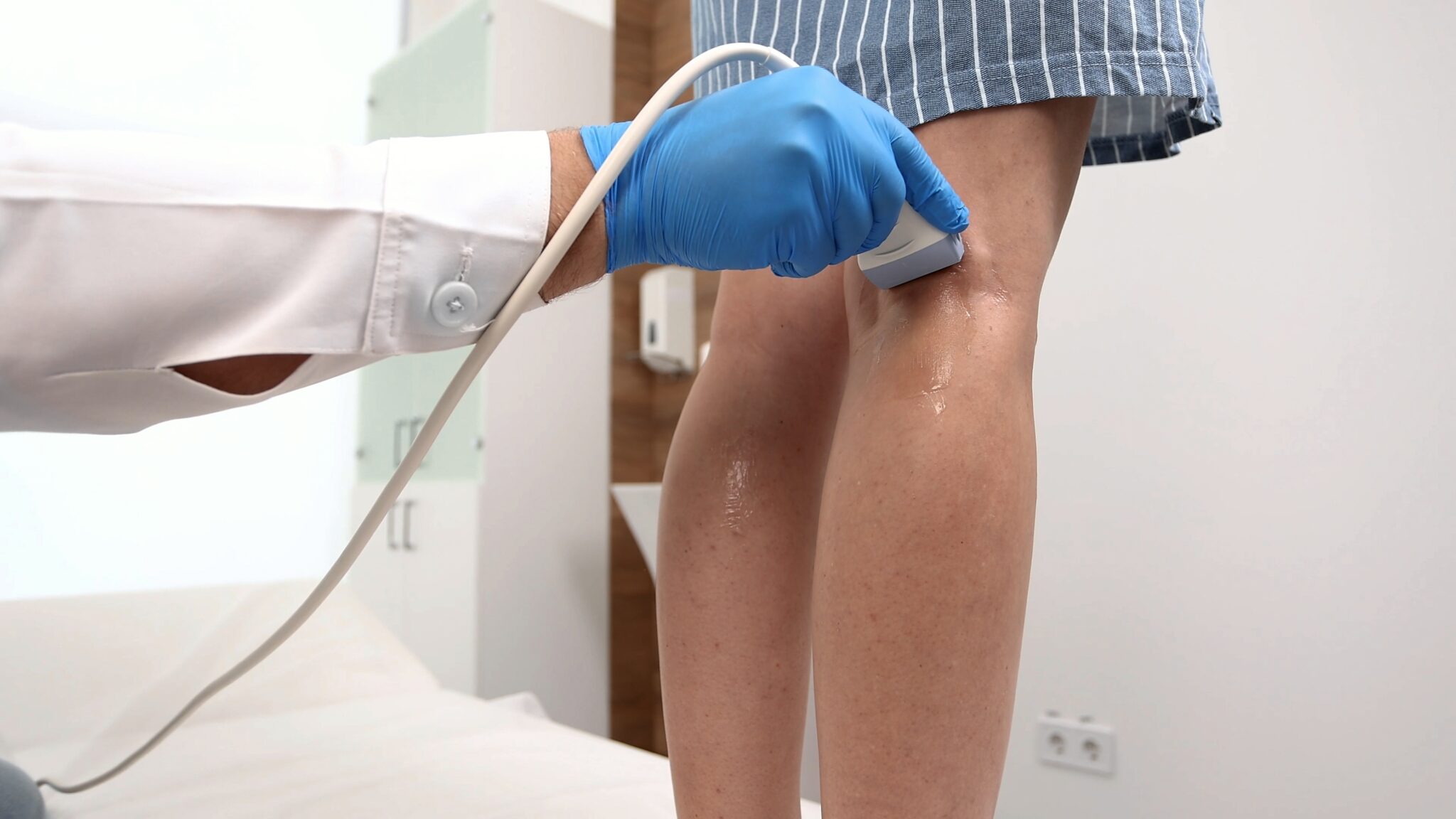
A vein screening is an initial evaluation used to review symptoms, relevant health history, and visible signs that may be related to vein disease with a board-certified vein specialist. Based on the findings, your specialist may recommend additional testing.
When appropriate, a duplex ultrasound can evaluate blood flow, valve function, and the deep, superficial, and perforator vein systems. It can also help identify the location and pattern of venous reflux.
A vein screening does not automatically include an ultrasound, and not every patient who completes a screening will need testing or treatment. Recommendations depend on the individual evaluation.
How Is Vein Disease Treated?
When treatment is appropriate, the recommended procedure depends on the affected veins, symptoms, medical history, ultrasound findings, and provider evaluation.
Minimally invasive vein procedures offered at United Vein & Vascular Centers may include:
Ablación por radiofrecuencia (ARF)
Radiofrequency ablation uses controlled thermal energy to close a targeted vein that is not circulating blood properly.
Learn About Radiofrequency Ablation
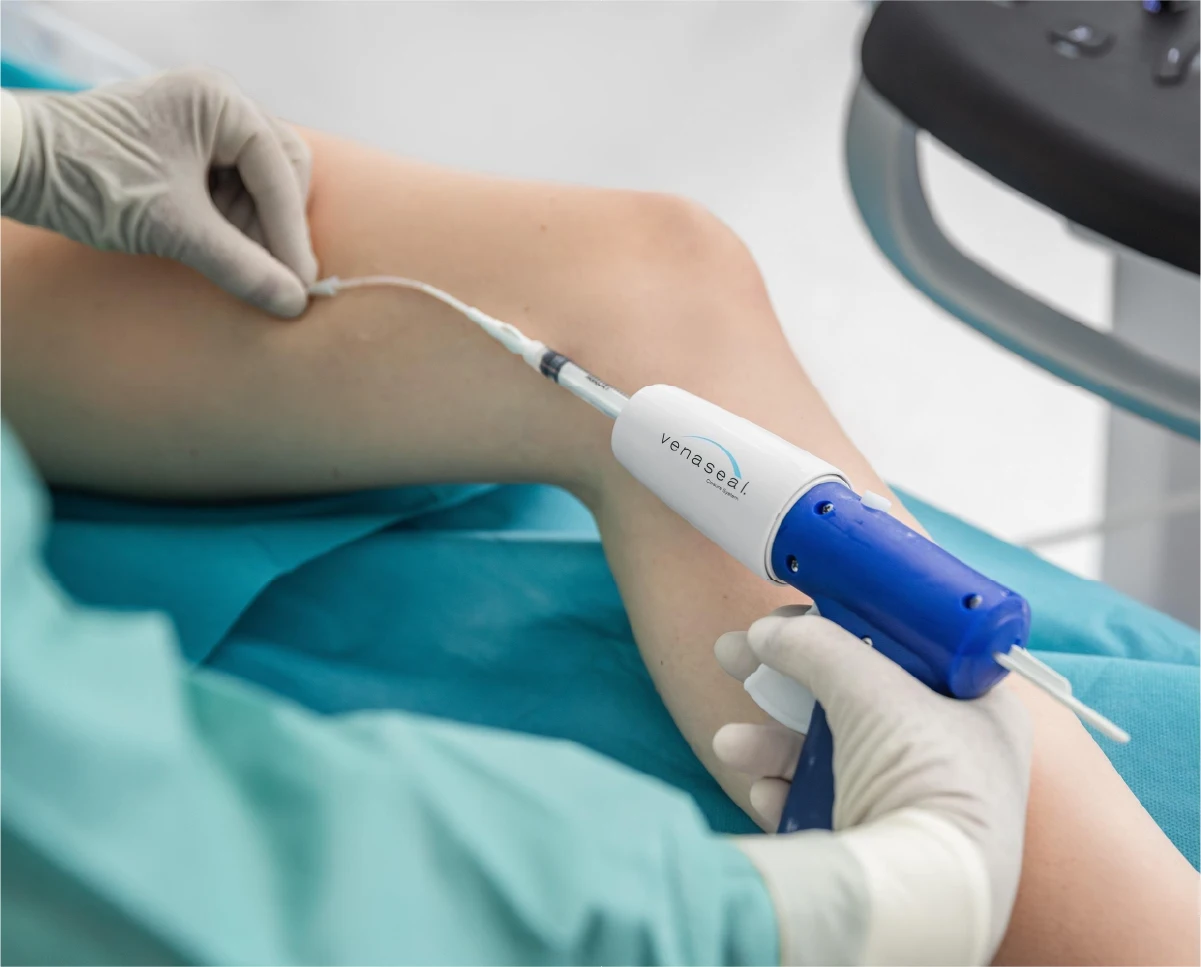
VenaSeal
VenaSeal uses a medical adhesive to close an affected vein without the use of thermal energy.
Varithena
Varithena is a prescription injectable microfoam used to close certain affected veins.
Escleroterapia guiada por ultrasonidos
Ultrasound-guided sclerotherapy uses ultrasound imaging to guide an injectable medication into a targeted vein.
Microflebectomía
Microphlebectomy, also known as stab or ambulatory phlebectomy, removes selected bulging varicose veins through very small openings in the skin.
Veins selected for treatment are already functioning poorly. Closing or removing an affected superficial vein allows blood to naturally reroute through healthier veins that can carry it more effectively.
Recovery varies based on the procedure and individual patient factors. Many patients return to normal daily activities relatively quickly, and walking is often encouraged after treatment. The care team provides instructions based on the procedure performed.
Preguntas frecuentes
El sistema circulatorio se encarga de mover la sangre por todo el cuerpo. Las arterias transportan la sangre oxigenada desde el corazón, mientras que las venas la devuelven. Cuando las pequeñas válvulas de las venas se debilitan o fallan, la sangre puede retroceder y acumularse en las piernas, lo que se conoce como reflujo venoso o insuficiencia venosa crónica (IVC). Esta mala circulación suele provocar varices, hinchazón de piernas y molestias.
La insuficiencia venosa se produce cuando las venas de las piernas no pueden enviar sangre al corazón de forma eficaz. A menudo no se diagnostica porque síntomas como dolor, hinchazón o venas visibles pueden confundirse con problemas estéticos o de envejecimiento. Sin tratamiento, la insuficiencia venosa puede progresar y provocar decoloración de la piel, úlceras y dolor crónico. Una evaluación temprana por un especialista en venas puede prevenir complicaciones y mejorar la circulación.
En United Vein & Vascular Centers, la educación del paciente es el núcleo de nuestra atención. Nuestros especialistas certificados utilizan imágenes de ultrasonido de diagnóstico para determinar la causa de sus síntomas, a continuación, explicar sus resultados y plan de tratamiento personalizado en detalle. Ofrecemos procedimientos mínimamente invasivos, en el consultorio que restaurar el flujo sanguíneo saludable con poco o ningún tiempo de inactividad - que le ayuda a volver a las actividades que le gustan más rápido.