Contents
- Understanding Leg Vein Anatomy: The Basics
- Axial vs. Tributary Veins: What’s the Distinction?
- The Crucial Role of Venous Valves
- The Domino Effect: How Branch Veins Become Varicose
- Why You Shouldn’t Ignore Them: Bulging Branch Vein Risks
- Practical Tips for Keeping Your Veins Healthy
- Frequently Asked Questions
- Take the Next Step Toward Healthier Legs
Have you noticed bulging, twisted veins in your legs or experienced aching, heaviness, or swelling after standing for long periods? These symptoms are often linked to vein disease, but many people don’t realize that the smaller veins branching off your main leg veins can play an important role.
These smaller vessels, called tributary veins, help move blood back toward your heart by connecting to larger veins in your legs. When they stop working properly, they can contribute to varicose veins, discomfort, and other symptoms that affect your daily life.
Understanding how tributary veins fit into your circulatory system can help you better recognize the signs of vein disease and know when it’s time to seek treatment.
Understanding Leg Vein Anatomy: The Basics
To understand tributary veins, we first need to look at the big picture. The human leg is equipped with a highly efficient, multi-layered circulatory system designed to push blood upward against the constant pull of gravity.
When discussing deep vs superficial venous system anatomy, it is helpful to think of your leg veins as a well-organized transit map:
- The Deep Venous System: Located deep within the muscle tissue near your bones, these large veins act as the primary highways of your legs. They handle roughly 90% of the blood volume returning to your heart. Muscle contractions during walking squeeze these deep veins, propelling blood upward.
- The Superficial Venous System: Located much closer to the skin’s surface, these veins handle the remaining 10% of blood flow. Because they are not surrounded by dense muscle fascia, they are far more susceptible to stretching and pooling.
Connecting these two systems is a series of specialized bridges. The role of perforator veins in circulation is to provide a one-way channel for blood to pass from the superficial system inward to the deep system, ensuring everything moves in the right direction.
The Structural Differences in Leg Vessels
There are notable structural differences in leg vessels depending on their location and function. Deep veins have thick walls reinforced by surrounding muscles. Superficial veins, on the other hand, rely entirely on their own muscular walls and internal valves to keep blood moving.
Because of this anatomical layout, lower limb venous drainage patterns dictate that superficial veins must first drain into larger collector veins before that blood can be shuttled into the deep system and, ultimately, back to the heart.
Axial vs. Tributary Veins: What’s the Distinction?
Within the superficial venous system, veins are broadly categorized into two types: axial (main trunk) veins and tributary (branch) veins.
The primary difference between main trunk and tributary veins lies in their structural hierarchy:
- Axial Veins: Think of these as the main trunks of a tree. The most famous example is the Great Saphenous Vein (GSV), which runs from the inner ankle all the way up to the groin. Another is the Small Saphenous Vein (SSV), running up the back of the calf.
- Tributary Veins: These are the smaller branches that feed into the main trunk. Just as small streams converge to form a larger river, tributary veins collect deoxygenated blood from the skin and surface tissues and deliver it to the axial veins.
When your doctor assesses a varicose vein problem, they are essentially investigating the relationship between these main trunks and their smaller, visible branches.
The Crucial Role of Venous Valves
You might be wondering how blood manages to travel from your ankle all the way up to your chest without falling backward. The answer lies in microscopic, one-way flaps of tissue inside the veins.
The purpose of valves in leg veins is to open as blood pushes upward, and then snap tightly shut to prevent gravity from pulling the blood back down. As long as these valves function correctly, your legs feel light, and your circulation remains efficient.
What Causes the System to Fail?
When these delicate valves become weakened or damaged, they fail to close completely. This allows blood to flow backward and pool in the lower extremities, a condition known as venous reflux or venous insufficiency.
There are several common causes of axial venous insufficiency, including:
- Genetics: A family history of weak vein walls or valves.
- Prolonged Standing or Sitting: Occupations that keep you on your feet (nursing, teaching) increase the gravitational pressure on your veins over time.
- Pregnancy: Increased blood volume and hormonal changes can relax vein walls.
- Aging: Natural wear and tear on the valves as we get older.
- Obesity: Extra physical weight places additional downward pressure on the leg veins.
One critical area doctors look at is saphenofemoral junction health. This junction, located in the groin, is where the Great Saphenous Vein meets the deep femoral vein. If the primary valve at this junction fails, massive backward pressure is sent tumbling down the leg.
The Domino Effect: How Branch Veins Become Varicose
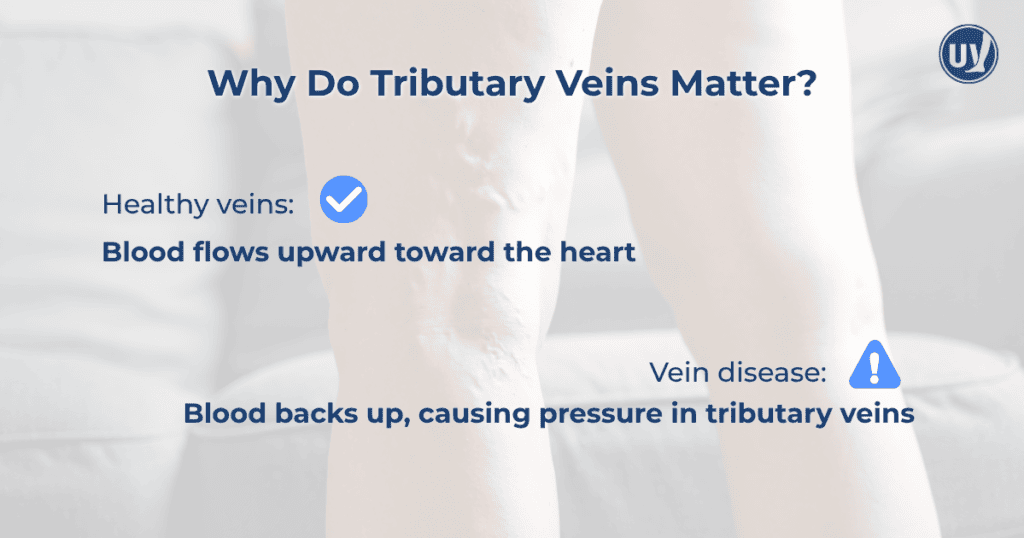
When an axial vein like the GSV experiences valve failure, the blood has nowhere to go but backward. This excess volume and pressure inevitably spill over into the smaller tributary veins.
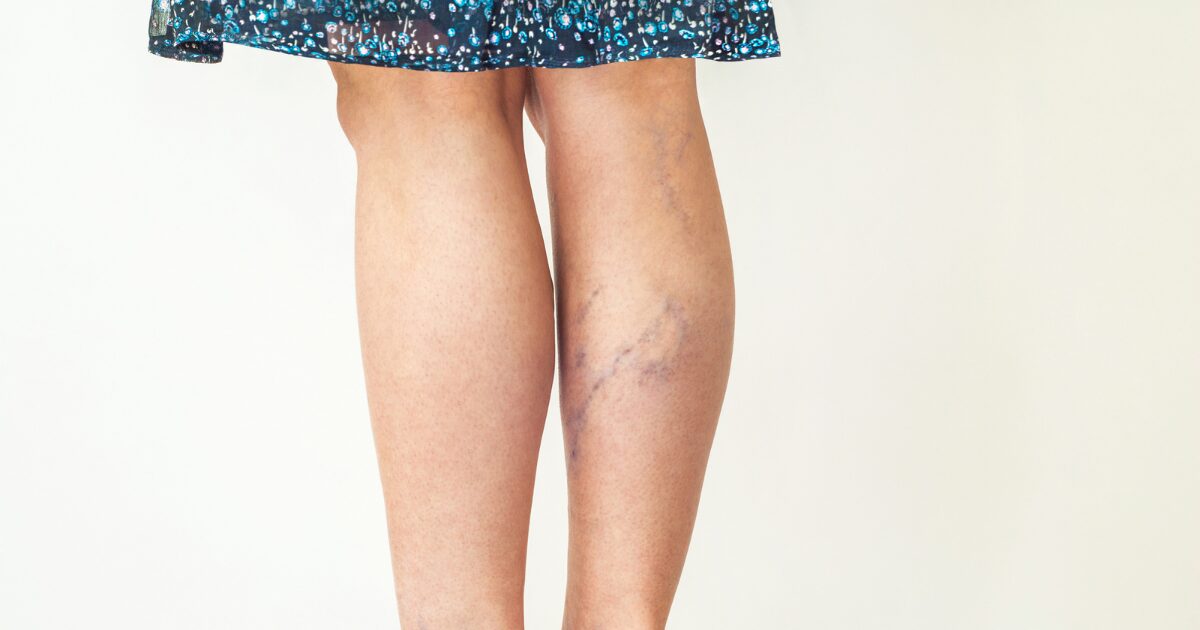
Because tributary veins are structurally thinner and closer to the surface, they cannot handle this sudden influx of high-pressure blood. This explains exactly how branch veins become varicose. The walls of the tributaries stretch, balloon outward, and twist, resulting in the thick, rope-like blue and purple cords you see bulging under the skin.
Recognizing the Warning Signs
Long before a massive varicose vein appears, your body will likely send you warning signals. Common great saphenous vein reflux symptoms include:
- A persistent, dull ache or throbbing in the legs, especially after long days.
- A feeling of unusual heaviness or fatigue in the calves and thighs.
- Swelling (edema) around the ankles.
- Night cramps or restless legs.
As the condition progresses into the branches, the signs of superficial vein disease become much more visible. You may notice tiny, web-like spider veins, darkening or discoloration of the skin near the ankles, and, of course, the signature bulging of the tributary veins themselves.
Why You Shouldn’t Ignore Them: Bulging Branch Vein Risks
It is a common misconception that varicose tributary veins are purely a cosmetic issue. While they can certainly make people feel self-conscious, ignoring them can lead to significant medical issues.
Some of the primary bulging branch vein risks include localized pain, spontaneous bleeding (since the veins are so close to the skin and under high pressure), and superficial thrombophlebitis, a painful condition where blood clots form just under the skin’s surface.
If the underlying high pressure is left unchecked for years, you may face severe complications of chronic venous reflux. These complications can include venous eczema (itchy, flaky, inflamed skin), lipodermatosclerosis (thickening and hardening of the skin), and ultimately, venous stasis ulcers. These open sores, usually located near the inner ankle, are notoriously difficult to heal and severely impact a person’s quality of life.
Practical Tips for Keeping Your Veins Healthy
While you cannot completely change your genetics, you can adopt habits to support both your deep and superficial venous systems:
- Keep Moving: Regular walking, cycling, or swimming engages your calf muscles, which act as a powerful pump to push blood back up to your heart.
- Elevate Your Legs: If your legs feel heavy at the end of the day, elevate them above the level of your heart for 15-20 minutes to give your venous valves a break.
- Wear Compression: Medical-grade compression stockings provide graduated pressure that helps keep the superficial and tributary veins compressed, preventing blood from pooling.
- Take Frequent Breaks: If you have a job that requires prolonged sitting or standing, make a point to shift your weight, do calf raises, or take a short walking break every hour.
Frequently Asked Questions
Tributary veins are smaller veins that branch off larger veins in the legs. They help collect blood from the skin and surrounding tissues and carry it back into the deeper venous system. When these veins become enlarged or damaged, they can contribute to visible varicose veins and other symptoms of vein disease.
Yes. When blood begins to flow backward due to damaged vein valves, known as venous reflux, pressure can build in the tributary veins. Over time, these veins may become enlarged, twisted, or more visible beneath the skin, leading to varicose veins.
Treatment depends on the size of the veins, the underlying cause, and whether they are causing symptoms. A vascular specialist can perform an ultrasound evaluation to determine if treatment is needed and recommend options to improve circulation and relieve discomfort.
Take the Next Step Toward Healthier Legs
Visible veins, leg heaviness, aching, or swelling are not something you have to simply accept. These symptoms may be signs of an underlying vein condition that can often be diagnosed and treated with minimally invasive options.
By understanding how tributary veins contribute to your overall leg health, you can take proactive steps toward improving comfort, circulation, and confidence in your legs. If you are experiencing symptoms of vein disease, book a free vein screening with a vein specialist can help you understand the cause and find the right path forward.