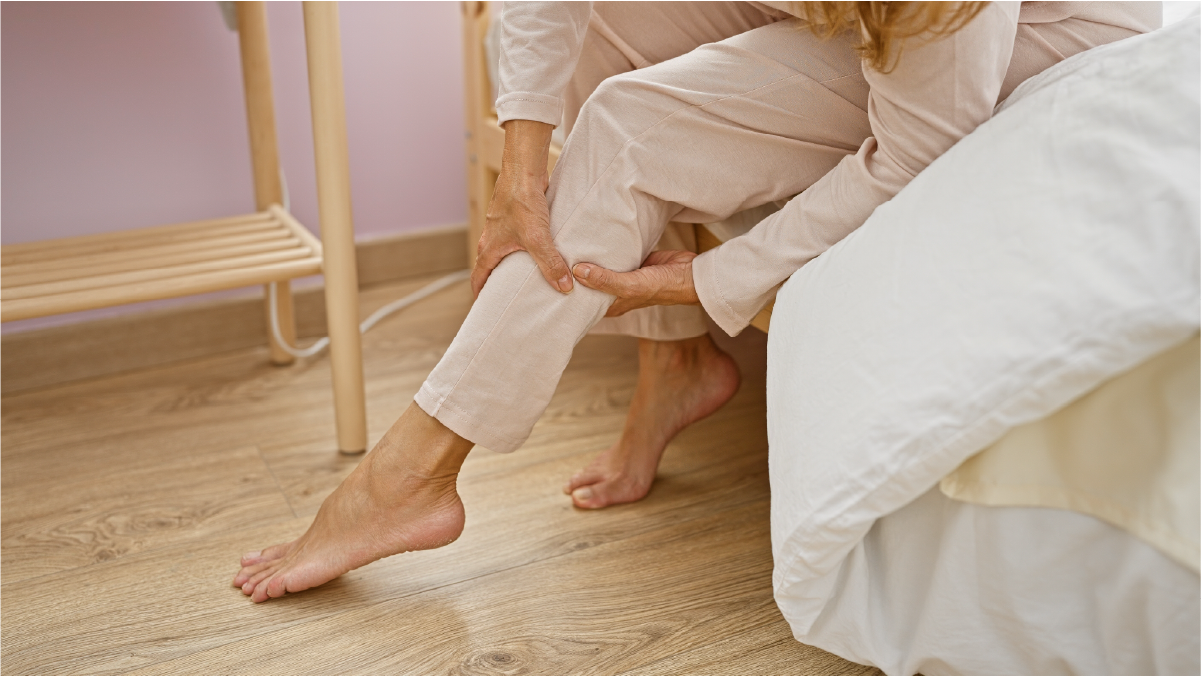
If you experience discomfort in your legs, especially at night, it can be difficult to tell what’s causing it. Sensations like restlessness, aching, or the urge to move your legs are often associated with restless leg syndrome, but they can also be linked to circulation problems such as vein disease.
Because these symptoms can overlap, understanding the differences is important. Identifying the underlying cause can help guide the right next steps and ensure you’re getting the most appropriate care for your symptoms.
What Is Restless Legs Syndrome?
Restless legs syndrome (RLS) is a neurological condition that causes an uncontrollable urge to move the legs, often accompanied by uncomfortable sensations. These sensations are commonly described as tingling, crawling, pulling, or itching feelings beneath the skin.
Symptoms of RLS typically occur during periods of rest, such as sitting or lying down, and are often more noticeable in the evening or at night. Movements such as walking or stretching usually provide temporary relief. While the exact cause is not always known, RLS has been linked to factors such as genetics, iron deficiency, and certain medical conditions.
What Is Vein Disease?
Vein disease, including conditions such as chronic venous insufficiency, occurs when the veins have difficulty returning blood back to the heart. This can lead to blood pooling in the legs, increasing pressure within the veins and causing a range of symptoms.
Common symptoms of vein disease include leg heaviness, aching, swelling, throbbing, and visible veins. Some patients may also experience burning, itching, or discomfort that worsens after long periods of standing or sitting. Unlike RLS, these symptoms are often related to circulation and may build throughout the day.
Key Differences
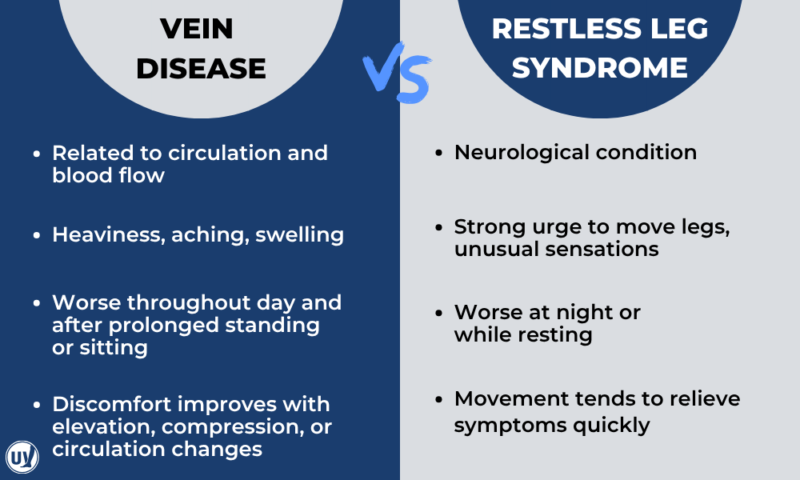
| Vein Disease | Restless Leg Syndrome |
| Related to circulation and blood flow | Neurological condition |
| Heaviness, aching, swelling | Strong urge to move legs, unusual sensations |
| Worse throughout the day and after prolonged standing or sitting | Worse at night or while resting |
| Discomfort improves with elevation, compression, or circulation changes | Movement tends to relieve symptoms quickly |
When Symptoms Overlap
Although restless legs syndrome and vein disease are different conditions, their symptoms can sometimes feel similar. Both may cause discomfort in the legs, especially at night, and both can interfere with sleep or daily comfort.
In some cases, patients who believe they have RLS may actually have an underlying circulation issue contributing to their symptoms. This is why it’s important to look at the full pattern of symptoms, including when they occur and what seems to improve or worsen them.
When to See a Vein Specialist
If your symptoms are persistent, worsening, or affecting your quality of life, it may be time to seek evaluation. A professional assessment can help determine whether your symptoms are related to vein disease, a neurological condition, or another underlying cause.
You may want to consider evaluation if:
- Your symptoms occur regularly or become more intense over time
- You experience swelling, visible veins, or skin changes
- Discomfort interferes with sleep or daily activities
- Symptoms do not improve with simple lifestyle changes
A vein screening can help assess circulation and identify whether vein disease may be contributing to your symptoms.
Frequently Asked Questions
Vein disease does not cause restless legs syndrome directly, but it can lead to similar symptoms such as discomfort, aching, or restlessness in the legs.
Yes, both conditions can feel worse at night, although for different reasons. RLS is typically triggered by rest, while vein disease symptoms may become more noticeable after a full day of activity.
RLS is usually diagnosed based on symptoms and medical history. There is no single test, but a healthcare provider may evaluate contributing factors such as iron levels or underlying conditions.
Leg discomfort at night can be caused by several factors, including restless legs syndrome, vein disease, muscle fatigue, or circulation issues.
You should consider seeing a specialist if your symptoms are persistent, worsening, or affecting your sleep or daily activities.
Find Answers for Your Symptoms
Leg discomfort at night or during rest can have multiple causes, and understanding the difference is key to finding the right treatment. While restless legs syndrome and vein disease may share some similarities, they require different approaches to care.
At United Vein & Vascular Centers (UVVC), our specialists provide comprehensive vein evaluations to help determine whether your symptoms are related to circulation.
If your symptoms are ongoing, a vein screening can help identify the underlying cause and provide a clearer path forward. Understanding what’s contributing to your discomfort is the first step toward finding the right solution.
With the right evaluation, you can take meaningful steps toward lasting relief, improved comfort, and better rest.