Contents
- Why Does My Leg Hurt When I Lie Down?
- What Causes Leg Pain When Lying Down?
- Why Does My Left Leg Hurt When I Lie Down?
- Can Sciatica Cause Leg Pain When Lying Down?
- How Can I Tell Sciatica From Vein Pain?
- Why Do I Get Leg Cramps When Lying Down?
- Can Poor Circulation Cause Leg Pain at Night?
- What Does Vein-Related Leg Pain Feel Like?
- Leg Cramps vs. Sciatica vs. Vein Pain
- Can Varicose Veins Make Your Legs Hurt at Night?
- How Do Doctors Check for Vein Disease?
- What Can Help Leg Pain When Lying Down?
- When Should I Worry About Leg Pain at Night?
- Could Your Leg Pain Be Caused by Vein Disease?
- Frequently Asked Questions
Leg pain can be frustrating enough during the day, but when it starts interfering with your sleep, it can be even more concerning. Whether you’re experiencing aching, cramping, throbbing, or sharp pain when lying down, there are several possible explanations, including muscle cramps, sciatica, nerve problems, and poor circulation.
Key Takeaway: In some cases, nighttime leg pain may also be related to underlying vein disease, especially when accompanied by symptoms such as swelling, heaviness, or visible veins. Understanding what may be causing your discomfort can help you recognize when it’s time to seek medical evaluation.
Why Does My Leg Hurt When I Lie Down?
Your leg may hurt when you lie down because of a problem with your muscles, nerves, joints, arteries, or veins.
Some types of pain also become more noticeable when you are resting. During the day, you may be moving and focused on other things. At night, with fewer distractions, discomfort can be harder to ignore.
Your sleeping position may also put pressure on certain muscles or nerves, making some types of leg pain worse.
If your pain happens often, understanding the cause is an important first step toward finding the right way to manage it.

What Causes Leg Pain When Lying Down?
There are several possible causes of leg pain when lying down.
Leg Cramps
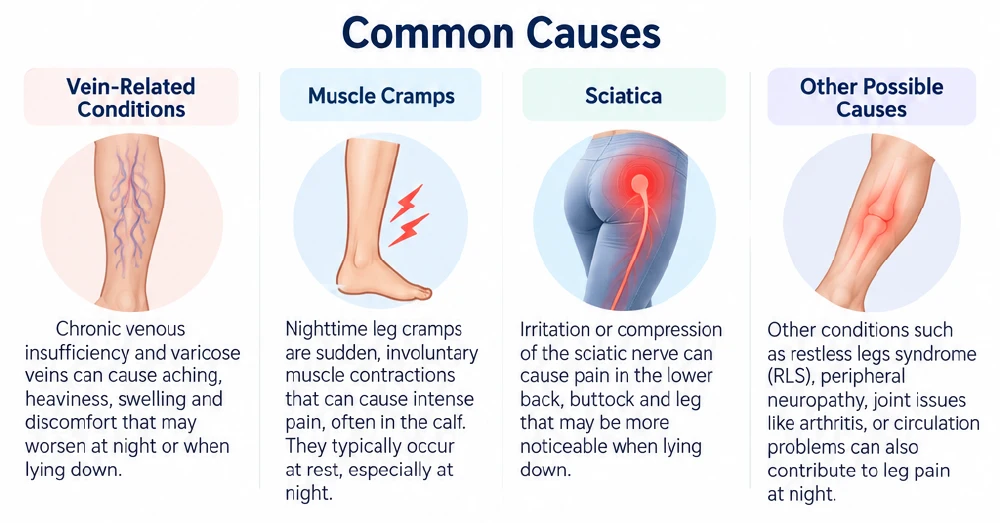
Leg cramps are sudden, painful muscle contractions that commonly affect the calf and often occur at night.
A cramp may last for a few seconds or several minutes, and the muscle may remain sore after the cramp stops.
Several factors can contribute to leg cramps, including tired muscles, dehydration, certain medications, and some health conditions.
Sciatica
Sciatica occurs when the sciatic nerve becomes irritated or compressed. This large nerve runs from the lower back into the legs.
Sciatica may cause sharp, burning, or shooting pain, along with tingling or numbness. Some people notice that their symptoms feel worse when lying down because certain sleeping positions can place more pressure on the irritated nerve.
Chronic Venous Insufficiency
Chronic venous insufficiency (CVI) is a type of vein disease that occurs when the valves in the leg veins do not work as they should.
Healthy vein valves help move blood from your legs back toward your heart. When these valves become weak or damaged, blood can collect in the legs.
This may cause symptoms such as:
- Aching
- Leg heaviness
- Swelling
- Throbbing
- Cramping
- Itching or burning
- Tired legs
- Visible varicose veins
You do not need to have visible varicose veins to have vein disease.
Peripheral Artery Disease
Peripheral artery disease (PAD) occurs when narrowed arteries reduce blood flow to the legs.
PAD commonly causes leg pain during walking or activity. In more serious cases, it can also cause pain while you are resting.
PAD is different from vein disease, even though both affect circulation. A healthcare provider can help determine which type of circulation problem may be contributing to your symptoms.
Restless Legs Syndrome
Restless legs syndrome causes an uncomfortable urge to move your legs.
Symptoms commonly begin while sitting or lying down and are also more noticeable in the evening or at night.
Moving your legs may provide short-term relief.
Nerve Problems
Nerve problems can cause burning, tingling, numbness, or pain in the legs and feet.
Peripheral neuropathy is one example. These symptoms may become easier to notice at night when you’re resting.
Muscle and Joint Problems
Problems with your muscles, hips, knees, joints, or lower back can also contribute to leg pain.
Depending on the cause, your sleeping position may make the discomfort feel better or worse.
Why Does My Left Leg Hurt When I Lie Down?
Pain that affects only your left leg can have many causes. The same is true when pain only occurs in your right leg.
One-sided leg pain may come from a muscle, joint, nerve, or circulation problem, and the other symptoms you experience can provide useful clues.
For example, pain that starts in your lower back or buttock and travels down your leg may be related to sciatica. Tingling or numbness may also occur.
Aching accompanied by swelling, heaviness, throbbing, or visible veins may be associated with a vein problem.
Sudden pain with swelling, warmth, or redness in one leg needs prompt medical attention because these can be signs of a blood clot.
Can Sciatica Cause Leg Pain When Lying Down?
Yes. Sciatica can cause leg pain while you are lying down.
The sciatic nerve runs from the lower back into the legs. When pressure or irritation affects this nerve, pain can travel into the leg.
Sciatica symptoms may include:
- Sharp or shooting pain
- Burning pain
- Tingling
- Numbness
- Pain that starts in the back or buttock and travels down the leg
You may also notice that your symptoms change when you change positions.
How Can I Tell Sciatica From Vein Pain?
Sciatica and vein disease can both cause leg pain, but the symptoms often feel different.
Sciatica often causes shooting, burning, or electric-like pain. The discomfort may begin in the lower back or buttock and travel down the leg. Tingling or numbness can also occur.
Vein-related pain is more often described as aching, throbbing, heaviness, or cramping. Other symptoms may include swelling, tired legs, itching, skin changes, or varicose veins.
However, symptoms can overlap and it is possible to have more than one condition at the same time. A medical evaluation can help determine what may be causing your leg pain.
Why Do I Get Leg Cramps When Lying Down?
Leg cramps are common at night and happen when a muscle suddenly tightens and does not relax right away.
Nighttime cramps most often affect the calf, although they can also occur in the feet or thighs.
Tired muscles, dehydration, certain medications, and some health conditions may all play a role. Cramping can also occur in people with vein disease.
If you frequently experience leg cramps along with swelling, aching, heaviness, or visible veins, talk with a healthcare provider. A vein screening can help determine whether poor vein function may be contributing to your symptoms.
Can Poor Circulation Cause Leg Pain at Night?
Yes. Circulation problems can contribute to leg pain, including discomfort that occurs at night.
However, the phrase “poor circulation” can refer to problems involving either your arteries or your veins.
Your arteries carry blood from your heart to your legs. Peripheral artery disease can reduce this blood flow.
Your veins carry blood from your legs back toward your heart. Chronic venous insufficiency makes it more difficult for blood to move efficiently out of the legs.
Because artery disease and vein disease are different and require different types of care, identifying the cause of your leg pain is important.
What Does Vein-Related Leg Pain Feel Like?
Vein disease does not feel the same for everyone.
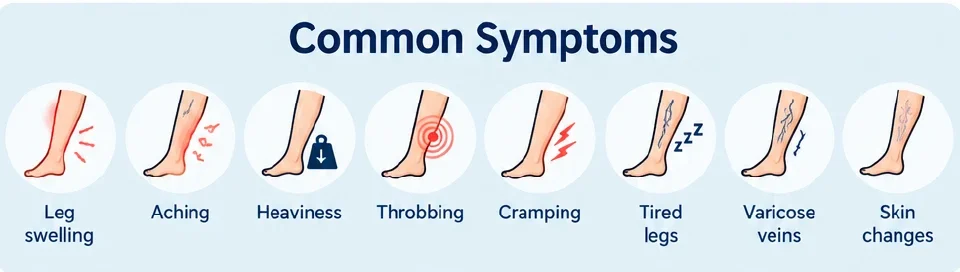
Common symptoms may include:
- Aching
- Heaviness
- Throbbing
- Cramping
- Swelling
- Tired legs
- Burning or itching
- Restless legs
- Visible varicose veins
- Skin color changes around the lower legs or ankles
Symptoms may become more noticeable after sitting or standing for long periods.
Some people with vein disease do not have visible varicose veins. An ultrasound can help evaluate how well the veins in your legs are working.
Leg Cramps vs. Sciatica vs. Vein Pain
The way your leg pain feels may offer clues about what could be causing it.
| What You Feel | Possible Cause |
| Sudden, painful muscle tightening | Leg cramp |
| Shooting pain from the back or buttock into the leg | Sciatica or another nerve problem |
| Burning, tingling, or numbness | Nerve problem |
| Aching, heaviness, swelling, or throbbing | Vein disease |
| Strong urge to move your legs while resting | Restless legs syndrome |
| Pain at rest caused by very low blood flow | Peripheral artery disease |
| Sudden one-sided pain with swelling, warmth, or redness | Possible blood clot |
Symptoms alone cannot tell you exactly what is causing the problem. A healthcare provider may need to examine your legs and perform testing to determine the cause.
Can Varicose Veins Make Your Legs Hurt at Night?
Yes. Varicose veins can cause leg pain and other symptoms.
Varicose veins develop when the valves inside a vein become weak or damaged. Blood can then flow backward and collect inside the vein.
This can lead to:
- Aching
- Heaviness
- Swelling
- Throbbing
- Cramping
- Itching
- Tired legs
Some people notice these symptoms more after sitting or standing for a long time.
If you have leg pain along with varicose veins or other signs of vein disease, a vein screening can help determine whether your symptoms may be related to poor vein function.
How Do Doctors Check for Vein Disease?
A vein specialist will first ask about your symptoms and health history.
Your provider may also examine your legs for swelling, varicose veins, skin changes, and other possible signs of vein disease.
A duplex ultrasound may be used to evaluate the veins in your legs. This test uses sound waves to create images of the veins and blood flow.
The ultrasound can show whether blood is moving in the right direction and whether the valves inside your veins are working as they should.
What Can Help Leg Pain When Lying Down?
The best way to relieve leg pain depends on what is causing it.
For some people, gentle stretching and regular movement may help. Staying hydrated may also be useful for some types of muscle cramps.
When symptoms are related to vein disease, a provider may recommend measures such as walking, elevating the legs, or wearing compression stockings.
Compression stockings are not right for everyone. Talk with a healthcare provider before using them if you have concerns about your circulation.
If your leg pain keeps returning, identifying and addressing the underlying cause is more important than simply trying to manage the discomfort.
When Should I Worry About Leg Pain at Night?
Leg pain should be checked if it keeps happening, gets worse, or regularly wakes you from sleep.
Some symptoms require more urgent medical attention.
Seek prompt medical care if you experience:
- Sudden swelling in one leg
- Redness or warmth in one leg
- Sudden or severe leg pain
- Chest pain
- Shortness of breath
These symptoms can sometimes occur with a blood clot or another serious health problem.
Could Your Leg Pain Be Caused by Vein Disease?
Leg pain when lying down does not necessarily mean that you have vein disease. Muscle cramps, sciatica, nerve problems, artery disease, and joint problems can also cause nighttime leg pain.
However, vein disease may be worth checking if your pain happens along with symptoms such as:
- Leg swelling
- Aching
- Heaviness
- Throbbing
- Cramping
- Tired legs
- Varicose veins
- Skin changes
At United Vein & Vascular Centers, our specialists can evaluate your circulation and look for signs of vein disease. If vein disease is contributing to your symptoms, your care team can discuss the treatment options that may be appropriate for you.
Request a vein screening with United Vein & Vascular Centers to find out whether vein disease could be contributing to your leg pain.
Frequently Asked Questions
Leg pain when lying down can have many causes. Muscle cramps, sciatica, nerve problems, joint problems, and circulation problems can all cause leg pain at night.
Pain in only your left leg may come from a muscle, nerve, joint, artery, or vein problem. Other symptoms, such as swelling, tingling, numbness, or heaviness, can help your healthcare provider find the cause.
Some types of leg pain become easier to notice when you are resting. Nighttime leg cramps and restless legs syndrome also often happen at night. Your sleeping position may make nerve, muscle, or joint pain worse.
Yes. Problems with the arteries or veins can cause leg pain. Because artery disease and vein disease are different, a healthcare provider may need to check your circulation to find the cause.
Circulation problems can be linked to leg discomfort and cramping. However, leg cramps have many possible causes. Frequent cramps with swelling, aching, heaviness, or varicose veins may be a reason to have your veins checked.
Leg cramping can occur in people with chronic venous insufficiency. Other symptoms may include aching, heaviness, swelling, throbbing, or varicose veins. Leg cramps alone do not mean that you have vein disease.
Sciatica often causes shooting, burning, tingling, or numbness. The pain may travel from your lower back or buttock into your leg. Vein problems are more likely to cause aching, heaviness, swelling, throbbing, or cramping. A healthcare provider can help find the cause if your symptoms keep happening.