

Itchy Legs
Itchy legs, medically known as pruritus, can feel mildly irritated, intensely uncomfortable, or difficult to ignore, with symptoms affecting the thighs, calves, ankles, or feet. The itching may come and go, worsen later in the day, or occur with dryness, swelling, discoloration, or visible veins. When itching persists, regularly returns, disturbs sleep, or leads to scratching and skin damage, an evaluation can help determine whether a skin condition, vein problem, or another health issue may be contributing.
Symptoms That May Occur Along with Itchy Legs
- Dry, flaky, scaly, red, or irritated skin
- Burning, tenderness, rash, or soreness
- Swelling, aching, heaviness, or skin discoloration
- Nighttime itching that disrupts sleep
- Worsening irritation during walking, standing, or other daily activities
- Itching that is concentrated around the ankles or lower legs
Persistent itching around the ankles or lower legs may be more than a skin concern. If symptoms keep returning or occur alongside swelling, aching, heaviness, or visible veins, request a vein screening at United Vein & Vascular Centers today.
Request a Screening
What Causes Itchy Legs?
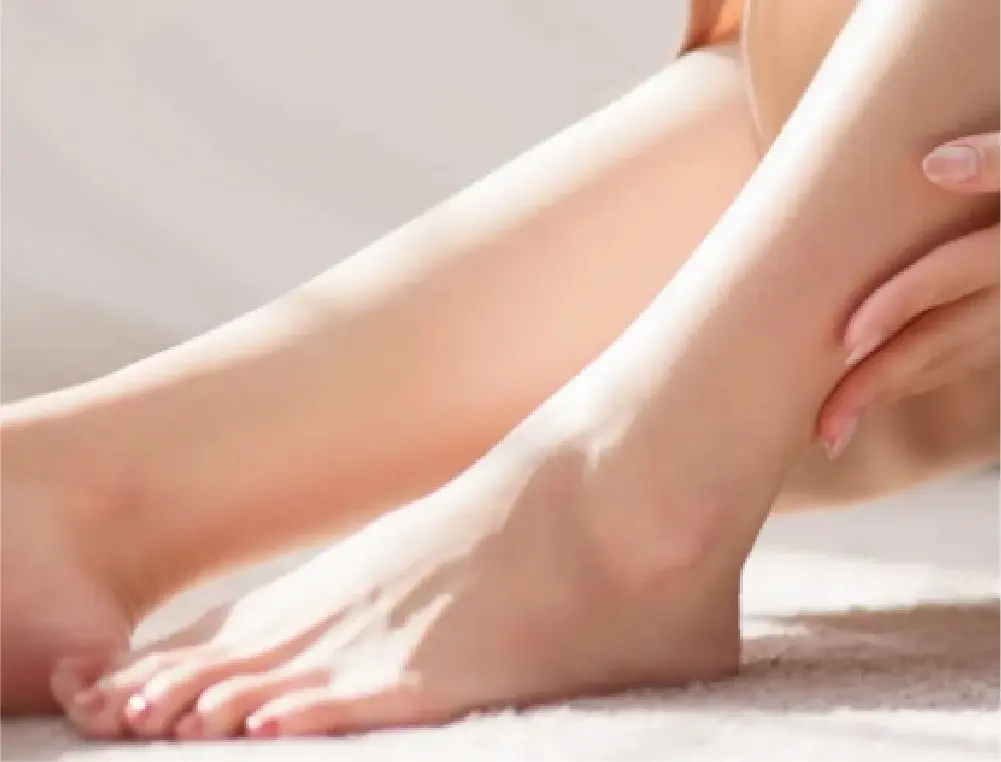
When vein disease affects circulation in the lower legs, ongoing pressure and inflammation may contribute to dry, itchy, discolored skin, particularly around the ankles. This condition is known as venous stasis dermatitis and may occur alongside other symptoms of chronic venous insufficiency. Persistent itching, medically known as pruritus, can sometimes develop when poor circulation and inflammation affect the skin and underlying tissues.
Does Your Itching Sound More Like
a Skin Condition or a Vein Problem?
Skin Irritation May Be More Likely If You Notice:
- Dry, flaky, or irritated skin
- New soaps, lotions, detergents, or fabrics triggering symptoms
- Rashes, bumps, redness, or blisters
- Itching that improves with moisturizers or skin care products
Vein Disease May Be More Likely If You Notice:
- Itching around the ankles or lower legs
- Swelling, heaviness, aching, or leg fatigue
- Varicose veins or spider veins
- Darkening, thickening, or discoloration of the skin
- Symptoms that worsen later in the day or after prolonged standing
When Should You Seek Care for Itchy Legs?
Occasional itching caused by dry skin or a temporary irritation often improves with self-care. However, persistent, worsening, or unexplained itching may indicate an underlying skin condition, poor circulation, nerve disorder, infection, or another medical concern that should be evaluated by a healthcare provider.
Consider scheduling an evaluation if you experience:
- Itching that lasts for several weeks or keeps returning
- Symptoms that interfere with sleep, daily activities, or quality of life
- Persistent scratching that causes skin damage, bleeding, or sores
- Swelling, aching, heaviness, or visible veins in the legs
- Skin discoloration, thickening, scaling, or irritation around the ankles or lower legs
- Symptoms that worsen after prolonged sitting or standing
- Little or no improvement despite moisturizing or avoiding known irritants
- Unexplained itching without an obvious cause
Urgent Symptoms That Require Prompt Medical Attention
While itchy legs are not usually an emergency, certain symptoms may indicate a serious allergic reaction, infection, blood clot, or other condition requiring immediate care.
Seek urgent or emergency medical attention if you experience:
- Itching or hives accompanied by difficulty breathing, throat tightness, dizziness, or swelling of the face, lips, or tongue
- Rapidly spreading redness, warmth, swelling, severe pain, drainage, open wounds, or fever
- Sudden swelling in one leg accompanied by pain, tenderness, warmth, redness, or discoloration
- Bleeding from a varicose vein
- A rapidly worsening skin ulcer or open sore
Call 911 immediately for difficulty breathing, loss of consciousness, or other signs of a severe allergic reaction.
How Is Persistent Leg Itching Diagnosed?
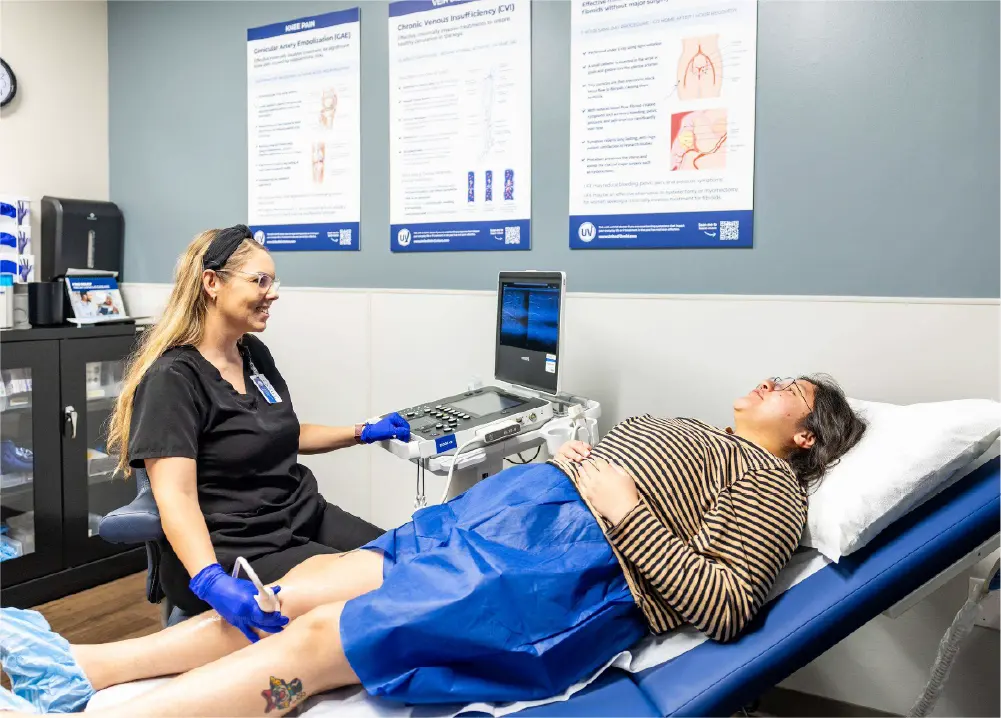
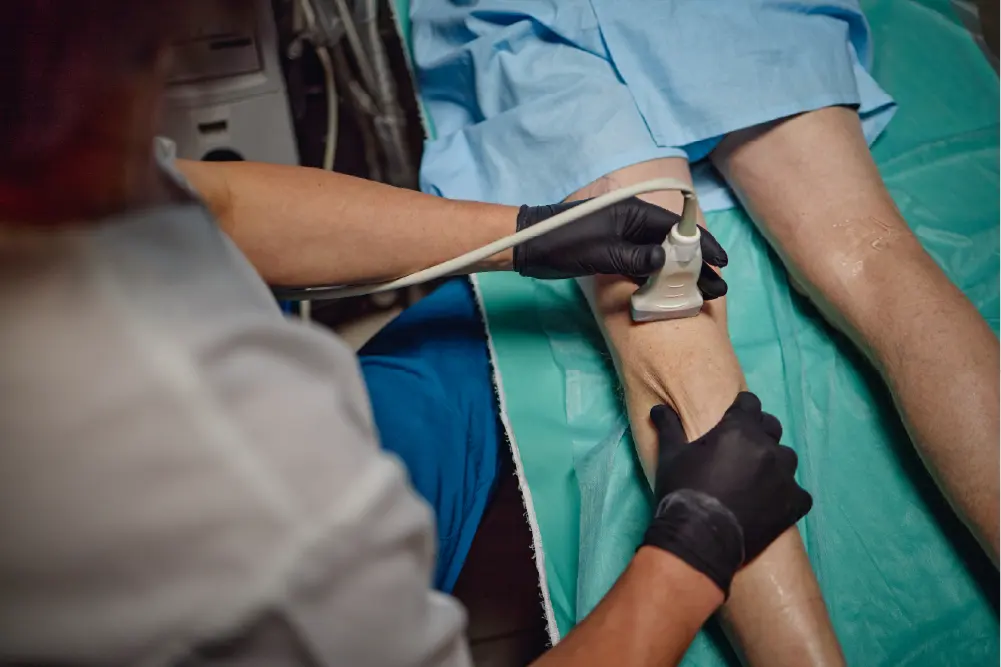
Diagnosing persistent leg itching begins with examining the skin and understanding when and where the symptoms occur. A provider may ask about new skin products, medications, allergies, existing health conditions, and whether the itching occurs with swelling, aching, heaviness, or visible veins. The examination may assess dryness, rashes, redness, tenderness, discoloration, skin thickening, wounds, and other changes. If a vein-related cause is suspected, duplex ultrasound may be recommended to evaluate blood flow and vein valve function.
Evaluation may include:
- A review of symptoms, medical history, medications, allergies, skin products, and possible irritants
- A physical examination of the affected skin, legs, ankles, feet, and visible veins
- Duplex ultrasound when a vein-related cause is suspected, with skin testing, bloodwork, or other evaluation when appropriate
The findings can help determine whether vein care, treatment for a skin condition, or another type of medical evaluation is needed.
Treatment Options for Leg Itching Due to Poor Circulation
Treatment for itchy legs depends on what is causing the irritation. Dry skin, eczema, an allergic reaction, or an infection may require skin-directed care from a primary care provider or dermatologist. When vein disease is contributing, recommendations are individualized based on symptoms, medical history, ultrasound findings, vein anatomy, and the condition of the skin. A care plan may include compression therapy, lifestyle recommendations, skin care, or a minimally invasive vein procedure when appropriate.
Vein-related treatment options may include:
- Compression therapy: Properly fitted compression stockings may help manage cramping and other vein-related symptoms while supporting circulation
- Lifestyle recommendations: Walking, leg elevation, and regular breaks from prolonged sitting or standing may help reduce pressure in the lower legs
- Radiofrequency ablation (RFA): Uses controlled heat to close an affected vein so blood can reroute through healthier veins nearby
- VenaSeal™: Uses a medical adhesive to close an affected vein without heat
- Varithena®: Uses an injectable microfoam to close certain affected veins that are not circulating blood properly
- Ultrasound-guided sclerotherapy: Uses ultrasound imaging to guide a medical solution or foam into an affected vein, causing it to close
Addressing an underlying vein problem may help reduce itching and related leg symptoms, but individual results vary.
Related Articles