


Contents
- Q: Why do my legs itch after walking?
- Q: Can vein disease cause itchy legs after walking?
- Q: What is runner’s itch, and how is it different from itching due to poor circulation?
- Q: How does venous insufficiency cause itchy skin on the lower legs?
- Q: What other symptoms can occur with venous insufficiency itching?
- Q: Can you have poor circulation and itching without visible varicose veins?
- Q: When should itchy legs after walking be evaluated?
- Q: How is the cause of persistent leg itching diagnosed?
- Q: How can I stop my legs from itching after walking?
- Q: How can UVVC help if vein disease is causing itchy legs?
- Frequently Asked Questions
- When Itchy Legs Keep Interrupting Your Walk
Welcome back to Ask the Doc, where physicians from United Vein & Vascular Centers answer the questions that patients often ask about changes in their legs, circulation, and vascular health. Each installment takes a closer look at what a symptom may mean, the details that can help narrow down its possible causes, and when a vein screening or vascular evaluation may be an appropriate next step.
In this installment, Dr. Desiree Clarke explains why your legs may itch after walking, how temporary exercise-induced itching differs from skin changes due to poor circulation, and when a vein screening may be appropriate.
The short answer: Yes, vein disease can cause itchy legs, but itching that occurs after walking is not automatically a sign of poor circulation. Temporary exercise-related itching, dry skin, heat, sweat, clothing friction, allergies, and skin conditions are all possible causes. Chronic venous insufficiency becomes more likely to contribute when itching repeatedly affects the lower legs or ankles and occurs with swelling, heaviness, visible veins, dryness, inflammation, or skin discoloration.
Q: Why do my legs itch after walking?
Dr. Clarke:
Walking changes several things at once. Your heart rate increases, more blood moves toward the working muscles, your body temperature rises, and you may begin to sweat. Clothing and footwear also move against the skin with every step. Any of these changes can make the legs itch during a walk or shortly afterward.
Possible causes include:
- Increased blood flow and widening of blood vessels during activity
- Heat and sweating
- Dry or sensitive skin
- Friction from leggings, socks, seams, or other clothing
- Irritation from laundry products, lotions, or fabrics
- Returning to exercise after a period of inactivity
- Hives or another exercise-triggered skin reaction
- Eczema, contact dermatitis, or another skin condition
- Nerve-related sensations that feel like itching, prickling, or crawling
- Skin inflammation associated with chronic venous insufficiency
The timing provides an important clue. Itching that appears only during brisk activity and fades soon afterward may follow a temporary exercise-related pattern. Itching that continues between walks, repeatedly affects the same area, or occurs with other changes in the lower legs deserves a closer look.
Q: Can vein disease cause itchy legs after walking?
Dr. Clarke:
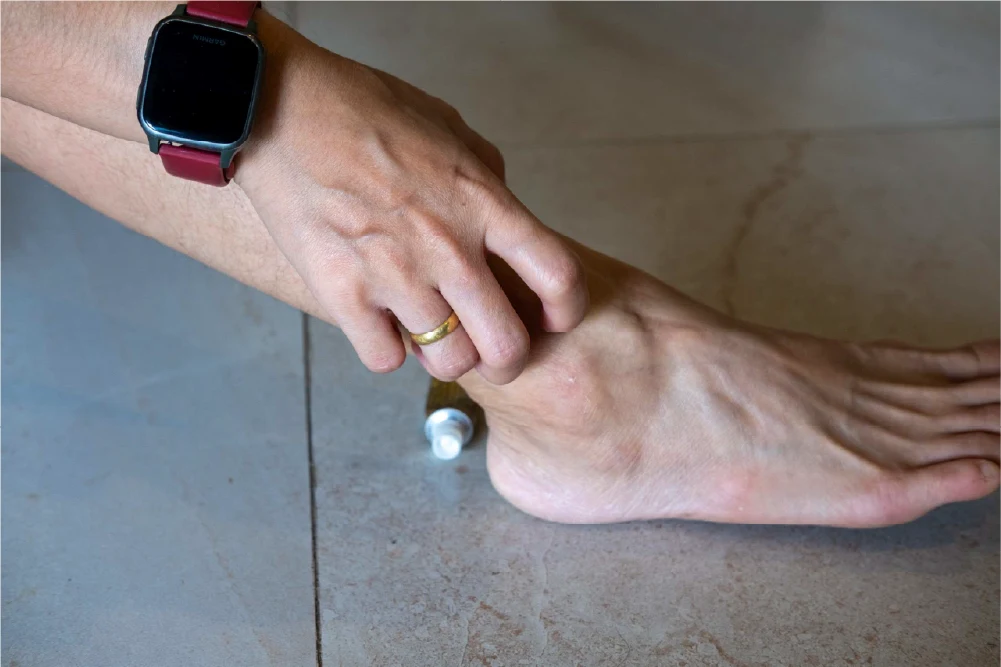
Yes. Vein disease can contribute to itching, especially around the ankles and lower legs. However, walking itself does not necessarily cause the underlying vein problem.
Healthy leg veins contain one-way valves that help move blood upward toward the heart. The calf muscles assist this process by squeezing the veins as a person walks. When vein valves become weakened or damaged, some blood can flow backward and collect in the lower legs. This condition is known as chronic venous insufficiency or venous reflux.
Ongoing pressure inside affected veins may allow fluid and inflammatory substances to move into the surrounding tissue. Over time, this can affect the skin, contributing to dryness, irritation, itching, scaling, or discoloration.
Walking may make existing skin irritation more noticeable because the legs become warmer, clothing rubs against sensitive areas, or increased movement draws attention to a sensation that was already present. The more useful question is not simply whether the itching follows a walk, but whether it fits a broader pattern of vein-related symptoms.
Q: What is runner’s itch, and how is it different from itching due to poor circulation?
Dr. Clarke:
“Runner’s itch” is an informal term for itching that develops during or after exercise. Despite the name, it can happen during running, brisk walking, hiking, or another activity that raises the heart rate and body temperature.
The sensation may be related to increased blood flow, the widening of small blood vessels, stimulation of nearby nerves, heat, sweating, or histamine released during activity. It is often reported by people who are returning to exercise after a break or increasing their activity level.
Runner’s itch generally begins during activity, affects both legs, and improves as the body cools down. It does not usually cause lasting swelling, ankle discoloration, or chronic changes in skin texture.
Vein-related itching tends to follow a different pattern. It may remain present outside of exercise, become worse later in the day, or affect areas where the skin is already dry, inflamed, or discolored. It may also occur with heaviness, aching, swelling, or visible veins.
| Clue | Temporary Exercise-Related Itching | Possible Vein-Related Itching |
| Timing | Begins during or shortly after activity | May continue between walks or worsen later in the day |
| Location | May affect both thighs, calves, or larger areas | Often concentrated around the ankles or lower legs |
| Skin appearance | Skin may look normal or temporarily flushed | Dryness, scaling, redness, inflammation, or brownish discoloration may develop |
| Other symptoms | Usually improves as the body cools down | May occur with swelling, heaviness, aching, cramping, or visible veins |
| Pattern | Often appears after restarting or increasing exercise | May become more frequent or persistent over time |
These patterns cannot diagnose the cause by themselves. Exercise-related itching, skin conditions, allergic reactions, nerve symptoms, and vein disease can overlap.
Q: How does venous insufficiency cause itchy skin on the lower legs?
Dr. Clarke:
When vein valves are not working effectively, blood can collect in the lower legs instead of moving efficiently back toward the heart. This increases pressure inside the veins and surrounding tissue.
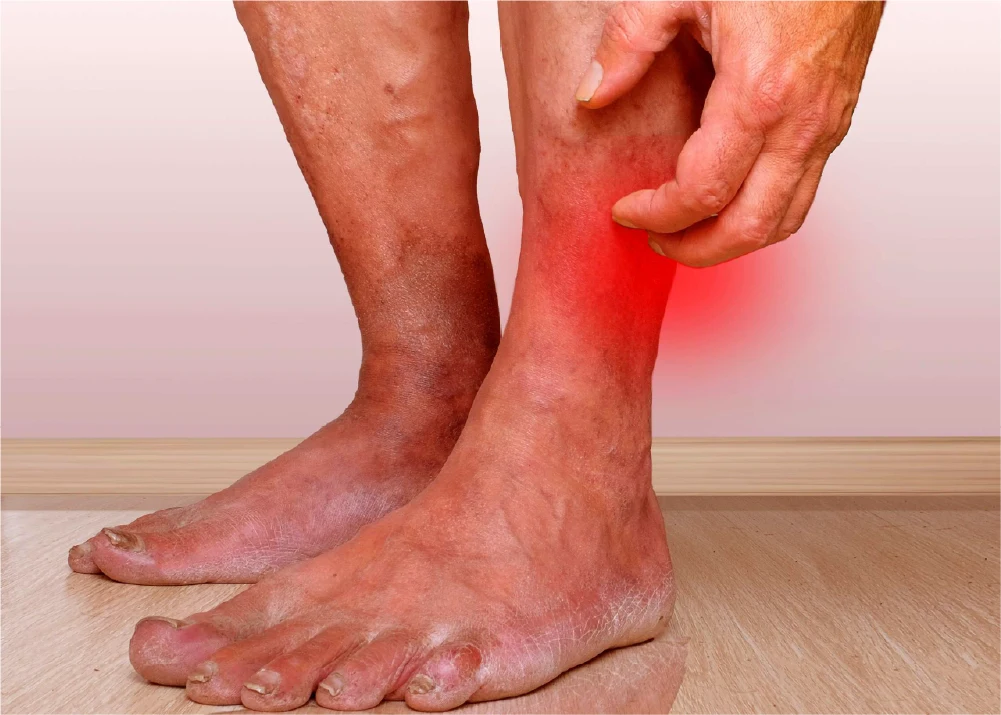
Persistent venous pressure can contribute to fluid buildup and inflammation beneath the skin. The skin may gradually become dry, irritated, scaly, or itchy. This inflammatory condition is commonly called venous stasis dermatitis or venous eczema.
Stasis dermatitis often develops near the ankles before spreading higher on the lower legs. Depending on the severity and duration of the underlying vein problem, patients may notice:
- Dry or flaky skin
- Persistent itching
- Redness or inflammation
- Brown, reddish, or purplish discoloration
- Thickened, firm, or leathery skin
- Swelling around the ankles
- Areas that become irritated or damaged from scratching
- Open sores in more advanced cases
Not everyone with venous insufficiency develops stasis dermatitis, and itching alone cannot confirm that the veins are responsible. The location of the itching and the condition of the surrounding skin help guide the evaluation.
Q: What other symptoms can occur with venous insufficiency itching?
Dr. Clarke:
Vein disease becomes a more relevant possibility when lower-leg itching occurs as part of a recognizable symptom pattern.
Other symptoms may include:
- Aching, throbbing, or tenderness in the legs
- A heavy, tired, or weighed-down feeling
- Swelling around the ankles, feet, or lower legs
- Symptoms that become worse after prolonged sitting or standing
- Symptoms that become more noticeable later in the day
- Varicose veins or clusters of visible veins
- Nighttime cramping or restlessness
- Dry, tight, or inflamed skin
- Brownish discoloration near the ankles
- Skin that feels firmer or thicker than the surrounding tissue
- A wound near the ankle that is slow to heal
Walking often supports venous circulation by activating the calf muscles. Therefore, itching that occurs exclusively while walking is not the most specific sign of vein disease. Persistent ankle or lower-leg itching accompanied by swelling, heaviness, visible veins, or skin changes provides a stronger reason to consider venous insufficiency.

Q: Can you have poor circulation and itching without visible varicose veins?
Dr. Clarke:
Yes. Visible varicose veins can occur with venous insufficiency, but their absence does not rule it out.
Some malfunctioning veins lie beneath the surface of the skin and cannot be identified simply by looking at the legs. A patient may first notice heaviness, swelling, aching, itching, or changes around the ankles without seeing large, raised veins.
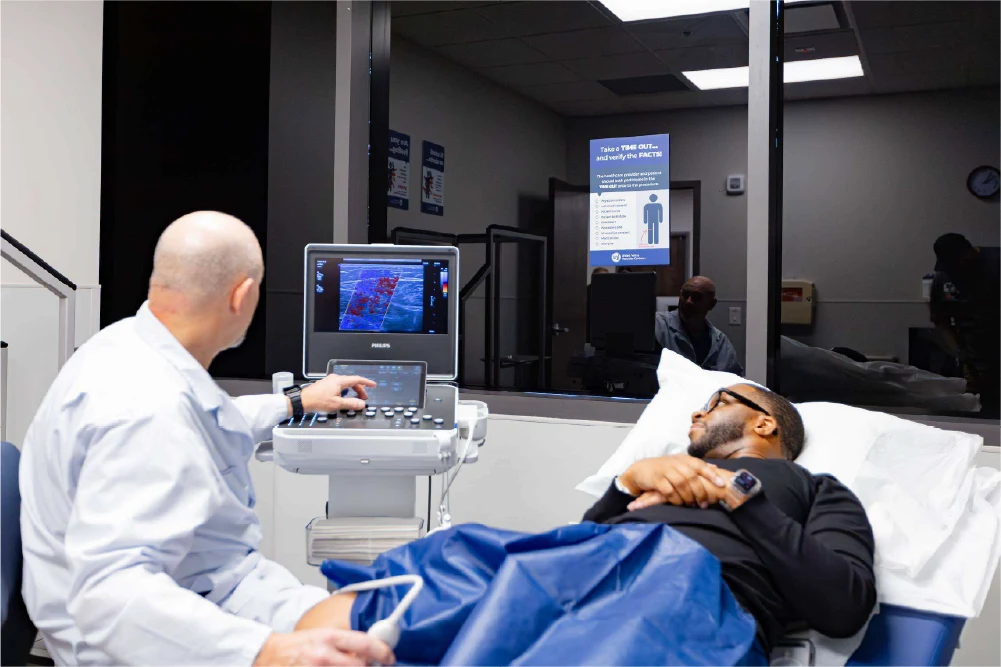
That is one reason symptom history and diagnostic imaging are important. A duplex ultrasound can examine blood flow inside the veins and determine whether the valves are allowing blood to move backward.
At the same time, itching without visible veins may have nothing to do with venous insufficiency. Dry skin, eczema, allergies, medication reactions, diabetes, nerve conditions, and other health concerns may produce similar sensations.
Q: When should itchy legs after walking be evaluated?
Dr. Clarke:
Occasional itching that resolves shortly after activity may not require a vein evaluation. Schedule an appointment with an appropriate healthcare provider when the itching:
- Happens during nearly every walk
- Continues long after activity has ended
- Interferes with walking, exercise, sleep, or daily comfort
- Remains concentrated around the ankles or lower legs
- Occurs with swelling, heaviness, aching, or visible veins
- Appears alongside dryness, scaling, inflammation, or discoloration
- Causes repeated scratching, bleeding, or broken skin
- Does not improve after removing possible skin irritants
- Is getting more frequent or affecting a larger area
Some accompanying symptoms need more immediate attention. Sudden one-sided leg swelling with pain, warmth, redness, or discoloration may indicate a blood clot and requires prompt medical evaluation.
Itching accompanied by widespread hives, facial or throat swelling, difficulty breathing, wheezing, dizziness, or fainting may indicate a severe allergic reaction. Call 911 for these symptoms.
Rapidly spreading redness, increasing warmth, pain, drainage, or fever may indicate a skin infection and also warrants prompt care.
Q: How is the cause of persistent leg itching diagnosed?
Dr. Clarke:
The evaluation begins with the pattern of the itching. A provider may ask where it occurs, whether it affects one or both legs, how quickly it begins after walking, how long it lasts, and whether it also happens at rest.
Other useful details include:
- Whether the skin develops a rash, hives, dryness, or scaling
- Whether heat, sweat, clothing, soap, or lotion appears to trigger it
- Whether swelling or heaviness becomes worse later in the day
- Whether elevation or overnight rest improves the symptoms
- Whether visible veins or ankle discoloration are present
- Whether medications, skin products, or exercise habits recently changed
- Whether the patient has diabetes, allergies, eczema, nerve symptoms, or another relevant medical condition
The physical examination may include checking the skin, comparing the legs, looking for swelling and visible veins, and evaluating pulses, temperature, tenderness, and sensation.
When the overall pattern suggests chronic venous insufficiency, a diagnostic duplex ultrasound may be recommended.
If the findings do not appear vein-related, the patient may need evaluation by a primary care provider, dermatologist, allergist, neurologist, or another specialist. Identifying the source matters because treatment for dry skin or an allergic reaction will not correct venous reflux, while a vein procedure will not resolve itching caused by eczema, nerve irritation, or another unrelated condition.
Q: How can I stop my legs from itching after walking?
Dr. Clarke:
Relief depends on what is causing the itching. For mild exercise-related or skin-surface irritation, a healthcare provider may recommend measures such as:
- Building up walking time and intensity gradually
- Warming up before increasing the pace
- Cooling down after a walk
- Wearing breathable, moisture-wicking clothing
- Avoiding tight seams or fabrics that rub against the legs
- Changing out of sweaty clothing after activity
- Using gentle, fragrance-free cleansers and moisturizers
- Avoiding very hot showers, which may worsen dry skin
- Staying adequately hydrated
- Avoiding scratching, which can further damage irritated skin
Do not assume that every recurring itch should be treated with over-the-counter cream or antihistamines. Some products can irritate the skin, interact with medications, or mask a problem that needs evaluation. A provider can help determine which products are appropriate.
When venous insufficiency contributes to the itching, movement, leg elevation, skin care, and properly fit compression may help manage symptoms. Compression is not appropriate for everyone, particularly patients with reduced arterial blood flow or certain other medical conditions. The type and pressure should be selected with guidance from a healthcare provider.
These measures may reduce discomfort, but they do not repair damaged vein valves.
Q: How can UVVC help if vein disease is causing itchy legs?
Dr. Clarke:
UVVC begins by determining whether the itching follows a pattern consistent with vein disease. During a vein screening, the care team reviews the location and timing of the itching along with swelling, heaviness, visible veins, skin changes, medical history, and other symptoms.
When further evaluation is appropriate, a duplex ultrasound may be scheduled to examine the veins and identify venous reflux. The results help determine whether the location of the affected veins corresponds with the patient’s symptoms.
If chronic venous insufficiency is confirmed, recommendations may include movement, elevation, skin care, compression, or a minimally invasive vein procedure. Depending on the veins involved and the ultrasound findings, treatment options may include:
- Radiofrequency ablation (RFA): A thin catheter delivers controlled thermal energy inside an affected vein. The vein closes, allowing blood to reroute through healthier veins nearby.
- VenaSeal™: A small amount of medical adhesive is placed inside an affected vein to seal it without thermal energy. Blood is then redirected through veins that are functioning properly.
- Varithena®: An injectable microfoam fills and closes certain malfunctioning veins, allowing blood to move through healthier pathways.
- Ultrasound-guided sclerotherapy: Ultrasound imaging helps the physician locate a problem vein beneath the skin and guide an injectable solution or foam into it. The treated vein closes and is gradually absorbed by the body.
Treatment recommendations are based on each patient’s symptoms, medical history, vein anatomy, ultrasound findings, and individual needs. Treating confirmed venous reflux may reduce related inflammation, swelling, heaviness, and itching, but results vary. Skin changes may also require separate care from a dermatologist or another provider.
Frequently Asked Questions
Walking raises body temperature, increases circulation, produces sweat, and creates friction between the skin and clothing. These changes can make the legs itch even when no underlying disease is present. If the itching happens consistently, lasts after the walk ends, or occurs with hives, swelling, heaviness, or skin changes, an evaluation can help identify the cause.
Changes in blood flow during exercise may stimulate nearby nerves and contribute to temporary itching, particularly when someone has recently started exercising or returned after a break. Increased blood flow is only one possible explanation, however. Heat, sweat, friction, histamine, and dry skin may also contribute.
Itching can occur before a visible rash develops or without one appearing at all. Possible causes include dry skin, medication effects, allergies, nerve irritation, diabetes, and circulation problems. With venous insufficiency, itching may begin around the ankles or lower legs before discoloration, thickening, or more obvious inflammation becomes noticeable.
Yes, but “poor circulation” is a broad phrase. Chronic venous insufficiency can increase pressure and inflammation in the lower legs, leading to dryness, itching, discoloration, or stasis dermatitis. Reduced arterial blood flow follows a different pattern and is more commonly associated with walking-related pain, coldness, color changes, weak pulses, or slow-healing wounds. A clinical evaluation is needed to determine which system, if either, is involved.
Walking generally supports venous circulation because the calf muscles help push blood upward from the legs. Regular movement may help reduce blood pooling and stiffness associated with prolonged sitting or standing.
If walking makes irritated skin feel itchier, that does not necessarily mean the underlying vein condition is worsening. Heat, sweat, and friction may temporarily intensify an existing sensation. Persistent itching accompanied by swelling, heaviness, visible veins, or ankle discoloration should still be evaluated.
When Itchy Legs Keep Interrupting Your Walk
Itching during or after walking may be temporary, especially when it follows a change in activity, warmer weather, dry skin, or clothing friction. When the sensation keeps returning between walks or appears with swelling, heaviness, visible veins, dryness, inflammation, or discoloration near the ankles, the veins may deserve a closer look.
If your itchy lower legs follow a pattern associated with chronic venous insufficiency, request a vein screening at United Vein & Vascular Centers. Our care team can evaluate your symptoms and determine whether vein disease may be contributing.
Medically reviewed by Dr. Domenic Zambuto, National Medical Director at United Vein & Vascular Centers. Board-certified in vascular and interventional radiology, Dr. Zambuto has more than 20 years of experience treating vascular disease and helping patients manage complex vein and circulatory conditions.