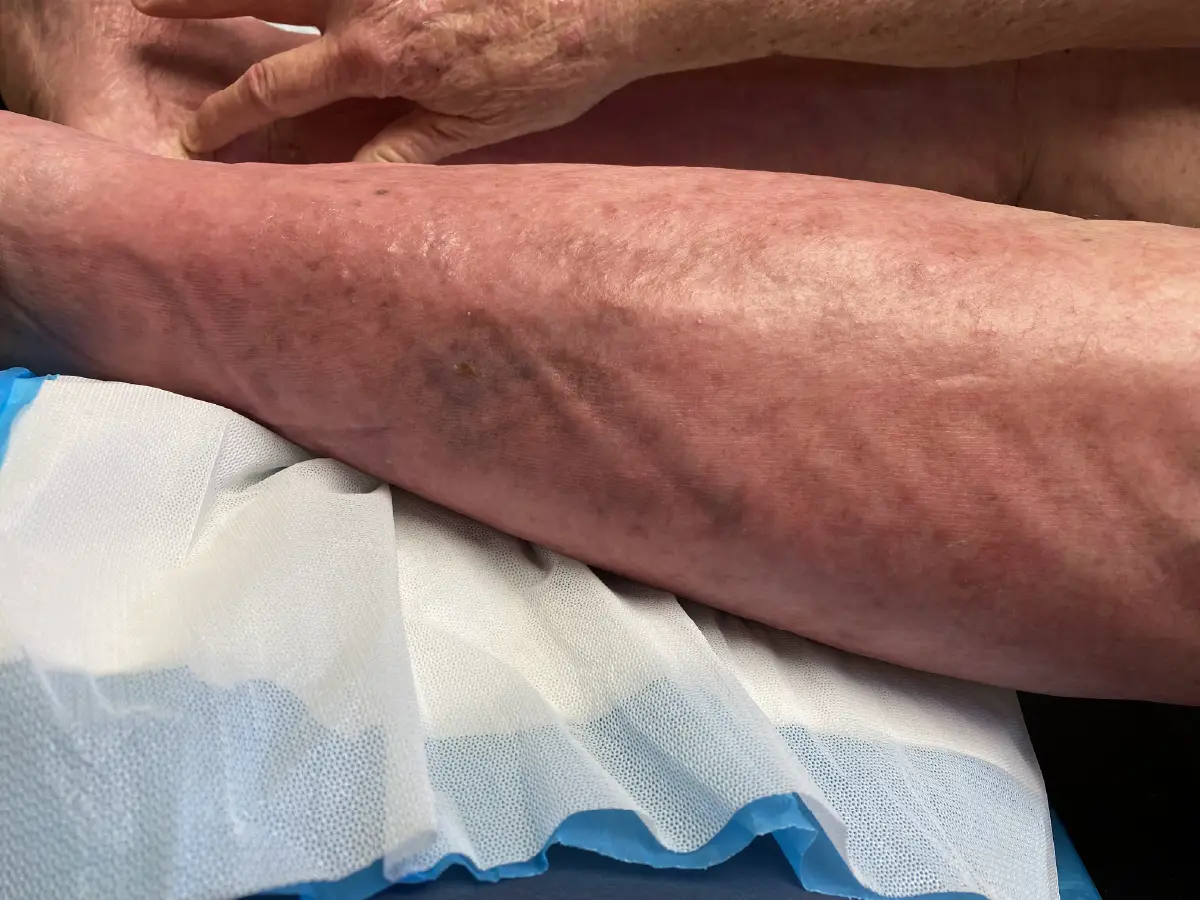
Shiny skin on the lower legs can have several causes, including swelling, fluid buildup, dry or irritated skin, and changes related to circulation. When blood and fluid collect in the lower legs, swelling can stretch the skin and give it a smooth, tight, or glossy appearance.
Shiny skin by itself does not necessarily mean you have a vein problem. However, when it appears alongside swelling, aching, heaviness, visible veins, or skin discoloration, it may be a sign that an underlying circulation issue is affecting the legs.
Understanding what causes shiny skin on the lower legs can help you recognize when the change may be related to your vein health and when it may be worth having your symptoms evaluated.
What Causes Shiny Skin on the Lower Legs?
Several factors can cause the skin on the lower legs to appear smooth, tight, or shiny. Common causes include:
- Swelling and fluid buildup: When excess fluid collects in the tissues of the lower legs, the skin can become stretched and appear shiny or tight.
- Chronic venous insufficiency: When leg veins have trouble moving blood back toward the heart, blood can pool in the legs and increase pressure in the surrounding tissues.
- Lymphedema: Problems with the lymphatic system can cause fluid to build up in the legs, leading to swelling and changes in skin texture.
- Dry or irritated skin: Changes in moisture levels or skin irritation can affect the appearance and texture of the skin.
- Inflammation or other skin conditions: Certain inflammatory or dermatological conditions can also cause changes in skin texture or appearance.
The cause is not always obvious based on appearance alone. Other symptoms and a physical evaluation can help determine what may be contributing to the change.
Why Does Swelling Make Skin Look Shiny or Tight?
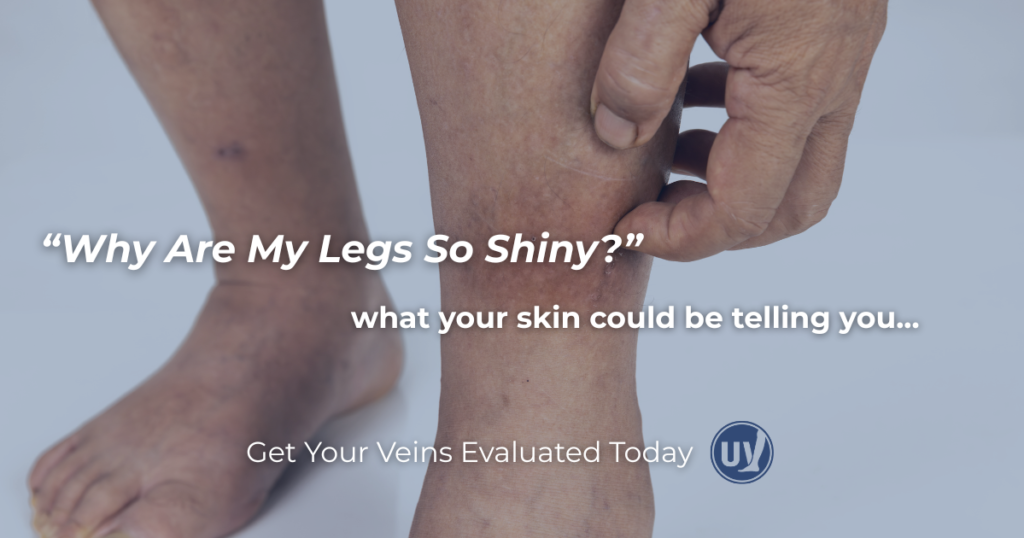
Shiny skin on the lower legs is often related to swelling. When fluid builds up in the tissues, the skin stretches over the swollen area. This can create a smooth, taut, or glossy appearance.
Swelling may be more noticeable around the ankles, calves, and feet. Some people also experience tightness, tenderness, or discomfort, particularly later in the day or after spending long periods standing or sitting.
If swelling is persistent or occurs regularly, it may be worth looking beyond skin care and considering whether an underlying circulation issue could be contributing.
How Does Circulation Affect Skin Health?
Healthy circulation helps deliver oxygen and nutrients to the skin while moving blood and excess fluid back through the body. When the veins in the legs are not functioning properly, blood can pool in the lower legs and increase pressure within the surrounding tissues.
Over time, this pressure can contribute to swelling, inflammation, dryness, discoloration, and changes in skin texture. These changes may become more noticeable after prolonged periods of standing or sitting.
When Can Shiny Skin Signal Vein Disease?
Shiny skin does not automatically indicate vein disease. However, persistent shiny or tight skin may be associated with chronic venous insufficiency, a condition that occurs when the valves inside the leg veins do not work properly.
When these valves are weakened, blood can flow backward and collect in the legs. This can increase pressure in the veins and contribute to swelling and gradual changes in the skin.
Shiny skin may be more concerning when it occurs along with other symptoms of vein disease.
Other Symptoms to Watch For
Additional signs that may appear with vein-related skin changes include:
- Swelling in the lower legs or ankles
- Leg heaviness or fatigue
- Aching, throbbing, or cramping
- Itching or burning sensations
- Skin discoloration around the ankles
- Dry, irritated, or thickened skin
- Visible varicose or spider veins
If you notice several of these symptoms together, a vein evaluation can help determine whether an underlying circulation problem may be contributing.
Why Are My Lower Legs Shiny and Swollen?
Shiny, swollen skin can occur when excess fluid builds up in the tissues of the lower legs. Venous insufficiency is one possible cause because weakened vein valves can make it harder for blood to return efficiently to the heart.
Other conditions, including lymphedema and inflammation, can also cause swelling and changes in the appearance of the skin. If swelling is persistent, worsening, or accompanied by other symptoms, a healthcare provider can help identify the underlying cause.
When Should You Seek Care?
Occasional dry or irritated skin may improve with basic skin care. However, shiny or tight skin that persists or worsens should be evaluated, especially if you also experience swelling, discomfort, visible veins, or changes in skin color or texture.
Consider speaking with a vein specialist if you notice:
- Persistent swelling in your legs or ankles
- New or worsening leg heaviness or aching
- Shiny, tight, or thickened skin that does not improve
- Skin discoloration around the ankles
- Varicose or spider veins along with other symptoms
- Changes in your skin that continue to progress
A vein specialist can evaluate your symptoms and determine whether a circulation issue may be contributing.
Frequently Asked Questions
Not necessarily. Shiny skin can have several causes, including swelling, dry skin, inflammation, and other skin conditions. When shiny skin occurs alongside swelling, heaviness, aching, visible veins, or discoloration, it may be associated with a circulation problem such as chronic venous insufficiency.
Shiny, swollen lower legs can result from fluid buildup in the tissues, which stretches the skin and creates a smooth or glossy appearance. Venous insufficiency is one possible cause, although lymphedema and other conditions can also contribute to swelling.
Varicose veins can be associated with skin changes, particularly when they are caused by underlying venous insufficiency. Increased pressure in the leg veins can contribute to swelling, discoloration, dryness, and changes in skin texture that may make the skin appear shiny or tight.
Yes. Chronic venous insufficiency can cause several skin changes over time, including swelling, dryness, discoloration, thickening, irritation, and changes in texture. Shiny or tight skin may occur when swelling stretches the skin.
Moisturizer may help if dry or irritated skin is contributing to its appearance. However, lotion will not address swelling or circulation problems that may be causing the skin to look tight or shiny.
Consider a vein evaluation if shiny skin is persistent, worsening, or accompanied by swelling, aching, heaviness, discoloration, or visible veins. A specialist can help determine whether an underlying vein condition may be contributing to your symptoms.
Take Skin Changes Seriously
Shiny skin on the lower legs can have a number of causes, and it is not always a sign of vein disease. However, persistent changes in skin appearance, particularly when accompanied by swelling, discomfort, discoloration, or visible veins, may be worth evaluating.
At United Vein & Vascular Centers, our specialists provide comprehensive vein evaluations and personalized treatment options for patients experiencing symptoms related to vein disease.
If you have noticed changes in the appearance or texture of your lower-leg skin, schedule a vein screening to learn more about what may be causing your symptoms.