Many people focus on improving their health, eating better, moving more, and scheduling preventive care. One area that’s often overlooked is vein health, even though vein disease affects millions of people and tends to worsen over time if left untreated.
Whether you’re managing symptoms like leg heaviness or swelling, have visible varicose veins, or simply want to protect your circulation long-term, this checklist can help you stay proactive throughout the year.
Think of this as your roadmap for vein health, covering prevention, daily habits, screening, and treatment options.
Why Vein Health Deserves Attention
Vein disease is common, progressive, and often misunderstood. Conditions such as chronic venous insufficiency (CVI) and varicose veins develop gradually, which makes symptoms easy to dismiss at first.
Without intervention, vein disease may lead to:
- Persistent leg pain or heaviness
- Obrzęk nóg lub kostek
- Skin changes or irritation
- Visible bulging veins
- Ograniczona mobilność
- Advanced complications like ulcers
Prioritizing vein health early helps prevent progression and supports better quality of life.
Vein Health Checklist
Use this checklist throughout the year to monitor symptoms, reinforce healthy habits, and know when to seek care.
✔ Step 1: Pay attention to early symptoms
Vein disease often begins subtly. Make note if you experience:
- Leg aching or heaviness
- Obrzęk nasilający się w ciągu dnia
- Fatigue after standing or sitting
- Burning, itching, or cramping
- Restlessness in the legs at night
These symptoms are common signs of venous insufficiency and shouldn’t be ignored.
✔ Step 2: Build daily habits that support circulation
Small lifestyle changes can make a big difference in vein health.
Daily vein health habits
- Take movement breaks every hour
- Unikanie długotrwałego siedzenia lub stania
- Elevate your legs when resting
- Bądź nawodniony
- Utrzymanie prawidłowej masy ciała
- Avoid tight clothing that restricts blood flow
These habits help reduce pressure on your veins and support healthy circulation.
✔ Step 3: Use compression when appropriate
Compression therapy supports blood flow and helps manage symptoms like swelling and heaviness. Some people benefit from wearing compression stockings during:
- Long travel days
- Extended standing
- Periods of increased swelling
Always follow provider recommendations for proper fit and use.
✔ Step 4: Support vein health through nutrition
While diet can’t cure vein disease, certain foods support circulation and blood vessel health.
Vein-friendly foods include:
- Leafy greens
- Citrus fruits
- Berries
- Fatty fish
- Nuts and seeds
- Foods rich in antioxidants
Reducing excess salt can also help minimize swelling.
✔ Step 5: Stay active with vein-friendly exercise
Exercise plays a key role in preventing varicose veins and managing symptoms.
Helpful activities include:
- Chodzenie
- Pływanie
- Jazda na rowerze
- Low-impact strength training
Movement activates the calf muscle pump, which helps blood return to the heart more efficiently.
✔ Step 6: Know when screening matters
If you have symptoms, visible veins, or risk factors such as family history, pregnancy, or prolonged standing at work, screening can help detect vein disease early.
A vein evaluation typically includes:
- Medical history review
- Physical exam
- Diagnostic ultrasound
Screening provides clarity, even if treatment isn’t immediately needed.
✔ Step 7: Understand your treatment options
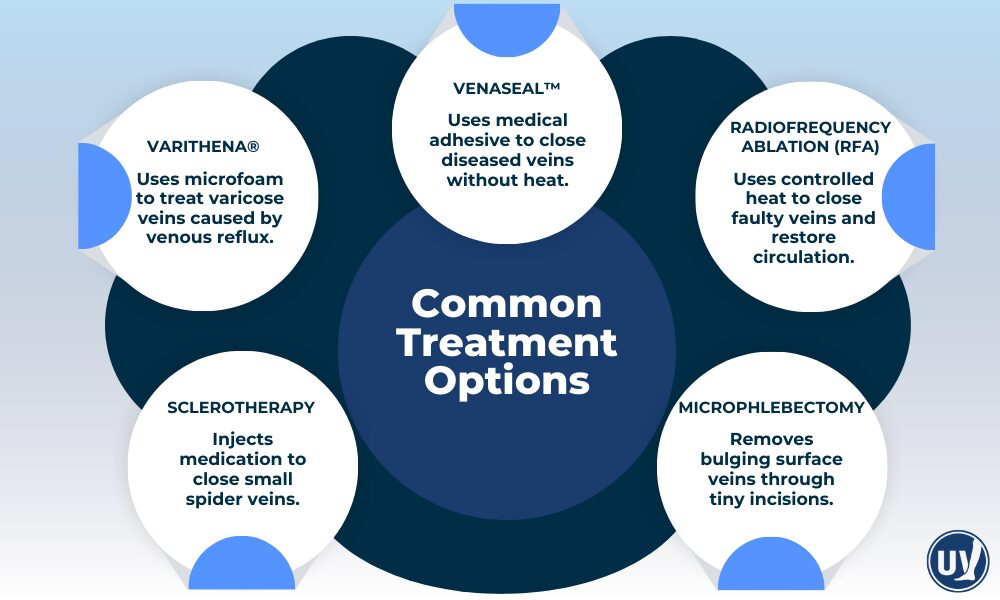
Modern vein treatments are minimally invasive, performed in-office, and tailored to your condition.
Your Vein Health Checklist.png
Your specialist will recommend treatment based on vein size, symptoms, and circulation findings.
✔ Step 8: Monitor progression over time
Vein disease is progressive, meaning symptoms often worsen without treatment. Track changes such as:
- Increased swelling
- Worsening discomfort
- New visible veins
- Skin changes around the ankles
Noticing progression early allows for timely intervention.
Często zadawane pytania
If you have symptoms or risk factors, screening may be recommended periodically. Your specialist can advise on timing.
Regular movement, leg elevation, hydration, and avoiding prolonged sitting or standing all support healthy circulation.
Foods rich in antioxidants and anti-inflammatory nutrients support vascular health and circulation.
While genetics play a role, healthy habits can reduce symptom severity and slow progression.
Yes. Exercise improves circulation and reduces pressure in the leg veins.
Share This Checklist
Vein disease affects many people silently. Sharing this checklist can help friends or family recognize symptoms early and take proactive steps toward better vein health.
When To Seek Care and How UVVC Can Help
If you’re experiencing persistent leg discomfort, swelling, or visible veins, or if symptoms seem to be progressing, it may be time for a professional evaluation.
At United Vein & Vascular Centers, our specialists provide comprehensive evaluations and personalized treatment plans using advanced, minimally invasive techniques designed to restore healthy circulation and improve long-term comfort.
Find a clinic near you and schedule your screening today.
Medically reviewed by UVVC National Medical Director, Dr. Domenic Zambuto