Contenido
- What Are the Warning Signs of a Blood Clot in the Ankle or Leg?
- Can a Blood Clot Cause Ankle or Foot Swelling?
- What Is a Deep Vein Thrombosis (DVT)?
- Common Symptoms of a Blood Clot in the Ankle or Leg
- Symptom Comparison Chart
- When Is a Blood Clot an Emergency?
- How Is a Blood Clot Diagnosed?
- How Is a Blood Clot Treated?
- Preguntas frecuentes
- Cómo puede ayudar United Vein & Vascular Centers
A blood clot in the ankle or lower leg can cause symptoms such as one-sided swelling, pain, warmth, redness, or skin discoloration. Deep vein thrombosis (DVT) occurs when a blood clot forms in a deep vein, most commonly in the lower leg, thigh, or pelvis. While a clot may cause symptoms around the ankle or foot, DVT is not limited to the ankle itself.
Because these symptoms can overlap with a sprained ankle, muscle injury, or other vein conditions, it is important not to assume the cause based on symptoms alone. If you develop sudden or unexplained swelling, pain, warmth, or discoloration in one leg, contact a healthcare provider as soon as possible.
If you experience shortness of breath, chest pain, coughing up blood, a fast or irregular heartbeat, lightheadedness, or fainting, seek immediate medical attention. These can be signs of a pulmonary embolism (PE), which can occur when part of a DVT travels to the lungs.
What Are the Warning Signs of a Blood Clot in the Ankle or Leg?
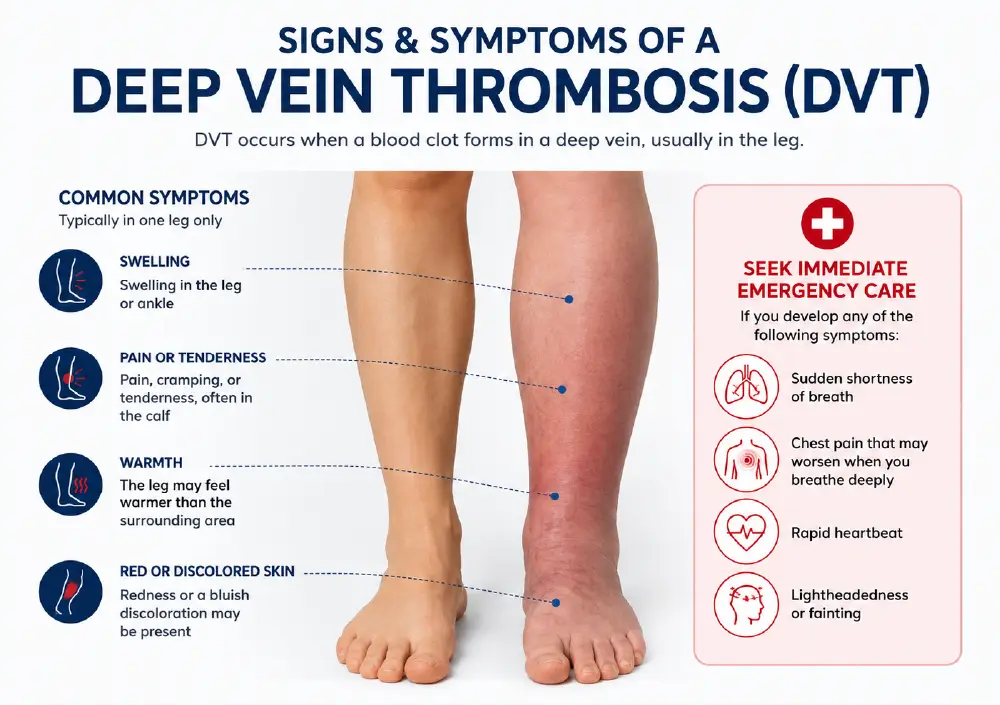
DVT does not always cause noticeable symptoms. When symptoms do occur, they commonly affect one leg and may include:
- Swelling: One-sided swelling in the ankle, foot, calf, or leg
- Pain or tenderness: Unexplained pain, aching, cramping, or tenderness in the affected area
- Warmth: Skin over the affected area may feel warmer than the surrounding skin
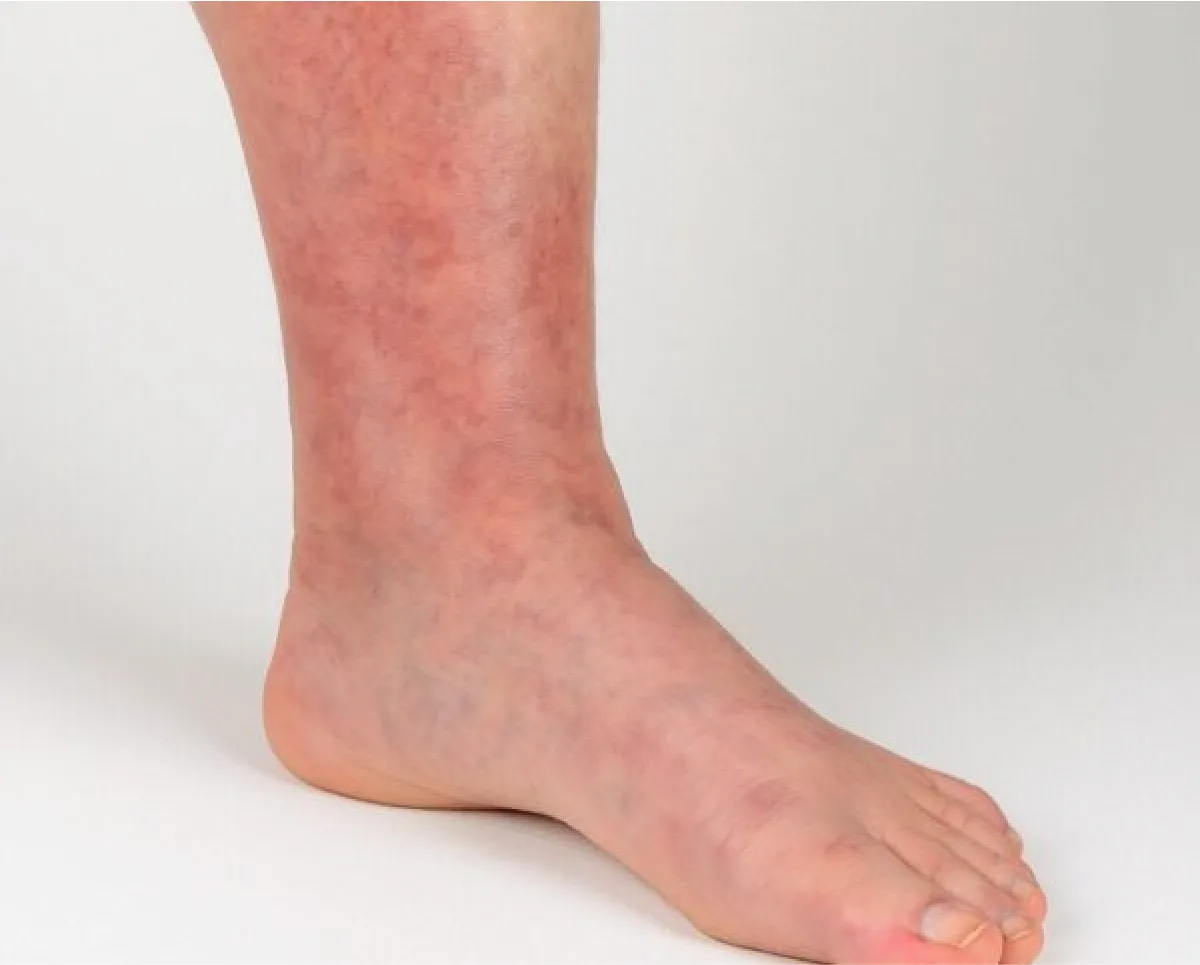
- Redness or discoloration: The skin may appear red or otherwise discolored
- A heavy or uncomfortable feeling: The affected leg may feel different from the other leg
Not everyone with DVT will experience all of these symptoms, and some people have no symptoms at all. Symptoms alone cannot confirm whether a blood clot is present.
Can a Blood Clot Cause Ankle or Foot Swelling?
Yes. A DVT can cause swelling in the affected leg, which may be noticeable in the lower leg, ankle, or foot. This happens when the clot interferes with normal blood flow through a deep vein.
However, ankle or foot swelling does not automatically mean you have a blood clot. Other possible causes include an injury, chronic venous insufficiency, lymphedema, medications, and other medical conditions.
When swelling is sudden, occurs primarily on one side, or happens alongside pain, warmth, redness, or discoloration, it should be evaluated by a vein specialist.
What Is a Deep Vein Thrombosis (DVT)?
A deep vein thrombosis is a blood clot that forms in a deep vein. DVT most commonly develops in the lower leg, thigh, or pelvis, although it can occur in other parts of the body.
A clot can partially or completely interfere with blood flow through the affected vein. In some cases, part of the clot can break away and travel to the lungs, causing a pulmonary embolism. This is why symptoms that may indicate DVT should be evaluated promptly.
What Can Increase Your Risk of a Blood Clot?
DVT can happen to anyone, but certain factors can increase the risk. These may include:
- Prolonged periods of sitting or limited movement
- Recent surgery or hospitalization
- A serious injury or trauma
- Previous blood clots
- Certain medical conditions, including cancer
- Edad avanzada
- A family history of blood clots
- Pregnancy and the period shortly after pregnancy
- Estrogen-containing medications, including some forms of birth control and hormone therapy
- Long-distance travel
Having one or more risk factors does not mean you have a blood clot, but it can be helpful to discuss your individual risk with a healthcare provider.
Common Symptoms of a Blood Clot in the Ankle or Leg
Swelling in One Ankle, Foot, or Leg
Swelling is one of the most common symptoms associated with DVT. It may affect part or all of the leg and can sometimes be most noticeable around the ankle or foot.
Pay attention to swelling that is unexplained or noticeably different between your two legs, particularly when it occurs with other possible DVT symptoms.
Pain or Tenderness
A blood clot can cause pain, tenderness, aching, or cramping in the affected leg. The discomfort may occur around the area of the clot and can sometimes be mistaken for a muscle injury or sprained ankle.
Because pain has many possible causes, it is important to consider other symptoms and risk factors rather than assuming the pain is caused by a blood clot.
Warmth, Redness, or Skin Discoloration
The skin over an affected area may feel warmer than usual and may appear red or discolored. These symptoms can occur alongside swelling and tenderness.
These changes can also occur with other conditions, so they cannot be used on their own to diagnose DVT.
Symptom Comparison Chart
| Symptom | Blood Clot | Muscle Strain | Varicose Vein |
|---|
| One-sided swelling | ✓ | Sometimes | Rare |
| Warm skin | ✓ | Rare | Sometimes |
| Sudden onset | ✓ | Often | Usually gradual |
| Decoloración de la piel | ✓ | Rare | Common |
| Emergency risk | Alta | Bajo | Bajo |
When Is a Blood Clot an Emergency?
A DVT requires prompt medical evaluation because part of the clot can travel to the lungs and cause a pulmonary embolism.
Seek immediate medical attention if you experience:
- Sudden difficulty breathing or shortness of breath
- Chest pain or discomfort, particularly if it worsens with deep breathing or coughing
- Tos con sangre
- A fast or irregular heartbeat
- Mareos o desmayos
These symptoms can indicate a pulmonary embolism and require immediate medical attention.
How Is a Blood Clot Diagnosed?
Symptoms alone cannot confirm or rule out DVT. A vein specialist will consider your symptoms, medical history, risk factors, and physical examination when determining whether additional testing is needed.
Diagnostic testing may include blood tests or imaging. Duplex ultrasound is commonly used to evaluate blood flow through the veins and look for a clot.
If you are experiencing symptoms that could indicate DVT, a healthcare provider can determine which testing is appropriate based on your individual situation.

How Is a Blood Clot Treated?
Treatment depends on the location and severity of the clot, your overall health, and other individual factors.
Many DVTs are treated with anticoagulant medications, commonly called blood thinners. These medications help prevent the clot from getting larger and reduce the risk of additional clots forming.
In certain situations, additional procedures may be considered. These can include catheter-assisted clot removal or medications designed to dissolve a clot. These treatments are generally reserved for specific cases, including more serious or complicated blood clots.
Your specialist can recommend the appropriate treatment based on your diagnosis and individual risk factors.
Preguntas frecuentes
Possible warning signs include swelling, pain or tenderness, warmth, redness, or discoloration in the affected leg. Symptoms can occur around the ankle or foot, although DVT most commonly develops in the deeper veins of the lower leg, thigh, or pelvis.
A DVT may cause pain, tenderness, aching, cramping, swelling, or increased warmth in the affected area. However, some people with DVT have no noticeable symptoms, so how an area feels cannot confirm whether a blood clot is present.
Yes. Both conditions can cause pain and swelling. A sprain is generally associated with an injury, while DVT can cause unexplained swelling, pain, warmth, or discoloration. If symptoms do not have an obvious cause or you have risk factors for DVT, seek medical evaluation.
A healthcare provider may evaluate your symptoms, medical history, and risk factors and may order blood tests or imaging. Duplex ultrasound is commonly used to evaluate the veins for a DVT.
No. Ankle swelling can have many causes, including injuries, chronic venous insufficiency, lymphedema, medications, and other medical conditions. Sudden or unexplained one-sided swelling should be evaluated, particularly when it occurs with pain, warmth, redness, or discoloration.
Seek immediate medical attention if you have possible DVT symptoms along with difficulty breathing, chest pain, coughing up blood, a fast or irregular heartbeat, lightheadedness, or fainting. These can be signs of a pulmonary embolism.
Cómo puede ayudar United Vein & Vascular Centers
If you are experiencing symptoms that could be related to a blood clot or another vein condition, a vein specialist can evaluate your symptoms and determine whether additional testing is appropriate.
At United Vein & Vascular Centers, our vein specialists evaluate a range of vascular conditions and use diagnostic imaging, including duplex ultrasound, when appropriate. If a vein condition is identified, your provider can discuss treatment options based on your specific needs.
If you have symptoms that may indicate a DVT, prompt medical evaluation is important. If you are experiencing emergency symptoms such as chest pain or difficulty breathing, seek emergency medical care rather than waiting for a vein evaluation.
Medically reviewed by Dr. Domenic Zambuto, National Medical Director at United Vein & Vascular Centers. Board-certified in vascular and interventional radiology, Dr. Zambuto has more than 20 years of experience treating vascular disease and helping patients manage complex vein and circulatory conditions.