Contenido
- Common Causes of Left Leg Swelling
- ¿Qué es el flebolinfedema?
- How Chronic Venous Insufficiency Causes Leg Swelling
- Why Does May-Thurner Syndrome Cause Left Leg Swelling?
- Can a Blood Clot Cause Left Leg Swelling?
- How Is Left Leg Swelling Treated?
- Lifestyle Strategies to Help Manage Leg Swelling
- When Should You Seek Medical Attention for Left Leg Swelling?
- Preguntas frecuentes
- Actúe por la salud de sus piernas
Swelling in the left leg can have several causes, ranging from chronic venous insufficiency and phlebolymphedema to May-Thurner syndrome, a blood clot, injury, or infection. When swelling is persistent or affects only one leg, it is important to identify the underlying cause rather than assume it is simply a circulation issue. Sudden swelling, particularly when accompanied by pain, redness, warmth, or shortness of breath, requires prompt medical attention because it can be a sign of a blood clot.
Common Causes of Left Leg Swelling
Left leg swelling can have several causes. Some are related to vein or lymphatic problems, while others may require more immediate evaluation.
- Chronic venous insufficiency: When damaged vein valves allow blood to pool in the leg, causing swelling, heaviness, and discomfort.
- Phlebolymphedema: When chronic vein disease overwhelms the lymphatic system, leading to persistent fluid buildup and swelling.
- May-Thurner syndrome: Compression of the left iliac vein can restrict blood flow and cause swelling primarily in the left leg.
- Deep vein thrombosis (DVT): A blood clot in a deep vein can cause sudden swelling, pain, warmth, or redness in one leg.
- Lymphedema: Impaired lymphatic drainage can cause persistent swelling, often accompanied by tightness or a heavy feeling.
- Injury or infection: Trauma, inflammation, or infection can also cause swelling in one leg.
¿Qué es el flebolinfedema?
El flebolinfedema se produce cuando una enfermedad venosa, como la insuficiencia venosa crónica (IVC ), daña las venas y dificulta el drenaje normal de líquidos. Con el tiempo, la incapacidad de las venas para transportar la sangre con eficacia puede sobrecargar el sistema linfático y provocar acumulación de líquido e hinchazón en la pierna. A diferencia de la hinchazón causada exclusivamente por problemas linfáticos, la enfermedad venosa es la principal causa del flebolinfedema.
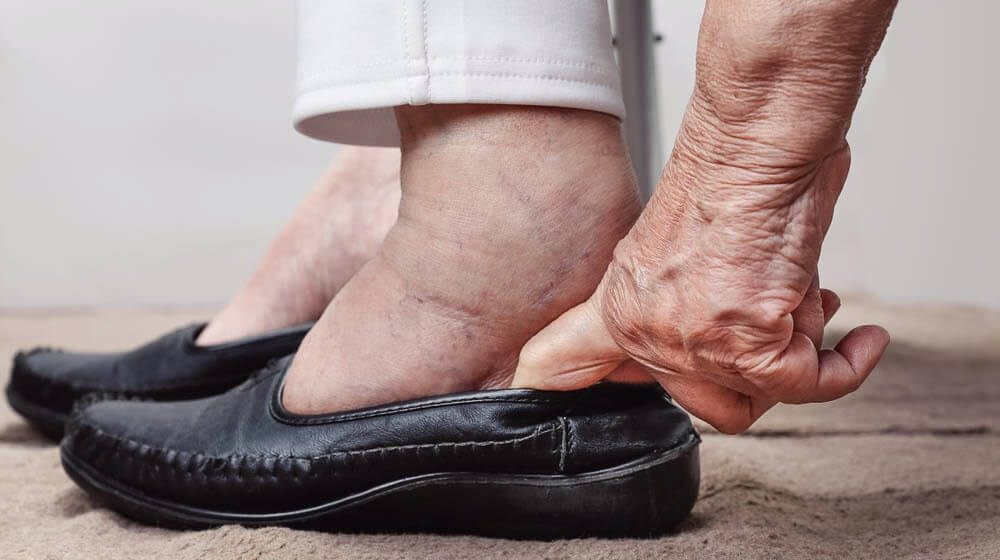
Esta enfermedad suele afectar a ambas piernas, aunque una pierna puede hincharse más que la otra. Las personas con flebolinfedema pueden notar hinchazón persistente, sensación de pesadez, opresión en la pierna, cambios en la piel o molestias al caminar o estar de pie. Si no se trata, el flebolinfedema puede evolucionar a infecciones cutáneas, úlceras e importantes problemas de movilidad.
Comprender el flebolinfedema es importante porque pone de relieve que no toda la hinchazón de piernas se debe a problemas linfáticos. Al identificar y tratar precozmente la enfermedad venosa, los pacientes pueden prevenir complicaciones a largo plazo y mejorar su calidad de vida.
How Chronic Venous Insufficiency Causes Leg Swelling
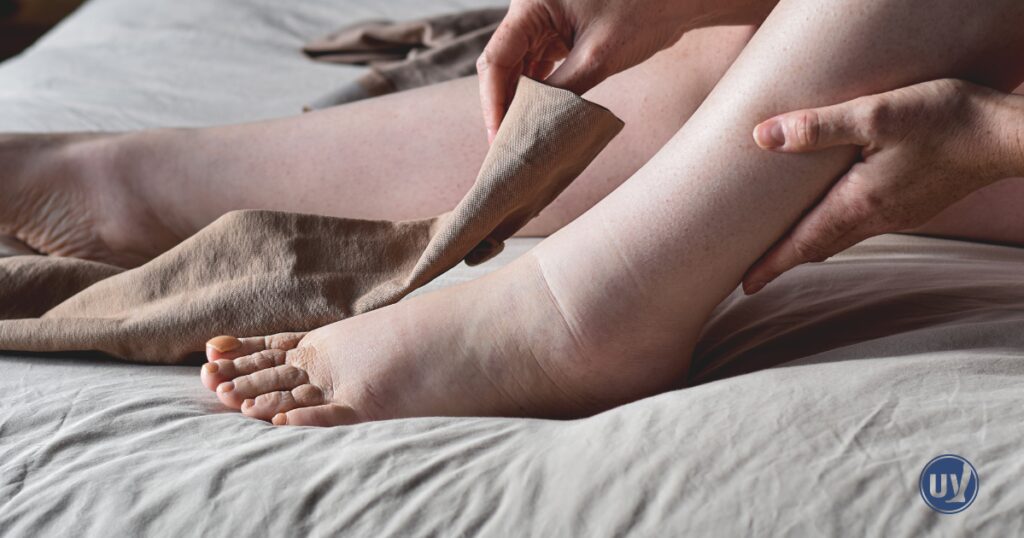
CVI occurs when the valves inside the leg veins do not work properly. These valves normally help keep blood moving toward the heart. When they weaken or fail, blood can pool in the legs, increasing pressure within the veins and contributing to swelling, inflammation, discomfort, and varicose veins.
Early signs of CVI may include swelling that worsens throughout the day or after prolonged standing, along with aching or heaviness in the legs. More advanced vein disease can cause skin thickening, discoloration, or ulcers.
When CVI contributes to phlebolymphedema, treating the underlying vein disease may help reduce swelling and prevent the condition from progressing.
Why Does May-Thurner Syndrome Cause Left Leg Swelling?
May-Thurner syndrome is a condition that can cause swelling primarily in the left leg. It occurs when the right iliac artery compresses the left iliac vein in the pelvis, making it more difficult for blood to flow from the left leg back toward the heart.
This restricted blood flow can increase pressure in the veins of the left leg and contribute to swelling, heaviness, discomfort, or visible varicose veins. In some cases, May-Thurner syndrome can also increase the risk of developing a blood clot.
Treatment depends on the underlying cause and severity. For some patients, minimally invasive procedures such as venous stenting may be used to restore blood flow and relieve the compression.
Can a Blood Clot Cause Left Leg Swelling?
Yes. A deep vein thrombosis (DVT) can cause swelling in one leg, including the left leg. Other symptoms may include pain or tenderness, warmth, or redness in the affected area.
Sudden or rapidly worsening swelling should be evaluated promptly, particularly when these symptoms occur together. If leg swelling is accompanied by chest pain or shortness of breath, seek emergency medical attention.
How Is Left Leg Swelling Treated?
Treatment depends on what is causing the swelling. When chronic venous insufficiency or varicose veins are contributing to swelling or phlebolymphedema, treatment may include minimally invasive procedures such as radiofrequency ablation, VenaSeal™, or sclerotherapy.
Compression therapy may also be recommended to help support circulation and reduce fluid buildup. Depending on the cause, a specialist may also recommend leg elevation, regular walking or other low-impact activity, or additional treatment for an underlying condition such as May-Thurner syndrome.
At United Vein & Vascular Centers, treatment plans are tailored to each patient’s vein health, symptoms, and medical history.
Lifestyle Strategies to Help Manage Leg Swelling
Certain habits may help support circulation and manage swelling alongside recommended medical treatment. These may include:
- Elevating the affected leg above heart level
- Staying physically active with regular walking or other low-impact exercise
- Wearing compression garments as recommended by a specialist
- Mantener un peso saludable
- Staying hydrated
These strategies can support circulation and help manage symptoms, but persistent or unexplained swelling should still be evaluated to determine the underlying cause.
When Should You Seek Medical Attention for Left Leg Swelling?
Sudden or rapidly worsening swelling in one leg should be evaluated promptly, especially if it is accompanied by pain, redness, warmth, or tenderness. These symptoms can occur with a blood clot and should not be ignored.
Gradual or persistent swelling also warrants evaluation, particularly when it continues to worsen or is accompanied by skin changes, heaviness, or discomfort. Identifying the underlying cause can help guide appropriate treatment and reduce the risk of complications.
Preguntas frecuentes
Swelling in only the left leg can have several causes, including chronic venous insufficiency, phlebolymphedema, May-Thurner syndrome, DVT, lymphedema, injury, or infection. Because unilateral swelling can have different causes, persistent or unexplained swelling should be evaluated by a medical professional.
Conditions that specifically affect blood or fluid flow in one leg can cause one-sided swelling. May-Thurner syndrome, DVT, injury, infection, and localized vein or lymphatic problems are possible causes.
Seek prompt medical attention for sudden or rapidly worsening swelling, especially when accompanied by pain, redness, warmth, or tenderness. Chest pain or shortness of breath with leg swelling requires emergency medical attention.
Actúe por la salud de sus piernas
If you are experiencing persistent or unexplained swelling in one leg, identifying the underlying cause is an important first step. At United Vein & Vascular Centers, our specialists evaluate vein-related conditions and develop treatment plans based on each patient’s symptoms and needs.
If you notice swelling in one leg or other vein-related symptoms, schedule a consultation today.