Contents
- Why Do Leg and Foot Sores Happen?
- Common Circulation-Related Causes of Frequent Leg and Foot Sores
- Why Frequent Sores Should Not Be Ignored
- How Vascular Conditions Are Diagnosed
- Treatment Options for Artery and Vein Disease
- Supporting Healing at Home
- Frequently Asked Questions
- Find Expert Care for Leg and Foot Sores Near You
A sore on your leg or foot that takes longer than expected to heal can be easy to brush off at first. Maybe it started as a small cut, a blister, or a patch of irritated skin. But when sores keep coming back or seem to linger for weeks, they may be signaling something more serious happening beneath the surface.
Frequent leg and foot sores are often connected to circulation problems that affect how blood moves through your arteries and veins. While these wounds are sometimes mistaken for complications of diabetes or simple skin infections, poor blood flow is a common and often overlooked cause. Understanding why these sores develop and when to seek care can help protect your mobility, comfort, and long-term health.
Why Do Leg and Foot Sores Happen?
Healthy circulation plays a major role in wound healing. Blood delivers oxygen and nutrients that help repair damaged tissue and fight infection. When circulation is compromised, even minor injuries can take much longer to heal.
As we age, blood flow can naturally slow. In some people, circulation becomes limited due to narrowed or damaged blood vessels. When this happens, the body struggles to deliver what the skin needs to recover, making sores more likely to form and harder to heal.
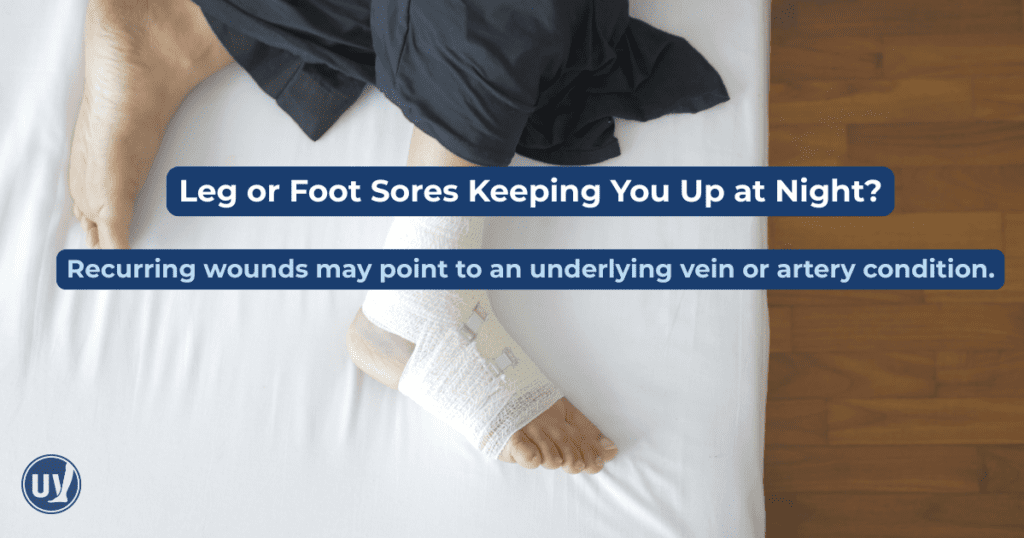
If you are experiencing frequent or recurring sores on your legs or feet, it may be a sign of an underlying artery or vein condition rather than a simple skin issue.
Common Circulation-Related Causes of Frequent Leg and Foot Sores
Several vascular conditions can interfere with blood flow and contribute to slow-healing or recurring wounds.
Peripheral Artery Disease (PAD)
Peripheral artery disease occurs when plaque builds up inside the arteries, reducing blood flow to the legs and feet. Because arteries carry oxygen-rich blood from the heart to the body, blockages can significantly affect healing.
People with PAD may notice:
- Sores or ulcers on the legs or feet that heal slowly or not at all
- Coldness or numbness in the lower extremities
- Tingling or a pins-and-needles sensation
- Weakness or fatigue in the legs
- Slower hair and toenail growth
PAD-related sores are particularly concerning because they increase the risk of infection and tissue damage if left untreated.
Varicose Veins and Chronic Venous Insufficiency
Varicose veins develop when vein valves weaken and allow blood to pool in the legs instead of flowing back toward the heart. Over time, this increased pressure damages surrounding tissue and affects skin health.
In the later stages of venous disease, poor circulation can lead to:
- Swelling in the lower legs and ankles
- Skin discoloration or irritation
- Frequent sores near the ankles
- Wounds that reopen or fail to heal properly
Venous sores often develop slowly but can become chronic without proper treatment.
Deep Vein Thrombosis (DVT)
Deep vein thrombosis occurs when a blood clot forms in the deep veins of the leg. This clot can restrict blood flow and lead to long-term circulation problems, even after the clot resolves.
In some cases, previous DVT can contribute to ongoing swelling, skin changes, and delayed wound healing. Any sudden leg swelling, pain, or warmth should be evaluated immediately, as DVT can be serious.
Why Frequent Sores Should Not Be Ignored
Persistent sores are more than a surface-level concern. When wounds remain open or repeatedly reopen, the risk of infection increases. In severe cases, untreated circulation problems can lead to chronic ulcers, tissue damage, or reduced mobility.
Early evaluation allows specialists to identify the cause of poor healing and recommend treatments that restore circulation and support proper recovery. The sooner the underlying condition is addressed, the better the chances of preventing complications.
How Vascular Conditions Are Diagnosed
If you are experiencing frequent leg or foot sores, a vascular specialist will begin with a thorough evaluation of your symptoms and medical history. Diagnostic testing helps determine whether an artery or vein condition is contributing to your symptoms.
Common diagnostic tools include ultrasound imaging to assess blood flow and identify blockages or valve dysfunction. In some cases, additional imaging or circulation tests may be recommended to understand the severity of the condition and guide treatment planning.
Accurate diagnosis is essential for choosing the most effective treatment approach.
Treatment Options for Artery and Vein Disease
UVVC offers advanced, minimally invasive treatments designed to improve circulation and support healing. Treatment plans are tailored to each patient’s condition and symptoms.
Treatments for Peripheral Artery Disease
- Angioplasty: Angioplasty is a minimally invasive procedure used to open narrowed or blocked arteries. A small balloon is inserted and inflated to improve blood flow to the affected area.
- Atherectomy: Atherectomy involves removing plaque from the artery using specialized catheter-based tools. This treatment helps restore circulation and reduce symptoms associated with PAD.
Treatments for Venous Disease
- Sclerotherapy: Sclerotherapy uses ultrasound guidance to inject a solution into damaged veins, causing them to close and reroute blood to healthier veins.
- VenaSeal™: VenaSeal™ uses a medical adhesive to seal a diseased vein with minimal incisions. This approach improves circulation without the need for heat or multiple injections.
By improving blood flow, these treatments help create an environment where sores can heal more effectively and recurrence is less likely.
Supporting Healing at Home
In addition to medical treatment, lifestyle adjustments can support healing and reduce the risk of future sores. These may include:
- Keeping wounds clean and properly dressed
- Elevating the legs to reduce swelling
- Staying active to promote circulation
- Wearing compression garments when recommended
- Managing chronic conditions such as diabetes or high blood pressure
Your specialist can provide guidance on wound care and daily habits that support recovery.
Frequently Asked Questions
Why am I getting so many sores on my legs?
Leg sores can be caused by poor circulation, diabetes, venous insufficiency, or infections. If they don’t heal properly, consult a doctor.
Can poor circulation cause sores on legs?
Yes, poor circulation can lead to slow-healing sores and is often linked to venous or arterial disease.
Why you should never ignore leg sores?
Untreated leg sores can lead to infections, ulcers, or serious complications. If you have persistent sores, seek medical care to prevent worsening conditions.
Find Expert Care for Leg and Foot Sores Near You
You do not have to manage frequent leg or foot sores on your own. At United Vein and Vascular Centers, our specialists focus on identifying the root cause of poor healing and creating personalized treatment plans that support long-term circulation and skin health.
With more than 50 clinics across multiple states and expanding, expert care is closer than you think. If you are dealing with recurring sores or slow-healing wounds, find a United Vein and Vascular Centers clinic near you and schedule a consultation today. Taking action now can help protect your comfort, mobility, and quality of life.