
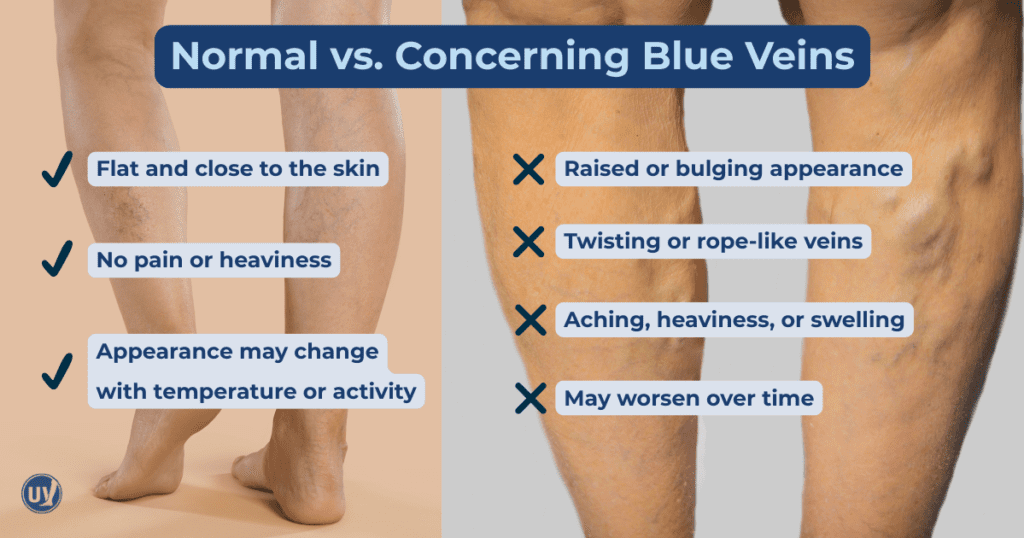
Noticing blue or purple veins on your body can be unsettling, especially when they appear suddenly or seem more prominent than before. In many cases, visible veins are completely normal. These veins are usually flat, soft, and painless.
But when blue veins on the backs of your legs begin to twist, bulge, or rise above the surface of the skin, it may be time to take a closer look. Changes like these can sometimes signal an underlying vein condition that deserves medical attention.
When Are Visible Blue Veins Normal?
Veins become visible for many harmless reasons. Skin tone, genetics, and body composition all play a role in how noticeable veins appear. People with lighter skin or lower body fat may see their veins more clearly. Heat, exercise, or prolonged standing can also temporarily make veins look larger or darker as blood flow increases.
Normal veins typically:
- Appear flat or only slightly raised
- Do not cause pain or discomfort
- Fade or become less noticeable with rest or elevation
If your veins fit this description, they are usually not a cause for concern.
When Do Blue Veins Become a Problem?
Twisting, swollen blue veins on the backs of the legs are often different from normal visible veins. These veins may look rope-like or knotted and can become more noticeable over time. This appearance is commonly associated with varicose veins, a condition caused by weakened or damaged vein valves.
Healthy veins rely on one-way valves to push blood upward toward the heart. When those valves stop working properly, blood can flow backward and collect in the vein. Over time, this added pressure causes veins to stretch, twist, and bulge.
Varicose veins often develop gradually and may be accompanied by symptoms such as:
- Aching or throbbing in the legs
- Heaviness or fatigue, especially after standing
- Swelling in the ankles or calves
- Burning, itching, or cramping sensations
- Skin discoloration around the ankles
While varicose veins are sometimes viewed as cosmetic, they are actually a sign of poor circulation and can worsen if left untreated.
Why Do Twisting Blue Veins Appear on the Backs of the Legs?
The veins in the legs work against gravity all day, making them especially vulnerable to circulation problems.
Several factors increase the likelihood of developing twisted or swollen blue veins, including:
- Long periods of standing or sitting
- Aging, which naturally weakens vein walls
- Family history of vein disease
- Pregnancy or hormonal changes
- Previous blood clots or vein injuries
Over time, these factors can strain the veins, causing them to enlarge and become visible beneath the skin.
Do Twisting Veins Always Mean Varicose Veins?
Not every visible vein is a varicose vein, but twisting and bulging veins are rarely normal. In some cases, reticular veins or spider veins may appear blue or purple without severe symptoms. However, when veins are raised, painful, or progressively worsening, it is important to be evaluated by a vein specialist.
A medical assessment helps determine whether your veins are functioning properly and whether treatment is needed to prevent further complications.
Treatment Options for Twisting and Swollen Blue Veins
The good news is that modern vein care offers effective, minimally invasive treatment options. These procedures are designed to close damaged veins and redirect blood flow to healthier ones, improving circulation and relieving symptoms.
Some of the most common treatment options include:
- Sclerotherapy: Sclerotherapy involves injecting a specialized solution into the damaged vein. This causes the vein to close and gradually fade as blood is rerouted through healthier veins. It is commonly used for smaller varicose veins and visible blue veins near the surface.
- Varithena®: Varithena® uses a medical-grade foam that fills and collapses faulty veins. This treatment is guided by ultrasound and is especially effective for larger veins that are difficult to treat with traditional injections.
- VenaSeal™: VenaSeal™ uses a medical adhesive to seal damaged veins from the inside. The procedure requires only a small access point and does not involve heat or multiple injections. Once sealed, blood naturally reroutes to functioning veins, improving circulation and reducing symptoms.
Each treatment is performed in an outpatient setting and typically allows patients to return to normal activities quickly.
Why Early Treatment Matters
Ignoring twisting or swollen blue veins can allow vein disease to progress. Over time, untreated varicose veins may lead to chronic swelling, skin changes, or even leg ulcers. Early treatment not only improves appearance but also helps protect long-term vein health and comfort.
Seeing a specialist early can help stop symptoms from worsening and may reduce the need for more advanced treatment later.
Frequently Asked Questions
Twisting or bulging blue veins are not usually dangerous on their own, but they can indicate an underlying vein condition like varicose veins or chronic venous insufficiency. If left untreated, these conditions can worsen over time and may lead to swelling, skin changes, or leg ulcers. A vein evaluation can help determine whether treatment is needed.
In most cases, twisting or swollen blue veins do not go away without treatment. While elevating your legs or wearing compression stockings may temporarily reduce discomfort or swelling, damaged veins typically do not repair themselves. Minimally invasive treatments can close faulty veins and improve circulation.
You should consider seeing a vein specialist if your veins are painful, swollen, worsening over time, or accompanied by symptoms like heaviness, aching, itching, or skin discoloration. Even if the veins are not painful, an evaluation can help prevent future complications and provide peace of mind.
Find Expert Varicose Vein Care at United Vein & Vascular Centers
You do not have to live with discomfort, swelling, or visible veins that affect your confidence or daily routine. The specialists at United Vein & Vascular Centers are experienced in diagnosing and treating vein conditions using advanced, minimally invasive techniques.
Our team takes the time to help you understand what is happening in your veins, what treatment options are available, and what approach makes the most sense for your lifestyle and goals.
A personalized treatment plan is designed to:
- Reduce pain, swelling, and heaviness
- Improve circulation and mobility
- Restore comfort and confidence in your legs
- Support long-term vein health
If twisting or swollen blue veins are concerning you, schedule a consultation with United Vein & Vascular Centers today. Expert care can help you feel better, move better, and get back to living comfortably.