
Contents
- What Is Vascular Care?
- Common Signs of a Vascular Condition
- Understanding Peripheral Artery Disease (PAD)
- Other Vascular Conditions That Can Impact Daily Life
- Modern Vascular Treatments Available in Phoenix
- Why Early Evaluation Matters
- Prioritizing Your Vascular Health
- Frequently Asked Questions
- Schedule a Vascular Consultation in Phoenix, AZ
When people think about vascular health, they often think of visible vein issues. In reality, vascular care encompasses much more than that. Conditions affecting the arteries, veins, and lymphatic system can impact circulation throughout the body, influencing everything from mobility and wound healing to reproductive health and quality of life.
Many vascular conditions develop gradually, making it easy to dismiss symptoms as part of aging, an active lifestyle, or everyday stress. However, early evaluation and treatment can often help prevent complications and improve outcomes.
For residents of Phoenix and the surrounding Valley, understanding the signs of vascular disease and knowing when to seek specialized care is an important step toward protecting your health.
What Is Vascular Care?
Vascular care focuses on diagnosing and treating conditions that affect the body’s network of blood vessels and circulation. This includes both arterial and venous conditions, as well as disorders involving the lymphatic system.
Because blood vessels play a critical role in delivering oxygen and nutrients throughout the body, vascular conditions can affect many aspects of health and wellness.
Some of the most common vascular conditions include:
- Peripheral artery disease (PAD)
- Atherosclerosis
- Lymphedema
- Chronic wounds
- Uterine fibroids
- Knee Osteoarthritis
- Enlarged prostate (Benign prostatic hyperplasia or BPH)
- Hemorrhoids
While these conditions vary significantly, many share one common characteristic: early diagnosis can help patients access more treatment options and potentially avoid worsening symptoms.
Common Signs of a Vascular Condition
Vascular symptoms are not always obvious. In many cases, they develop slowly over time and may be mistaken for other health concerns.
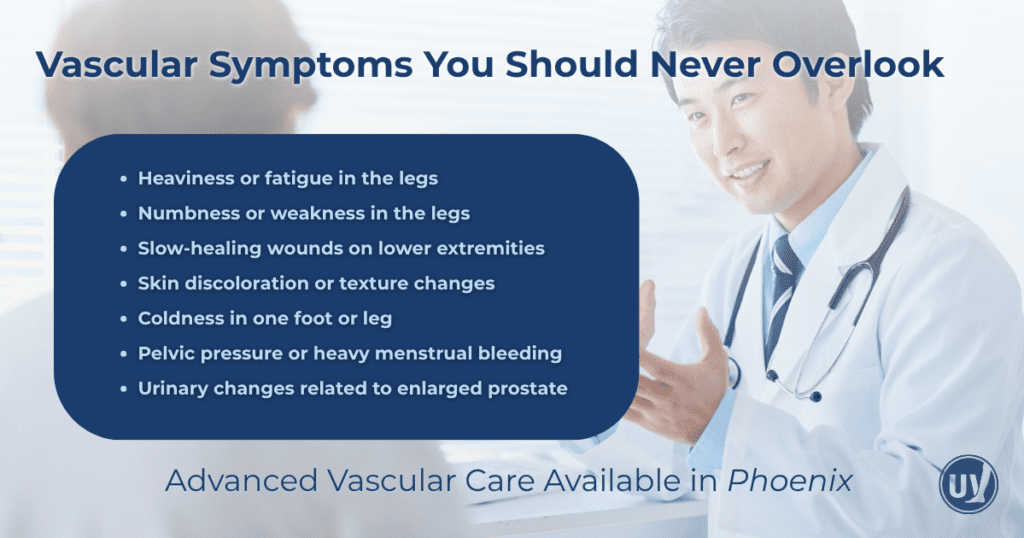
You should consider speaking with a vascular specialist if you experience symptoms such as:
Leg Pain or Cramping During Activity
Pain, cramping, or fatigue in the legs while walking may indicate reduced blood flow caused by peripheral artery disease.
Persistent Leg Swelling
Chronic swelling in the legs or feet may be associated with circulation issues or lymphedema.
Slow-Healing Wounds
Wounds on the feet, ankles, or legs that heal slowly can signal underlying vascular disease and should be evaluated promptly.
Numbness or Weakness
Reduced circulation can affect sensation and strength, particularly in the lower extremities.
Heavy Menstrual Bleeding or Pelvic Pressure
For some women, these symptoms may be associated with uterine fibroids.
Frequent Urinary Symptoms
Men experiencing frequent urination, difficulty emptying the bladder, or interrupted sleep due to urinary urgency may be dealing with an enlarged prostate.
If symptoms are affecting your daily activities, work, exercise routine, or overall comfort, seeking evaluation from a vascular specialist can help identify the underlying cause.
Understanding Peripheral Artery Disease (PAD)
One of the most common vascular conditions is peripheral artery disease, a circulatory condition that occurs when plaque builds up inside the arteries, restricting blood flow to the limbs.
PAD most commonly affects the legs and can become more serious if left untreated.
Risk Factors for PAD
Several factors can increase your risk of developing peripheral artery disease, including:
- Smoking
- Diabetes
- High blood pressure
- High cholesterol
- Obesity
- Family history of cardiovascular disease
- Advanced age
Symptoms of PAD
Common symptoms may include:
- Leg pain while walking
- Cramping in the calves, thighs, or hips
- Coldness in one leg or foot
- Numbness or weakness
- Slow-healing wounds
- Changes in skin color or texture
Because PAD can increase the risk of cardiovascular complications, early diagnosis and treatment are important for protecting both vascular and overall health.
Other Vascular Conditions That Can Impact Daily Life
Vascular specialists treat a wide range of conditions beyond arterial disease. Understanding these conditions can help patients recognize symptoms earlier and seek appropriate care.
Atherosclerosis
Atherosclerosis occurs when plaque accumulates within the arteries, causing them to narrow and harden over time. This can reduce blood flow and contribute to serious health concerns throughout the body.
Managing risk factors such as high blood pressure, high cholesterol, diabetes, and smoking can help reduce the likelihood of progression.
Lymphedema
Lymphedema is a chronic condition caused by dysfunction within the lymphatic system. It often results in persistent swelling, most commonly in the arms or legs.
Symptoms may include:
- Swelling
- Tightness or heaviness
- Reduced range of motion
- Skin changes
Early intervention can help manage symptoms and improve quality of life.
Chronic Wounds
Wounds that fail to heal properly may be linked to poor circulation. Chronic wounds can significantly impact mobility and increase the risk of infection if left untreated.
Vascular evaluation can help determine whether underlying circulation issues are contributing to delayed healing.
Uterine Fibroids
Uterine fibroids are noncancerous growths that develop within or around the uterus. While many women experience no symptoms, others may experience:
- Heavy menstrual bleeding
- Pelvic pain or pressure
- Frequent urination
- Abdominal fullness
Treatment options have evolved significantly, providing alternatives to traditional surgery for many patients.
Enlarged Prostate (BPH)
Benign prostatic hyperplasia, commonly known as an enlarged prostate, affects millions of men as they age.
Symptoms may include:
- Frequent urination
- Weak urine stream
- Difficulty starting urination
- Increased nighttime bathroom visits
Fortunately, minimally invasive treatment options may help relieve symptoms while preserving quality of life.
Modern Vascular Treatments Available in Phoenix
Advancements in vascular medicine have transformed the way many conditions are treated. Today, many procedures can be performed using minimally invasive techniques that often require less downtime than traditional surgery.
Depending on your diagnosis, treatment options may include:
Angioplasty
Angioplasty is a minimally invasive procedure that helps restore blood flow by opening narrowed or blocked arteries.
Atherectomy
This procedure removes plaque buildup from the arteries, helping improve circulation and reduce symptoms associated with arterial disease.
Uterine Fibroid Embolization (UFE)
UFE is a minimally invasive treatment that reduces blood flow to fibroids, causing them to shrink over time and helping relieve symptoms.
Prostate Artery Embolization (PAE)
PAE is a non-surgical treatment option for enlarged prostate symptoms that works by reducing blood flow to the prostate gland.
Hemorrhoid Artery Embolization (HAE)
HAE is an innovative treatment designed to reduce blood flow to hemorrhoids, helping alleviate symptoms without traditional surgery.
Genicular Artery Embolization (GAE)
For patients experiencing chronic knee pain caused by osteoarthritis, GAE offers a minimally invasive treatment option that works by reducing abnormal blood flow associated with inflammation, helping to alleviate pain and improve mobility.
Why Early Evaluation Matters
One of the biggest challenges with vascular disease is that symptoms often develop gradually. Many patients adapt to discomfort over time, assuming their symptoms are simply part of getting older.
However, delaying care can allow conditions to progress.
Seeking evaluation early may help:
- Improve circulation
- Reduce pain and discomfort
- Promote wound healing
- Preserve mobility
- Expand available treatment options
- Prevent disease progression
The earlier a vascular condition is identified, the sooner a personalized treatment plan can be developed.
Prioritizing Your Vascular Health
Whether you are experiencing leg pain, swelling, circulation issues, chronic wounds, or symptoms related to fibroids or an enlarged prostate, vascular health plays an important role in your overall well-being.
Phoenix residents lead active lives, and maintaining healthy circulation is essential for staying mobile, independent, and engaged in everyday activities. Understanding the signs of vascular disease and seeking care when symptoms arise can help protect your long-term health and quality of life.
Frequently Asked Questions
A vascular specialist diagnoses and treats conditions affecting blood vessels and circulation, including Peripheral Artery Disease (PAD), atherosclerosis, lymphedema, chronic wounds, uterine fibroids, enlarged prostate symptoms, and other vascular-related conditions.
Common early signs include leg pain while walking, cramping, numbness, weakness, cold feet, and wounds that heal slowly. These symptoms should be evaluated by a vascular specialist.
No. Many vascular conditions can be treated using minimally invasive procedures such as angioplasty, atherectomy, Uterine Fibroid Embolization (UFE), Prostate Artery Embolization (PAE), and Hemorrhoid Artery Embolization (HAE).
Schedule a Vascular Consultation in Phoenix, AZ
If you’re experiencing symptoms such as leg pain, swelling, poor circulation, chronic wounds, heavy menstrual bleeding, or enlarged prostate symptoms, professional evaluation can help identify the cause and determine the most appropriate treatment plan.
At United Vein & Vascular Centers in Phoenix, our specialists provide comprehensive vascular evaluations and advanced minimally invasive treatment options designed to help patients improve circulation, relieve symptoms, and return to daily life with greater confidence.
Schedule a consultation with the Phoenix team today to learn more about your options and take the next step toward better vascular health.