Contents
- Why Healthy Blood Flow Matters
- Can Supplements Improve Blood Flow?
- 6 Supplements That May Support Better Blood Flow
- Lifestyle Habits That Naturally Improve Circulation
- When Poor Circulation Is More Than a Vitamin Deficiency
- Frequently Asked Questions
- Supplements Can Support Healthy Circulation, But They’re Not a Cure
Healthy blood flow is essential for delivering oxygen and nutrients throughout your body. If you’ve been wondering what supplements improve blood flow, research suggests that ingredients like omega-3 fatty acids, beetroot, garlic, L-arginine, niacin, and ginkgo biloba may help support healthy circulation by promoting blood vessel function and reducing inflammation.
However, supplements are not a treatment for poor circulation or vein disease. If you’re experiencing symptoms like leg swelling, heaviness, varicose veins, leg pain, or cold feet, it’s important to see a vein and vascular specialist to determine the underlying cause.
Why Healthy Blood Flow Matters
Your circulatory system works around the clock to move oxygen-rich blood throughout your body. When circulation is impaired, tissues may not receive the oxygen and nutrients they need, which can lead to uncomfortable symptoms and, in some cases, serious vascular conditions.
Poor circulation can contribute to:
- Leg swelling
- Aching or heavy legs
- Cold feet
- Numbness or tingling
- Muscle cramping
- Fatigue
- Slow wound healing
- Varicose veins
- Chronic venous insufficiency
- Deep vein thrombosis (DVT)
While healthy lifestyle habits remain the foundation of good circulation, some supplements may offer additional support when used alongside your provider’s recommendations.
Can Supplements Improve Blood Flow?
Some supplements have been studied for their ability to support healthy circulation by:
- Promoting nitric oxide production, which helps blood vessels relax
- Supporting healthy blood pressure
- Reducing inflammation
- Improving blood vessel function
- Supporting healthy cholesterol levels
Supplements should never replace medical evaluation or treatment, particularly if your symptoms are caused by an underlying vein or vascular condition.
Always speak with your healthcare provider before starting any supplement, especially if you take blood thinners, blood pressure medication, or have existing cardiovascular conditions.
6 Supplements That May Support Better Blood Flow
Omega-3 Fatty Acids
Omega-3 fatty acids, commonly found in salmon, sardines, mackerel, and fish oil supplements, are among the most researched nutrients for cardiovascular health.
Studies suggest omega-3s may help:
- Reduce inflammation
- Support healthy blood vessel function
- Lower triglyceride levels
- Improve circulation
- Reduce the risk of blood clot formation
Because they can affect blood clotting, discuss omega-3 supplements with your provider before taking them, especially if you’re on anticoagulants.
Beetroot
Beetroot is naturally rich in dietary nitrates, which the body converts into nitric oxide. Nitric oxide helps blood vessels relax and widen, allowing blood to flow more efficiently.
Potential benefits include:
- Increased nitric oxide production
- Improved circulation
- Lower blood pressure
- Better oxygen delivery during exercise
Beetroot juice and concentrated beetroot supplements have become especially popular among athletes, but they may also benefit individuals looking to support vascular health.
Garlic
Garlic contains allicin, a naturally occurring compound that may help improve circulation by relaxing blood vessels.
Research suggests garlic may help:
- Promote healthy blood pressure
- Support blood vessel flexibility
- Reduce inflammation
- Improve overall cardiovascular health
Garlic supplements can interact with blood-thinning medications, so it’s important to discuss them with your healthcare provider.
L-Arginine
L-arginine is an amino acid your body uses to produce nitric oxide, making it another supplement commonly associated with improved blood flow.
Potential benefits include:
- Relaxing blood vessels
- Supporting healthy circulation
- Improving oxygen delivery
- Supporting heart health
Some studies suggest L-arginine may benefit certain circulation-related conditions, although more research is still needed.
Niacin (Vitamin B3)
Niacin helps convert food into energy while also supporting cardiovascular function.
It may help:
- Increase HDL (“good”) cholesterol
- Improve blood vessel function
- Promote healthy circulation
High doses of niacin should only be taken under medical supervision, as they may cause flushing, liver problems, or other side effects.
Ginkgo Biloba
Ginkgo biloba has long been studied for both cognitive and circulatory health.
Potential benefits include:
- Supporting peripheral circulation
- Improving blood vessel dilation
- Providing antioxidant protection
- Supporting healthy blood flow to the brain
Because ginkgo may increase bleeding risk, it should be used cautiously by people taking blood-thinning medications.
Lifestyle Habits That Naturally Improve Circulation
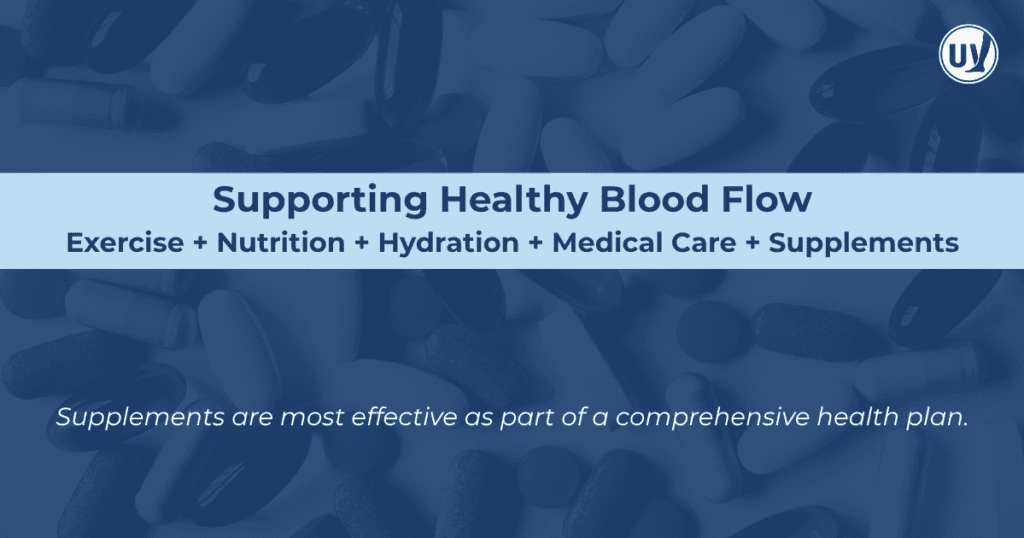
Supplements work best when combined with healthy lifestyle habits. Simple changes can have a significant impact on your vascular health.
Consider:
- Walking or exercising regularly
- Maintaining a healthy weight
- Eating a heart-healthy diet rich in fruits and vegetables
- Drinking enough water
- Avoiding smoking
- Wearing compression stockings if recommended by your provider
- Elevating your legs when sitting for long periods
These habits can help support healthy blood flow while reducing your risk of developing vein disease.
When Poor Circulation Is More Than a Vitamin Deficiency
Many people assume poor circulation simply means they need more exercise or a supplement. In reality, symptoms like leg pain, swelling, heaviness, or bulging veins may be caused by an underlying vein condition.
At UVVC, our specialists use advanced diagnostic ultrasound to identify the source of circulation problems and recommend personalized treatment options, including minimally invasive procedures when appropriate.
Frequently Asked Questions
There isn’t a single “best” supplement for everyone. Omega-3 fatty acids, beetroot, garlic, L-arginine, niacin, and ginkgo biloba have all been studied for their potential to support healthy circulation. The right option depends on your overall health, medications, and the cause of your symptoms.
Supplements may support overall vascular health, but they cannot eliminate varicose veins or treat chronic venous insufficiency. If you have visible veins, leg heaviness, swelling, or aching, it’s important to schedule an evaluation with a vein specialist.
Poor circulation can result from several conditions, including chronic venous insufficiency, peripheral artery disease, diabetes, blood clots, smoking, obesity, and prolonged sitting. A medical evaluation can determine the underlying cause and appropriate treatment.
You should seek medical care if you experience persistent leg swelling, pain, heaviness, numbness, skin discoloration, non-healing wounds, or visible varicose veins. These symptoms may indicate an underlying vascular condition that requires treatment.
Supplements can support healthy blood flow, but they work best alongside lifestyle changes and professional vein and vascular care. A specialist can help you create a comprehensive plan for optimal results.
Yes. Some supplements, such as niacin, can cause side effects or interact with medications if taken incorrectly. Always consult a vein and vascular specialist before starting any new supplement.
Persistent swelling, leg pain, varicose veins, skin changes, or fatigue in your legs can indicate underlying vein or vascular issues. A specialist can assess your condition and recommend safe, effective treatment options.
Supplements Can Support Healthy Circulation, But They’re Not a Cure
Natural supplements may help support healthy blood flow, particularly when paired with regular exercise, a balanced diet, and other healthy lifestyle habits. However, they cannot treat underlying vein disease or other vascular conditions.
If you’re experiencing persistent symptoms of poor circulation, the most effective next step is a comprehensive evaluation by a vein and vascular specialist. Early diagnosis can help prevent complications and get you back to living comfortably.
Schedule a consultation with United Vein & Vascular Centers to learn what’s causing your symptoms and explore treatment options that can improve your circulation and quality of life.