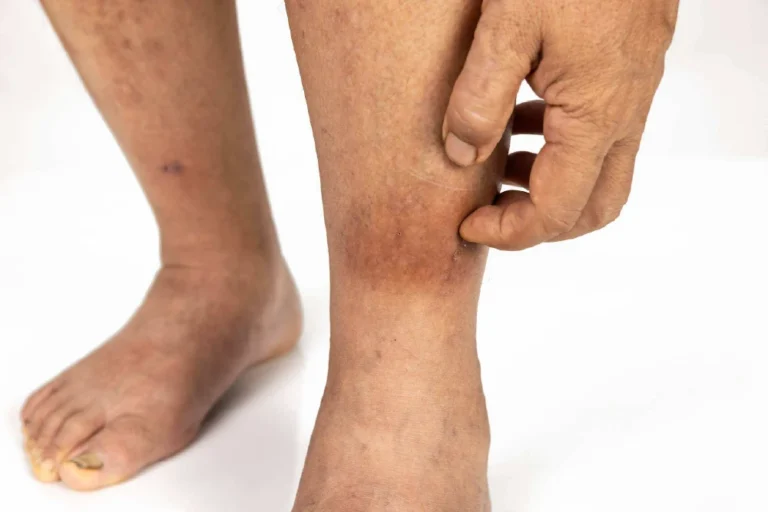

Skin Discoloration on Legs
Skin discoloration on the legs may appear as red, purple, brown, gray, pale, or bluish areas that differ from the surrounding skin. Changes may develop after an injury or skin irritation, but persistent discoloration around the ankles or lower legs can sometimes be associated with circulation problems. Discoloration accompanied by swelling, heaviness, aching, itching, or visible veins should be evaluated.
Associated Symptoms
- Swelling, heaviness, aching, or fatigue in the legs
- Itchy, dry, scaly, thickened, or hardened skin
- Visible veins or a sore that is slow to heal
The appearance of skin discoloration varies by skin tone and underlying cause. Changes linked to vein disease often develop gradually around the ankles or lower legs and may become more noticeable over time. A vein screening can help determine whether venous circulation may be contributing to the discoloration and accompanying leg symptoms.
Request a Screening
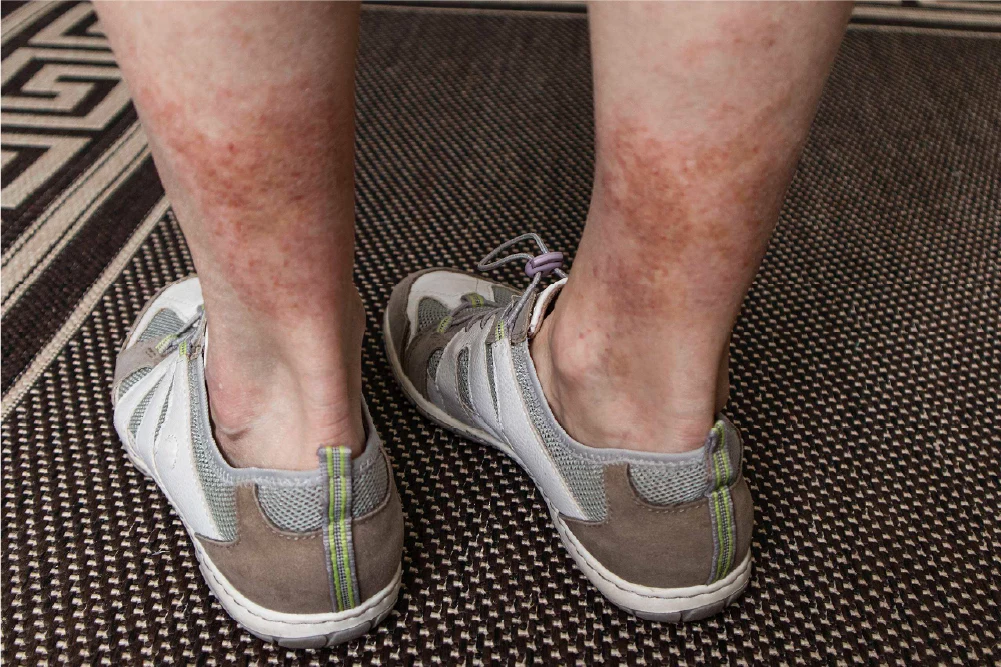
What Causes Skin Discoloration on the Legs?
Skin discoloration can develop for many reasons, including bruising, inflammation, infection, allergic reactions, medication effects, diabetes, and conditions affecting blood flow. When vein valves do not function properly, blood can pool in the lower legs and increase pressure within the veins. Fluid and blood components may then enter the surrounding tissue, contributing to reddish, purple, rust-colored, or brown skin changes.
Over time, chronic venous insufficiency may also contribute to venous stasis dermatitis, which can cause discoloration, itching, scaling, thickening, and irritation around the ankles and lower legs.
Skin color alone cannot confirm the cause. A healthcare provider can evaluate the location, pattern, accompanying symptoms, and circulation findings to determine whether the changes may be related to vein disease, arterial disease, a skin condition, or another medical issue.
What Kinds of Skin Changes Can Be Caused by Poor Circulation?
Earlier Skin Changes
- Mild itching, dryness, or irritation
- Discoloration that becomes more noticeable after prolonged standing
- Swelling that improves after resting or elevating the legs
- Color changes that can be red, brown, purple, or blue
Changes That Can Develop Over Time
- Darker or more widespread discoloration
- Thickened, hardened, or scaly skin
- Ongoing swelling around the ankles or lower legs
- Cracked skin or a slow-healing sore
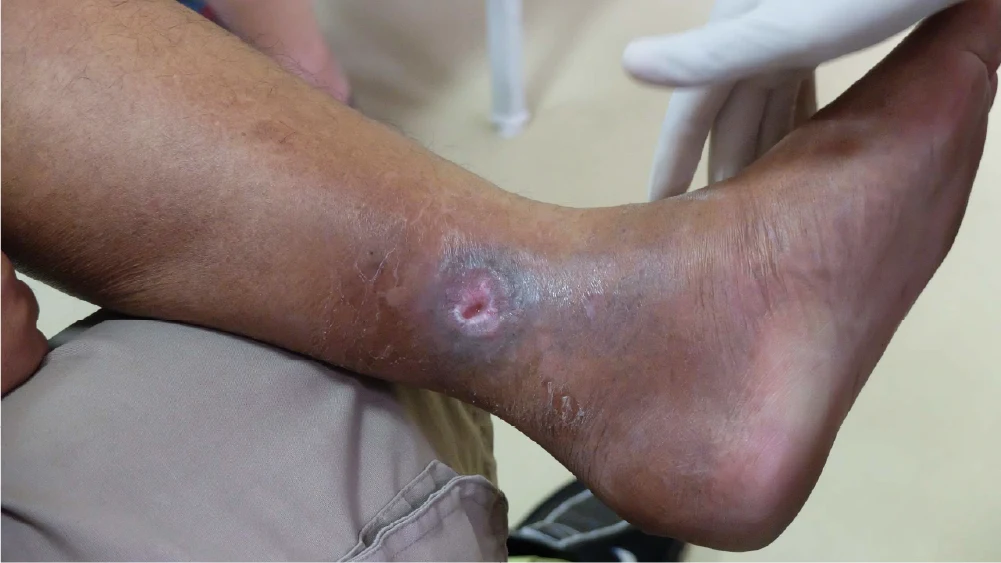
How Is Skin Discoloration on the Legs Diagnosed?
Diagnosis begins with a review of when the discoloration appeared, whether it has changed, and what other symptoms are present. A provider may ask about injuries, skin conditions, medications, diabetes, blood clots, circulation problems, and previous vein treatment.
Evaluation may include:
- Physical examination: A provider may assess the color, location, texture, temperature, and condition of the skin while checking for swelling, tenderness, visible veins, or wounds.
- Medical history: Recent injuries, medication changes, prolonged standing, previous blood clots, and other health conditions may help identify possible causes.
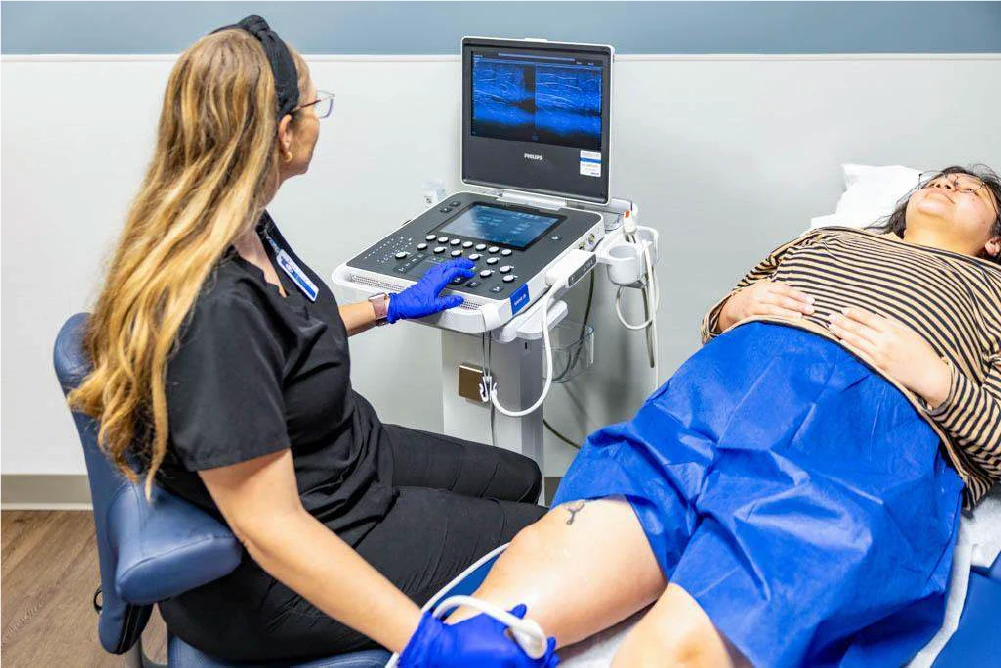
- Vein evaluation: Duplex ultrasound may be recommended to examine blood flow and determine whether weakened vein valves or another venous condition is present.
- Arterial evaluation: Pulse checks or other circulation tests may be needed when the leg or foot is cold, pale, blue, numb, painful, or slow to heal.
- Skin evaluation: A dermatology assessment or additional testing may be appropriate when the discoloration appears related to inflammation, infection, an allergic reaction, or another skin condition.
A vein screening can help identify whether venous symptoms are present and whether additional testing may be appropriate. If a diagnostic ultrasound is recommended, it may be scheduled for a later appointment.
Treatment Options for Skin Discoloration on the Legs
Treatment depends on the cause of the discoloration. Skin infections, arterial circulation problems, bruising, medication reactions, and dermatological conditions require different approaches. If an evaluation identifies underlying vein disease, treatment may focus on improving venous circulation, reducing swelling, and limiting additional pressure on the skin.
Vein-related treatment options may include:
- Compression therapy: Properly fitted compression garments may help reduce swelling and support blood flow when medically appropriate. Compression therapy should not be started without medical guidance when arterial disease may be present.
- Lifestyle recommendations: Walking, leg elevation, weight management when appropriate, and breaks from prolonged sitting or standing may help support circulation.
- Skin care recommendations: Gentle cleansing and moisturizing may help manage dryness or irritation. Topical products may address certain skin symptoms, but they do not correct an underlying vein problem.
- Radiofrequency ablation (RFA): This minimally invasive vein procedure uses radiofrequency energy to heat and close an affected vein, allowing blood to naturally reroute through healthier veins nearby.
- VenaSeal™: This adhesive-based vein closure procedure places a medical adhesive into an affected vein to close it, allowing blood to naturally reroute through healthier veins nearby.
- Varithena®: This injectable foam treatment closes certain affected veins so blood can naturally reroute through healthier veins nearby.
- Ultrasound-guided sclerotherapy: Ultrasound imaging is used to locate an affected vein beneath the skin and guide a medical solution or foam into the targeted vein, causing it to close.
Treating underlying vein disease may help reduce swelling and limit the progression of vein-related skin changes. Existing discoloration may fade gradually, remain visible, or require additional skin-focused care. Results and treatment recommendations vary based on the cause, severity, medical history, and circulation findings.
Related Articles