
Contents
- What Causes Leg Pain at Night?
- Could It Be Vein Disease?
- Why Douglasville Residents Shouldn’t Ignore Nighttime Leg Pain
- Concerned About Your Vein Symptoms?
- How Vein Disease Is Diagnosed
- Treatment Options for Nighttime Leg Pain
- Returning to Restful Nights in Douglasville
- When to Seek Evaluation
- Frequently Asked Questions
- Take the next step toward better sleep and healthier legs
You might not think much of it at first, just a little discomfort when you finally sit down or try to relax. But for many people, that’s when certain symptoms become more noticeable. Many people in Douglasville, GA notice leg discomfort most at the end of the day, especially when trying to relax or fall asleep. Aching, heaviness, restlessness, or throbbing sensations at night can sometimes point to an underlying circulation issue rather than simple fatigue.
Leg discomfort that becomes more noticeable in the evening is often tied to how blood flows through the veins during the day. In this article, we’ll break down what can cause leg pain at night, how vein conditions may be involved, and how these symptoms are evaluated and treated in Douglasville.
If you’ve noticed recurring discomfort, restlessness, or unusual sensations in your legs at night, a vein screening can help identify what’s behind your symptoms and what next steps may be recommended.
What Causes Leg Pain at Night?
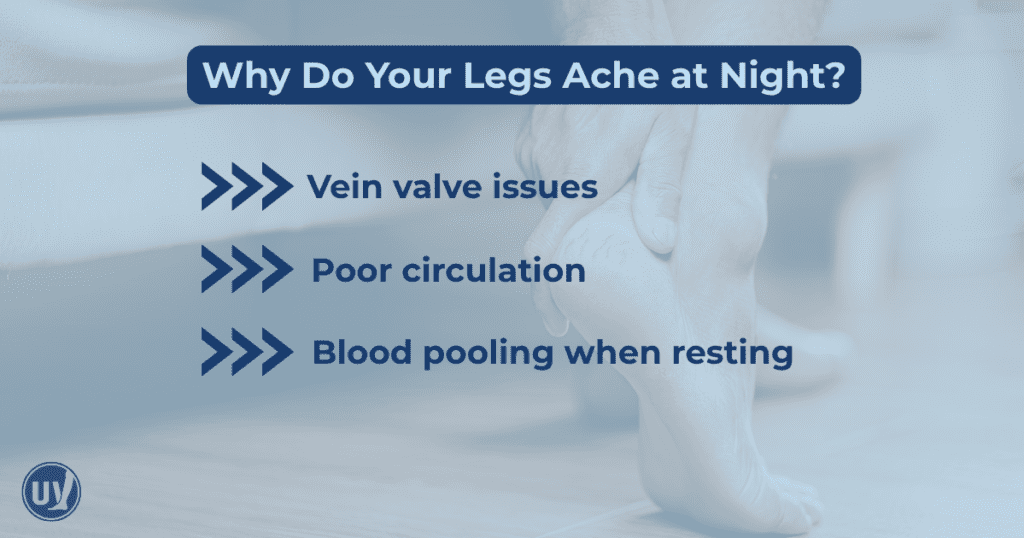
Leg pain at night can have several causes, but one of the most common is poor circulation related to vein disease. When veins have difficulty returning blood to the heart, pressure can build in the legs, leading to discomfort that becomes more noticeable when you’re resting.
Other contributing factors may include:
- Prolonged sitting or standing during the day
- Muscle fatigue or overuse
- Dehydration
- Nerve-related conditions
- Underlying vein conditions like chronic venous insufficiency (CVI)
Because symptoms often worsen when you’re lying down, they can disrupt sleep and impact your overall quality of life.
Could It Be Vein Disease?
Vein disease is a frequent but often overlooked cause of nighttime leg pain. Conditions like chronic venous insufficiency can cause blood to pool in the legs, increasing pressure and leading to symptoms that become more noticeable in the evening.
Common signs include:
- Aching or throbbing in the legs at night
- A feeling of heaviness or fatigue
- Restlessness or discomfort when trying to sleep
- Swelling in the lower legs or ankles
- Visible varicose or spider veins
These symptoms may develop gradually, which is why they are often dismissed at first.
Why Douglasville Residents Shouldn’t Ignore Nighttime Leg Pain
Occasional discomfort may not be cause for concern, but persistent or worsening symptoms can indicate an underlying vein condition.
If left untreated, vein disease may lead to:
- Increased discomfort and disrupted sleep
- Worsening swelling or heaviness
- Skin changes, including discoloration or irritation
- Progression of visible veins
Early evaluation can help identify the cause and prevent symptoms from becoming more severe.
Concerned About Your Vein Symptoms?
Schedule a vein screening to get answers and explore treatment options.
How Vein Disease Is Diagnosed
At our Douglasville clinic, diagnosing vein disease begins with a comprehensive evaluation of your symptoms and vein health. This typically includes a duplex ultrasound, a non-invasive imaging test used to assess blood flow and identify areas where circulation may be impaired.
This process helps determine whether blood is pooling in the veins, identify the location and severity of the issue, and guide a personalized treatment plan.
Treatment Options for Nighttime Leg Pain
If vein disease is contributing to your symptoms, treatment is focused on improving circulation and relieving pressure in the veins.
Options may include:
- Compression therapy to support blood flow
- Lifestyle adjustments, including movement and leg elevation
- Minimally invasive vein procedures performed in-office
These treatments are designed to address the underlying issue, helping reduce nighttime discomfort and improve overall leg health.
Returning to Restful Nights in Douglasville
Addressing the cause of nighttime leg pain can make a meaningful difference in your sleep and daily comfort. With improved circulation, many patients find it easier to relax in the evening and wake up feeling more rested.
Whether you’re running errands or enjoying time around Boundary Waters Park, improved symptom control can help you move through your days and nights with greater comfort and ease.
When to Seek Evaluation
If your legs ache at night consistently, especially when paired with swelling, heaviness, or visible veins, it may be time to have your veins evaluated. These symptoms often don’t resolve on their own and may worsen over time without treatment.
Frequently Asked Questions
Leg pain often worsens at night because you are less active. Without muscle movement to support circulation, blood can pool in the legs if vein function is weakened.
Yes. Varicose veins are often a sign of underlying vein dysfunction, which can contribute to aching, heaviness, and nighttime discomfort.
You should consider an evaluation if leg pain is persistent, worsens at night, or is accompanied by swelling, visible veins, or sleep disruption.
Take the next step toward better sleep and healthier legs
Nighttime leg pain should not be something you simply accept as normal. In many cases, it is your body signaling that your veins need attention.
If you are experiencing ongoing discomfort, the team at UVVC is here to help you understand what is causing your symptoms and what can be done to treat them.
A simple evaluation could be the first step toward better sleep, improved comfort, and healthier legs. Schedule a consultation today!