
Upper Extremity Embolization
Understanding Chronic Hand and Elbow Pain and Minimally Invasive Treatment Options
Chronic hand and elbow pain can affect far more than a single joint. Because the hands and arms are involved in so many daily movements, ongoing discomfort may interfere with everything from typing and preparing meals to lifting groceries and enjoying favorite hobbies.
Symptoms often depend on the area involved. Hand pain may develop at the base of the thumb or within the finger joints, making it harder to grip, pinch, write, or open containers. Elbow pain may be felt along the inside or outside of the joint and become more noticeable when lifting, carrying, rotating the forearm, or moving the wrist.
When pain continues despite conservative care, persistent inflammation and abnormal blood flow may be contributing to the symptoms. Upper extremity embolization is a minimally invasive vascular procedure designed for select patients with certain types of chronic hand or elbow pain. At United Vein & Vascular Centers, our care team considers your symptoms, previous treatments, examination or imaging findings, and overall health to determine whether the procedure may be an appropriate option.
Request a Consultation

What Causes Chronic Hand and Elbow Pain?
The hand and elbow depend on several joints, tendons, muscles, ligaments, and other soft tissues working together. When these structures become irritated, inflamed, or affected by wear and tear, pain can interfere with both precise hand movements and larger arm motions.
Chronic hand pain may be related to osteoarthritis at the base of the thumb or within the finger joints. These changes can contribute to pain, stiffness, tenderness, swelling, and reduced grip or pinch strength. Repetitive use, prior injury, or other inflammatory joint conditions may also contribute to ongoing symptoms.
Chronic elbow pain may develop when the tendons or tissues around the joint become irritated. Lateral epicondylitis, commonly called tennis elbow, often causes pain along the outside of the elbow that worsens with gripping, lifting, wrist movement, or forearm rotation. Pain along the inside of the elbow, arthritis, overuse, prior injury, and other inflammatory conditions may cause similar limitations.
Because hand and elbow pain can have several possible causes, an accurate evaluation is important. Understanding which structures are affected and what may be contributing to the inflammation can help guide the next step in care.
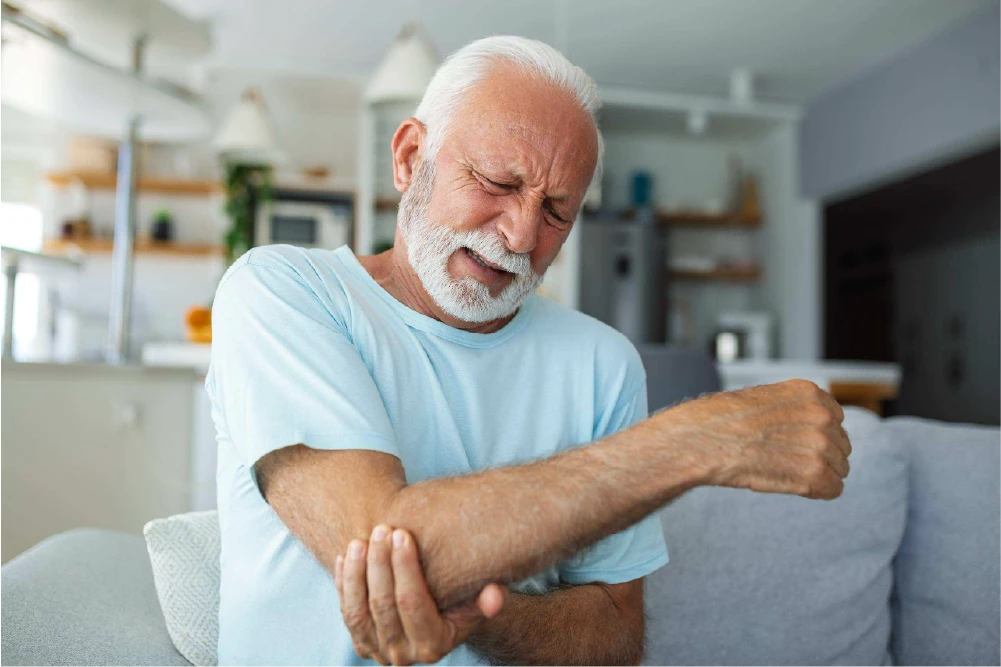
Common Symptoms of Chronic Hand and Elbow Pain
Symptoms can vary depending on whether the hand, elbow, or surrounding tissues are affected. Some people notice pain only during specific activities, while others experience stiffness or discomfort throughout the day.
Hand symptoms may include:
- Pain at the base of the thumb or in the finger joints
- Pain with gripping, pinching, writing, typing, or opening containers
- Stiffness or limited movement in an affected joint
- Tenderness or swelling around the thumb or fingers
- Reduced grip or pinch strength
- Difficulty completing detailed or repetitive hand movements
Elbow symptoms may include:
- Persistent pain along the inside or outside of the elbow
- Pain with gripping, lifting, carrying, or wrist movement
- Discomfort with forearm rotation
- Tenderness around the elbow
- Stiffness or reduced range of motion
- Difficulty completing work, household, or recreational activities
- Pain that continues despite conservative treatment
Symptoms may improve temporarily with rest and return as soon as the hand or arm is used again. When pain becomes persistent, even familiar activities can require more time, effort, or assistance.

Why Hand and Elbow Pain Can Disrupt Daily Life
The hands and elbows are involved in many of the movements people repeat throughout the day. Hand pain can make it difficult to hold utensils, turn a key, button clothing, use a phone, write, or complete tasks that require steady grip strength. Elbow pain may interfere with lifting, carrying, reaching, cooking, cleaning, exercising, or performing job-related movements.
Over time, people may change how they use the affected arm without realizing it. They may avoid certain tasks, use the opposite side more often, grip objects differently, or stop participating in activities that aggravate their symptoms. These adjustments can affect comfort, productivity, independence, and confidence with everyday movement.
Persistent pain should not automatically be dismissed as a normal result of aging or repetitive use. If symptoms are limiting what you can do or returning despite treatment, an evaluation can help identify the likely source and determine whether additional options may be available.

How Chronic Hand and Elbow Pain Is Evaluated
An evaluation usually begins with a discussion of your symptoms, medical history, activity level, and previous treatments. Your provider may ask where the pain is located, which movements make it worse, how long it has been present, and how it affects work, hobbies, sleep, or daily tasks.
An evaluation may include:
- Review of your symptoms and medical history
- Physical exam of the hand, wrist, elbow, and surrounding tissues
- Assessment of tenderness, swelling, range of motion, and strength
- Discussion of prior therapy, medication, bracing, splinting, or injections
- Review of available imaging or other examination findings
- Evaluation of how symptoms affect daily activity and care goals
Because pain in the hand or elbow may come from the joints, tendons, muscles, nerves, or nearby structures, a thorough evaluation is important before choosing a treatment plan. The evaluation also helps determine whether symptoms may be related to inflammation that could respond to a vascular approach.

When to Seek Care for Hand or Elbow Pain
Mild discomfort may improve with rest, activity changes, therapy, medication, or supportive devices. However, pain that continues, worsens, or interferes with normal use of the hand or arm may need further evaluation.
You may want to seek care if:
- Hand or elbow pain lasts for several weeks or months
- Pain makes gripping, pinching, lifting, or carrying difficult
- Stiffness or tenderness is limiting normal movement
- Symptoms interfere with work, household tasks, hobbies, or exercise
- Pain returns despite therapy, medication, bracing, splinting, rest, or injections
- Grip or pinch strength has decreased
- Symptoms are becoming more frequent or more difficult to manage
- You are looking for options beyond conservative care
A specialist can help determine what may be contributing to your symptoms and whether chronic inflammation and abnormal blood flow are part of the problem.

Hand and Elbow Pain Treatment Options
Treatment depends on the location and suspected cause of the pain, the severity of symptoms, previous treatment history, and how much the condition affects daily life. Many patients begin with conservative care before considering additional options.
Common approaches may include:
- Rest and activity modification
- Physical or occupational therapy
- Stretching, strengthening, or mobility exercises
- Medication when appropriate
- Bracing or splinting
- Ice or heat therapy
- Injections in select cases
- Orthopedic or other specialty evaluation when needed
For some patients, hand or elbow pain continues despite these approaches. When symptoms are related to persistent inflammation and abnormal blood flow in targeted tissues, a vascular specialist may recommend further evaluation to determine whether upper extremity embolization may be an option.

Upper Extremity Embolization for Chronic Hand and Elbow Pain
Upper extremity embolization is a minimally invasive vascular procedure for select patients with chronic hand or elbow pain that has not improved with conservative treatment. It is designed to reduce abnormal blood flow associated with inflammation in carefully targeted tissues.
During the procedure, a physician uses image guidance to guide a thin catheter into the arteries supplying the affected area. Once the targeted abnormal vessels are identified, tiny embolic particles are delivered to reduce excess blood flow associated with chronic inflammation.
For hand pain, treatment may target inflamed tissues around the base of the thumb or finger joints. For elbow pain, it may target tissues surrounding the joint or affected tendons. The exact treatment area depends on the location and suspected source of the symptoms.
Upper extremity embolization does not remove or replace a joint, repair a torn tendon, or correct every possible cause of hand or elbow pain. Instead, it addresses inflammation-related blood flow that may be helping sustain pain in appropriate candidates.
Because every case is different, your provider will review your symptoms, diagnosis, previous treatments, imaging or examination findings, and overall health to determine whether hand or elbow embolization may be appropriate for you.

Benefits of a Minimally Invasive Approach
For appropriate candidates, upper extremity embolization may offer another option when chronic hand or elbow pain has not improved with nonsurgical care.
Potential benefits may include:
- No open surgery
- No large incision
- Image-guided precision
- Outpatient treatment setting
- Targeted treatment of inflammation-related blood flow
- Reduced downtime compared with more invasive procedures
- Potential improvement in pain and daily mobility
- Option for select patients who are not ready for or are not candidates for more invasive procedures
Not every patient with hand or elbow pain will need upper extremity embolization. Your provider will recommend a care plan based on your diagnosis, symptoms, previous treatments, and individual health needs.

What to Expect After Upper Extremity Embolization
Most patients return home the same day after upper extremity embolization. After the procedure, your care team will provide instructions for caring for the small access site, managing activity, and gradually returning to normal use of the hand or arm.
Recovery can vary from patient to patient. Some people may experience mild soreness, bruising, or tenderness near the access site. Your provider may recommend avoiding strenuous lifting or repetitive activity for a short period while continuing any approved therapy or mobility plan.
Improvement may happen gradually as inflammation decreases over time. Follow-up care allows your provider to monitor your symptoms, answer questions, and assess changes in pain, movement, grip, or everyday function after treatment.