If your legs often feel heavy, tired, or achy at the end of the day, you might assume it is just part of getting older or the result of being on your feet too long. But when these symptoms become frequent, persistent, or start interfering with daily life, they may be a sign of an underlying circulation problem known as venous reflux disease.
Venous reflux disease, sometimes referred to as chronic venous insufficiency, affects how blood flows through the veins, particularly in the legs. While it is a common condition, it often goes undiagnosed for years because symptoms can develop gradually and are easy to dismiss. Understanding what venous reflux disease is, how it presents, and what treatment options are available can help you take control of your leg health before complications arise.
What Is Venous Reflux Disease?
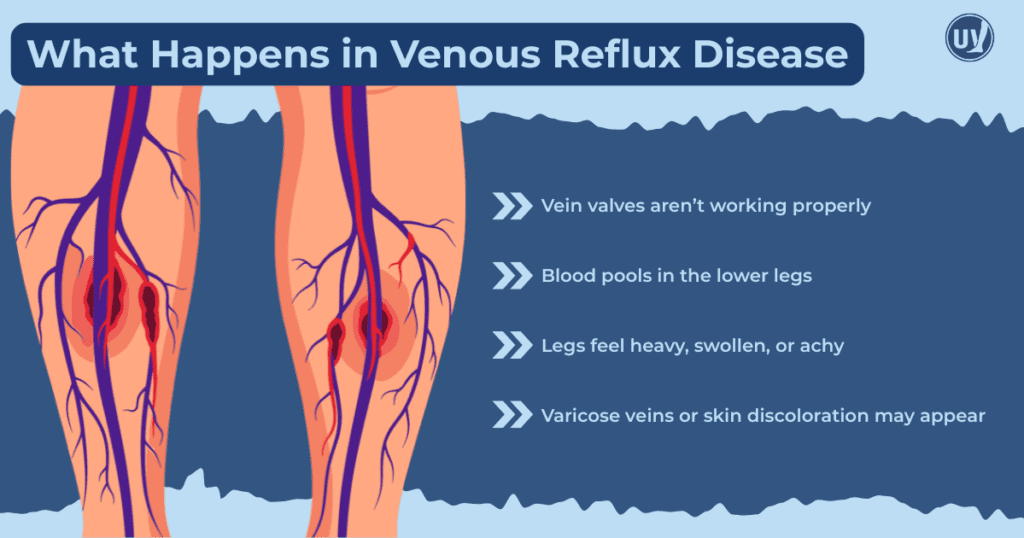
Venous reflux disease occurs when the valves inside your veins stop working as they should. Under normal conditions, these tiny valves open to allow blood to move upward toward the heart and close to prevent it from flowing backward. In people with venous reflux disease, these valves weaken or become damaged.
When the valves fail, blood flows backward and begins to pool in the lower legs. This backward flow increases pressure inside the veins, stretching them and reducing their ability to circulate blood effectively. Over time, this pressure leads to many of the symptoms commonly associated with venous reflux disease.
Although venous reflux most often affects the legs, it can also occur in other areas of the body, including the pelvic region or rectal veins. However, leg symptoms are the most common and most noticeable.
Common Symptoms of Venous Reflux Disease
Venous reflux disease can look different from person to person, but symptoms often worsen over time if left untreated. Many patients notice that their discomfort increases after long periods of standing or sitting and improves with leg elevation.
Some of the most common symptoms include:
Obrzęk nóg
Swelling in the ankles, feet, or lower legs is often one of the earliest signs of venous reflux disease. Swelling may be mild in the morning and worsen as the day goes on, especially after standing or sitting for extended periods.
Aching, heaviness, and fatigue
Many people describe their legs as feeling heavy, tired, or sore. This sensation can make it uncomfortable to walk, stand, or stay active for long periods of time.
Throbbing or cramping
Some patients experience throbbing, burning, or cramping sensations in their legs, particularly at night or after activity.
Przebarwienia skóry
As blood pools in the lower legs, the skin around the ankles may begin to darken, taking on a brown or reddish appearance. This discoloration is a sign of ongoing vein pressure and capillary damage.
Widoczne żylaki
Bulging, twisted veins that appear near the surface of the skin are a common sign of venous reflux. These veins develop as pressure builds in the superficial veins.
Skin changes and irritation
Poor circulation can lead to dry, itchy, or inflamed skin. Some people develop eczema-like rashes around the ankles or lower legs.
Venous leg ulcers
In advanced cases, venous reflux disease can cause open sores on the lower legs or ankles. These ulcers heal slowly and require medical attention to prevent infection.
Types of Venous Reflux Disease
Venous reflux disease can be classified based on which veins are affected.
Superficial venous reflux
This type affects veins closer to the surface of the skin and is commonly associated with visible varicose veins. While it is often less dangerous than deep vein involvement, it can still cause significant discomfort and skin changes.
Deep venous reflux
This type involves the larger veins deeper within the leg. Deep venous reflux is more serious and may increase the risk of complications such as blood clots and chronic swelling.
In some cases, patients may have a combination of both superficial and deep venous reflux.
How Venous Reflux Disease Is Diagnosed
If you are experiencing symptoms of venous reflux disease, a vein specialist can evaluate your condition through a combination of medical history, physical examination, and diagnostic testing.
One of the most common tools used to diagnose venous reflux is a Doppler ultrasound. This painless, noninvasive test uses sound waves to visualize blood flow in the veins and determine whether valves are functioning properly. The ultrasound allows the specialist to identify which veins are affected and how severe the reflux is.
In some cases, additional tests such as plethysmography may be used to measure blood volume changes in the legs and assess circulation efficiency.
Accurate diagnosis is essential for creating an effective treatment plan tailored to your specific needs.
Treatment Options for Venous Reflux Disease
The good news is that venous reflux disease is highly treatable. With proper care, many patients experience significant symptom relief and improved quality of life.
Lifestyle and Conservative Treatments
For mild to moderate cases, conservative management may be recommended as a first step.
These approaches often include:
- Wearing compression stockings to support healthy blood flow
- Elevating the legs throughout the day
- Staying physically active to promote circulation
- Maintaining a healthy weight to reduce vein pressure
- Avoiding long periods of standing or sitting when possible
While these strategies do not cure venous reflux disease, they can help manage symptoms and slow progression.
Minimally Invasive Vein Treatments
For patients with more advanced disease or persistent symptoms, minimally invasive procedures are often recommended. These treatments are performed on an outpatient basis and typically require little to no downtime.
Common options include:
- Sclerotherapy: A specialized solution is injected into the affected vein, causing it to close and gradually be absorbed by the body.
- Radiofrequency ablation: Radiofrequency energy is used to heat and seal damaged veins, rerouting blood flow to healthier veins.
- VenaSeal™: A medical adhesive is used to close the affected vein from the inside, eliminating reflux without the need for heat or multiple injections.
These treatments are designed to address the root cause of venous reflux by closing malfunctioning veins and restoring healthy circulation.
Surgical Treatment
In rare or severe cases, surgical intervention may be necessary to remove or repair damaged veins. Your vein specialist will determine whether surgery is appropriate based on your condition and overall health.
Why Early Treatment Matters
Left untreated, venous reflux disease can progress and lead to serious complications. Chronic swelling and skin changes increase the risk of infections, ulcers, and reduced mobility. In some cases, advanced venous disease may contribute to blood clots.
Early diagnosis and treatment can help prevent these outcomes while improving comfort and long-term leg health.
Często zadawane pytania
Is venous reflux disease the same as varicose veins?
Varicose veins are often a symptom of venous reflux disease, but they are not the same thing. Venous reflux disease refers to the underlying valve dysfunction that causes varicose veins and other symptoms.
Can venous reflux disease go away on its own?
Venous reflux disease does not typically resolve without treatment. Symptoms may temporarily improve with leg elevation or compression, but the underlying valve damage usually persists.
Kiedy należy udać się do specjalisty chorób żył?
If you experience ongoing leg swelling, pain, heaviness, visible veins, or skin changes, it is a good idea to consult a vein specialist. Early evaluation allows for more treatment options and better outcomes.
Find Expert Vein Care Near You
Living with leg pain, swelling, or visible vein changes does not have to be your new normal. At United Vein & Vascular Centers, our experienced specialists are dedicated to diagnosing and treating venous reflux disease using advanced, minimally invasive techniques.
Our team takes the time to understand your symptoms, explain your condition, and develop a personalized treatment plan designed to improve circulation and protect your long-term leg health.
If you are experiencing symptoms of venous reflux disease, find a United Vein & Vascular Centers clinic near you and schedule a consultation today. Taking the first step can help you feel more comfortable, confident, and active again.