
Zawartość
- Why Vein Treatment Is About More Than Appearance
- What Modern Vein Surgery Actually Looks Like Today
- Preparing for Your Vein Procedure
- Co dzieje się podczas procedury
- The First 24 Hours After Vein Treatment
- The Healing Process Week by Week
- Activities to Avoid During Recovery
- How Vein Treatment Improves Daily Life
- Why Early Treatment Matters for Vein Disease
- Często zadawane pytania
- Take the First Step Toward Healthier Circulation
Thinking about vein surgery can bring up a lot of questions. Will it hurt? How long will recovery take? When can you get back to your normal routine? Most importantly, will it actually help you feel better?
Modern vein treatments are very different from what many people imagine. Today’s procedures are designed to be minimally invasive, highly precise, and focused on getting you back to your life quickly. Whether you are dealing with varicose veins or symptoms of chronic venous insufficiency, understanding the process can help you feel confident and prepared.
This guide walks you through what vein surgery really involves, what recovery looks like, and how treatment can improve both your health and your day to day comfort.
Why Vein Treatment Is About More Than Appearance
Many people assume vein treatment is cosmetic. In reality, vein disease is a medical condition that affects circulation. When valves inside your veins stop working properly, blood can pool in the legs. This leads to symptoms such as:
- Bolące lub ciężkie nogi
- Obrzęk kostek lub łydek
- Burning, throbbing, or cramping
- Visible bulging or twisted veins
- Skin discoloration or irritation
- Fatigue when standing or walking
Over time, untreated vein disease can progress to more serious complications, including skin ulcers or blood clots. That is why early treatment is not just about how your legs look. It is about restoring healthy circulation and preventing long term damage.
What Modern Vein Surgery Actually Looks Like Today
The term “vein surgery” can sound intimidating, but most procedures performed today are not traditional surgery at all. They are outpatient treatments that use advanced technology to close or remove damaged veins without major incisions.
Common minimally invasive vein procedures include:
- Radiofrequency ablation that gently closes veins with controlled energy
- Sclerotherapy that redirects blood flow by treating smaller veins with a medical solution
- Microphlebectomy that removes surface veins through tiny openings in the skin
These treatments are performed in a comfortable clinical setting. Most patients are awake, experience little discomfort, and go home the same day.
Preparing for Your Vein Procedure
Preparation is simple, but it plays an important role in ensuring a smooth experience and recovery.
Before your treatment, your provider will perform a detailed evaluation using ultrasound imaging. This allows the care team to map your veins and identify exactly where circulation problems are occurring. This level of precision helps tailor treatment specifically to your body.
You may be asked to:
- Wear loose, comfortable clothing on procedure day
- Avoid applying lotions to your legs beforehand
- Arrange for light activity afterward such as walking
- Follow guidance about medications if needed
Unlike major surgeries, there is usually no need for fasting or extended downtime.
Co dzieje się podczas procedury
Most vein treatments take less than an hour. A local anesthetic is used to numb the treatment area, which means you stay comfortable without general anesthesia.
During the procedure, your specialist treats the affected vein using image guidance. The unhealthy vein is sealed or removed, and blood naturally reroutes to nearby healthy veins. Your body then absorbs the treated vein over time.
Patients are often surprised by how quick and straightforward the experience is. Many describe it as easier than expected.
The First 24 Hours After Vein Treatment
One of the biggest advantages of modern vein procedures is how quickly you can return to normal movement.
Walking is encouraged immediately after treatment. Light activity helps promote healthy circulation and supports healing. Most patients resume everyday routines the same day, including work that is not physically strenuous.
You may notice:
- Mild soreness or tenderness
- Bruising near the treatment area
- A sensation of tightness or pulling
These responses are normal and typically resolve within a few days to two weeks.
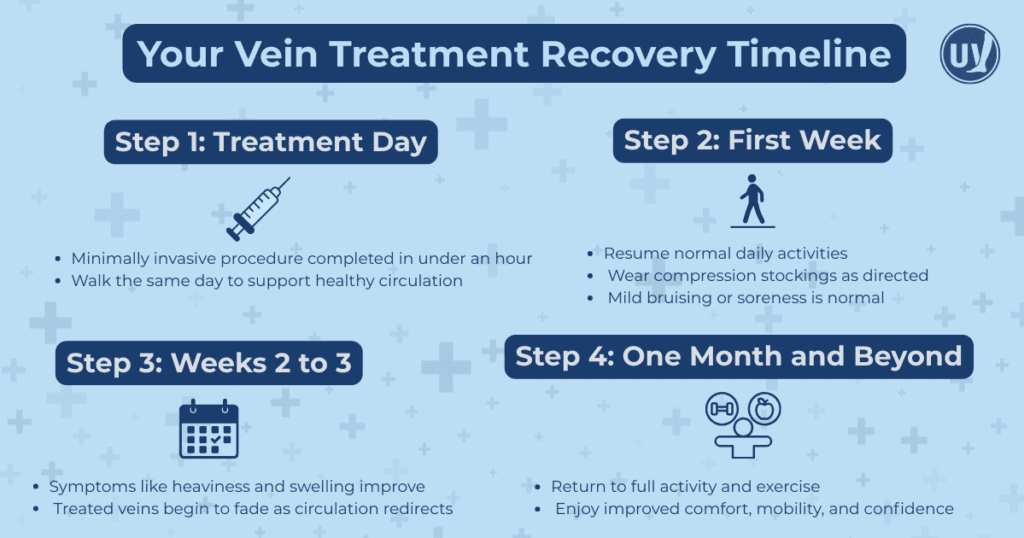
The Healing Process Week by Week
Understanding what your body is doing during recovery can make the experience feel much more reassuring.
Week One: Supporting Circulation
During the first week, you will likely wear compression stockings to help reduce swelling and encourage blood flow. Walking daily is recommended. Strenuous workouts and heavy lifting should be avoided during this time to allow veins to heal properly.
Weeks Two to Three: Gradual Improvement
Bruising and tenderness continue to fade. Many patients notice reduced leg fatigue and less swelling. The treated vein begins transforming into harmless scar tissue that your body will naturally absorb.
Weeks Four and Beyond: Long Term Benefits
Circulation continues improving, and symptoms such as heaviness or aching often diminish significantly. Cosmetic improvements also become more visible as treated veins fade.
Activities to Avoid During Recovery
While recovery is quick, there are a few temporary restrictions to protect healing veins:
- Avoid hot baths, pools, and hot tubs for about one week
- Delay high impact exercise such as running or heavy weightlifting
- Do not lift heavy objects for the first several days
- Limit prolonged standing without movement
These precautions help prevent pressure from reopening treated veins and allow your body to adapt to healthier circulation patterns.
How Vein Treatment Improves Daily Life
Patients often seek treatment because of discomfort, but many are surprised by how much better they feel overall afterward.
Benefits may include:
- Increased energy in the legs
- Reduced swelling at the end of the day
- Improved ability to walk, travel, or exercise
- Better sleep without leg discomfort
- Confidence wearing clothing that shows the legs
By addressing the underlying circulation issue, treatment improves both physical comfort and long term vascular health.
Why Early Treatment Matters for Vein Disease
Vein disease is progressive, meaning it worsens over time if ignored. What begins as mild spider veins or occasional aching can develop into chronic inflammation, skin changes, or more serious vascular conditions.
Seeking care early allows for simpler treatment, faster recovery, and better outcomes. Modern techniques are designed to intervene before complications arise, not after.
Często zadawane pytania
Most patients experience minimal discomfort. Treatments use local anesthesia, and many people return to normal activities the same day. Mild soreness afterward is temporary and manageable.
Many individuals return to work within 24 hours, especially if their job is not physically demanding. Your provider will give personalized recommendations based on your lifestyle.
The veins that are treated do not return. However, vein disease is influenced by genetics, lifestyle, and aging, so new problem veins can develop over time. Ongoing monitoring helps maintain long term results.
Take the First Step Toward Healthier Circulation
Living with leg pain, swelling, or visible veins does not have to be your normal. Modern vein treatment is safe, effective, and designed to fit into your life with minimal disruption.
The specialists at United Vein & Vascular Centers provide advanced, personalized care to diagnose vein disease, relieve symptoms, and restore healthy blood flow. Their team focuses on treatments that reduce discomfort, improve mobility, and help you return to the activities you enjoy.
If you are ready to stop managing symptoms and start addressing the cause, schedule a consultation today and learn how vein treatment can help you feel better, move easier, and live more confidently.