Visible veins on the legs can vary in size, color, and appearance, which can make it difficult to know what you’re looking at, or whether it’s something to be concerned about. Spider veins and reticular veins are two common types, and while they may seem similar at first glance, they have important differences in how they form and what they may indicate about your vein health.
Understanding these differences can help you recognize when visible veins may be more than cosmetic and could be an early sign of an underlying circulation issue.
Czym są pajączki?
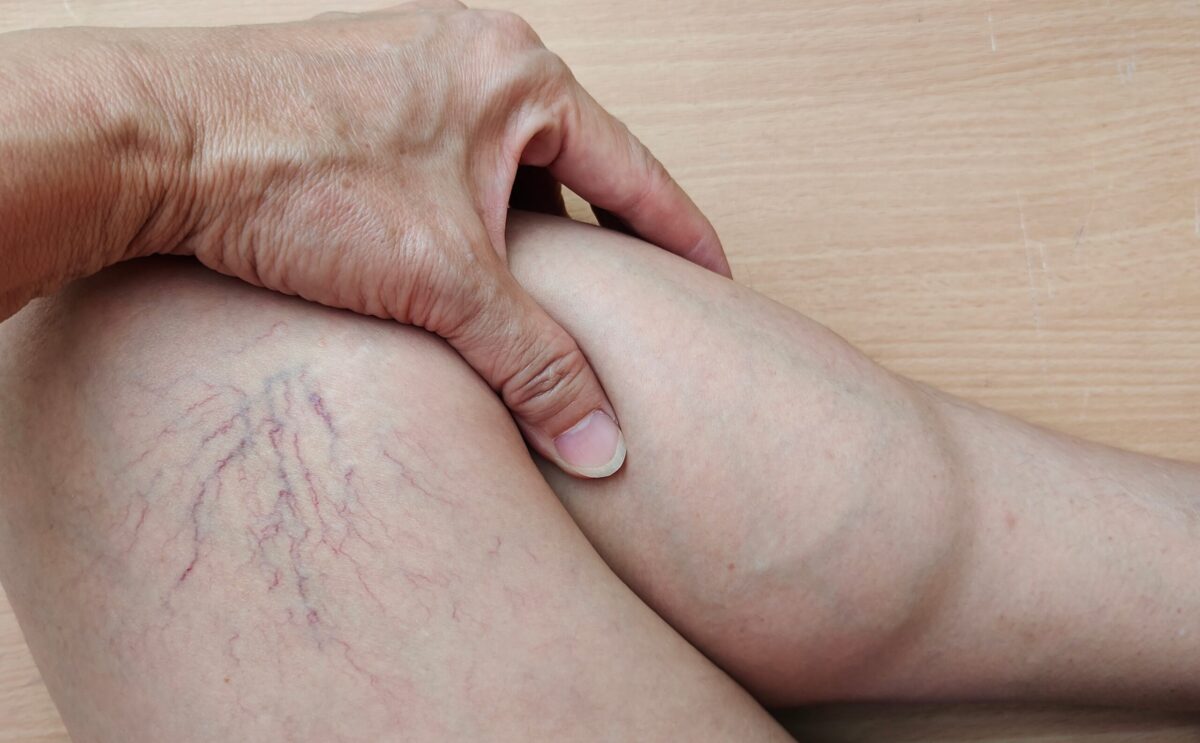
Spider veins are small, damaged blood vessels that appear just beneath the surface of the skin. They are typically red, blue, or purple and form thin, web-like patterns, which is how they get their name.
These veins most commonly appear on the legs, particularly around the thighs, calves, and ankles. While spider veins are often thought of as a cosmetic concern, they can sometimes be linked to underlying vein issues and may be accompanied by symptoms such as itching, burning, or increased sensitivity.
Czym są żyły siatkowate?
Reticular veins are slightly larger than spider veins and are located just below the surface of the skin. They are usually blue or green in color and appear as thicker, rope-like lines rather than fine web patterns.
While reticular veins are often not as visible as spider veins, they can serve as “feeder veins,” meaning they may contribute to the development of spider veins on the surface. In some cases, if left untreated, reticular veins may also progress and contribute to the development of larger varicose veins over time. Some patients may also experience mild discomfort or pressure, and in certain cases, these veins may be associated with underlying circulation changes.

How These Veins Develop
Both spider veins and reticular veins develop when pressure builds within the veins or when vein walls and valves weaken over time. This can cause blood to pool rather than flow efficiently back toward the heart, increasing pressure within the veins and contributing to vein dysfunction over time.
Factors that may contribute to their development include genetics, hormonal changes, prolonged standing or sitting, and lifestyle habits that affect circulation. While these veins may develop gradually, they often become more noticeable over time as pressure in the veins increases.
When Visible Veins May Indicate Venous Insufficiency
Visible veins are not always just a cosmetic concern. In some cases, they may be an early sign of chronic venous insufficiency, a condition in which blood is not circulating properly through the veins.
If spider veins or reticular veins are accompanied by symptoms such as leg heaviness, swelling, aching, or skin changes, it may indicate an underlying circulation issue. Identifying these signs early can help prevent symptoms from progressing and allow for more effective treatment.
In some cases, these visible veins may be one of the earliest noticeable signs of vein disease.
Treatment Options for Visible Veins
Treatment for visible veins focuses on improving circulation and addressing the underlying vein dysfunction, not just their appearance.
Some options for treatment include:
- Sclerotherapy to treat spider veins and smaller surface veins
- Minimally invasive procedures to address underlying venous reflux
- Compression therapy to support circulation and reduce symptoms
By treating both visible veins and any contributing underlying issues, these approaches can help improve both appearance and overall vein health.
Często zadawane pytania
No, reticular veins are larger and located slightly deeper beneath the skin, while spider veins are smaller and appear closer to the surface.
They can. Some patients experience mild discomfort, pressure, or aching in areas where reticular veins are present.
Yes, in some cases, visible veins may be associated with underlying conditions such as chronic venous insufficiency.
Spider veins are commonly treated with sclerotherapy, a minimally invasive procedure that closes the affected veins.
You should consider evaluation if veins are accompanied by symptoms such as pain, swelling, or skin changes, or if they become more noticeable over time.
Understand What Your Veins Are Telling You
While spider veins and reticular veins may look different, both can provide insight into your vein health. Understanding the difference can help you recognize when changes in your veins may be more than cosmetic and could indicate an underlying vein condition that should be evaluated. Early evaluation can help identify circulation issues before symptoms progress and support more effective treatment.
At United Vein & Vascular Centers (UVVC), our specialists provide comprehensive vein evaluations and minimally invasive treatment options designed to improve circulation and relieve symptoms.
Take the next step by connecting with a UVVC specialist to better understand your vein health and explore the treatment options available to you.