


Zawartość
- Q: What does a pulsating feeling in the legs feel like?
- Q: What causes a pulsating feeling in the legs at night?
- Q: How is a pulsating feeling different from muscle twitching, leg cramps, or restless legs?
- Q: Can a pulsating feeling occur with leg pain or other vein symptoms?
- Q: What symptoms may indicate that the pulsating feeling is vein-related?
- Q: When should a pulsating feeling in the leg be evaluated?
- Q: What can help relieve a pulsating feeling in the legs at night?
- Q: How can UVVC help when pulsating leg sensations are related to vein disease?
- Często zadawane pytania
- Find Out What Is Behind the Pulsating Feeling in Your Legs
Welcome back to Ask the Doc, an educational series from United Vein & Vascular Centers designed to provide clear, medically grounded answers to common questions about vein and vascular health. Each week, a UVVC physician explains what symptoms may mean, when they warrant attention, and how minimally invasive care may help when an underlying circulation problem is found.
In this installment, Dr. John Eun explains what can cause a pulsating feeling in the legs at night, how it differs from similar symptoms, and when a vein evaluation may be appropriate.
The short answer: A pulsating feeling in the legs may come from normal pulse awareness, muscle activity, nighttime leg cramps, restless legs syndrome, nerve-related symptoms, or circulation problems. When the sensation repeatedly occurs with aching, heaviness, swelling, visible veins, or other forms of leg discomfort, an evaluation can help determine whether vein disease may be contributing.
Q: What does a pulsating feeling in the legs feel like?
Dr. Eun:
Patients use “pulsating” to describe several different sensations. It may feel like:
- A rhythmic beat or throb beneath the skin
- A fluttering or tapping sensation in the calf or thigh
- Pressure that seems to rise and fall
- A repeated internal movement without visible muscle activity
- Aching or discomfort that occurs in waves
- A small area of the muscle that jumps or twitches
Some patients feel the sensation in one specific spot, while others experience it throughout the calf or lower leg. It may occur in one or both legs and may or may not follow the rhythm of the heartbeat.
Those details matter. A sensation that matches the heartbeat is different from an irregular muscle flutter, a sustained cramp, or an uncomfortable urge to move the legs. Patients should note where the feeling occurs, how long it lasts, whether it is painful, and what makes it better or worse.
Q: What causes a pulsating feeling in the legs at night?
Dr. Eun:
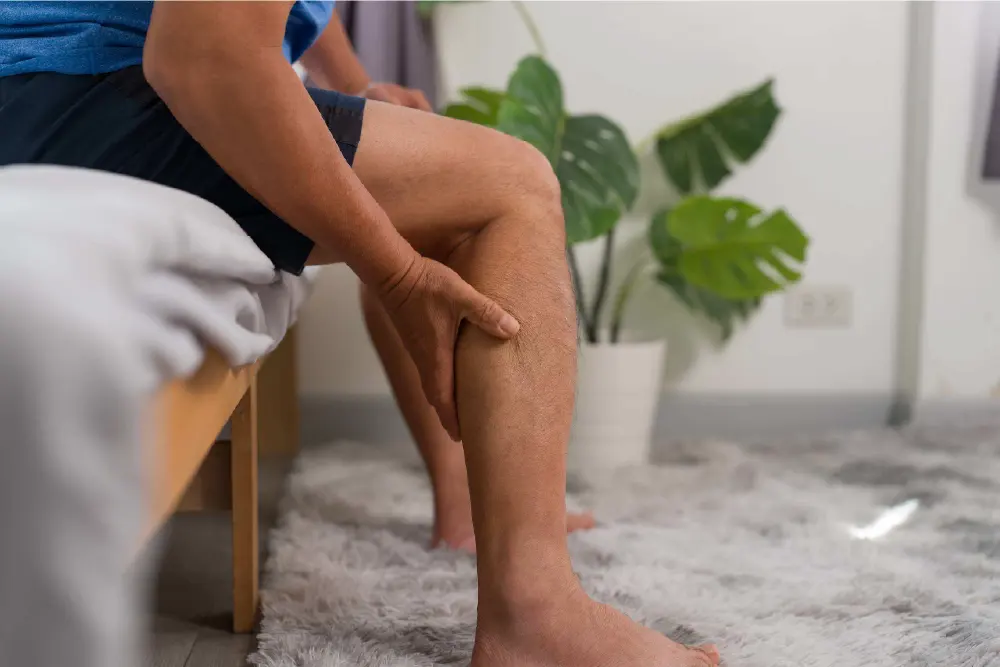
There is no single cause. A pulsating sensation may come from the muscles, nerves, arteries, veins, or a person’s increased awareness of normal body sensations while resting.
Possible explanations include:
- Normal pulse awareness: A person may become more conscious of a normal arterial pulse when lying still in a quiet room. This is more likely to feel regular and follow the heartbeat.
- Muscle fatigue or twitching: Muscles may flutter after exercise, prolonged activity, stress, or insufficient rest. Benign muscle twitches commonly affect the calf and may be visible beneath the skin.
- Nighttime leg cramps: A cramp causes a sudden, involuntary tightening of a muscle. It is usually painful and may leave the affected area sore afterward.
- Restless legs syndrome: This neurological condition causes uncomfortable sensations and a strong urge to move the legs. Symptoms typically begin or worsen during rest in the evening or at night and improve temporarily with movement.
- Nerve-related symptoms: Nerve irritation or damage can produce tingling, burning, crawling, electric, or throbbing sensations. Numbness or weakness may also be present.
- Medication or health-related factors: Certain medications and conditions involving iron levels, kidney function, nerves, muscles, or circulation can contribute to unusual leg sensations.
- Venous circulation problems: When vein valves do not move blood efficiently toward the heart, blood can collect in the lower legs and increase pressure within the veins. Some patients describe the resulting discomfort as throbbing, pulsing, aching, or pressure.
The sensation may become more noticeable at night simply because the body is still and there are fewer distractions. For patients with vein-related symptoms, bedtime may also be when they first notice discomfort that has developed after a day of sitting, standing, or being on their feet.
Q: How is a pulsating feeling different from muscle twitching, leg cramps, or restless legs?
Dr. Eun:
These sensations can overlap, but their patterns often provide useful clues.
| Sensation | Common description | Typical pattern |
| Pulsating or throbbing | Rhythmic beating, pressure, or discomfort that occurs in waves | May follow the heartbeat or become noticeable during rest |
| Muscle twitching | Brief fluttering, jumping, or tapping beneath the skin | Usually affects a small area and may be visible |
| Leg cramp | Sudden, painful muscle tightening or knotting | Often begins abruptly and may leave soreness afterward |
| Niespokojne nogi | Crawling, pulling, aching, or difficult-to-describe discomfort with an urge to move | Begins or worsens during rest, is more common at night, and improves temporarily with movement |
| Vein-related discomfort | Aching, throbbing, heaviness, pressure, fatigue, or cramping | Often worsens after prolonged sitting or standing and may occur with swelling or visible veins |
| Nerve-related symptoms | Burning, tingling, pins and needles, numbness, or electric sensations | May follow a nerve distribution or occur with weakness or altered sensation |
Restless legs syndrome should not be used as a general label for every unusual sensation that occurs at night. The defining pattern is an urge to move the legs that begins or worsens during rest and improves temporarily with movement.
Movement may also provide temporary relief from vein-related discomfort because the calf muscles help move blood out of the lower legs. For that reason, improvement with walking does not identify the cause by itself. The full symptom pattern needs to be considered.
Q: Can a pulsating feeling occur with leg pain or other vein symptoms?
Dr. Eun:
Yes. A pulsating feeling may occur on its own, but some patients experience it alongside leg pain, aching, heaviness, swelling, cramping, or fatigue.
When chronic venous insufficiency develops, weakened or damaged valves allow blood to flow backward and collect in the legs. This increases pressure within the veins and surrounding tissues. Patients do not all describe that pressure in the same way. Some report a dull ache or heavy feeling, while others use words such as throbbing, pulsing, tightness, fullness, or burning.
A pulsating sensation does not automatically mean that vein disease is present. However, vein-related causes become more important to consider when the feeling follows a recognizable pattern or appears with other symptoms.

Q: What symptoms may indicate that the pulsating feeling is vein-related?
Dr. Eun:
A vein-related cause may be more likely when the pulsating feeling:
- Becomes worse later in the day
- Develops after prolonged sitting or standing
- Improves with walking or leg elevation
- Occurs with aching, heaviness, fatigue, or cramping
- Is accompanied by swelling around the lower legs or ankles
- Occurs near visible varicose veins
- Appears with itching, dryness, or skin irritation
- Is associated with brown, red, or other discoloration near the ankles
- Affects comfort, sleep, mobility, or daily activities
Visible varicose veins can provide an important clue, but their absence does not rule out venous disease. Veins affected by reflux may lie beneath the surface and may not be visible without ultrasound imaging.
The timing of symptoms can be especially helpful. Venous discomfort frequently builds after the legs have spent hours working against gravity. Patients may therefore notice throbbing or pressure when they finally sit down or get into bed, even though the underlying process developed throughout the day.
Q: When should a pulsating feeling in the leg be evaluated?
Dr. Eun:
The evaluation begins with a detailed symptom history. A provider may ask where the sensation occurs, whether it affects one or both legs, whether it matches the heartbeat, and whether any muscle movement is visible. Understanding when the sensation begins and whether walking, stretching, changing position, or elevating the legs provides relief can also help narrow the possible causes. Other important details include whether the pulsating occurs with pain, swelling, heaviness, numbness, an urge to move, visible veins, skin changes, or wounds, as well as whether any medications or health conditions have recently changed.
During the physical examination, the provider may check the pulses, compare both legs, examine the skin and visible veins, and look for swelling, tenderness, temperature changes, weakness, or altered sensation.
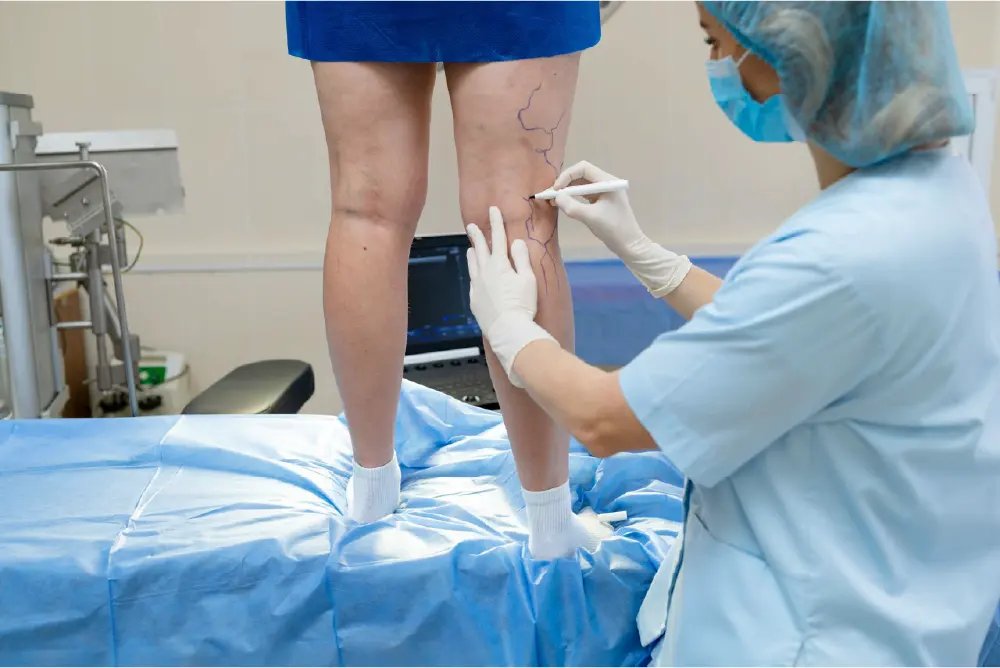
When symptoms suggest chronic venous insufficiency, a duplex ultrasound may be recommended. This noninvasive test allows the care team to examine the structure of the veins, evaluate blood flow, and determine whether weakened valves are allowing blood to flow backward.
If the pattern does not appear vein-related, the patient may need evaluation by a primary care provider or another specialist. Depending on the symptoms, additional testing may be used to investigate muscle, nerve, arterial, medication-related, or metabolic causes.
Q: What can help relieve a pulsating feeling in the legs at night?
Dr. Eun:
Relief depends on the underlying cause. Until that cause is known, patients can pay attention to the symptom pattern and try gentle measures that do not worsen the discomfort.
Mogą one obejmować:
- Changing position rather than remaining still for an extended period
- Taking a brief walk if movement feels comfortable
- Performing gentle ankle pumps or calf movements
- Stretching a tight muscle without forcing the stretch
- Elevating the legs when symptoms appear after a day of sitting or standing
- Staying adequately hydrated
- Maintaining regular movement throughout the day
- Tracking when symptoms occur and which measures provide relief
- Reviewing new or changing symptoms with a healthcare provider
Compression stockings may help manage aching, swelling, heaviness, or throbbing related to venous insufficiency, but they are not appropriate for every patient. The correct style and pressure should be selected with guidance from a healthcare provider, particularly when arterial disease, unexplained one-sided symptoms, certain heart conditions, or significant skin changes may be present.
These measures may temporarily reduce discomfort, but they do not determine why the sensation is occurring or repair damaged vein valves. Persistent or worsening symptoms still warrant evaluation.
Q: How can UVVC help when pulsating leg sensations are related to vein disease?
Dr. Eun:
UVVC begins with an evaluation rather than assuming that a pulsating sensation is caused by vein disease. The care team reviews the patient’s symptoms, medical history, risk factors, and physical findings. When appropriate, duplex ultrasound is used to identify venous reflux and determine which veins are affected.
If the evaluation does not reveal a venous cause, the patient may be directed to the appropriate provider for further assessment. If vein disease is found, treatment is selected according to the patient’s anatomy, symptoms, health history, and goals.
Depending on the findings, minimally invasive options may include:
- Radiofrequency ablation (RFA): Uses controlled thermal energy to close an affected vein.
- VenaSeal™: Uses a medical adhesive to close certain veins without heat.
- Varithena®: Uses an injectable microfoam to treat certain affected veins, including some varicose veins.
- Ultrasound-guided sclerotherapy: Uses ultrasound imaging to guide an injectable solution into selected veins.
Closing an affected vein allows blood to reroute naturally through healthier veins nearby. Treatment recommendations vary, and not every patient with pulsating sensations will need or qualify for a vein procedure.
If a pulsating feeling repeatedly interrupts your sleep or occurs with aching, heaviness, swelling, cramping, or visible veins, schedule a vein screening with United Vein & Vascular Centers. An evaluation can help determine whether your symptoms may be connected to vein disease and what next step is appropriate.
Często zadawane pytania
Feeling an occasional rhythmic pulse may simply mean that you have become more aware of normal blood flow while lying still. However, a new, persistent, painful, or unusually strong sensation should be discussed with a healthcare provider, particularly when it affects one specific area or occurs with other symptoms.
A one-sided sensation may come from a localized muscle twitch, nerve irritation, injury, or a circulation issue affecting that leg. It does not identify the cause on its own. Evaluation is especially important if the sensation persists or occurs with swelling, pain, warmth, redness, discoloration, numbness, or weakness.
Dehydration may contribute to muscle cramping or unusual muscle activity in some people, particularly after exercise, heat exposure, or fluid loss. It is only one possible factor, however, and drinking more water may not resolve a sensation caused by a nerve or circulation problem.
Varicose veins and chronic venous insufficiency may be associated with aching, throbbing, heaviness, cramping, or pressure in the legs. These symptoms often worsen after prolonged sitting or standing and may occur with swelling or leg fatigue. Not every affected vein is visible at the skin’s surface, so an ultrasound may be needed to evaluate blood flow.
A pulsating feeling by itself is not a typical sign of deep vein thrombosis. More common DVT symptoms include swelling, unexplained pain or tenderness, warmth, redness, or discoloration, usually affecting one leg. Because symptoms alone cannot confirm or exclude a blood clot, sudden one-sided changes should receive prompt medical attention.
Find Out What Is Behind the Pulsating Feeling in Your Legs
A pulsating feeling is a description, not a diagnosis. The location, timing, rhythm, triggers, and accompanying symptoms all help distinguish an occasional muscle sensation from restless legs, nerve-related symptoms, or an underlying circulation problem.
If the sensation keeps returning, disrupts your sleep, or occurs with leg pain, aching, heaviness, swelling, cramping, skin changes, or visible veins, schedule a vein screening with United Vein & Vascular Centers. Our care team can evaluate your symptoms and determine whether vein disease may be contributing.
Medically reviewed by Dr. Domenic Zambuto, National Medical Director at United Vein & Vascular Centers. Board-certified in vascular and interventional radiology, Dr. Zambuto has more than 20 years of experience treating vascular disease and helping patients manage complex vein and circulatory conditions.