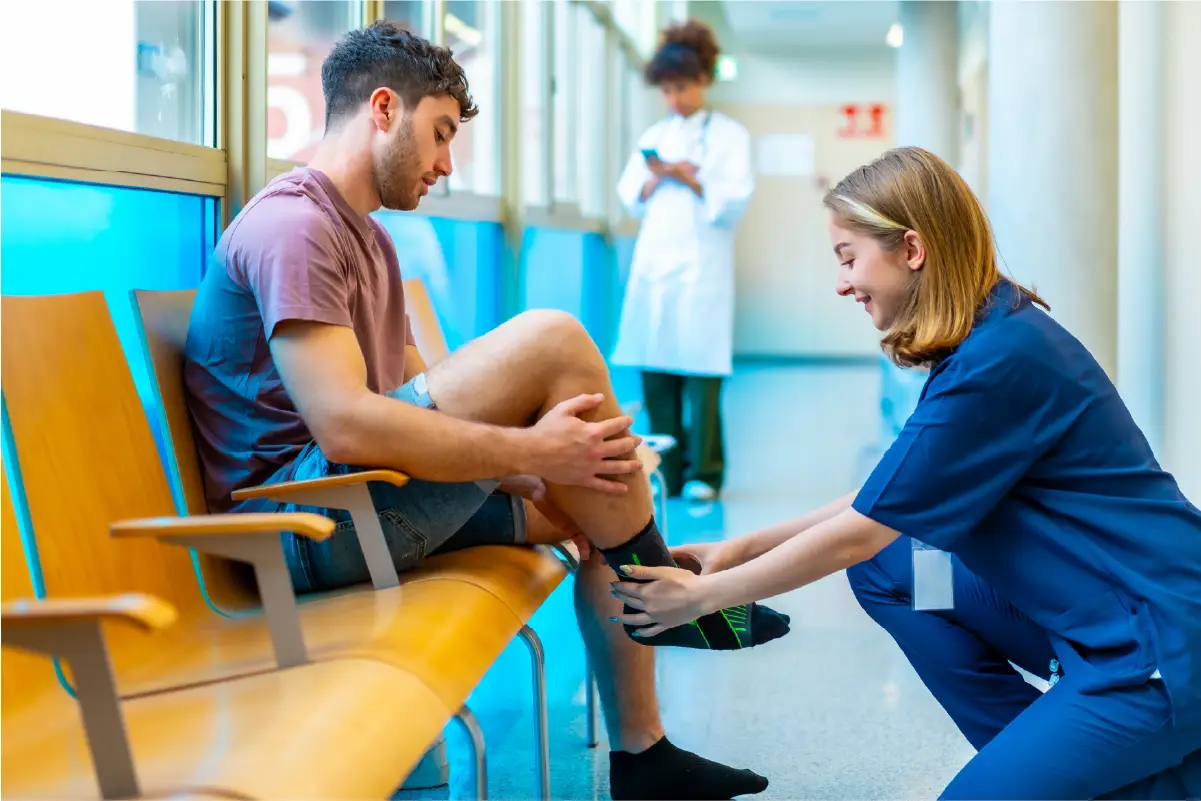
If you have varicose veins, you may have been told to wear compression socks. These specialized garments are designed to gently squeeze the legs and support healthy blood flow. While compression socks do not remove varicose veins, they can help manage symptoms and improve comfort.
Understanding how compression works can help you decide whether they may be right for you.
How Compression Socks Work
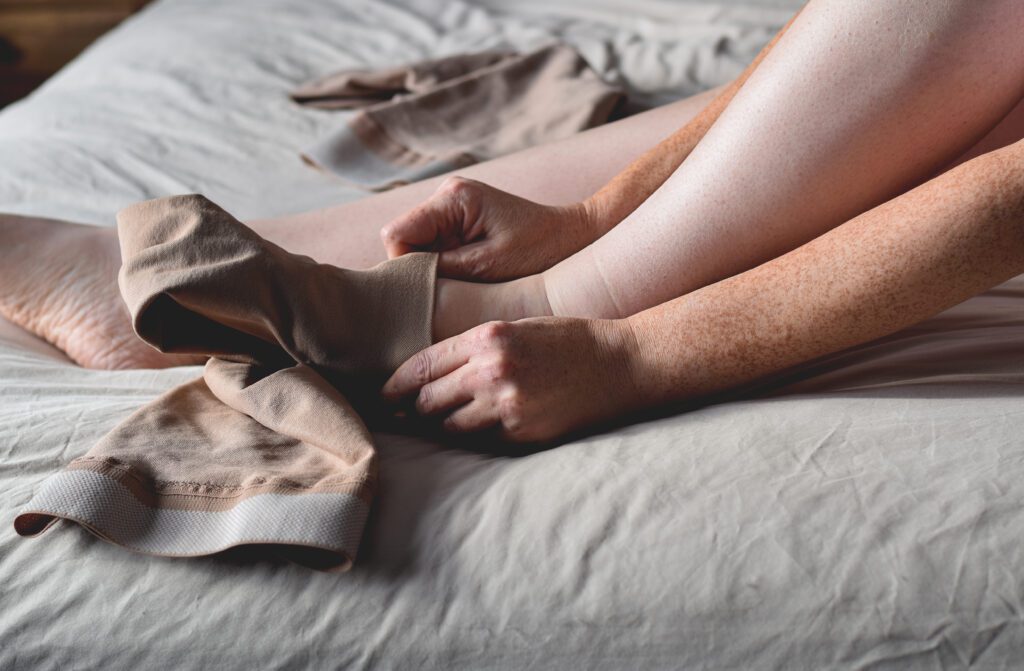
Compression socks apply graduated pressure to the legs, meaning the compression is strongest at the ankle and gradually decreases as it moves up the leg. This design works with the body’s natural circulation, helping blood flow upward toward the heart instead of collecting or pooling in the lower legs.
By supporting healthy circulation, compression socks can help reduce pressure within the veins and improve overall blood flow. This may help ease common symptoms associated with vein disease, such as leg heaviness, swelling, aching, or fatigue. They can also provide support for the vein walls and valves, helping them function more effectively and reducing strain on the circulatory system throughout the day.
Symptoms Compression Socks May Help Relieve
Compression socks are often used to manage symptoms caused by chronic venous insufficiency (CVI) and varicose veins.
They may help reduce:
- Leg heaviness or aching
- Swelling in the lower legs or ankles
- Tired or fatigued legs
- Mild throbbing or discomfort after standing
Many people find their legs feel more supported and less tired when wearing compression during the day.
What Compression Socks Cannot Do
While compression socks can help manage symptoms, they do not eliminate varicose veins or correct the underlying cause of vein disease. They cannot repair damaged vein valves or permanently close veins that are no longer functioning properly. Instead, they work by supporting circulation and helping reduce the pressure that contributes to discomfort and swelling.
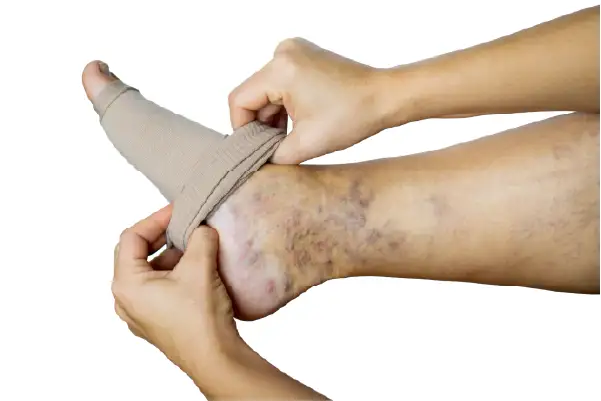
For some people, compression therapy is enough to provide day-to-day relief. However, if you have significant varicose veins, persistent leg pain, swelling, or skin changes such as discoloration or irritation around the ankles, compression alone may not fully address the problem. In these cases, a vein specialist can perform a thorough evaluation, often including a duplex ultrasound, to assess how your veins are functioning and determine whether additional treatment may be beneficial.
When to Consider More Than Compression
You should consider a vein evaluation if you have:
- Uporczywy ból lub uczucie ciężkości nóg
- Swelling that does not improve
- Visible bulging veins
- Skin discoloration near the ankles
- Itching, burning, or skin thickening
These symptoms may suggest underlying venous reflux that could benefit from minimally invasive vein treatments.
Choosing the Right Compression Level
Compression socks are available in several different pressure levels, commonly referred to as compression strengths and measured in millimeters of mercury (mmHg). Lower levels of compression are often used to help with general leg fatigue, mild swelling, or prolonged sitting or standing. Higher levels of compression are typically recommended for medical conditions such as varicose veins, chronic venous insufficiency, or more significant swelling in the legs.
Because the amount of pressure can affect how well the socks work, it’s important to choose the right compression level for your specific needs. A healthcare provider can help determine the most appropriate strength based on your symptoms and vein health. They can also ensure the socks fit correctly, since proper sizing is essential for both comfort and effectiveness.
Często zadawane pytania
No. They help manage symptoms but do not remove or permanently treat varicose veins.
Many people wear them during the day, especially when standing or sitting for long periods. Your provider can give specific guidance.
Properly fitted compression socks should feel snug but not painful. A specialist can help ensure the right size and compression level.
Mild compression socks are available over the counter, but stronger medical grade compression may require a prescription.
If you have ongoing pain, swelling, skin changes, or visible bulging veins, a specialist evaluation is recommended.
Supporting Vein Health with the Right Approach
Compression socks can play an important role in managing the symptoms of varicose veins. By supporting circulation and helping reduce swelling, they may improve daily comfort, especially for people who spend long periods standing, sitting, or traveling. However, while compression therapy can help manage symptoms, it does not correct the underlying vein condition.
If your symptoms continue, worsen, or begin affecting your daily activities, a professional vein evaluation can help identify the cause and determine whether additional treatment options may be beneficial. At United Vein & Vascular Centers (UVVC), our specialists use advanced diagnostic imaging and minimally invasive treatments to evaluate and address vein disease at its source, helping patients find long-term relief and improved circulation.
If you’re concerned about your vein health, scheduling an evaluation with the team at UVVC can help you understand your condition and explore the most appropriate next steps for care.