
Zawartość
- Can a Blood Clot Feel Like a Charlie Horse?
- Why Can DVT Cause Cramping or Calf Pain?
- What Does a Charlie Horse Feel Like?
- What Can Cause a Charlie Horse?
- What Does a Blood Clot in the Calf Feel Like?
- Blood Clot vs. Charlie Horse: What’s the Difference?
- Can a Muscle Cramp Cause Bruising?
- How Do Doctors Tell the Difference Between a Blood Clot and a Muscle Cramp?
- When Should Calf Pain Be Evaluated?
- When Is It an Emergency?
- Często zadawane pytania
- Understanding Calf Pain and When to Seek Vein Care
Medically reviewed by Dr. Domenic Zambuto, National Medical Director at United Vein & Vascular Centers. Board-certified in vascular and interventional radiology, Dr. Zambuto has more than 20 years of experience treating vascular disease and helping patients manage complex vein and circulatory conditions.
A painful calf cramp might seem like an ordinary Charlie horse (also spelled Charley horse), especially if it happens after exercise or wakes you up in the middle of the night. But what if the discomfort continues, or you begin noticing swelling or changes in your skin? Although muscle cramps are common, similar symptoms can sometimes develop when a blood clot forms in a leg vein.
While muscle cramps and blood clots develop for different reasons, their symptoms can sometimes overlap. Understanding how these conditions differ, what changes may indicate a circulation concern, and when to seek medical attention can help you make more informed decisions about your leg health.
Key Takeaway: A Charlie horse is an involuntary muscle spasm, while a blood clot forms within a blood vessel. In the legs, clots may develop in superficial veins or in the deep venous system, where they are called deep vein thrombosis (DVT). Both muscle cramps and venous blood clots can cause calf discomfort, but symptoms alone cannot reliably distinguish them. Persistent or unexplained pain, especially with one-sided swelling, warmth, or discoloration, requires prompt medical evaluation.
Can a Blood Clot Feel Like a Charlie Horse?
Blood clots and Charlie horses can produce similar sensations in the calf, including aching, tenderness, tightness, or cramping. Although these symptoms may feel alike, the underlying causes are different, making it difficult to determine the source of discomfort based on pain alone.
A Charlie horse develops when a muscle contracts involuntarily, while a blood clot forms within a blood vessel. In the legs, blood clots can affect two different venous systems:
- Superficial vein thrombosis (SVT): A blood clot that forms in a vein close to the skin’s surface. It may cause localized tenderness, redness, warmth, or a firm, painful area along the affected vein.
- Deep vein thrombosis (DVT): A blood clot that develops within the deep venous system. Symptoms may include calf pain, cramping, swelling, or tenderness. DVT carries a greater risk of pulmonary embolism, a potentially serious complication.
While both types of blood clots may cause leg discomfort, their location and potential complications differ. Persistent or unexplained calf pain, particularly when accompanied by swelling or skin changes, should be evaluated by a healthcare provider.
Why Can DVT Cause Cramping or Calf Pain?
When a blood clot develops in a deep vein, it may partially or completely obstruct blood flow through that vessel. The resulting inflammation and changes in pressure can contribute to aching, tenderness, or cramping in the affected leg.
However, DVT does not always cause noticeable pain, and the sensation of a muscle cramp cannot confirm or exclude its presence.
What Does a Charlie Horse Feel Like?
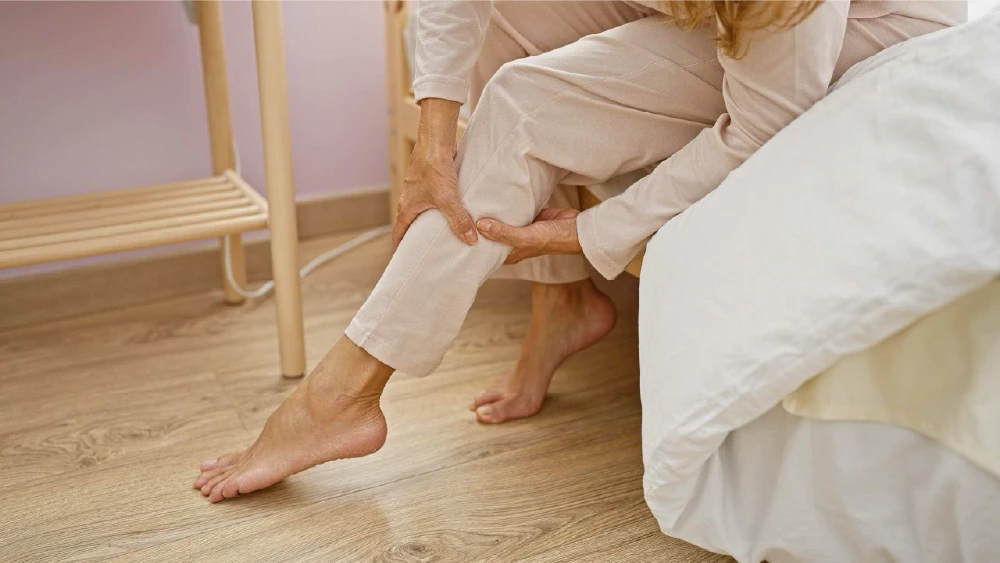
A Charlie horse occurs when a muscle contracts unexpectedly and does not immediately relax. These spasms commonly affect the calf and can develop during exercise, periods of rest, or sleep.
The affected muscle may feel unusually hard, tight, or knotted. Pain can be intense enough to interrupt movement, although the contraction generally releases after a short period. Some people continue experiencing soreness or tenderness after the spasm has ended.
What Can Cause a Charlie Horse?
The exact cause of a muscle cramp is not always clear. Several factors may contribute, including:
- Muscle fatigue: Strenuous exercise or repetitive physical activity may contribute to cramping.
- Dehydration: Fluid loss or inadequate hydration may increase susceptibility to muscle spasms.
- Prolonged positioning: Remaining in one position for extended periods may trigger muscle contractions.
- Medications or medical conditions: Certain health conditions and medications may contribute to recurring cramps.
Although occasional spasms may resolve without treatment, frequent or unexplained foot and leg cramps deserve attention, particularly when other leg symptoms are present.
What Does a Blood Clot in the Calf Feel Like?
The symptoms of a blood clot can vary depending on the affected vein. Some people experience localized discomfort, while others notice swelling, aching, or cramping that affects a larger area of the leg. These changes can be difficult to recognize because blood clot symptoms may resemble muscle strains or other common causes of leg pain.
Superficial blood clots often cause discomfort along a specific vein near the skin’s surface. The affected area may feel tender or warm and develop visible redness, discoloration, or a firm, cordlike texture.
When a clot forms in a deep vein, symptoms may be less localized. Possible signs of DVT include:
- Unexplained calf or leg pain
- Tenderness in the affected area
- Swelling, commonly involving one leg
- Warmth over the affected area
- Redness or skin discoloration
Some individuals with DVT experience mild symptoms or none at all. Additionally, superficial clots can sometimes extend toward or into the deep venous system, making appropriate evaluation important.
Blood Clot vs. Charlie Horse: What’s the Difference?
A muscle spasm, superficial blood clot, and DVT can all cause discomfort in the calf, but they involve different structures and may produce different symptom patterns.
| Feature | Charlie horse | Superficial blood clot | Deep vein thrombosis (DVT) |
| Underlying cause | Involuntary muscle contraction | Blood clot in a superficial vein | Blood clot in a deep vein |
| Ból | Sudden, intense tightening or spasming | Localized pain or tenderness along a vein | Aching, cramping, or tenderness in the leg |
| Duration | Spasm generally resolves; soreness may linger | Discomfort may persist | Pain may persist or worsen |
| Swelling | Usually minimal with an isolated cramp | Localized swelling may occur | May involve swelling of one leg |
| Zmiany skórne | Generally absent | Redness, warmth, or a firm area along the vein | Warmth, redness, or discoloration may occur |
| Medical concerns | Often temporary | May require medical evaluation to determine whether the clot has spread to deeper veins and whether treatment is needed | Requires prompt evaluation due to possible complications |
Although these characteristics may help explain the different conditions, determining whether a blood clot is present requires medical evaluation and, when appropriate, diagnostic imaging.

Can a Muscle Cramp Cause Bruising?
An ordinary Charlie horse generally does not produce bruising. However, an especially forceful contraction may occur alongside a muscle strain or injury that damages small blood vessels within the surrounding tissue.
Bruising can also develop for other reasons, including minor injuries, certain medications, or medical conditions.
Unexplained bruising accompanied by persistent calf pain, swelling, or other concerning symptoms should not automatically be attributed to a muscle cramp. Although bruising is not a defining symptom of DVT, an examination may be necessary to identify its cause.
How Do Doctors Tell the Difference Between a Blood Clot and a Muscle Cramp?
Because the symptoms can overlap, healthcare providers consider medical history, physical findings, and diagnostic testing when evaluating unexplained calf pain. The goal is to determine whether the discomfort is related to a muscle problem or a condition affecting the veins.
Symptoms and Medical History
A provider may ask when symptoms began, whether they followed physical activity, and how the discomfort has changed.
Factors such as recent surgery, prolonged immobility, previous blood clots, pregnancy, and certain medications may also influence the evaluation.
Physical Examination
The affected leg may be examined for tenderness, swelling, warmth, skin discoloration, or changes along visible veins.
A localized, tender vein may raise concern for superficial thrombosis, while more extensive swelling or unexplained discomfort may prompt evaluation for DVT. However, physical findings cannot reliably confirm or rule out either condition.
Ultrasonografia dupleksowa
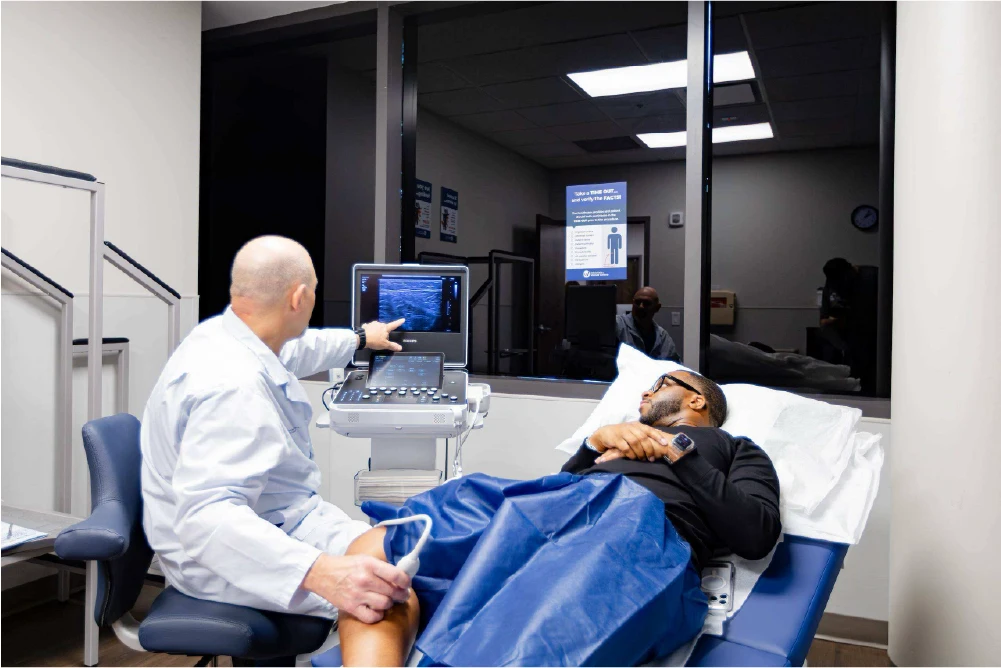
Duplex ultrasound is commonly used to examine leg veins and evaluate suspected venous blood clots.
This noninvasive imaging test allows healthcare providers to assess blood flow and identify clots within superficial or deep veins. It can also help determine the location and extent of a clot, which influences treatment decisions.
Depending on the findings, additional testing or follow-up may be necessary.
When Should Calf Pain Be Evaluated?
Calf pain that develops without an obvious cause or continues beyond an expected muscle spasm deserves medical attention, particularly when other symptoms are present.
Concerning changes include:
- Swelling affecting one leg: Especially when one calf or leg becomes noticeably larger than the other.
- Unexplained warmth or discoloration: Changes in skin temperature or appearance that develop alongside discomfort.
- Persistent pain or tenderness: Discomfort that continues without a clear explanation.
- A firm, painful area along a vein: A possible sign of superficial vein thrombosis that may require further evaluation.
- Known blood clot risk factors: Such as recent surgery, prolonged immobility, or a previous history of blood clots.
Superficial blood clots and DVT require different clinical considerations, and suspected DVT should be evaluated promptly rather than waiting for a routine vein screening.
When Is It an Emergency?
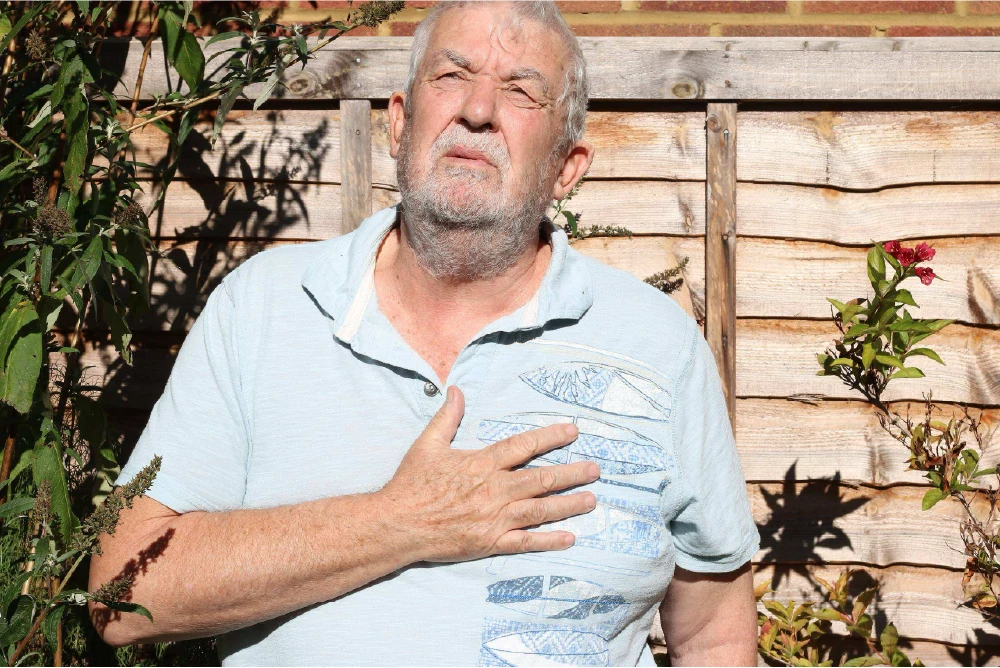
A serious complication of DVT is pulmonary embolism (PE), which occurs when part of a clot travels through the bloodstream and blocks an artery in the lungs.
Possible symptoms include:
- Nagła duszność
- Chest pain, particularly when breathing deeply
- Odkrztuszanie krwi
- Fainting or severe lightheadedness
Call 911 immediately if you experience possible symptoms of a pulmonary embolism. Emergency medical care is necessary.
Często zadawane pytania
Venous blood clots can sometimes cause pain or tenderness that resembles muscle cramping. DVT, which develops in the deep venous system, may produce calf aching or cramping. Symptoms alone cannot reliably identify the cause.
A Charlie horse commonly causes temporary muscle tightening, while venous blood clots may cause persistent pain, swelling, warmth, or tenderness. However, the symptoms can overlap, and medical evaluation may be necessary to distinguish them.
Not all venous blood clots produce noticeable swelling. Some people with DVT have few or no symptoms, so a lack of swelling cannot exclude a clot.
A blood clot in a deep leg vein may interfere with blood flow and contribute to inflammation, resulting in cramping or aching. However, muscle strains and other conditions can cause similar symptoms.
A typical muscle cramp does not usually cause bruising, although an associated strain or muscle injury may. Unexplained bruising with ongoing pain or swelling should be medically evaluated.
A Charlie horse typically involves a temporary muscle contraction that releases, although soreness can linger for a few days. Discomfort associated with a blood clot may continue rather than gradually feeling better like a typical muscle spasm. Medical evaluation is needed when the calf pain is persistent or unexplained.
Understanding Calf Pain and When to Seek Vein Care
Calf pain can have several possible causes, from temporary muscle spasms to blood clots affecting the superficial or deep veins. Although certain symptoms may raise concern for a circulation problem, medical evaluation is important for determining the underlying cause and identifying appropriate next steps.
If you’re experiencing unexplained calf pain, swelling, tenderness, or other symptoms that may indicate a blood clot or underlying vein condition, United Vein & Vascular Centers (UVVC) can help you better understand your symptoms and determine whether further evaluation or care is needed.
Request a free vein screening to take the next step toward understanding your vein health and determining whether additional testing or care may be recommended.