

Contenido
- Q: Why do my legs feel weak?
- Q: Can poor circulation make your legs feel weak?
- Q: Why do my legs feel weak after standing or walking?
- What the Timing of Leg Weakness May Suggest
- Q: When should I worry about leg weakness?
- Q: How is the cause of leg weakness diagnosed?
- Q: What can help weak or tired legs?
- Q: How can UVVC help when my legs feel weak and heavy?
- Preguntas frecuentes
- Weak, Heavy Legs? Take the Next Step Toward Answers
Medically reviewed by Dr. Domenic Zambuto, National Medical Director at United Vein & Vascular Centers. Board-certified in vascular and interventional radiology, Dr. Zambuto has more than 20 years of experience treating vascular disease and helping patients manage complex vein and circulatory conditions.
Welcome back to Ask the Doc, an educational series from United Vein & Vascular Centers where our physicians help patients make sense of symptoms that can be noticeable, uncomfortable, and sometimes difficult to describe. By looking beyond the symptom itself, each installment explores the patterns that may help identify its source and determine when further evaluation is appropriate.
In this installment, Dr. Obi Okoye explains why the legs may feel weak or tired, how circulation problems can contribute, and when a change in strength requires medical attention.
The short answer: Leg weakness may reflect muscle fatigue, reduced conditioning, medication effects, nerve or spine problems, or another medical condition. Circulation problems can also affect how the legs feel and function. Venous insufficiency more commonly causes heaviness, aching, swelling, and fatigue than a measurable loss of muscle strength. New, persistent, or worsening weakness should be evaluated, particularly when walking or balance is affected.
Q: Why do my legs feel weak?
Dr. Okoye:
The first step is understanding what “weak” means for you. Does it mean your legs feel tired and weighed down, or are you having trouble performing movements you could previously manage?
True muscle weakness involves a loss of strength. Examples include difficulty getting out of a chair, lifting the front of the foot, or supporting your weight. Someone with fatigue or heaviness may still have normal strength during an examination, even though movement feels uncomfortable or takes more effort. Both experiences deserve attention, but they lead us toward different explanations.
Possible causes include:
- Muscle fatigue after activity or prolonged standing
- Reduced conditioning after inactivity, illness, or recovery from surgery
- Pain or stiffness that limits movement
- Nerve compression or peripheral neuropathy
- Conditions affecting the muscles or nervous system
- Medication effects
- Anemia, thyroid problems, or certain electrolyte abnormalities
- Venous or arterial circulation problems
Weakness does not require a recent workout. A person who has been less active, developed an illness, or started a medication may notice changes during ordinary activities. Persistent weakness without an obvious explanation should be assessed rather than attributed to tiredness alone.
Q: Can poor circulation make your legs feel weak?
Dr. Okoye:
Yes, but the type of circulation problem matters.
Veins return blood from the legs toward the heart. When their one-way valves do not work effectively, blood can flow backward and collect in the lower legs. This is called venous reflux and may contribute to chronic venous insufficiency.
Patients may describe their legs as weak when swelling, aching, or heaviness makes them feel tired and difficult to move. The sensation may build throughout the day, particularly after prolonged standing. However, venous insufficiency should not automatically be used to explain a new loss of strength.
Arteries deliver oxygen-rich blood to the legs. Peripheral artery disease, or PAD, can reduce that supply and cause walking-related aching, cramping, fatigue, or weakness. Some patients also notice numbness, a colder foot, or skin color changes.
A circulation evaluation may be relevant, but it should not replace an examination of the muscles, nerves, and other possible causes.

Q: Why do my legs feel weak after standing or walking?
Dr. Okoye:
Standing still and walking place different demands on the legs. Knowing which one brings on the symptoms helps narrow the possibilities.
When you stand for an extended period, the leg veins must return blood against gravity without as much assistance from repeated calf-muscle contractions. If venous reflux is present, discomfort and swelling may accumulate. The legs can feel increasingly heavy or tired by the end of the day.
Walking activates the calf muscles and generally supports venous return. Weakness or discomfort that consistently begins during walking may therefore need investigation for another cause, including arterial disease or spinal nerve compression.
What the Timing of Leg Weakness May Suggest
| Pattern you notice | Possible explanation | Useful details to share |
| Tired, heavy legs after prolonged standing | Venous discomfort, swelling, or muscle fatigue | Whether ankle swelling develops and elevation helps |
| Aching, cramping, or weakness after walking a similar distance | Possible reduced arterial blood flow | How far you can walk and whether stopping relieves symptoms |
| Leg symptoms while standing or walking that improve when sitting or leaning forward | Possible lumbar spinal stenosis | Whether back position changes your walking tolerance |
| Difficulty lifting a foot, rising from a chair, or completing a specific movement | Possible loss of muscle strength | Whether the difficulty is new, progressing, or affecting one side |
These patterns provide clues rather than a diagnosis. More than one condition can affect the same person.
Rather than simply saying that walking makes your legs weak, explain what happens: Do they ache, shake, buckle, become numb, or stop responding normally? That distinction makes the evaluation more useful.
Q: When should I worry about leg weakness?
Dr. Okoye:
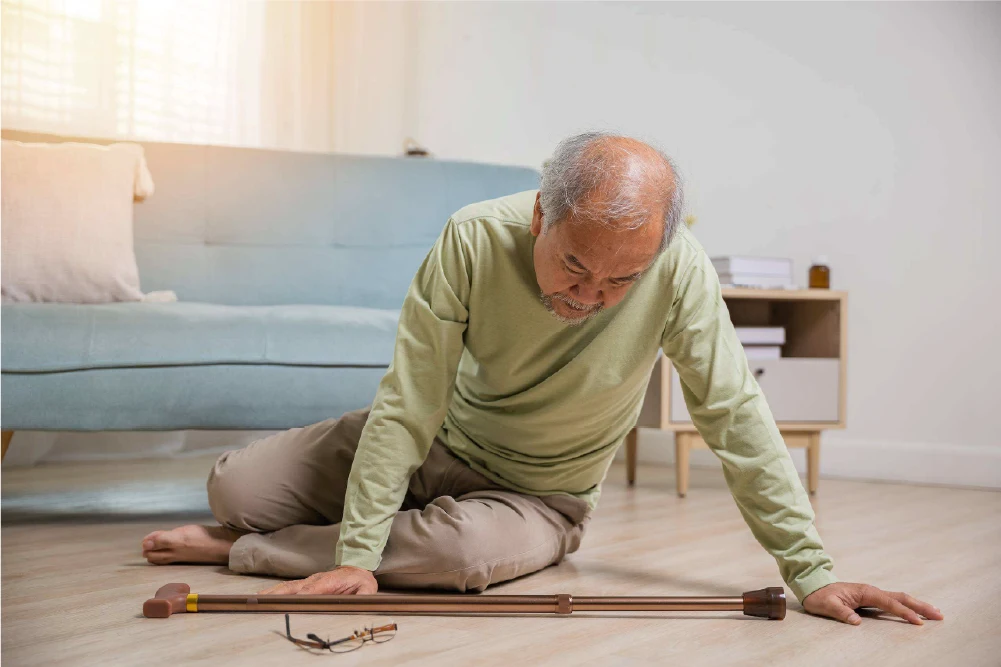
Leg weakness deserves evaluation when it is new, unexplained, persistent, or getting worse. Seek timely assessment if you are falling, your knees keep giving way, you begin dragging a foot, or ordinary movements become increasingly difficult.
Weakness that develops during walking, occurs with numbness, or affects one leg differently also needs attention. Do not assume these changes are a normal part of aging or simply a consequence of being less active.
Some symptoms require emergency care.
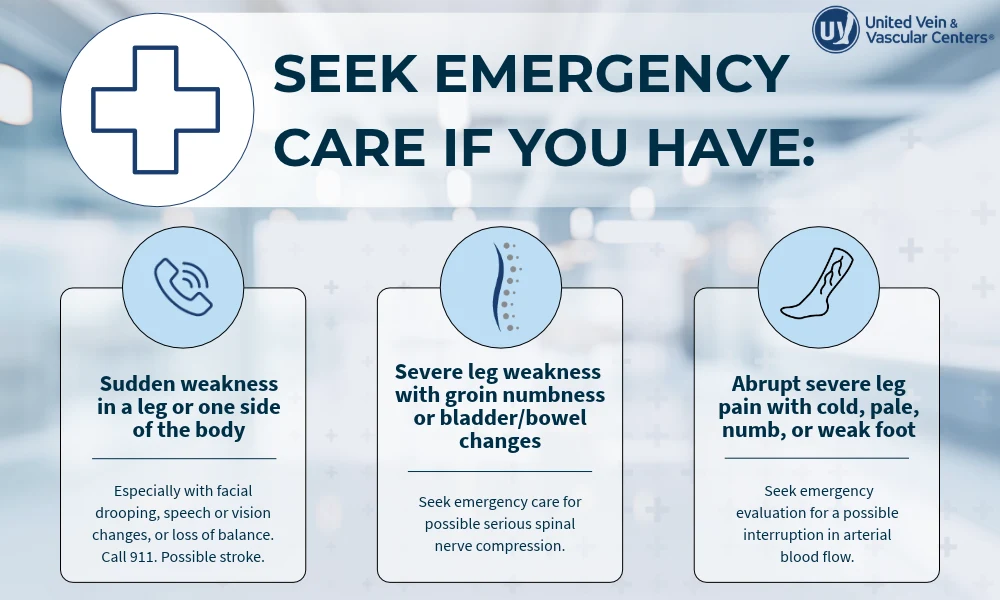
New one-sided swelling, pain, warmth, or redness also requires prompt assessment for a possible blood clot. Weakness alone is not a typical way to identify a clot, but these accompanying changes should not wait for a routine screening.
Q: How is the cause of leg weakness diagnosed?
Dr. Okoye:
The evaluation begins with your description of the problem and an examination of what your legs can do. A provider considers whether the change started abruptly or gradually, affects one or both legs, and occurs continuously or only during particular activities.
The physical examination may assess muscle strength, reflexes, sensation, balance, joint movement, and walking. Checking pulses, skin temperature, swelling, and visible veins helps determine whether circulation testing is also appropriate. Blood tests or nerve and spine studies may be recommended based on the findings.
If the symptoms suggest venous insufficiency, a diagnostic duplex ultrasound can evaluate vein function and identify backward blood flow. If arterial disease is suspected, an ankle-brachial index compares blood pressure at the ankle and arm; additional vascular testing may be needed.
A vein ultrasound cannot explain every cause of weakness. The examination helps determine whether the next step belongs with a vein specialist, vascular specialist, primary care provider, neurologist, or another clinician.
Q: What can help weak or tired legs?
Dr. Okoye:
Treatment depends on whether the problem involves strength, endurance, pain, swelling, or another condition. There is no single exercise or home remedy that is appropriate for every type of leg weakness.
A provider may recommend:
- Gradually rebuilding activity after inactivity or illness
- Physical therapy for strength, balance, or movement limitations
- Treatment for an identified nerve, muscle, joint, or medical condition
- Reviewing medications that could contribute to symptoms
- Using an appropriate walking aid when stability is affected
Exercise recommendations should fit the diagnosis and your ability to move safely. If a leg is buckling or you are falling, trying to push through the weakness can increase injury risk. Do not stop prescribed medication without discussing it with the prescribing provider.
When venous insufficiency causes tired, heavy legs, regular movement, ankle exercises, elevation, and appropriately selected compression may help manage discomfort. Compression needs professional guidance, particularly if arterial disease is possible. These measures support symptom management but do not repair damaged vein valves.
Q: How can UVVC help when my legs feel weak and heavy?
Dr. Okoye:
United Vein & Vascular Centers can evaluate whether vein disease may be contributing when a weak or tired feeling occurs with swelling, aching, heaviness, and visible veins.
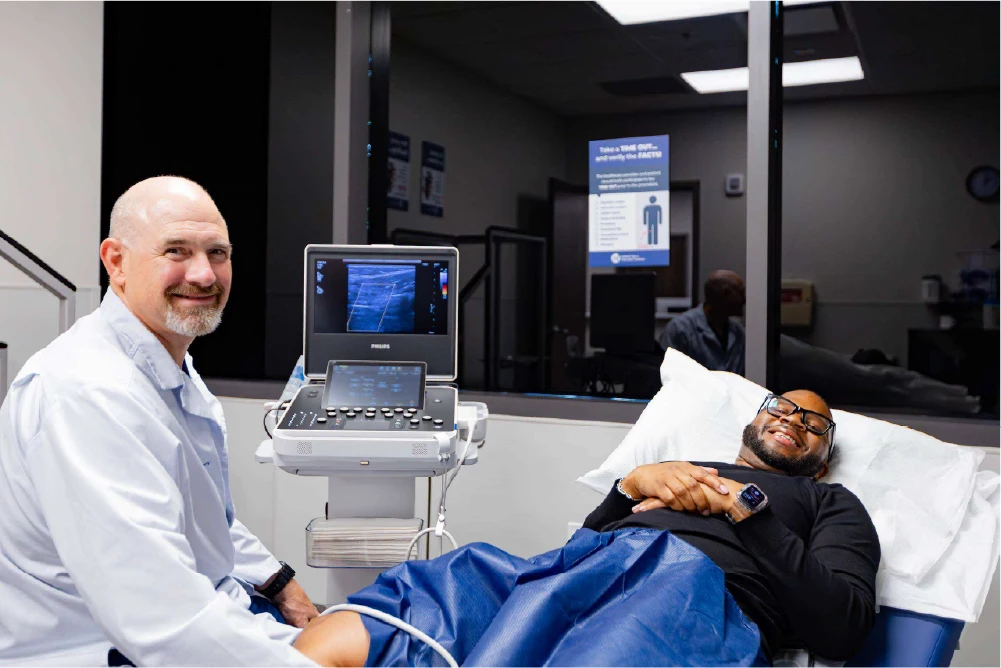
During a vein screening, the care team reviews the symptoms, medical history, and changes in daily activities. If further testing is appropriate, a diagnostic duplex ultrasound may be scheduled to assess blood flow and identify venous reflux.
When symptomatic reflux is confirmed, treatment may include conservative measures or a minimally invasive vein procedure. Options depend on the affected veins and may include:
- Radiofrequency ablation: A thin catheter delivers controlled thermal energy inside a malfunctioning vein. The vein closes, allowing blood to reroute through healthier veins nearby.
- VenaSeal™: A small amount of medical adhesive seals an affected vein without thermal energy. Blood returns through other veins that are functioning more effectively.
- Varithena®: An injectable microfoam closes certain veins affected by reflux. Ultrasound guidance helps the physician monitor treatment in the targeted veins.
- Ultrasound-guided sclerotherapy: Ultrasound imaging helps locate selected problem veins beneath the skin and guide an injectable solution or foam into them. Treatment closes those veins so blood can move through healthier pathways.
Treating vein disease may reduce related heaviness, swelling, aching, and fatigue. It should not be presented as treatment for an unrelated loss of muscle strength.
If the symptoms suggest reduced arterial blood flow, a vascular consultation may be appropriate. Findings that suggest a nerve, muscle, or spinal problem require a different evaluation and care plan.
Preguntas frecuentes
Shakiness and weakness are not necessarily the same symptom. Trembling may accompany exertion, medication effects, or a medical condition, while weakness refers to reduced strength. A provider can help distinguish them. Describe when the shaking starts, whether you can support your weight, and whether it occurs with dizziness, numbness, or other symptoms.
Either pattern may need evaluation. One-sided weakness can suggest a localized nerve, muscle, or brain-related problem, while weakness in both legs has other possible explanations. The speed of onset and accompanying symptoms determine urgency. Sudden one-sided weakness requires emergency assessment.
Yes. Peripheral nerve problems or pressure on nerves in the spine may affect both sensation and strength. For example, sciatica can cause pain, tingling, numbness, or weakness along a leg. A new change in strength should be assessed rather than treated only as a sensory symptom.
Compression stockings may help manage swelling and venous discomfort, but they do not build muscle strength or treat every cause of weakness. Their suitability depends on your circulation and medical history. They should not replace evaluation when you are losing strength, falling, or having difficulty walking.
Weak, Heavy Legs? Take the Next Step Toward Answers
Be specific about what has changed: how long you can stand, whether stairs are harder, or whether a foot is catching while you walk. Those details help distinguish fatigue and discomfort from a loss of strength.
If your legs feel tired or weak alongside swelling, aching, heaviness, or visible veins, request a vein screening at United Vein & Vascular Centers. A screening can help determine whether further vein testing is appropriate.
New or worsening loss of strength needs medical assessment. Sudden weakness or the emergency symptoms described above should receive immediate attention rather than wait for a scheduled appointment.