Your lower legs can reveal a lot about your vein and circulatory health; sometimes in ways you might not even notice at first. A brownish patch near the ankle. A bruise-like spot that refuses to fade. Small areas of yellow discoloration. These changes might seem minor, even cosmetic. But in many cases, they are early signals that your veins are under stress.
Two of the most common issues related to these skin changes are hemosiderin staining and chronic venous insufficiency (CVI). While they are closely linked, they are not the same and understanding the differences can help you protect your circulation, prevent discomfort, and take action before serious complications develop.
Understanding Hemosiderin Staining
Hemosiderin staining is a type of skin discoloration caused by iron deposits. When tiny blood vessels in the legs leak, red blood cells escape into the surrounding tissue. As these cells break down, iron is released and trapped under the skin. This creates brown, yellow, or reddish patches that tend to appear around the ankles, shins, and feet.
Early on, these stains may look like simple bruises, but unlike typical bruises, they don’t fade within a few weeks. They can slowly expand, darken over time, and serve as a visual clue that your veins are not functioning optimally.
While staining itself is usually painless, it can indicate ongoing stress to your veins and circulatory system. Ignoring it can allow vein problems to progress silently.
What Is Chronic Venous Insufficiency?
Chronic venous insufficiency is a more serious condition that develops when the valves inside your leg veins weaken or fail. Healthy valves act like one-way gates, keeping blood flowing upward toward the heart. When these valves don’t function properly, blood can flow backward and pool in the lower legs.
This pooling increases pressure inside the veins, which can lead to visible symptoms such as:
- Swelling that worsens throughout the day
- Legs that feel heavy, achy, or tight
- Bulging varicose veins
- Skin that becomes thin, dry, or discolored
- Increased risk of venous ulcers
Unlike hemosiderin staining alone, CVI often impacts comfort and daily mobility. Many people with CVI notice that prolonged standing or walking becomes more difficult, and simple activities may leave their legs feeling fatigued or heavy.
How to Recognize the Difference
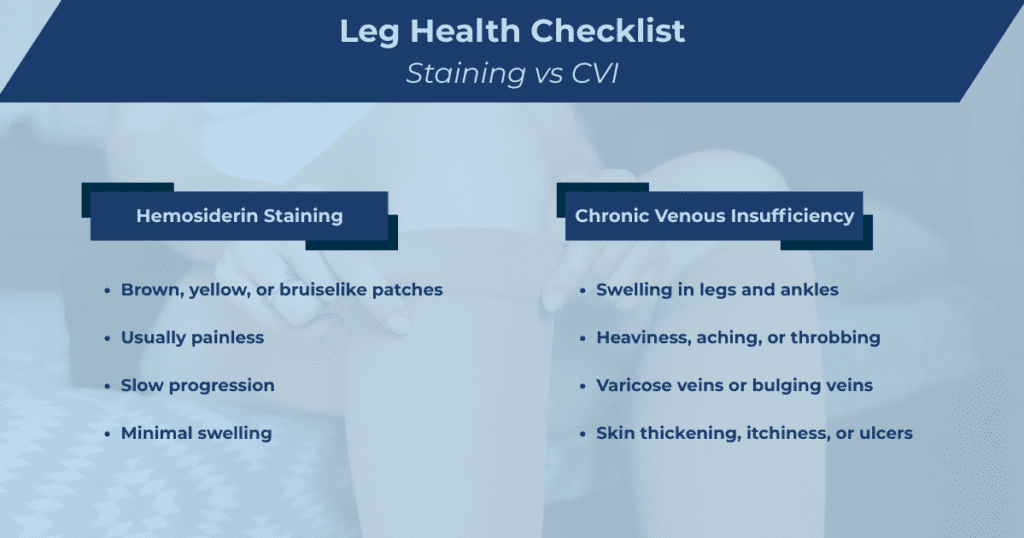
Hemosiderin staining and CVI often appear together, but there are some clues that help distinguish them:
- Appearance: Hemosiderin is primarily brown or yellow discoloration without swelling or pain in early stages. CVI may include varicose veins, swelling, and thickened or itchy skin.
- Symptoms: Staining itself is usually painless, whereas CVI often causes heaviness, aching, or throbbing sensations in the legs.
- Progression: Staining develops slowly and initially has minimal impact on mobility. CVI tends to worsen over time and can limit everyday movement if untreated.
- Lifestyle impact: Early staining can be managed with daily habits. CVI typically requires a combination of lifestyle adjustments and medical evaluation to relieve symptoms and protect circulation.
Recognizing these differences is important. What may seem like a cosmetic concern could actually be the first warning sign of an underlying circulation issue.
Lifestyle Factors That Influence Both
Even if staining appears minor, your daily habits can determine whether it stays cosmetic or progresses into chronic venous insufficiency. The veins in your legs rely on movement, pressure regulation, and healthy circulation to work efficiently. Some lifestyle factors that influence vein health include:
- Prolonged sitting or standing: Remaining in one position for hours increases pressure in the veins and promotes blood pooling. Short breaks, stretching, and gentle walking can help blood flow.
- Low physical activity: Inactive legs reduce the natural pumping action of your calf muscles, which normally helps push blood back toward the heart.
- Diet and weight management: Excess sodium can worsen swelling, and additional body weight places more strain on the veins. Maintaining a balanced diet and healthy weight reduces stress on your lower legs.
- Hydration: Proper hydration supports circulation and prevents blood from becoming more viscous, which can contribute to vein strain.
Even small changes in daily habits can make a measurable difference in vein health, slow the progression of staining, and reduce the risk of developing CVI.
Why Early Attention Matters
Hemosiderin staining may feel like a minor cosmetic concern, but it often appears before significant discomfort or mobility issues develop. Left unchecked, vein problems can worsen, leading to swelling, pain, skin changes, and venous ulcers.
Paying attention to your legs and seeking early evaluation allows specialists to prevent complications, manage symptoms, and restore circulation before serious issues arise. Early intervention gives patients the best chance to protect both skin health and overall leg comfort.
Practical Steps for Protecting Your Legs
Even before a vein specialist evaluation, there are steps you can take to support healthy circulation and manage staining:
- Stay active: Walking, gentle stretching, and low-impact exercise help your calf muscles push blood upward toward the heart.
- Elevate your legs: Rest with legs raised above heart level to reduce pressure in the veins.
- Compression stockings: These support blood flow, reduce swelling, and prevent further vein stress.
- Track changes: Take note of discoloration or swelling patterns to share with a vein specialist.
- Address underlying conditions: If a vein specialist diagnoses CVI, minimally invasive treatments, lifestyle guidance, and targeted therapies can improve circulation and protect your skin.
Frequently Asked Questions
Can hemosiderin staining appear without CVI?
Yes. Staining can result from minor vein stress, previous injuries, or temporary circulation issues. However, persistent or spreading staining should be evaluated to rule out underlying vein disease.
Does every case of CVI cause staining?
Not always. Some patients with CVI experience swelling, heaviness, or varicose veins without noticeable staining. Staining is just one visual clue of vein strain.
How can I reduce the risk of progression from staining to CVI?
Daily movement, leg elevation, wearing compression stockings, maintaining healthy weight, and regular vein evaluations all help support circulation and prevent progression.
Take Action for Healthy Legs
Hemosiderin staining may seem minor at first, but it often serves as an early warning signal of vein stress. Ignoring it can allow circulation problems to progress, leading to swelling, discomfort, and even venous ulcers.
At United Vein & Vascular Centers, specialists help identify whether discoloration is purely cosmetic or a sign of chronic venous insufficiency. They create personalized treatment plans designed to:
- Reduce swelling and discomfort
- Improve mobility and daily function
- Protect skin health and prevent complications
Schedule your consultation with a UVVC specialist today and start improving your circulation, relieving discomfort, and protecting your leg health for the long term.