
Contenido
- Bruise vs. Blood Clot: What’s the Difference?
- Symptoms of a Blood Clot in the Leg
- Key Differences Between a Bruise and a Blood Clot
- Who Is at Higher Risk for Blood Clots?
- When a Blood Clot Is a Medical Emergency
- When Should You See a Vein Specialist?
- How Is a Blood Clot in the Leg Diagnosed?
- Preguntas frecuentes
- When It’s Time to Get Checked
It is common to notice a bruise on your leg after bumping into something or experiencing a minor injury. Most bruises are harmless and fade over time. However, some leg symptoms that look or feel like a simple bruise can be a sign of a more serious condition, such as a blood clot.
A bruise and a blood clot in the leg can both cause pain or changes in skin color, but they are very different conditions. A bruise usually develops after an injury and improves as it heals, while a blood clot such as deep vein thrombosis (DVT) can develop without an obvious injury and may cause swelling, warmth, and persistent pain.
Bruise vs. Blood Clot: What’s the Difference?
Knowing the difference between a typical bruise and possible signs of a blood clot can help you decide when it is time to seek medical care.
What Is a Bruise?
A bruise happens when small blood vessels under the skin break due to an injury. Blood leaks into the surrounding tissue, causing discoloration that may look purple, blue, or yellow as it heals.
Common features of a bruise include:
- A known injury or bump to the area
- Skin discoloration that changes over time
- Mild soreness when pressed
- Gradual improvement over several days to weeks
Bruises usually stay close to the surface of the skin and do not cause significant swelling of the entire leg.
What Is a Blood Clot in the Leg?
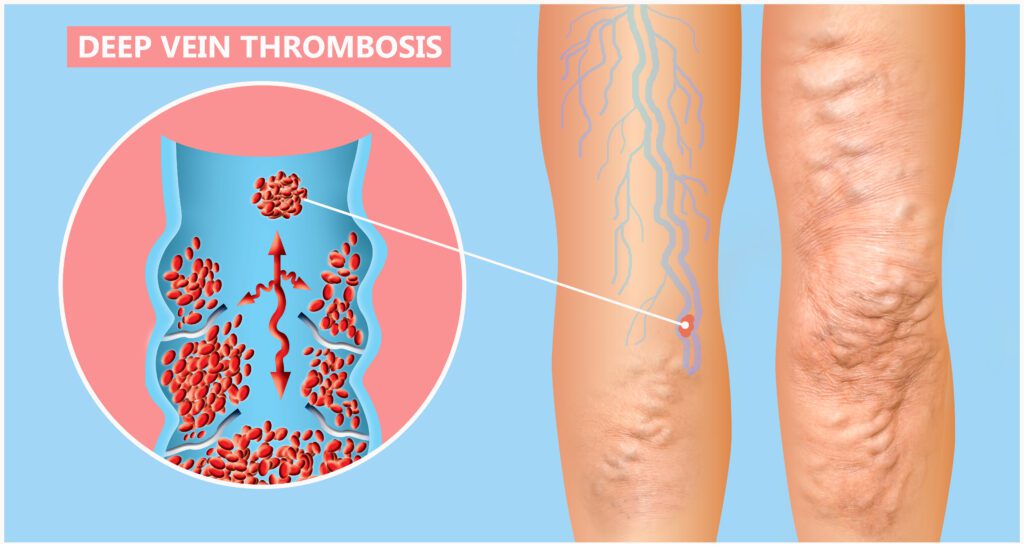
A blood clot in the leg, often called deep vein thrombosis (DVT), is a clot that forms in a deep vein, usually in the lower leg or thigh. This type of clot develops inside the vein rather than on the surface and can partially or completely block normal blood flow. DVT is considered a serious condition because a portion of the clot can break loose and travel to the lungs, causing a pulmonary embolism, which requires immediate medical attention.
Unlike a bruise, which results from bleeding under the skin after an injury, a blood clot forms within the vein itself and may not be associated with any visible trauma. DVT can develop quietly, sometimes without an obvious trigger, which is why recognizing symptoms and seeking prompt evaluation is so important.
Symptoms of a Blood Clot in the Leg
Blood clot symptoms in the leg can sometimes be mistaken for a muscle strain or a bruise, but there are important differences to be aware of. A blood clot may cause swelling in one leg, particularly in the calf, along with pain or tenderness that feels like cramping or soreness. The affected area may feel warm to the touch, and the skin can appear red or discolored. In some cases, leg pain worsens when standing or walking. These symptoms typically affect only one leg and may appear without a clear injury. If you notice any of these warning signs, it’s important to seek medical care right away.

Key Differences Between a Bruise and a Blood Clot
While both can involve pain and discoloration, there are some key differences:
A bruise:
- Usually follows a clear injury
- Changes color as it heals
- Stays near the surface of the skin
- Improves steadily over time
A possible blood clot:
- May occur without injury
- Often causes swelling of the leg
- May feel warm to the touch
- Can cause ongoing or worsening pain
Because a blood clot can lead to serious complications, it is better to get symptoms checked rather than wait and see.
Who Is at Higher Risk for Blood Clots?
Certain factors can increase your risk of developing DVT:
- Long periods of immobility such as travel or bed rest
- Recent surgery or hospitalization
- Long-distance travel
- Fumar
- Obesidad
- A personal or family history of blood clots
- Pregnancy and postpartum period
- Previous DVT or pulmonary embolism
- Certain medications, including estrogen-containing birth control or hormone therapy
- Cancer or certain conditions that increase blood clotting risk
If you have risk factors and develop leg symptoms, it is especially important to seek evaluation.
When a Blood Clot Is a Medical Emergency
If a blood clot travels to the lungs, it can cause a pulmonary embolism (PE). Sudden shortness of breath, chest pain, rapid heartbeat, coughing up blood, or feeling faint require immediate emergency medical attention.
When Should You See a Vein Specialist?
You should seek medical care as soon as possible if you have:
- Unexplained swelling in one leg
- Persistent leg pain without injury
- Warm, red, or tender areas on the leg
- Sudden shortness of breath or chest pain, which could signal a medical emergency
Early diagnosis and treatment of DVT can help prevent serious complications.
How Is a Blood Clot in the Leg Diagnosed?
If DVT is suspected, a healthcare provider may perform a physical examination and use tests such as a duplex ultrasound to evaluate blood flow and look for a clot in the leg veins. Blood tests, including a D-dimer test, may also be used in some situations.
Preguntas frecuentes
Sometimes. A blood clot can cause redness or discoloration, but it is usually accompanied by swelling, warmth, and deeper pain rather than surface tenderness.
Yes. DVT can develop without a visible bruise or obvious injury. Symptoms may include swelling, warmth, redness or discoloration, and persistent pain or tenderness in the affected leg.
Most bruises do not cause significant swelling of the entire leg. Swelling in one leg without injury may be a sign of a blood clot.
Doctors often use ultrasound imaging to look at blood flow in the leg veins and check for clots.
If the pain is severe, the area is very swollen, or you do not remember an injury, it is safest to seek medical care to rule out a blood clot.
When It’s Time to Get Checked
Leg symptoms that don’t have a clear explanation, such as persistent pain, swelling, warmth, or changes in skin color, shouldn’t be dismissed, especially if they affect only one leg or worsen over time. Even when symptoms seem mild at first, it’s important to trust your instincts and seek medical guidance if something doesn’t feel right.
If you’re unsure whether your symptoms are cause for concern, a professional evaluation can provide clarity and peace of mind. Find a United Vein & Vascular Centers clinic near you to take the next step and get answers from a vascular care team you can trust.
Medically reviewed by UVVC National Medical Director, Dr. Domenic Zambuto