
Welcome back to Ask the Doc, an educational series from United Vein & Vascular Centers designed to provide clear, physician-led answers to common questions about vein and vascular health. Each week, a UVVC physician explains everyday symptoms and what they may mean medically.
In this installment, Dr. John Eun addresses a concern many patients notice gradually over time:
“Can vein problems cause skin discoloration on the legs?”
Dr. Eun:
Yes, they can. Vein problems that affect blood flow in the legs can lead to changes in skin color, especially around the lower legs and ankles. These changes are often linked to chronic venous insufficiency (CVI), a condition in which blood does not flow efficiently back toward the heart.
When circulation slows or blood pools in the legs, it increases pressure in the veins and surrounding tissues. Over time, this pressure can affect the skin’s appearance.
Dr. Eun:
When vein valves are not working properly, blood can collect in the lower legs. This increased pressure can cause fluid and red blood cells to leak into surrounding tissues. As these cells break down, iron-rich deposits build up in the skin.
Over time, this process can lead to inflammation and visible changes that appear as brown, red, or darkened patches. The longer circulation issues persist, the more noticeable these changes can become.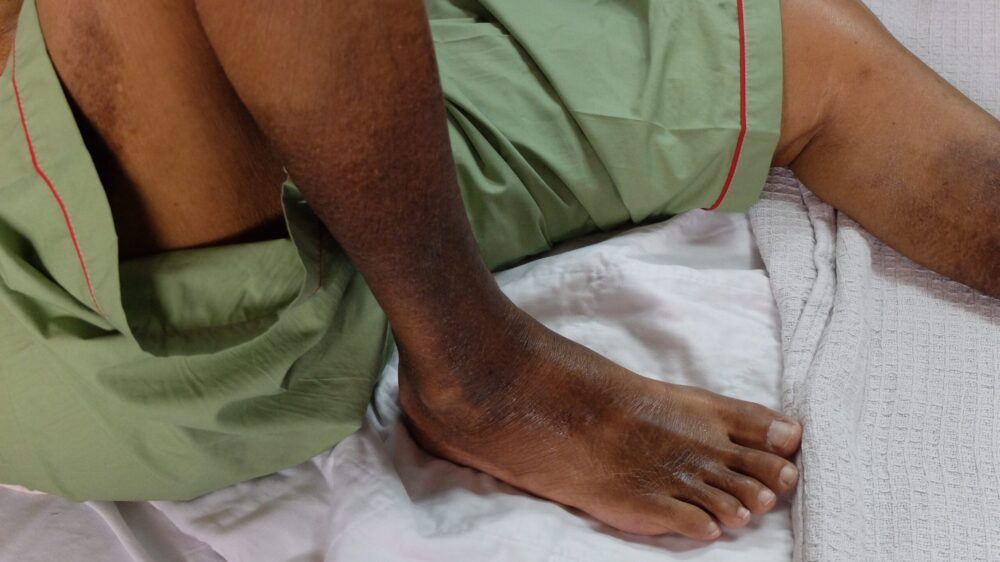
Dr. Eun:
Skin changes from vein problems often appear around the ankles or lower legs and may look brown, reddish, or purplish in color. They typically develop gradually and may be accompanied by swelling.
In addition to discoloration, the skin may feel dry, itchy, or thicker than normal in the affected areas. These changes can be subtle at first but tend to progress if the underlying circulation problem is not addressed.
Dr. Eun:
Yes. Varicose veins are often part of the same circulation issue that leads to skin changes. When blood pools in the veins, pressure increases and affects nearby tissues.
Over time, this can lead to both visible, bulging veins and discoloration of the surrounding skin. The two conditions are frequently linked because they share the same underlying cause: venous reflux and impaired blood flow.
Dr. Eun:
Skin discoloration can be an early warning sign of more advanced vein disease. If circulation problems continue untreated, they may lead to skin thickening or even slow-healing sores known as venous ulcers.
Early evaluation can help prevent progression and reduce the risk of complications.
Dr. Eun:
You should consider a vein evaluation if you notice:
– New or worsening dark patches on your lower legs
– Swelling in the legs or ankles
– Itching or dryness near the ankles
– Leg heaviness or aching
– Visible varicose veins
A specialist can use duplex ultrasound imaging to assess blood flow and determine whether venous insufficiency is present.
Dr. Eun:
Treatment focuses on improving circulation and reducing pressure in the leg veins. Options may include:
– Compression therapy
– Minimally invasive procedures to close damaged veins
– Lifestyle changes such as regular walking and leg elevation
Addressing the underlying vein problem can help slow or stop further skin changes and protect long-term skin health.
Preguntas frecuentes
Early treatment may improve skin appearance, but long-standing discoloration may not fully fade. Treating the vein problem can prevent it from worsening.
Not always, but it is a common sign of chronic venous insufficiency and should be evaluated.
Poor vein circulation can cause blood and fluid to leak into surrounding tissues, leading to gradual darkening over time.
Yes. Severe circulation problems can lead to venous ulcers, which are slow-healing sores on the lower legs.
A vein specialist typically uses duplex ultrasound to evaluate blood flow and check for venous reflux.
What’s Next in the Ask the Doc Series
Skin discoloration can be one of the more visible signs of vein disease, but other symptoms can be just as concerning, especially when they appear suddenly. The Ask the Doc series continues to explore how circulation issues show up in ways patients may not immediately connect to vein health.
In our next installment, Dr. Elizabeth Harvey will address another important question: why does my leg feel warm to the touch? She’ll explain what warmth in the leg may indicate, when it could be related to vein inflammation or circulation problems, and when a prompt medical evaluation is recommended.
If you’re experiencing new warmth, swelling, or discomfort in your leg, you don’t have to wait, find a United Vein & Vascular Centers clinic near you and schedule an evaluation with one of our specialists.
Medically reviewed by Dr. Domenic Zambuto, National Medical Director at United Vein & Vascular Centers. Board-certified in vascular and interventional radiology, Dr. Zambuto has more than 20 years of experience treating vascular disease and helping patients manage complex vein and circulatory conditions.