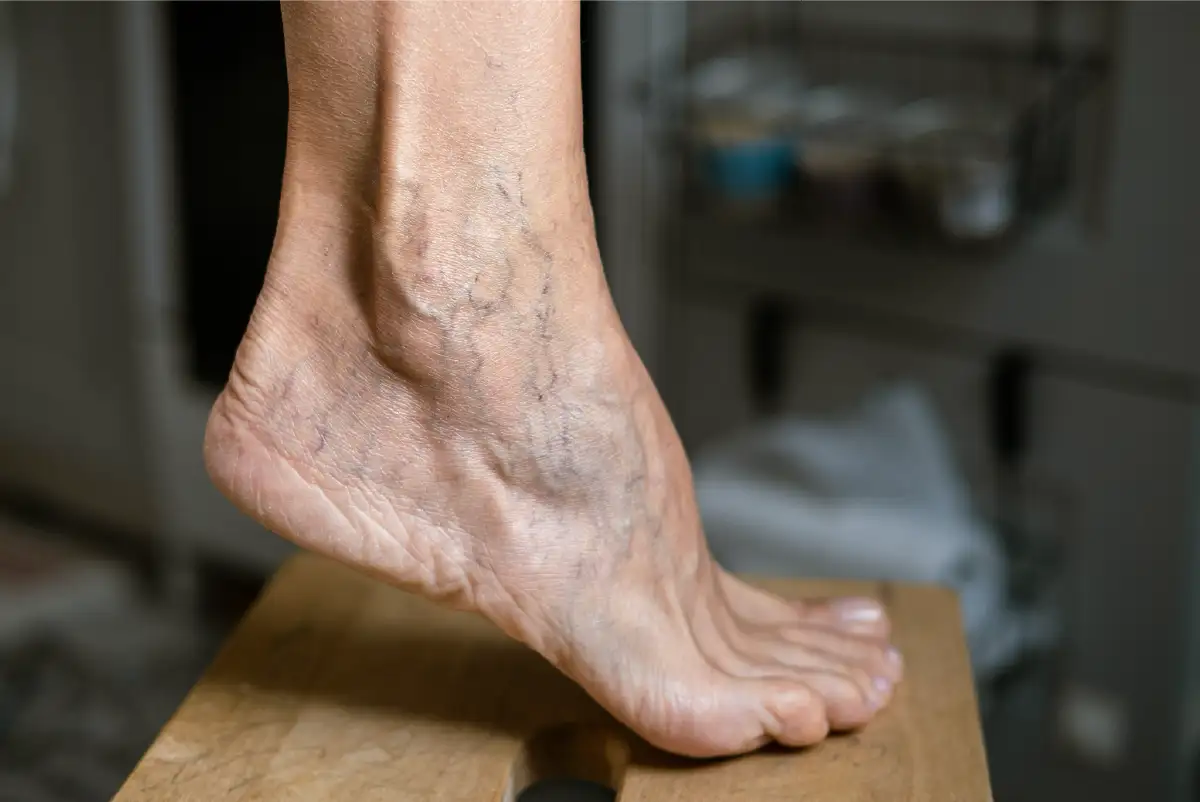
If you are exploring treatment for varicose veins, you may come across two common options: Varithena™ and radiofrequency ablation, often called RFA. Both are minimally invasive treatments designed to close problem veins and improve blood flow, but they work differently and may be used for different situations.
Understanding how each treatment works can help you feel more confident when discussing options with your vein specialist.
What Is Varithena®?
Varithena® is an FDA approved injectable foam treatment used to treat the diseased veins causing varicose veins. During the procedure, a specialized foam medication is injected into the affected vein using ultrasound guidance.
The foam causes the vein walls to collapse and seal shut. Over time, the body naturally absorbs the treated vein, and blood is redirected to healthier veins.
What Is Radiofrequency Ablation (RFA)?
Radiofrequency ablation is a procedure that uses heat energy to close a damaged vein. A thin catheter is inserted into the vein, and radiofrequency energy is delivered through the catheter to heat the vein wall.
This heat causes the vein to collapse and seal shut. Over time, the body naturally absorbs the treated vein, and blood is redirected to healthier veins.
Key Differences Between Varithena® and RFA
Both treatments aim to close problem veins, but they use different methods.
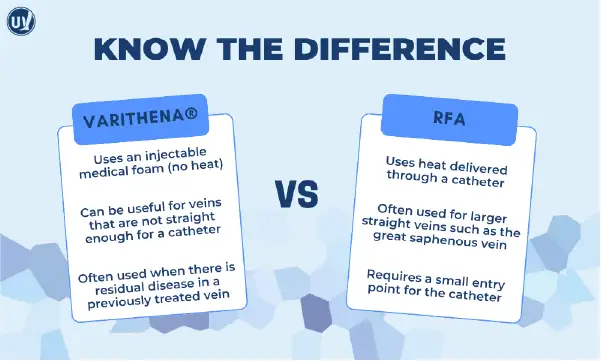
Your specialist will consider the anatomy of your veins and ultrasound findings when recommending treatment.
Which Treatment Is Better for Varicose Veins?
There is no one size fits all answer. The best treatment depends on:
- The size and shape of the affected veins
- Whether the vein is straight or twisted
- The location of the vein
- Your overall health and symptoms
In some cases, Varithena® may be recommended for veins that are difficult to treat with a catheter. In other cases, RFA may be ideal for treating larger underlying veins that are causing reflux.
A full vein evaluation with duplex ultrasound helps determine which treatment is most appropriate.
Recovery and Downtime
Both Varithena® and RFA are minimally invasive and performed in an outpatient setting.
After Varithena®
- You may be asked to walk and wear compression
- Mild swelling or tenderness can occur
- Most people return to normal activities quickly
After RFA
- Walking is encouraged soon after treatment
- Mild bruising or tightness along the treated vein may occur
- Most patients resume daily activities within a short time
Your provider will give you specific aftercare instructions based on your treatment plan.

Can These Treatments Be Combined?
Yes. Some patients benefit from a combination of treatments. For example, RFA may be used to close a larger underlying vein, while Varithena® or other treatments address remaining diseased veins.
Your treatment plan is customized based on your vein anatomy and symptoms.
Frequently Asked Questions
Neither treatment is universally better. The right option depends on the size, shape, and location of your veins and your overall health.
Most patients report only mild discomfort. The procedure is done with ultrasound guidance and local numbing when needed.
RFA is minimally invasive and not traditional surgery. It is performed through a small catheter in an outpatient setting.
Both treatments are designed to permanently close treated veins. However, new vein problems can develop over time, which is why follow-up care is important.
Many insurance plans cover these treatments when varicose veins cause medical symptoms. Your clinic can help verify your benefits.
Choosing the Right Treatment for Your Veins
Varithena® and radiofrequency ablation are both effective, minimally invasive options for treating varicose veins. While they work differently, each is designed to close damaged veins and improve circulation. The most appropriate treatment depends on your vein anatomy, symptom severity, and the findings from your ultrasound evaluation.
A comprehensive vein exam allows a specialist to recommend the option best suited to your needs and develop a personalized treatment plan. If you’re exploring solutions for varicose veins, scheduling an evaluation is the first step toward relief and improved vein health.