Contents
- Overview of the Saphenous Veins
- Anatomy of the Great Saphenous Vein
- Anatomy of the Small Saphenous Vein
- Great vs Small Saphenous Veins: Key Differences
- Functions and Importance in Circulation
- Common Disorders Affecting the Saphenous Veins
- Diagnosis and Assessment of Saphenous Vein Health
- Treatment Options for Saphenous Vein Conditions
- When to Seek Medical Advice
- Frequently Asked Questions
- Take the Next Step Toward Better Vein Health
If you’ve noticed bulging veins, aching legs, swelling, or a feeling of heaviness that worsens throughout the day, your saphenous veins may be involved. These two important veins play a key role in keeping blood flowing from your legs back to your heart, and when they stop functioning properly, they are often the source of common vein problems like varicose veins and chronic venous insufficiency.
The great saphenous vein (GSV) and small saphenous vein (SSV) are both part of your superficial venous system, but they follow different paths through the leg and can contribute to different symptoms. Understanding how these veins work and why they matter can help you better recognize the signs of vein disease and know when it’s time to seek treatment.
Overview of the Saphenous Veins
The great and small saphenous veins are the two primary superficial veins in your legs. Their job is to return blood from your lower legs back to your heart with the help of one-way valves that keep blood flowing in the right direction.
When these valves weaken or become damaged, blood can pool inside the vein, leading to symptoms such as aching, swelling, heaviness, and varicose veins.
The great and small saphenous veins differ in their paths and lengths. Each serves distinct functions but shares the common purpose of aiding circulation. Located closer to the skin, they are more visible and palpable, especially in lean individuals.
Some key roles and features of the saphenous veins include:
- Assisting in returning blood from the legs to the heart
- Being part of the superficial venous system
- Frequently used in medical procedures like grafting
Both the GSV and SSV have valves that prevent blood from flowing backward. Valve failure can lead to conditions like varicose veins. Understanding these veins’ anatomy can help recognize signs of venous disorders early. Early recognition is vital for managing vein-related health issues effectively.
Anatomy of the Great Saphenous Vein
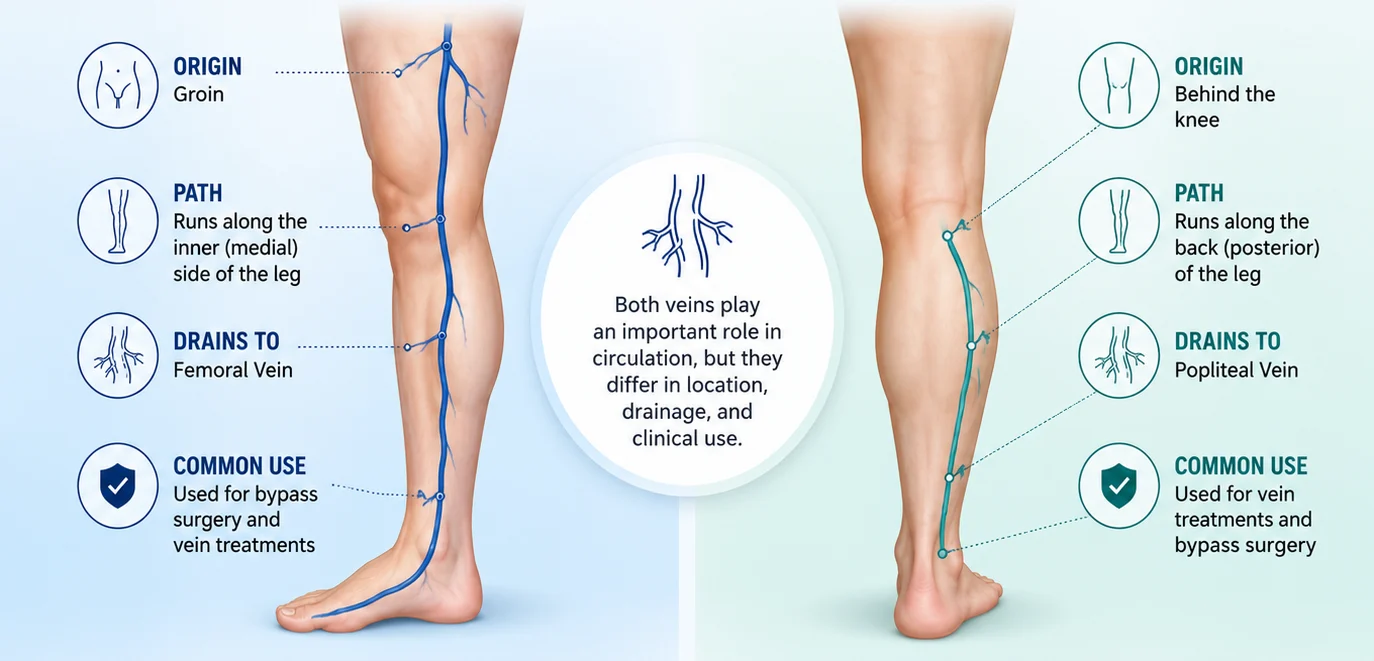
The great saphenous vein holds the distinction of being the longest vein in the human body. It originates from the top of the foot and travels upward, finally connecting to the femoral vein near the groin. This extensive path allows it to play a crucial role in blood circulation.
Lying within the subcutaneous tissue, the GSV is often accessible for medical procedures. Its length and accessibility make it a popular choice for procedures like coronary artery bypass grafting. The vein’s superficial location also contributes to its visibility, especially in individuals with thinner skin.
Key features of the GSV include:
- Running from the foot to the groin
- Participating in medical grafting procedures
- Containing valves to prevent blood backflow
The GSV is prone to developing issues like varicose veins due to increased pressure within its walls. When the vein’s valves fail, blood can pool and cause vein distension. Such conditions can lead to symptoms like pain and swelling in the legs.
Understanding the anatomy and function of the GSV is essential for diagnosing and treating related disorders. Its significance in vascular health cannot be overstated, making it a frequent subject of medical studies and treatments.
Anatomy of the Small Saphenous Vein
The small saphenous vein is a vital component of the body’s venous system. It runs along the back of the leg, from the ankle to the knee. Unlike the great saphenous vein, the SSV drains into the popliteal vein found behind the knee.
This vein is also part of the superficial venous system and sits closer to the skin than deeper veins. Despite its smaller size, the SSV plays a key role in venous return. Its anatomical positioning behind the calf can influence its function and sometimes complicate medical access.
Key features of the SSV include:
- Extending from the ankle to the knee
- Draining into the popliteal vein
- Supported by calf muscle contractions
While not as long or visible as the GSV, the SSV is equally important in aiding blood flow back to the heart. Its valves help regulate this flow and prevent backflow of blood. Problems such as varicose veins can occur if these valves fail.
Understanding the small saphenous vein involves recognizing its role in leg circulation and its impact on overall health. These veins, while less prominent, are essential in maintaining proper blood circulation. Their health is a testament to their importance in the vascular system.
Great vs Small Saphenous Veins: Key Differences
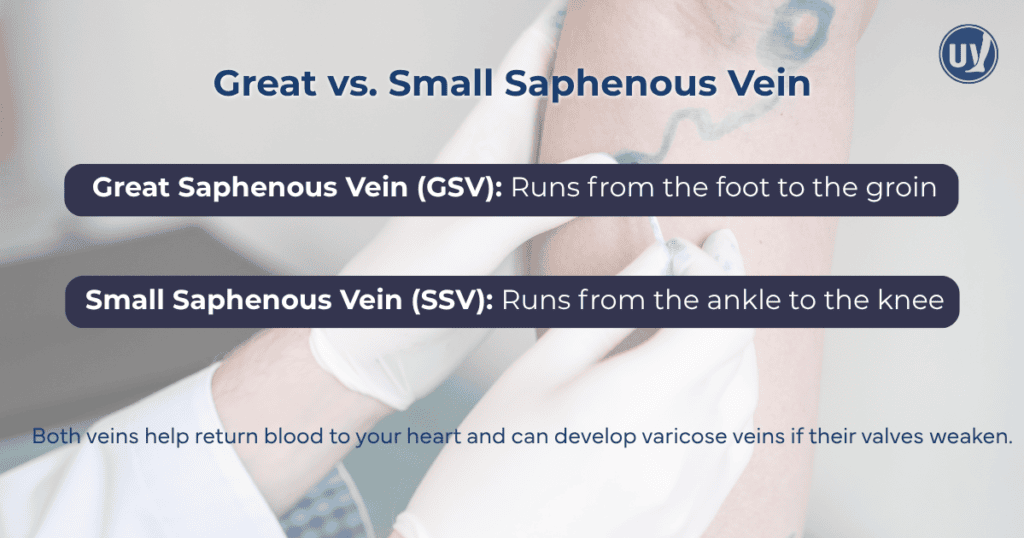
The great and small saphenous veins, while part of the same system, serve different roles. Their locations are distinct, with the great saphenous vein running from the foot to the groin. In contrast, the small saphenous vein extends from the ankle to the knee.
These veins’ functions differ due to their distinct pathways and lengths. The GSV is longer and more commonly involved in procedures like coronary artery bypass grafting. Meanwhile, the SSV, being shorter, plays a lesser role in such surgeries.
Key differences between GSV and SSV include:
- Length: GSV is the longest vein; SSV is shorter
- Drainage points: GSV connects to the femoral vein; SSV connects to the popliteal vein
- Visibility: GSV is often more visible through the skin
Understanding these differences is crucial for both diagnostics and treatments. Recognizing which vein may be affected guides effective interventions. Clinicians often consider these distinctions when addressing venous health issues, ensuring a tailored approach for each patient. The unique characteristics of each vein underline their respective importance in the body’s circulatory system.
Functions and Importance in Circulation
The great and small saphenous veins play vital roles in the circulatory system. Both veins help return deoxygenated blood from the legs to the heart. This function is essential for maintaining efficient blood circulation.
Their importance in circulation extends beyond just returning blood. The veins also aid in thermoregulation by helping dissipate excess body heat. This function is crucial, especially during physical activity, when body temperature may rise.
Key functions of the saphenous veins include:
- Returning blood from the lower limbs to the heart
- Assisting in regulating body temperature
- Supporting overall vascular health
The efficiency of these veins in circulating blood ensures that the lower extremities receive adequate oxygen and nutrient supply. This system also helps prevent blood pooling, reducing the risk of conditions such as varicose veins and venous insufficiency.
Common Disorders Affecting the Saphenous Veins
Saphenous veins are prone to several disorders due to their location and function. One common issue is varicose veins, which occur when the veins become enlarged and twisted. This condition often results from valve failure, leading to increased pressure.
Another frequent disorder is chronic venous insufficiency. This occurs when the veins cannot efficiently return blood to the heart. Symptoms may include swelling, pain, and heavy legs.
Thrombophlebitis is another condition affecting saphenous veins. This involves inflammation of the vein due to a clot, causing pain and tenderness in the affected area.
Understanding these conditions is essential for managing symptoms and preventing further complications. Early detection and treatment play a crucial role in maintaining optimal vein health and avoiding serious issues like deep vein thrombosis. Regular check-ups and monitoring of symptoms can facilitate timely intervention.
Diagnosis and Assessment of Saphenous Vein Health
Diagnosing saphenous vein conditions begins with a detailed medical history and physical exam. Physicians often look for signs of vein disorders such as swelling or discoloration. Understanding any symptoms and risk factors is essential for an accurate assessment.
A duplex ultrasound is a primary tool for evaluating vein health. This non-invasive test uses sound waves to create images of blood flow and vein structure. It helps identify valve failures and blockage presence, which can cause complications.
Other diagnostic methods include venography and MRI. These may be used when more detail is needed. Accurate diagnosis allows for effective treatment planning.
Timely assessments can lead to better management of vein health. It’s important to seek medical advice if symptoms arise.
Treatment Options for Saphenous Vein Conditions
When treating saphenous vein conditions, conservative therapies are often the first step. Compression stockings help improve blood flow and reduce swelling. Such non-invasive methods can alleviate many symptoms effectively.
In cases where conservative methods do not work, minimally invasive procedures are available. Ultrasound-guided sclerotherapy involves injecting a solution to collapse the problem veins. This treatment is typically used for smaller varicose veins.
Surgical procedures are less common but necessary for severe cases. Vein stripping and ligation are traditional surgical methods to remove or tie off veins.
Choosing the right treatment depends on individual conditions. Consulting a medical professional helps determine the most suitable approach.
When to Seek Medical Advice
Recognizing when to consult a healthcare provider is crucial. Persistent leg pain or swelling may indicate a vein problem.
Discoloration or sores on your legs require attention too. If you notice these symptoms, seek medical advice promptly. Watch for:
- Persistent pain or swelling
- Skin changes or ulcers
Early intervention can prevent serious complications and improve outcomes. Don’t wait to reach out for help.
Frequently Asked Questions
The great saphenous vein is the most common source of varicose veins because it is the longest superficial vein in the leg and experiences higher pressure over time.
Yes. If the vein is no longer functioning properly, minimally invasive treatments safely redirect blood through healthy veins.
A duplex ultrasound allows your vein specialist to evaluate blood flow, identify valve dysfunction, and determine whether the great or small saphenous vein is contributing to your symptoms.
Take the Next Step Toward Better Vein Health
Your great and small saphenous veins play an essential role in keeping blood circulating through your legs. When these veins aren’t functioning properly, symptoms like aching, swelling, heaviness, or varicose veins can gradually affect your comfort and quality of life.
At United Vein & Vascular Centers, our experienced vein specialists use advanced diagnostic imaging to identify the source of your symptoms and create a personalized treatment plan. With minimally invasive procedures that require little downtime, you can find relief and get back to doing the things you love. Schedule a vein screening today to take the first step toward healthier legs and improved circulation.