

D-Dimer Blood Test: What It Is and When It's Used
What Is a D-Dimer Blood Test?
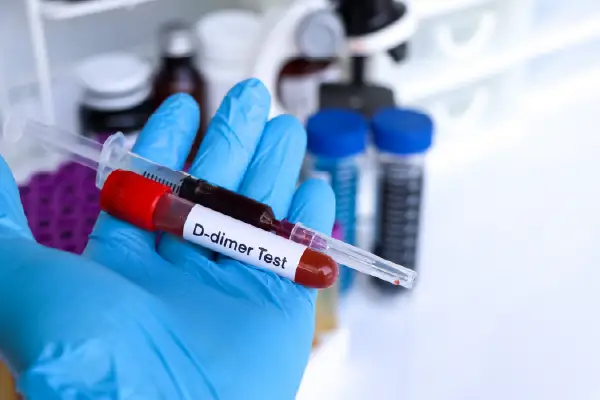
A D-dimer blood test is a diagnostic tool used to help detect abnormal blood clotting in the body. D-dimer is a protein fragment that is produced when a blood clot dissolves.
When levels are elevated, it may indicate that your body is forming and breaking down clots more than usual.
This test is commonly used as part of an evaluation when a blood clot is suspected, particularly in conditions such as deep vein thrombosis (DVT) or pulmonary embolism (PE).
Request a Vein Screening Now to Get Started
Why Would You Need a D-Dimer Test?
A D-dimer test is typically ordered when symptoms suggest a possible blood clot or circulation issue. It helps providers determine whether further imaging or evaluation is needed.
Your doctor may recommend a D-dimer test if you are experiencing:
- Leg swelling, especially in one leg
- Pain or tenderness in the calf or thigh
- Warmth or redness in the affected area
- Sudden shortness of breath
- Chest pain that worsens with breathing
- Unexplained fatigue or rapid heart rate
Because these symptoms can have multiple causes, the D-dimer test is often used as an initial screening step.
What Do D-Dimer Test Results Mean?
D-dimer results are typically reported as either normal or elevated.
Normal (low) D-dimer level:
- Suggests that a significant blood clot is unlikely
- May help rule out conditions like DVT or pulmonary embolism in low-risk patients
Elevated D-dimer level:
- Indicates increased clot activity in the body
- Does not confirm a diagnosis on its own
- Requires further testing, such as ultrasound or CT imaging
It’s important to note that elevated levels can also occur for other reasons, including recent surgery, injury, pregnancy, or certain medical conditions.

How the Test Works
The D-dimer test is a simple blood draw that typically takes only a few minutes.
- A small sample of blood is taken from your arm
- No special preparation is usually required
- Results are often available quickly, sometimes the same day
Because it is minimally invasive, the test is commonly used in urgent care and outpatient settings.
While UVVC providers may recommend a D-dimer test as part of your evaluation, the blood draw is typically performed at an external laboratory or diagnostic facility. Our team will guide you on where to go and coordinate next steps based on your results.

When Is Additional Testing Needed?
A D-dimer test alone cannot diagnose a blood clot. If your levels are elevated or your symptoms are concerning, your provider may recommend further evaluation.
Additional tests may include:
- Duplex ultrasound to evaluate blood flow in the veins
- CT scan to check for clots in the lungs
- Venography or other imaging studies in certain cases
At UVVC, advanced imaging helps confirm a diagnosis and guides appropriate treatment.

How UVVC Uses D-Dimer Testing
At United Vein & Vascular Centers, D-dimer testing may be used as part of a comprehensive evaluation for patients with symptoms of vein disease or vascular conditions.
Our specialists combine:
- Clinical assessment
- Diagnostic imaging
- Laboratory testing
to ensure an accurate diagnosis and personalized treatment plan.
Related Articles