
Hip Embolization
Understanding Chronic Hip Pain and Minimally Invasive Treatment Options
Chronic hip pain can affect nearly every part of daily life because the hip is involved in so many basic movements. Getting up from a chair, walking through the store, climbing stairs, bending, driving, exercising, or lying on one side can all become more difficult when the joint or surrounding tissues remain irritated.
For many patients, hip pain is not just a single ache in one spot. It may feel like stiffness in the morning, soreness along the outside of the hip, discomfort in the groin or thigh, or pain that flares after activity. Some people begin changing how they walk or limiting certain routines without realizing how much their symptoms are affecting their mobility.
Hip embolization is a minimally invasive vascular procedure that may be considered for select patients with chronic hip pain related to inflammation, including certain cases of hip osteoarthritis. At United Vein & Vascular Centers, our specialists evaluate symptoms, prior treatments, and overall health to determine whether this approach may be an appropriate option.
Poproś o konsultację

What Causes Chronic Hip Pain?
Hip pain can develop when the structures in or around the hip joint become irritated, inflamed, or damaged. The hip is a major weight-bearing joint, which means it plays an important role in walking, balance, posture, and everyday movement.
Common causes of chronic hip pain may include osteoarthritis, greater trochanteric pain syndrome, bursitis, tendon irritation, inflammation, prior injury, or wear and tear within the joint. Pain may be felt in the groin, outer hip, thigh, buttock, or along the side of the leg, depending on what is contributing to the symptoms.
Because hip pain can come from the joint itself or from surrounding muscles, tendons, nerves, or blood vessels, an accurate evaluation is important. Understanding the source of the pain can help guide the next step in care.

Common Symptoms of Chronic Hip Pain
Hip pain can feel different from person to person. Some patients experience sharp pain with movement, while others notice a deep ache, stiffness, or discomfort that worsens after activity.
Symptoms may include:
- Pain in the hip, groin, thigh, or buttock
- Pain along the outside of the hip
- Stiffness after sitting or resting
- Difficulty walking or climbing stairs
- Discomfort when standing for long periods
- Pain that worsens with activity
- Limited range of motion
- Trouble sleeping on the affected side
- Limping or changes in the way you walk
- Hip pain that returns despite conservative care
Some people notice that symptoms improve with rest but return during daily activity. Others may find that hip pain gradually limits how much they can move, work, exercise, or participate in the activities they enjoy.

Why Chronic Hip Pain Can Affect Daily Life
The hip supports many of the movements people rely on every day. When pain becomes persistent, it can interfere with walking, standing, exercising, getting in and out of a car, bending, climbing stairs, or sleeping comfortably.
Over time, chronic hip pain may also change the way you move. When you begin favoring one side or adjusting your walking pattern to avoid discomfort, it can place added stress on the back, knees, ankles, or opposite hip. This can make daily movement feel more difficult and may contribute to additional aches or mobility concerns.
Ongoing hip pain should not be dismissed as a normal part of aging or something you have to live with. If symptoms are affecting your comfort, movement, or independence, an evaluation can help identify what may be causing the pain and what options may be available.

How Chronic Hip Pain Is Diagnosed
A chronic hip pain evaluation usually begins with a conversation about your symptoms, medical history, activity level, and previous treatments. Your provider may ask where your pain is located, how long it has been present, what makes it better or worse, and whether the discomfort affects walking, standing, sleep, or daily activity.
An evaluation may include:
- Review of your symptoms and medical history
- Physical exam of the hip and surrounding area
- Assessment of range of motion, tenderness, and mobility
- Discussion of prior treatments or imaging
- Review of medications, injections, therapy, or other conservative care
Because hip pain can have multiple causes, proper diagnosis is important. Conditions such as arthritis, bursitis, tendon injury, nerve irritation, referred back pain, or circulation-related concerns can sometimes cause overlapping symptoms.

When to Seek Care for Hip Pain
Mild hip discomfort may improve with rest, stretching, physical therapy, medication, or activity changes. However, pain that continues, worsens, or interferes with daily life may need further evaluation.
You may want to seek care if:
- Hip pain lasts for several weeks or months
- Pain limits walking, standing, or climbing stairs
- Discomfort interferes with work, exercise, or daily activity
- Symptoms return despite medication, therapy, or injections
- Pain affects your sleep or ability to rest comfortably
- You notice stiffness, reduced mobility, or limping
- Hip pain is worsening over time
- You are looking for options beyond conservative care
A vascular specialist can help determine whether your symptoms may be related to chronic inflammation in or around the hip and whether a minimally invasive treatment option may be appropriate.
Hip Pain Treatment Options
Treatment for chronic hip pain depends on the cause of your symptoms, the severity of your discomfort, and how much the pain affects daily life. Many patients begin with conservative care before considering additional treatment options.
Common approaches may include:
- Activity modification
- Physical therapy
- Stretching and strengthening exercises
- Anti-inflammatory medication when appropriate
- Weight management when recommended
- Supportive mobility changes
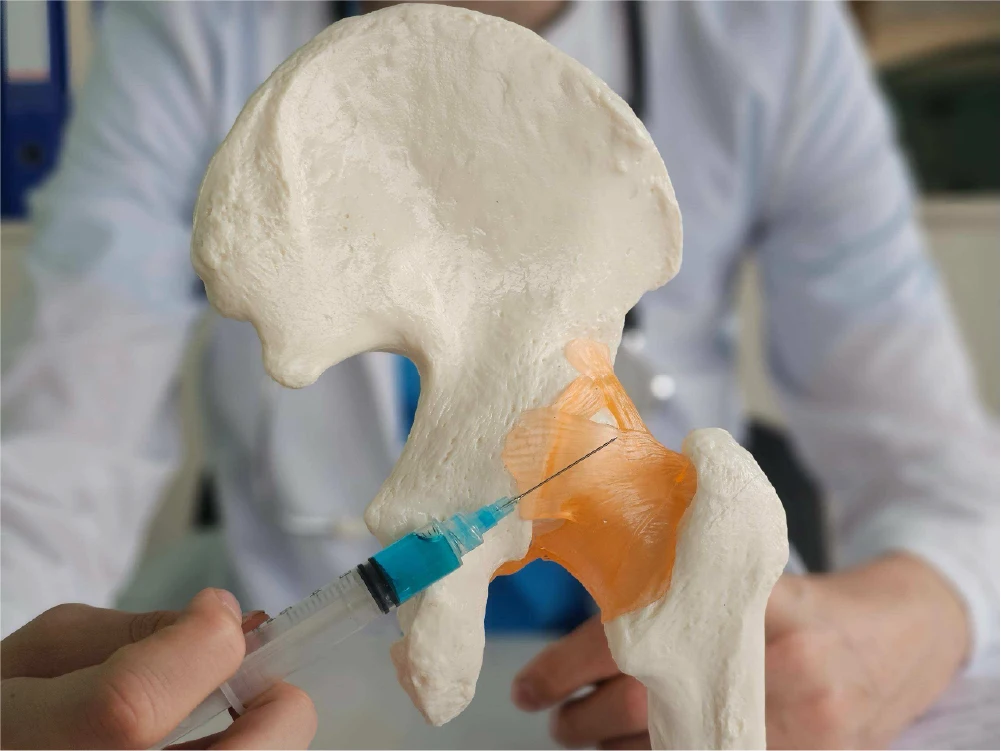
- Joint or soft tissue injections in select cases
- Orthopedic evaluation when needed
For some patients, hip pain continues despite conservative treatment. When chronic pain is related to inflammation and abnormal blood flow around the affected area, a specialist may recommend further evaluation to determine whether hip embolization may be an option.
Hip Embolization for Chronic Hip Pain
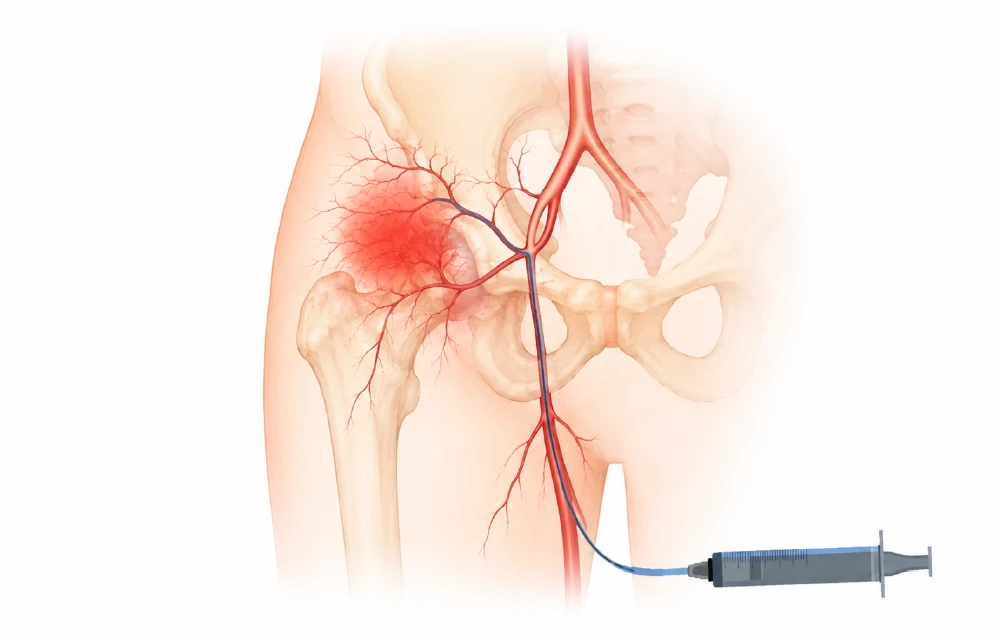
Hip embolization is a minimally invasive vascular procedure for select patients with chronic hip pain that has not improved with conservative care. It may be considered for certain patients with hip pain related to osteoarthritis.
In some chronic hip pain conditions, small abnormal blood vessels may develop around areas of inflammation. These vessels can contribute to ongoing irritation and pain signals in the affected region. During hip embolization, a physician uses image guidance to carefully guide a thin catheter through the blood vessels toward the targeted area around the hip.
Once the targeted vessels are reached, tiny particles are released to reduce blood flow contributing to inflammation. The procedure does not remove the hip joint or require open surgery. Instead, it is designed to address one factor that may be helping sustain chronic inflammation and discomfort.
Because every case of hip pain is different, your provider will review your symptoms, prior treatments, imaging, and overall health to determine whether hip embolization may be appropriate for you.

Benefits of a Minimally Invasive Approach
For appropriate candidates, hip embolization may offer another option when chronic hip pain has not improved with standard care.
Potential benefits may include:
- No open surgery
- No large incision
- Image-guided precision
- Outpatient treatment setting
- Targeted treatment of inflammation-related blood flow
- Reduced downtime compared with more invasive procedures
- Potential improvement in pain and daily mobility
- Option for select patients who are not ready for or are not candidates for more invasive procedures
Not every patient with chronic hip pain will need hip embolization. Your provider will recommend a care plan based on your diagnosis, symptoms, previous treatments, and individual health needs.

What to Expect After Hip Embolization
Most patients return home the same day after hip embolization. After the procedure, your care team will provide instructions for caring for the small access site, managing activity, and easing back into your normal routine.
Recovery can vary from patient to patient. Some people may experience mild soreness, bruising, or tenderness near the access site. Your provider may recommend avoiding strenuous activity for a short period while your body begins to respond to treatment.
Improvement may happen gradually as inflammation decreases over time. Follow-up care allows your provider to monitor your symptoms, answer questions, and help determine how your hip is responding after treatment.