Zawartość
- Czym jest przewlekła niewydolność żylna?
- How Winter and Cold Weather Affect Vein Function
- Winter vs. Summer: Why CVI Behaves Differently in Cold Weather
- How Cold Weather Affects Circulation and Symptoms
- Why CVI Symptoms Feel Worse in Winter
- How to Manage CVI Symptoms During Winter
- When Symptoms Could Signal Something More Serious
- When CVI Symptoms Worsen — When to Seek Treatment
- Często zadawane pytania
- Take Control of Your Vein Health This Winter
If your legs feel heavier, more swollen, or more uncomfortable during the colder months, you’re not imagining it. Winter can worsen symptoms of chronic venous insufficiency (CVI), a condition that affects how well blood returns from the legs back to the heart. Many people associate vein symptoms with heat or humidity, but cold temperatures bring their own challenges for circulation — especially when underlying vein disease is already present.
By understanding how winter impacts the vascular system, you can take steps to stay comfortable and protect your vein health all season long.
Czym jest przewlekła niewydolność żylna?
Chronic venous insufficiency occurs when the valves inside the leg veins weaken or stop working properly. These valves normally help blood move upward against gravity. When they malfunction, blood can pool in the lower legs, leading to symptoms such as:
- Obrzęk nóg
- Heaviness or fatigue
- Tingling or restlessness
- Cramping or aching
- Przebarwienia skóry
- Żylaki
If you’d like to learn more about these symptoms, see our guide to the symptoms and risks of venous insufficiency.
When temperatures drop, many people notice that these symptoms become more noticeable — sometimes significantly so.
How Winter and Cold Weather Affect Vein Function
Your veins work year-round to keep blood flowing upward, but winter can interfere with that process in several ways. Three major physiological changes occur when the weather gets colder.
1. Cold Temperatures Cause Blood Vessels to Constrict
When exposed to cold, your body constricts (narrows) blood vessels to preserve heat. This includes the veins in your legs. While this is a normal survival mechanism, it also:
- Thickens blood slightly
- Slows overall circulation
- Increases pressure inside veins
For people with CVI, slowed circulation and narrowing veins make it even harder for blood to move upward. This can make swelling and heaviness more noticeable.
To learn more about how poor circulation affects leg health, explore our article on chronic leg swelling.
2. Reduced Physical Activity Weakens the Calf Muscle Pump
Your calf muscles act as a natural pump that helps blood return to the heart. But when the weather turns cold, people tend to:
- Walk less
- Spend more time sitting
- Avoid outdoor activity
Lower muscle activity means the calf pump doesn’t assist circulation as effectively. Blood can pool more easily, causing heaviness, tightness, and discomfort. You can see additional movement-related triggers in our article on leg heaviness causes.
3. Cold Weather Places Extra Stress on Already-Weakened Vein Valves
If you already have vein valve damage or venous reflux, cold weather adds pressure to the system. Narrowed veins increase resistance, forcing damaged valves to work even harder.
Learn more about how reflux develops in our detailed explainer on venous reflux disease and how venous reflux works.
Combined, these winter-related changes create a perfect storm of slower circulation, valve strain, and increased venous pressure — all of which make CVI symptoms flare.
Winter vs. Summer: Why CVI Behaves Differently in Cold Weather
Many people with vein disease notice that their symptoms fluctuate throughout the year. Here’s how winter symptoms often compare to summer symptoms:

If you’re curious about how heat affects vein health, you may also want to read our seasonal guide on how heat and humidity affect veins.
How Cold Weather Affects Circulation and Symptoms
Incomplete vein function combined with winter changes can result in:
- Increased swelling after sitting or standing
- Heaviness or pressure in the legs
- Calf tightness or cramping
- Tingling or mild numbness
- Skin dryness or itchiness
- Aching around varicose veins
If you notice symptoms such as discoloration, persistent swelling, or skin changes, our educational resource on leg discoloration may be helpful.
Why CVI Symptoms Feel Worse in Winter
Several additional factors contribute to symptom flares during colder months.
Reduced Movement
Cold weather discourages outdoor activity. More sitting and standing without movement means less help from the calf muscle pump, increasing pooling and discomfort.
For help staying active safely, see our guide on exercise tips for managing CVI.
Thick Winter Clothing and Footwear
Layers, compression from tight boots, or bulky clothing can reduce circulation in the lower legs. Even healthy veins can feel fatigued when circulation is compressed.
Indoor Heating and Mild Dehydration
Heaters lower indoor humidity, increasing the risk of dehydration. Even mild dehydration can thicken blood enough to impact circulation. To counteract this, read more about hydration’s role in vein health here: hydration and vein health.
Circulatory Constriction
Cold constricts surface-level veins, forcing more blood into deeper veins that may already struggle due to CVI. This increases pressure and can make swelling and aching worse.
How to Manage CVI Symptoms During Winter
While you can’t control the weather, there are several practical ways to protect your circulation during the winter season.
Stay Active Every Day
Brief, frequent movement helps your calf muscle pump work efficiently. Try:
- Indoor walking
- Light stretching
- Desk breaks every 30–45 minutes
- Gentle leg lifts
For more detailed circulation exercises, explore our guide on how to increase blood flow with venous insufficiency.
Use Compression Stockings
Compression supports weakened veins and improves circulation. It’s one of the most effective daily tools for managing CVI.
To learn about the benefits, read our article on compression therapy.
Uniesienie nóg
Raising your legs above heart level for 10–15 minutes at a time helps reduce swelling and encourages blood to move upward using gravity.
See step-by-step guidance here: leg elevation techniques.
Nawodnienie
Drink water regularly throughout the day. Hydration helps maintain healthy blood viscosity and circulation, especially in dry, heated indoor environments.
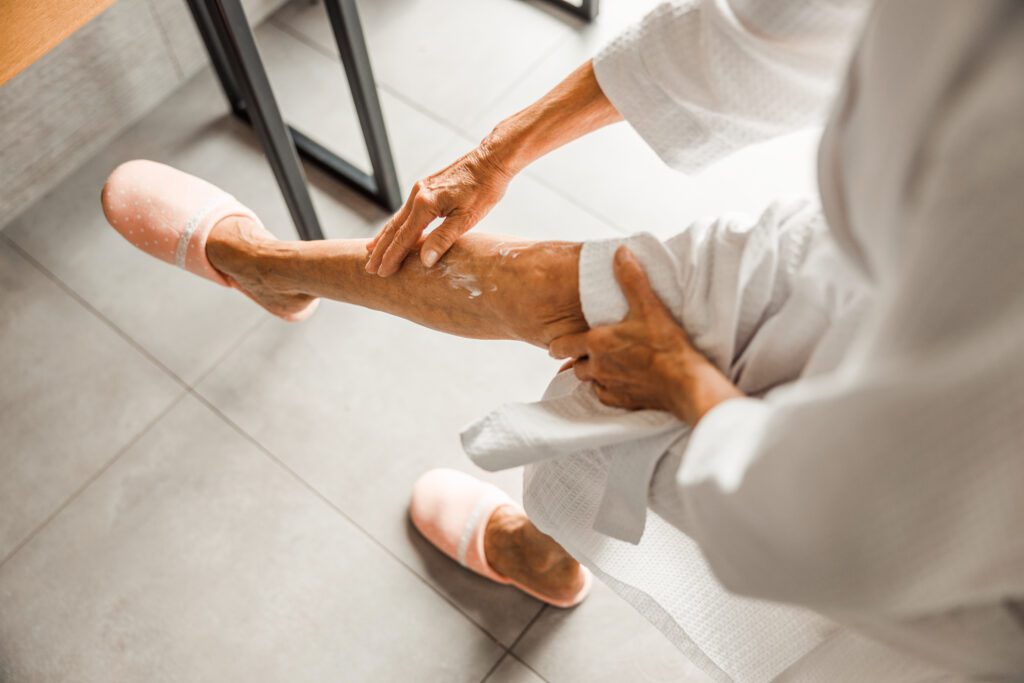
Moisturize Skin Daily
Poor circulation and dry air can cause the skin to feel tight, itchy, or irritated. Moisturizing can help protect skin integrity, especially around areas affected by varicose veins.
When Symptoms Could Signal Something More Serious
While winter symptoms are often related to CVI, certain warning signs should be evaluated promptly:
- Sudden swelling in one leg
- Intense pain or warmth
- Redness or tenderness
- Skin breakdown or ulceration
- Rapidly worsening discoloration
- New or severe cramping
For more on potential concerning signs, see our article on the causes of leg discoloration and warning signs of deep vein thrombosis.
When CVI Symptoms Worsen — When to Seek Treatment
Chronic venous insufficiency does not resolve on its own. If symptoms worsen in winter or persist even with home care, it may be time to discuss treatment options. At United Vein & Vascular Centers, we offer several minimally invasive procedures that can:
- Poprawa krążenia
- Reduce swelling
- Relieve heaviness
- Prevent disease progression
- Improve comfort year-round
Common treatment options include:
VenaSeal™ Closure System
The VenaSeal™ procedure uses a medical adhesive to gently close diseased veins, rerouting blood flow to healthy veins. It requires no heat, no tumescent anesthesia, and has minimal downtime.
Learn more about how it works here: VenaSeal™
Ablacja prądem o częstotliwości radiowej (RFA)
RFA uses targeted heat to seal weakened veins and improve circulation. It’s safe, effective, and a common first-line treatment for symptomatic CVI.
Skleroterapia
This procedure treats smaller diseased veins using a special solution that causes them to collapse and fade over time.
Learn more about sclerotherapy
Varithena® Microfoam
Varithena® is an injectable microfoam that treats varicose veins and reflux in a minimally invasive way.
Często zadawane pytania
Cold weather constricts blood vessels and slows circulation, placing added pressure on weakened veins. This can intensify aching, heaviness, and swelling — especially in people with CVI.
Cold temperatures do not cause vein disease, but they can aggravate existing symptoms and make poor circulation more noticeable.
If swelling becomes persistent, painful, or is accompanied by skin changes or new discoloration, it’s worth getting evaluated.
Yes. Compression is one of the most effective ways to support circulation, especially when cold weather causes veins to constrict. They can be worn under winter clothing comfortably.
Yes. Indoor heating reduces humidity, making winter dehydration common. Less fluid volume can thicken blood and worsen circulation.
If symptoms return year after year, worsen, or begin affecting daily comfort, vein treatment may help restore normal blood flow and reduce seasonal flare-ups.
Take Control of Your Vein Health This Winter
If you’re experiencing worsening symptoms of CVI during cold weather — whether swelling, heaviness, leg pain, or visible vein changes — you don’t have to wait for relief. At United Vein & Vascular Centers, our specialists provide comprehensive evaluations and personalized treatment plans designed to address your symptoms and help you feel better year-round.
Find a clinic near you and schedule your consultation today.
Medically reviewed by UVVC National Medical Director, Dr. Domenic Zambuto