

Zawartość
- Q: Why are my veins suddenly more visible?
- Q: Why are the veins in my legs blue and so noticeable?
- Q: What is the difference between visible veins and varicose veins?
- Q: Are visible veins a sign of poor circulation or vein disease?
- Q: When should I worry about visible veins on my legs?
- Q: How is the cause of newly visible veins diagnosed?
- Q: How does United Vein & Vascular Centers treat visible veins caused by vein disease?
- Często zadawane pytania
- Newly Visible Leg Veins? Schedule a Vein Screening
Welcome back to Ask the Doc, an educational series from United Vein & Vascular Centers where our physicians help patients make sense of symptoms that can be noticeable, uncomfortable, and sometimes difficult to describe. By looking beyond the symptom itself, each installment explores the patterns that may help identify its source and determine when further evaluation is appropriate.
In this installment, Dr. Michaela Klein explains why veins may suddenly look more noticeable, how visible blue veins differ from spider and varicose veins, and what accompanying symptoms may suggest an underlying vein condition.
The short answer: Visible veins may become more noticeable because of thin or fair skin, aging, weight loss, exercise, warm temperatures, hormonal changes, pregnancy, or genetics. However, visible veins that become enlarged, twisted, raised, or increasingly prominent alongside leg swelling, aching, heaviness, itching, or skin changes may be associated with chronic venous insufficiency. A vein screening can help determine whether the change is cosmetic or related to how blood is flowing through the legs.
Q: Why are my veins suddenly more visible?
Dr. Klein:
Veins may become more noticeable for several reasons, and the change does not always indicate a circulation problem. Some people naturally have visible veins because of genetics, fair or thin skin, or veins that sit close to the skin’s surface. Weight loss can also reduce the tissue covering the veins, making them easier to see.
Age may contribute as the skin becomes thinner and loses elasticity. The layer of fat beneath the skin may also decrease over time. At the same time, vein walls and the one-way valves inside the veins can weaken. If those valves no longer close properly, blood may flow backward and collect in the lower legs, increasing pressure within the veins and contributing to varicose veins or chronic venous insufficiency.
Exercise and warm temperatures may cause a temporary change. Blood flow increases during physical activity, and the veins may expand to carry more blood back toward the heart. Heat also causes blood vessels to widen as the body regulates its temperature. The veins may become less noticeable after activity ends or the body cools down.
Hormonal changes, pregnancy, prolonged sitting or standing, and changes in body composition may also affect vein visibility. A vein that remains flat and does not cause symptoms is generally less concerning than one that becomes enlarged, twisted, raised, painful, or progressively more noticeable.
Q: Why are the veins in my legs blue and so noticeable?
Dr. Klein:
Veins may appear blue, green, or purple beneath the skin, but the blood flowing through them is red. Their color comes from the way light travels through the skin before reflecting back to the eye. Skin tone and thickness, as well as how close the vein is to the surface, can all influence how dark or noticeable it appears.
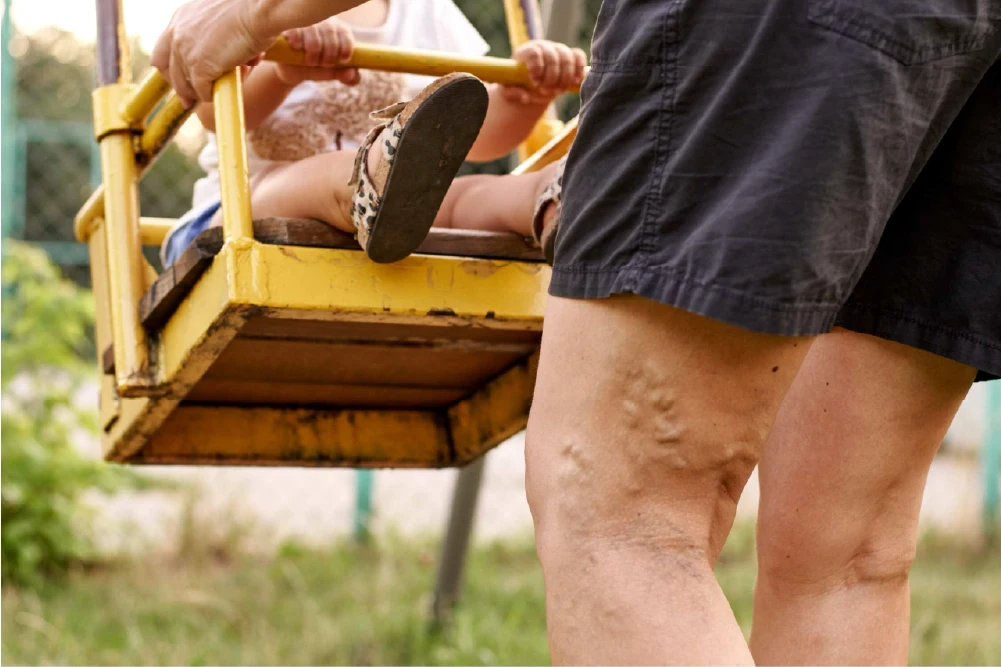
This is why veins are often easy to see on the feet, ankles, hands, and wrists, where less tissue may separate them from the skin. A blue vein is not necessarily unhealthy simply because of its color. It is more important to consider whether the vein has recently become enlarged, raised, twisted, painful, or accompanied by swelling or skin changes.
Q: What is the difference between visible veins and varicose veins?
Dr. Klein:
Patients often use “visible veins” to describe several different types of blood vessels. Their appearance can offer clues, but it cannot confirm how well the deeper veins are functioning.
| Type | What It May Look Like | What It May Mean |
| Visible superficial veins | Flat blue or green lines beneath the skin | Often part of normal anatomy, especially when the veins sit close to the skin |
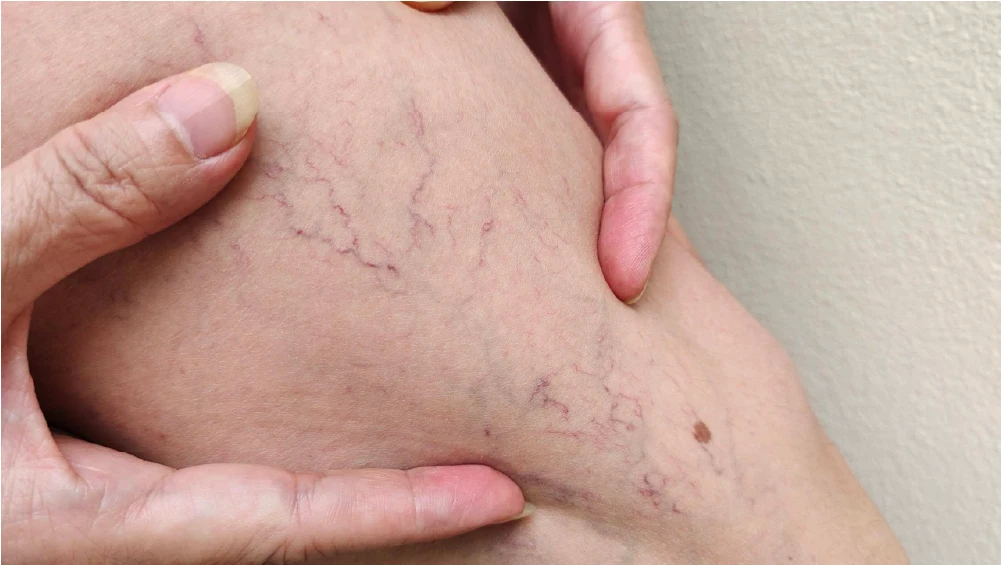
| Pajączki | Small red, blue, or purple vessels arranged in thin branches or web-like clusters | Commonly cosmetic, but may appear alongside an underlying vein condition |
| Reticular veins | Bluish or greenish veins that are larger than spider veins but smaller than varicose veins | May remain flat or slightly raised and sometimes supply nearby spider veins |
| Żylaki | Enlarged, twisted, bulging, knotted, or rope-like veins | Often develop when weakened valves allow blood to pool and increase pressure within the vein |
The appearance of a surface vein does not show how the deeper veins are functioning. If visible veins occur with swelling, aching, heaviness, itching, skin changes, or other possible symptoms of venous insufficiency, a duplex ultrasound may be recommended to identify the source.
Q: Are visible veins a sign of poor circulation or vein disease?
Dr. Klein:
They can be, but visible veins alone are not enough to diagnose a circulation problem.
The phrase “poor circulation” can refer to different conditions. Venous insufficiency affects the return of blood from the legs to the heart, while peripheral artery disease affects the delivery of oxygen-rich blood from the heart to the legs and feet. These conditions can produce different symptoms and require different evaluations.
Visible, enlarged, or bulging leg veins are more commonly associated with a problem in the venous system. When vein valves weaken, blood can move backward and collect in the legs. The resulting pressure may cause surface veins to stretch and become more noticeable.
Vein disease becomes more likely when visible veins occur with:
- Aching or throbbing in the legs
- Ciężkość lub zmęczenie nóg
- Swelling around the ankles or lower legs
- Burning, itching, or cramping
- Symptoms that worsen after prolonged sitting or standing
- Symptoms that improve with walking or leg elevation
- Brown, red, or irritated skin around the ankles
- Open or slow-healing wounds near the lower leg or ankle
Visible veins without these symptoms may be cosmetic or related to normal anatomy. An evaluation is the best way to distinguish between the two.
Q: When should I worry about visible veins on my legs?
Dr. Klein:
Visible leg veins can be normal, particularly when they are flat, painless, and unchanged over time. Genetics, skin characteristics, age, physical activity, and body composition all influence how easily veins can be seen.
Visible veins deserve closer attention when they:
- Become enlarged, raised, twisted, or rope-like
- Feel painful, tender, hard, or warm
- Occur with leg aching, throbbing, burning, or cramping
- Appear alongside ankle or lower-leg swelling
- Develop with leg heaviness or fatigue
- Occur near itching, redness, discoloration, or irritated skin
- Bleed or develop near an open or slow-healing wound
- Become more noticeable after prolonged sitting or standing
A person can also have vein disease without dramatic bulging veins. The surrounding symptoms and their pattern often provide more useful information than appearance alone.
Seek prompt medical care for new swelling, pain, warmth, redness, or discoloration affecting one leg, especially when there is no obvious injury. These symptoms may indicate deep vein thrombosis, although a newly visible vein by itself does not confirm a blood clot.
Call 911 for chest pain, unexplained shortness of breath, fainting, a rapid heartbeat, or coughing up blood. These may be symptoms of a pulmonary embolism and require emergency care.
If a surface vein begins bleeding, elevate the leg and apply firm, continuous pressure to the area. Seek urgent care if the bleeding is heavy or does not stop.
Q: How is the cause of newly visible veins diagnosed?
Dr. Klein:
The evaluation begins with the patient’s history and the pattern of the change. A provider may ask when the veins became noticeable, whether they change throughout the day, and whether standing, exercise, heat, or elevation affects their appearance.
Other important questions include whether the veins are painful, raised, tender, or warm and whether they occur with swelling, heaviness, itching, cramping, or skin changes. Family history, pregnancies, medications, previous blood clots, injuries, activity level, and the amount of time spent sitting or standing may also be relevant.
During the physical examination, the provider may assess the legs while the patient is standing and seated. This makes it easier to evaluate the veins, compare both legs, look for swelling, and examine the skin.
When the symptoms or examination suggest chronic venous insufficiency, a duplex ultrasound may be recommended. This noninvasive test uses sound waves to show the structure of the veins, evaluate blood flow, and determine whether weakened valves are allowing blood to travel backward.
Not every visible vein requires an ultrasound. Testing is based on the appearance of the veins, accompanying symptoms, medical history, and clinical examination.
Q: How does United Vein & Vascular Centers treat visible veins caused by vein disease?
Dr. Klein:
Treatment for visible veins begins with identifying which veins are affected and whether venous insufficiency is contributing to their appearance or associated symptoms. Spider veins, reticular veins, and varicose veins can develop for different reasons, and their appearance alone may not reveal how well the deeper veins are functioning.
Regular movement, exercise, leg elevation, weight management, and avoiding long periods of sitting or standing may help support circulation and reduce swelling, aching, or heaviness. However, these measures do not close damaged veins or cause established spider or varicose veins to disappear.
Compression stockings may help some patients manage symptoms by supporting blood flow out of the lower legs. The appropriate type and pressure level should be discussed with a healthcare provider because compression may not be suitable for everyone, including certain patients with arterial circulation problems.
At United Vein & Vascular Centers, care begins with an examination and, when appropriate, a duplex ultrasound. If an unhealthy deeper vein is increasing pressure in smaller surface veins, the treatment plan may need to address that underlying source rather than focusing only on the veins that can be seen. Recommendations are based on the affected veins, ultrasound findings, symptoms, medical history, and the patient’s treatment goals.
Minimally invasive treatment options may include:
- Radiofrequency ablation: A thin catheter delivers controlled thermal energy to close an unhealthy vein. Blood is then redirected through healthier veins that can return it toward the heart more effectively.
- VenaSeal™: A small amount of medical adhesive is delivered through a catheter to seal a malfunctioning vein. Blood reroutes through healthy vessels while the body gradually absorbs the treated vein.
- Varithena®: An injectable microfoam fills and closes certain diseased veins. Ultrasound guidance allows the physician to monitor treatment and redirect blood into veins with healthier function.
- Ultrasound-guided sclerotherapy: A physician uses ultrasound imaging to guide an injectable solution into selected problem veins, including veins that may not be clearly visible at the skin’s surface. The solution closes the treated vein so blood can move through healthier pathways.
Treatment cannot prevent every new visible vein from developing. However, when venous insufficiency is contributing to enlarged veins and leg symptoms, treating the affected veins may improve circulation and reduce associated discomfort.
Często zadawane pytania
Foot veins are often easy to see because there is less tissue between the vessels and the skin. Standing, exercise, heat, aging, weight loss, and pregnancy may make them more noticeable. Seek an evaluation if the veins become raised or occur with swelling, aching, heaviness, or skin discoloration. An unusually cold, pale, numb, painful, or slow-healing foot should be evaluated promptly.
A vein does not need to bulge to be visible. Superficial veins may show through the skin when they sit close to the surface, particularly in areas with less tissue covering them. Flat blue or green veins can be normal, while raised, twisted, or rope-like veins are more characteristic of varicose veins.
Yes. Losing fat beneath the skin can reduce the tissue covering superficial veins, making them easier to see. This does not necessarily mean the veins are unhealthy. Veins that become enlarged, twisted, painful, or accompanied by swelling or heaviness may need to be evaluated.
Dehydration may temporarily affect the appearance of the skin and blood vessels, but it is not a common direct cause of spider veins, varicose veins, or chronic venous insufficiency. Heat, exercise, weight loss, and the position of a vein beneath the skin are often more likely to make veins appear prominent.
Veins that become more noticeable because of exercise, heat, or prolonged standing may fade once the body cools down or the legs are rested. Established spider veins and varicose veins generally do not disappear without treatment. If visible veins continue to enlarge or occur with leg symptoms, an evaluation can help determine the cause.
Newly Visible Leg Veins? Schedule a Vein Screening
A newly visible vein may result from changes in the skin, body composition, temperature, or activity. It may also develop when weakened vein valves allow blood to collect and increase pressure within the legs. The appearance of the vein, how it changes over time, and any accompanying symptoms can help determine whether further evaluation is appropriate.
If your visible veins are becoming raised, painful, or increasingly prominent, or if they occur with leg swelling, aching, heaviness, itching, or skin changes, request a vein screening at United Vein & Vascular Centers.
Medically reviewed by Dr. Domenic Zambuto, National Medical Director at United Vein & Vascular Centers. Board-certified in vascular and interventional radiology, Dr. Zambuto has more than 20 years of experience treating vascular disease and helping patients manage complex vein and circulatory conditions.