Zawartość
- What Is Ultrasound-Guided Sclerotherapy?
- How Small Varicose Veins Can Develop
- What Types of Veins Can Ultrasound-Guided Sclerotherapy Treat?
- Benefits of Ultrasound-Guided Sclerotherapy for Problematic Veins
- What to Expect During Treatment
- Other Treatment Options for Varicose Veins
- When to Schedule a Vein Screening
- Często zadawane pytania
- Zrób kolejny krok w kierunku zdrowszych nóg
Small varicose veins may not always seem like a major medical concern at first. They may appear as slightly raised, twisted, or bluish veins near the surface of the skin, often on the legs. For some people, they are more noticeable than uncomfortable. For others, they may appear alongside symptoms such as aching, heaviness, swelling, burning, itching, or tired legs.
Because varicose veins can be connected to underlying vein disease, it is important to understand what treatment options may be appropriate. One option that may be recommended for certain problematic veins is ultrasound-guided sclerotherapy.
Ultrasound-guided sclerotherapy is a minimally invasive vein treatment that uses ultrasound imaging and targeted injections to help close affected veins. For some patients with small varicose veins, it may be part of a personalized treatment plan designed to improve circulation and reduce symptoms related to venous reflux.
What Is Ultrasound-Guided Sclerotherapy?
Ultrasound-guided sclerotherapy combines ultrasound imaging with targeted injections to locate affected veins in real time and guide a medical solution, called a sclerosant, directly into the targeted vein. This causes the vein to collapse and close, allowing blood to reroute through healthier veins.
Unlike surface-level treatments that only address veins visible on the skin, ultrasound-guided sclerotherapy allows a vein specialist to evaluate and treat problematic veins beneath the surface. This can be especially helpful when small varicose veins are connected to deeper vein issues that may not be visible to the naked eye.
The procedure is typically performed in-office and does not require traditional surgery. Treatment recommendations depend on the size, location, and function of the affected veins, as well as the patient’s symptoms and ultrasound findings.

How Small Varicose Veins Can Develop
Varicose veins often develop when the valves inside the leg veins do not work properly. Healthy vein valves help blood move upward toward the heart. When these valves weaken or become damaged, blood can flow backward and pool in the legs. This is known as venous reflux.
As pressure builds within the vein, the vein may stretch, enlarge, or become twisted. This can lead to visible varicose veins, including smaller varicose veins near the surface of the skin.
Small varicose veins may appear less severe than larger bulging veins, but they can still be associated with symptoms such as:
- Leg aching or discomfort
- Heaviness or fatigue in the legs
- Swelling in the ankles or lower legs
- Itching, burning, or throbbing sensations
- Niespokojne nogi
- Visible blue, purple, or raised veins
- Symptoms that worsen after long periods of standing or sitting
Because visible veins may be only one sign of a larger circulation issue, a vein screening can help determine whether underlying vein disease may be contributing to your symptoms.
What Types of Veins Can Ultrasound-Guided Sclerotherapy Treat?
Ultrasound-guided sclerotherapy may be used to treat certain problematic veins beneath the surface of the skin, including some varicose veins that are not always easy to see. It may be recommended for veins that are contributing to discomfort, swelling, or other symptoms related to poor vein function.
For small varicose veins, ultrasound-guided sclerotherapy may be appropriate when the targeted vein is suitable for injection-based treatment. The ultrasound component helps the provider see the affected vein during treatment and guide the sclerosant into the correct location.
However, ultrasound-guided sclerotherapy is not the right option for every vein. Larger diseased veins, certain deeper veins, or veins with more advanced reflux may require a different treatment approach. A vein specialist can evaluate the affected veins and determine whether ultrasound-guided sclerotherapy, vein ablation, or another procedure may be more appropriate.
Benefits of Ultrasound-Guided Sclerotherapy for Problematic Veins
For patients who are candidates, ultrasound-guided sclerotherapy may offer several benefits as part of a personalized vein treatment plan.
Because the treatment is guided by ultrasound, the provider can target affected veins beneath the surface of the skin with greater precision. This can be especially important when symptoms are connected to veins that are not clearly visible during a physical exam.
Additional benefits may include:
- In-office treatment
- Brak dużych nacięć
- No traditional vein stripping surgery
- Treatment guided by real-time ultrasound imaging
- Ability to address certain problematic veins beneath the skin
- Typically limited downtime
- Support for improved blood flow through healthier veins
Many patients are able to return to normal daily activities shortly after treatment, although specific recovery instructions may vary based on the treatment plan and provider recommendations.
What to Expect During Treatment
Before treatment, your provider may perform or review a diagnostic ultrasound to better understand how blood is moving through your veins. This helps identify veins that are not functioning properly and supports a more personalized treatment plan.
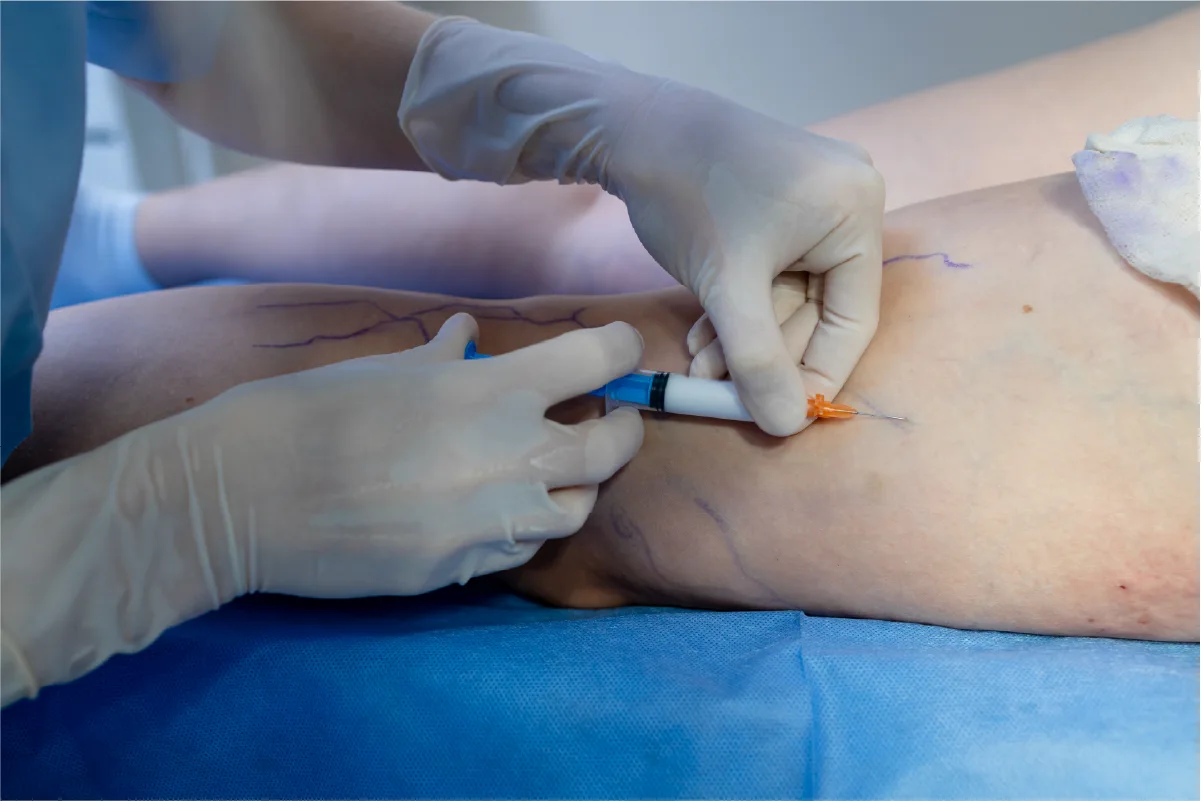
During ultrasound-guided sclerotherapy, the provider uses ultrasound imaging to locate the targeted vein. A sclerosant is then injected into the affected vein. The solution irritates the inside of the vein, causing it to collapse and close over time. Once the treated vein closes, blood naturally reroutes through healthier nearby veins.
The procedure is generally well tolerated. Patients may feel a small needle stick, mild pressure, or temporary discomfort during the injection. Your care team will provide instructions on what to expect after treatment, including whether compression stockings are recommended and when to resume certain activities.
Some patients may need more than one treatment session depending on the number of veins being treated, the severity of vein disease, and how the body responds.
Other Treatment Options for Varicose Veins
While ultrasound-guided sclerotherapy may be effective for certain small varicose veins, it is not the only treatment option. At United Vein & Vascular Centers, treatment recommendations are based on each patient’s symptoms, ultrasound findings, vein anatomy, and overall health.
Other treatment options for varicose veins may include:
Radiofrequency Ablation, or RFA
Radiofrequency ablation, or RFA, uses controlled heat delivered through a thin catheter to close a diseased vein. Once the treated vein closes, blood naturally reroutes through healthier veins, helping reduce symptoms caused by venous reflux.
RFA is often used to treat certain larger diseased veins that are contributing to varicose veins and other symptoms.
VenaSeal™
VenaSeal™ is a minimally invasive vein treatment that uses a medical adhesive to close a diseased vein. Once the vein is sealed, blood reroutes through healthier veins, helping address symptoms related to venous reflux.
Varithena®
Varithena® is an injectable foam treatment used to close certain diseased veins. The foam is delivered into the targeted vein, where it helps the vein collapse and close so blood can reroute through healthier veins.
Mikroflebektomia
Microphlebectomy is a minimally invasive procedure that removes certain varicose veins through tiny punctures in the skin. It is often used for visible, bulging veins near the surface of the skin.
In some cases, more than one treatment may be recommended to address both the underlying vein issue and the visible veins that have developed as a result.
When to Schedule a Vein Screening
Small varicose veins are worth having evaluated if they are new, worsening, uncomfortable, or appearing alongside other leg symptoms. Even veins that look minor may be connected to venous reflux or chronic venous insufficiency.
You may benefit from a vein screening if you notice:
- Varicose veins that are spreading or becoming more visible
- Leg heaviness, aching, or fatigue
- Obrzęk podudzi lub kostek
- Symptoms that worsen after standing or sitting for long periods
- Skin itching, discoloration, or irritation near visible veins
- A family history of vein disease
- Previous vein problems that have returned
A screening can help determine whether your symptoms may be related to vein disease and whether additional diagnostic testing, such as an ultrasound, may be recommended.
Często zadawane pytania
Ultrasound-guided sclerotherapy may work for certain small varicose veins, depending on the size, location, and function of the affected vein. A vein specialist can evaluate your symptoms and ultrasound findings to determine whether this treatment may be appropriate.
No, ultrasound-guided sclerotherapy is not the right treatment for every varicose vein. Some veins may be better treated with radiofrequency ablation, VenaSeal™, Varithena®, microphlebectomy, or another approach. Treatment recommendations depend on your vein anatomy and the underlying cause of your symptoms.
Ultrasound-guided sclerotherapy is generally well tolerated. Patients may feel a small needle stick, mild pressure, or temporary discomfort during the injection. Your provider will explain what to expect and provide guidance to help support your comfort during treatment.
Many patients can return to normal daily activities shortly after ultrasound-guided sclerotherapy. Your provider may recommend compression stockings, walking, and avoiding certain strenuous activities for a period of time. Recovery instructions can vary depending on your treatment plan.
A vein that has been successfully treated and closed is not expected to reopen in most cases. However, new varicose veins can develop over time, especially if underlying vein disease progresses. Ongoing follow-up and healthy circulation habits may help support long-term vein health.
Zrób kolejny krok w kierunku zdrowszych nóg
Ultrasound-guided sclerotherapy may be an effective treatment option for certain small varicose veins, especially when those veins are connected to underlying vein dysfunction. However, not every varicose vein should be treated the same way.
The best way to understand your options is to have your symptoms and vein health evaluated by a specialist. At United Vein & Vascular Centers, our providers can help determine whether ultrasound-guided sclerotherapy, another vein treatment, or a combination of treatments may be appropriate for your needs.
Schedule a vein screening today to learn more about your symptoms and take the next step toward healthier, more comfortable legs.