
Zawartość
- Why Cold Weather Increases the Risk of Leg Sores
- Who Is Most at Risk for Winter Leg Sores
- Understanding Leg Sores and Ulcers
- How to Prevent Leg Sores During Cold Weather
- Why Early Wound Care Matters
- How Vascular Care Helps Prevent Recurrent Sores
- Często zadawane pytania
- When to Seek Care and How UVVC Can Help
Cold weather can be hard on your skin, but for individuals with circulation issues, vein disease, or swelling, winter brings additional risks. Dry air, reduced blood flow, and heavier clothing can all contribute to skin breakdown, increasing the likelihood of sores, wounds, or ulcers forming on the legs.
While leg sores may start small, they can worsen quickly if circulation is compromised. Understanding why cold weather increases risk, and how to protect your legs, can help prevent painful complications and support long-term vascular health.
Why Cold Weather Increases the Risk of Leg Sores
Winter affects the body in ways that directly impact skin health and circulation, especially in the lower legs.
Cold constricts blood vessels
Low temperatures cause blood vessels to narrow in order to preserve body heat. For people with poor circulation, this further reduces oxygen and nutrient delivery to the skin, slowing healing and increasing vulnerability to injury.
Dry air weakens the skin barrier
Cold outdoor air and dry indoor heating strip moisture from the skin. Dry, cracked skin is more likely to split, creating openings where sores or infections can develop.
Reduced activity slows circulation
People tend to move less during winter. Sitting or standing for long periods allows blood and fluid to pool in the legs, increasing pressure on the skin and slowing wound healing.
Swelling stretches fragile skin
Conditions like lymphedema cause fluid buildup that stretches the skin, making it thinner and more prone to breakdown, especially in cold weather.
Who Is Most at Risk for Winter Leg Sores
Leg sores can develop in anyone, but certain conditions increase the risk significantly during colder months:
- Chronic venous insufficiency (CVI)
- Żylaki
- Peripheral artery disease (PAD)
- Cukrzyca
- Obrzęk limfatyczny
- Poor circulation
- History of leg ulcers or wounds
- Limited mobility
If you’ve had a previous leg wound, winter is an especially important time to be proactive.
Learn more about circulation-related wounds on our Wound Conditions page.
Understanding Leg Sores and Ulcers
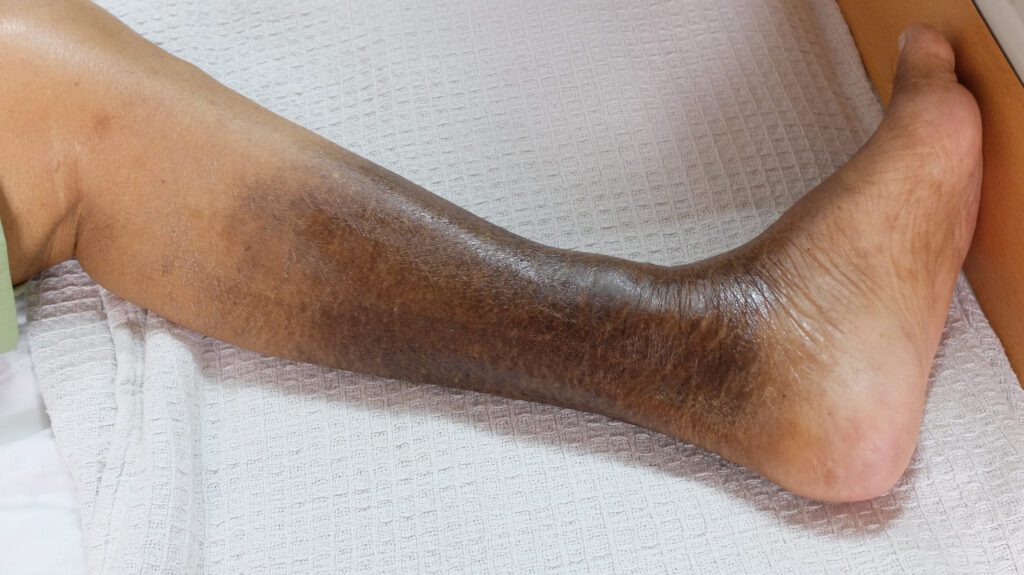
Leg sores are open areas of skin that fail to heal properly. When circulation is impaired, the skin doesn’t receive enough oxygen to repair itself.
Venous Leg Ulcers
Venous ulcers typically form around the ankles or lower legs and are caused by long-standing venous insufficiency. These wounds may ooze, appear shallow, and heal slowly.
Arterial Wounds
Arterial ulcers result from reduced blood flow and are often painful, especially in cold weather when circulation worsens.
Lymphedema-related skin breakdown
Swelling from lymphedema stretches the skin, increasing infection risk and slowing healing. Read more on our Lymphedema page.
How to Prevent Leg Sores During Cold Weather
While winter creates added challenges, consistent daily care can significantly reduce your risk.
Keep your legs warm — but not restricted
Warmth supports circulation, but overly tight socks, boots, or leggings can restrict blood flow. Choose loose, insulated layers that allow circulation.
Moisturize Daily
Apply fragrance-free moisturizer to your legs every day, especially after bathing. Focus on dry areas, but avoid applying lotion between toes unless instructed.
Inspect your legs regularly
Check your legs and feet daily for redness, cracks, blisters, or color changes. Early detection prevents small issues from becoming serious wounds.
Manage swelling
Elevate your legs when resting and follow provider recommendations for compression if prescribed. Swelling increases skin tension and ulcer risk.
Stay active indoors
Even gentle movements like walking, ankle pumps, or stretching improves circulation and supports skin health.
Protect your skin from injury
Avoid bumping furniture, scratching dry skin, or using heating pads directly on your legs, which can cause burns without you realizing it.
Why Early Wound Care Matters
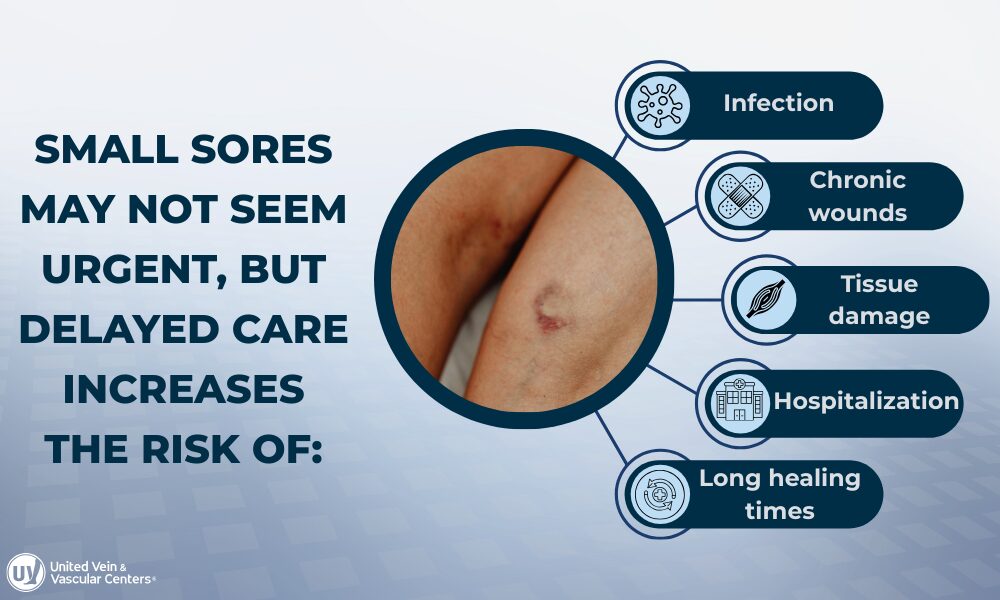
Cold weather slows healing further, making early evaluation especially important.
Signs a Leg Sore Needs Medical Attention
Contact a specialist if you notice:
- A sore that doesn’t heal within 1–2 weeks
- Increasing redness, warmth, or swelling
- Drainage or odor
- Darkening or hardening skin around a wound
- Pain that worsens with cold exposure
Prompt evaluation helps identify the cause and prevent progression.
How Vascular Care Helps Prevent Recurrent Sores
Treating the underlying circulation issue is key to preventing repeat wounds. Vascular specialists use diagnostic imaging to identify poor blood flow and tailor treatment plans that support healing.
Addressing venous disease, arterial disease, or lymphatic issues improves long-term outcomes and reduces recurrence risk.
Często zadawane pytania
Cold constricts blood vessels, slows circulation, and dries the skin, making wounds more likely and healing slower.
Yes. Cracks in dry skin can open the door to infection and ulcers, especially with poor circulation.
Yes. Keeping wounds clean, protected, and appropriately dressed helps prevent infection and supports healing.
Yes. Swelling stretches the skin and impairs circulation, increasing the chance of breakdown.
If a sore isn’t healing, worsens, or appears alongside swelling or discoloration, seek evaluation promptly.
When to Seek Care and How UVVC Can Help
If you’re noticing slow-healing sores, increased swelling, or skin changes in your legs during winter, it may be time for a professional evaluation. While cold weather can worsen symptoms, ongoing skin changes or sores may be connected to underlying vein, vascular, or lymphatic conditions that require medical attention.
At United Vein & Vascular Centers, our specialists provide comprehensive evaluations and personalized treatment plans designed to identify circulation issues and address the underlying conditions that may contribute to leg symptoms.Find a clinic near you and schedule your consultation today.
Find a clinic near you and request a consultation today.
Medically reviewed by UVVC’s National Medical Director, Dr. Domenic Zambuto.