Zawartość
Not every mark on your leg is a cause for concern. A bruise after bumping into furniture is usually harmless and fades with time. But when discoloration lingers, appears without injury, or begins to change in texture, it may be signaling something more serious beneath the surface.
Understanding the difference between a bruise and a venous ulcer is important, especially for people with circulation issues or a history of vein disease. In some cases, what looks like a bruise can actually be an early warning sign of an ulcer forming due to poor blood flow.
Knowing what to watch for can help you seek care sooner and avoid complications.
The Connection Between Bruises, Ulcers, and Circulation
Both bruises and venous ulcers involve blood vessels, but they develop for very different reasons. The key difference lies in circulation.
Healthy veins move blood efficiently back to the heart. When veins are damaged or valves weaken, blood can pool in the lower legs, increasing pressure in the surrounding tissue. Over time, this pressure affects the skin and underlying structures.
Discoloration, tenderness, or fragile skin may appear before an ulcer ever forms. For some patients, what initially looks like a bruise is actually a sign that circulation is compromised and the skin is under stress.
What Is a Bruise?
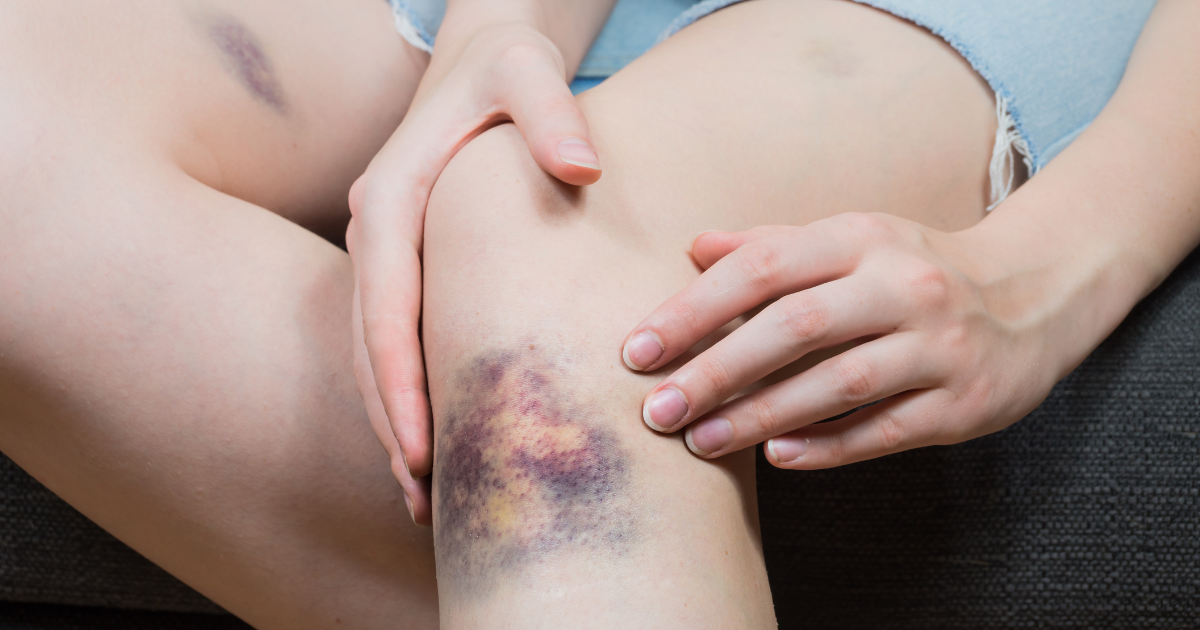
A bruise occurs when small blood vessels break under the skin, usually after a direct impact or injury. Blood leaks into the surrounding tissue, creating visible discoloration.
Common characteristics of bruises include:
- Caused by a known bump or injury
- Blue, purple, or red at first
- Gradually change to green or yellow as they heal
- Typically tender to the touch
- Heal on their own within one to two weeks
Bruises are common and usually harmless. However, frequent bruising without injury or bruiselike discoloration near the ankles can sometimes signal circulation issues rather than trauma.
When Bruiselike Discoloration Is a Red Flag
In people with vein disease, discoloration may appear without a clear injury. This is especially common near the lower legs and ankles. In these cases, the color change may be caused by blood and fluid leaking from stressed veins into the skin.
Some patients report seeing dark patches or bruise-looking areas before a venous ulcer develops. These changes often do not fade like a typical bruise and may be accompanied by swelling, itching, or tight skin.
When discoloration does not heal as expected, it is important to consider circulation as a possible cause.
What Is a Venous Ulcer?
A venous ulcer is an open wound that forms due to chronic poor circulation in the legs. It develops when prolonged pressure inside the veins prevents oxygen and nutrients from reaching the skin, making it fragile and slow to heal.
Venous ulcers most commonly form near the ankles and lower legs and may start as small sores that gradually worsen.
Common features of venous ulcers include:
- Open wounds that do not heal easily
- Moist or draining sores
- Surrounding skin that appears discolored or hardened
- Obrzęk podudzi lub kostek
- Pain or aching that improves with leg elevation
- Increased risk of infection
Unlike bruises, venous ulcers do not resolve without medical care and often worsen if circulation is not improved.
Key Differences Between Bruises and Venous Ulcers
Understanding the distinction between the two can help you know when to seek care.
- Bruises are temporary and caused by injury
- Venous ulcers are chronic wounds caused by poor blood flow.
- Bruises typically heal on their own
- Venous ulcers require treatment to improve circulation and support healing.
- Bruises change color and fade
- Venous ulcers persist and may grow larger over time.
- Bruises can appear anywhere on the body
- Venous ulcers most often develop near the ankles or lower legs.
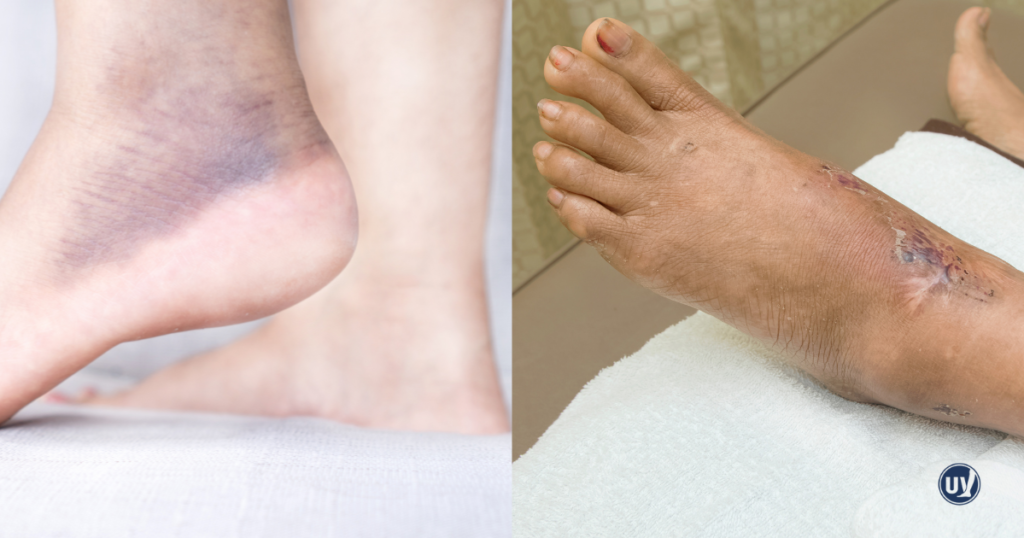
If a mark on your leg is not healing, becoming painful, or turning into an open wound, it is important to consult a vein specialist.
Treatment Options for Varicose Vein Ulcers
If you have a venous or varicose vein ulcer, effective treatment focuses on both healing the wound and improving blood flow.
Treatment may include:
- Antibiotics if an infection is present
- Specialized wound care to protect the skin
- Compression therapy to reduce swelling
- Lifestyle adjustments to support circulation
- Vein treatments designed to improve blood flow
A vein specialist evaluates your condition and creates a personalized care plan based on your symptoms and circulation health. Treating the underlying vein disease is essential for lasting healing and preventing recurrence.
Często zadawane pytania
A typical bruise does not turn into an ulcer. However, discoloration caused by poor circulation can resemble a bruise and may be an early sign that an ulcer could develop if circulation is not addressed.
Venous ulcers often appear near the ankles, heal slowly, and are surrounded by discolored or swollen skin. They may improve with leg elevation but worsen when standing for long periods.
Yes. Venous ulcers can become chronic, painful, and prone to infection if left untreated. Early evaluation by a vein specialist can help prevent complications and support healing.
Przejmij kontrolę nad zdrowiem swoich żył
You do not have to live with uncertainty about unexplained discoloration, slow-healing wounds, or leg discomfort. Understanding the difference between a bruise and a venous ulcer can help you take action before symptoms worsen.
The specialists at United Vein & Vascular Centers are experienced in diagnosing and treating vein conditions that affect circulation, skin health, and daily comfort. They work closely with patients to explain what is happening beneath the surface and guide them toward effective treatment options.
Find a United Vein & Vascular Centers clinic near you and schedule an evaluation today to get answers and relief.