


Zawartość
- Q: What do common vein ultrasound results mean?
- Q: What is a vein ultrasound?
- Q: Why did my physician order a vein ultrasound?
- Q: What does venous reflux mean?
- Q: How do ultrasound results influence treatment recommendations?
- Q: Do reflux measurements always mean I need treatment?
- Q: What happens after a vein ultrasound?
- Get Expert Guidance on Your Ultrasound Results
- Często zadawane pytania
Welcome back to Ask the Doc, an educational series from United Vein & Vascular Centers designed to provide clear, physician-led answers to common questions about vein and vascular health. Each week, a UVVC physician explains everyday symptoms and what they may mean medically.
In this installment, Dr. Todd Greer answers a question many patients have after diagnostic testing: what do my vein ultrasound results mean? He explains what physicians look for during a duplex ultrasound, what findings such as venous reflux may indicate, and how ultrasound results help guide treatment recommendations.
Q: What do common vein ultrasound results mean?
Dr. Greer:
Patients often see terms on their results that sound unfamiliar, such as reflux, valve dysfunction, GSV, SSV, or vein diameter. It is understandable to feel unsure about what those findings mean. The important thing to know is that physicians interpret these results in context.
Venous Reflux
Venous reflux means blood is flowing backward in the vein. This can suggest that the valves are not closing properly and may be contributing to symptoms. Reflux findings help us identify which veins are not functioning well.
Valve Dysfunction
Valve dysfunction means the valves inside the vein are not working as they should. When the valves do not close properly, blood can pool in the legs and increase pressure in the vein system.
Great Saphenous Vein, or GSV
The great saphenous vein is a large superficial vein that runs along the inside of the leg. It is one of the veins commonly evaluated during a venous ultrasound because reflux in this vein can contribute to varicose veins, swelling, heaviness, or aching.
Small Saphenous Vein, or SSV
The small saphenous vein is another superficial vein, located along the back of the lower leg. Like the great saphenous vein, it can develop reflux and contribute to symptoms depending on the patient’s anatomy and ultrasound findings.
Vein Diameter Measurements
Vein diameter refers to the size of the vein. An enlarged vein may suggest that the vein has been under pressure or is not functioning efficiently. However, measurements are only one part of the evaluation. Physicians also consider reflux, symptoms, anatomy, and medical history.
No Evidence of Blood Clots
If your results say there is no evidence of a blood clot, that means the ultrasound did not show a clot in the veins being evaluated. This can be reassuring, but it does not necessarily rule out venous reflux or chronic venous insufficiency. Blood clot evaluation and reflux evaluation are related parts of vein testing, but they are not the same thing.
Q: What is a vein ultrasound?
Dr. Greer:
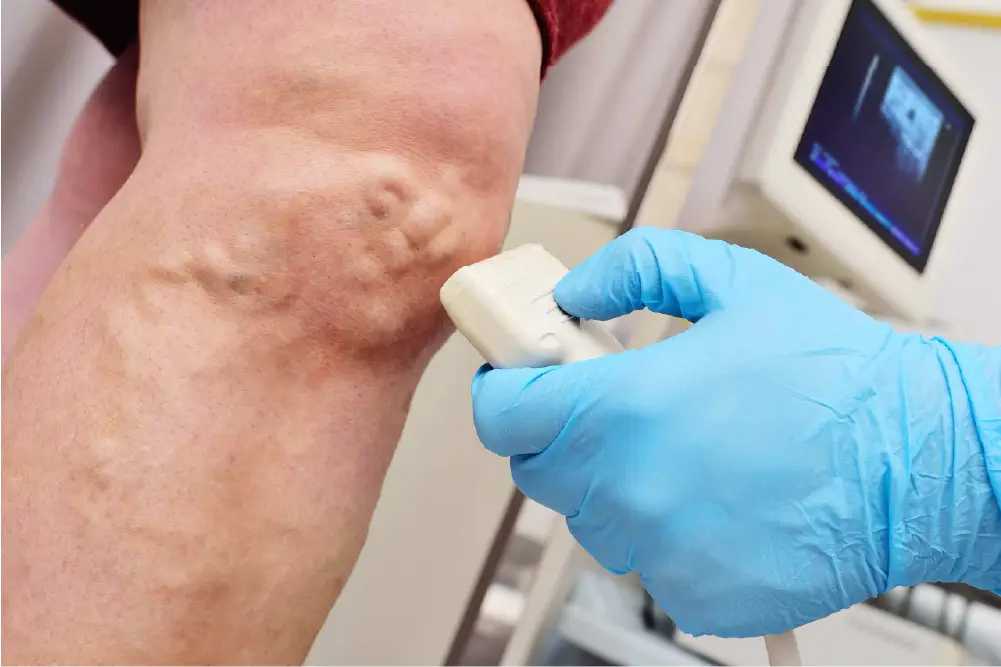
A vein ultrasound, often in the form of duplex or venous doppler ultrasounds, is a noninvasive imaging test that allows us to evaluate the veins beneath the surface of the skin. It uses sound waves to create images of the veins and assess how blood is moving through them. It also can show us valve dysfunction, venous reflux, vein size, and other findings that may contribute to symptoms such as swelling, heaviness, aching, fatigue, or visible veins. These results help your physician determine whether chronic venous insufficiency or another vein condition may be present.
This type of ultrasound is important because many vein problems cannot be fully evaluated by looking at the legs alone. A patient may have swelling, heaviness, aching, or varicose veins, but we need to understand what is happening beneath the surface to determine whether venous reflux or valve dysfunction is present.
During a vein ultrasound, we look at vein structure, blood flow direction, valve function, vein size, and whether there are any findings that may affect treatment planning. Duplex ultrasound is considered the gold standard for diagnosing many forms of venous disease because it helps us see both the anatomy of the veins and how blood is flowing through them.
Q: Why did my physician order a vein ultrasound?
Dr. Greer:
A physician may order a vein ultrasound when symptoms suggest that blood may not be moving through the leg veins as efficiently as it should. This may include recurring leg swelling, heaviness, aching, fatigue, throbbing, cramping, restless legs, visible varicose veins, or skin changes near the ankles or lower legs.
Ultrasound may also be recommended when symptoms worsen after standing or sitting for long periods, improve with walking or leg elevation, or continue despite conservative steps.
The goal is to move beyond symptoms and understand what is happening beneath the surface. During a vein ultrasound, physicians evaluate several key factors, including:
- Blood flow direction: Whether blood is moving upward toward the heart or flowing backward in the vein.
- Valve function: Whether the vein valves are opening and closing properly.
- Venous reflux: Whether blood is flowing backward and pooling in the legs.
- Vein diameter: Whether certain veins are enlarged or stretched.
- Blood clot findings: Whether there is evidence of a clot in the evaluated veins.
These findings are reviewed alongside your symptoms, medical history, and physical exam. Ultrasound results are not interpreted in isolation. Physicians use the full picture to determine whether venous reflux, chronic venous insufficiency, or another vein concern may be contributing to your symptoms and whether treatment may be appropriate.
Q: What does venous reflux mean?
Dr. Greer:
Venous reflux means blood is flowing backward in a vein instead of moving efficiently toward the heart. This usually happens when the valves inside the vein are weakened or damaged.
Healthy vein valves work like one-way doors. They help move blood upward from the legs back toward the heart. When those valves do not close properly, blood can fall backward and pool in the legs. Over time, that extra pressure can contribute to symptoms such as swelling, heaviness, aching, fatigue, visible varicose veins, and skin changes.
Venous reflux is one of the main findings we look for when evaluating chronic venous insufficiency. If reflux is present, we look at which veins are affected, how long reflux lasts, how the findings relate to symptoms, and whether treatment may help improve circulation through healthier veins.
Q: How do ultrasound results influence treatment recommendations?
Dr. Greer:
Ultrasound results help us determine which veins are functioning properly and which veins may be contributing to symptoms. This is important because vein treatment should be based on the patient’s anatomy, symptoms, physical exam, and objective findings.
If ultrasound shows reflux in a vein that matches the patient’s symptoms and exam findings, treatment may be recommended. The results help us identify the affected veins, understand the pattern of disease, and determine whether treatment may be medically appropriate.
Ultrasound findings can also help us decide which treatment option may be best suited for the patient. Treatment is not the same for every person, and recommendations depend on which veins are involved, the severity of reflux, vein size, vein location, and overall health.
| Ultrasound Finding | Why It Matters | Treatment Options That May Be Considered |
| Reflux in a larger superficial vein | May indicate that a main surface vein is not moving blood properly | Radiofrequency ablation, VenaSeal™, Varithena® |
| Reflux in branch or smaller surface veins | May contribute to visible veins, aching, heaviness, or lingering symptoms | Ultrasound-guided sclerotherapy, Varithena®, microphlebectomy |
| Enlarged vein diameter | May suggest the vein has stretched or is under pressure | Treatment depends on vein size, location, and reflux findings |
| Visible varicose veins connected to reflux | May indicate that surface veins are being affected by deeper vein dysfunction | Microphlebectomy or other treatment after larger affected veins are addressed |
| No significant reflux detected | May mean treatment is not recommended for the evaluated veins | Monitoring, conservative steps, or evaluation for other causes may be discussed |
It is also common for treatment to happen in a specific order. We often address larger affected veins first, then evaluate whether smaller veins or visible varicose veins still need treatment. This approach helps treat the source of the problem before moving to smaller branches that may be connected to deeper reflux.
Q: Do reflux measurements always mean I need treatment?
Dr. Greer:
Not always. Reflux measurements are important, but treatment recommendations depend on more than one number. We consider the location of reflux, the severity of the findings, the patient’s symptoms, physical exam, medical history, and whether the affected vein is likely contributing to the problem.
Some patients may have findings that can be monitored. Others may have reflux that is clearly connected to symptoms and may benefit from treatment. The purpose of the ultrasound is to help guide that decision, not to automatically recommend a procedure for every finding.
Q: What happens after a vein ultrasound?
Dr. Greer:
After a vein ultrasound, your provider reviews the results and explains what was found. This may include whether reflux was present, which veins were affected, whether vein diameter was enlarged, and whether there were any other findings that matter for your care.
If the ultrasound supports a diagnosis of venous reflux or chronic venous insufficiency, your provider may discuss treatment options. If treatment is recommended, they can explain which veins would be treated first, what procedure may be appropriate, and what to expect before, during, and after care.
If no significant reflux is found, your provider may discuss other possible explanations for your symptoms or recommend follow-up depending on your situation.
Get Expert Guidance on Your Ultrasound Results
Vein ultrasound results can be confusing, especially when they include unfamiliar vein names, measurements, or terms like reflux and valve dysfunction. A vein specialist can help explain what your results mean and how they relate to your symptoms.
If you are experiencing symptoms of vein disease, schedule a vein screening with United Vein & Vascular Centers to learn whether additional evaluation or treatment may be appropriate.
Często zadawane pytania
Venous reflux means blood is flowing backward in a vein because the valves are not closing properly. This can cause blood to pool in the legs and may contribute to symptoms such as swelling, heaviness, aching, fatigue, visible varicose veins, or skin changes.
A normal vein ultrasound result may show that blood is flowing in the correct direction, the evaluated veins are functioning properly, and no significant reflux or clot is detected. Your provider can explain what your results mean based on your symptoms and medical history.
Yes. Duplex ultrasound can help detect blood clots in the evaluated veins. If your report says there is no evidence of DVT, it means no deep vein thrombosis was seen in the veins assessed during the exam.
No. Reflux measurements do not automatically mean treatment is needed. Physicians consider the ultrasound findings along with symptoms, physical exam, vein anatomy, and medical history before making treatment recommendations.
Yes. A duplex ultrasound is commonly used to diagnose chronic venous insufficiency because it can evaluate blood flow, valve function, and venous reflux. These findings help physicians determine whether CVI may be contributing to symptoms.
Medically reviewed by Dr. Domenic Zambuto, National Medical Director at United Vein & Vascular Centers. Board-certified in vascular and interventional radiology, Dr. Zambuto has more than 20 years of experience treating vascular disease and helping patients manage complex vein and circulatory conditions.