
ABI Testing for Peripheral Artery Disease
Changes in circulation don’t always appear obvious at first, but symptoms like leg pain, cramping, or slow-healing wounds can be early signs of reduced blood flow. An ankle-brachial index (ABI) test is a simple, non-invasive way to evaluate circulation in the legs and help identify conditions such as peripheral artery disease (PAD). Understanding how blood flows through your arteries is an important step toward finding the cause of your symptoms and determining the most appropriate path forward.

Poproś o konsultację
What Is an ABI Test?
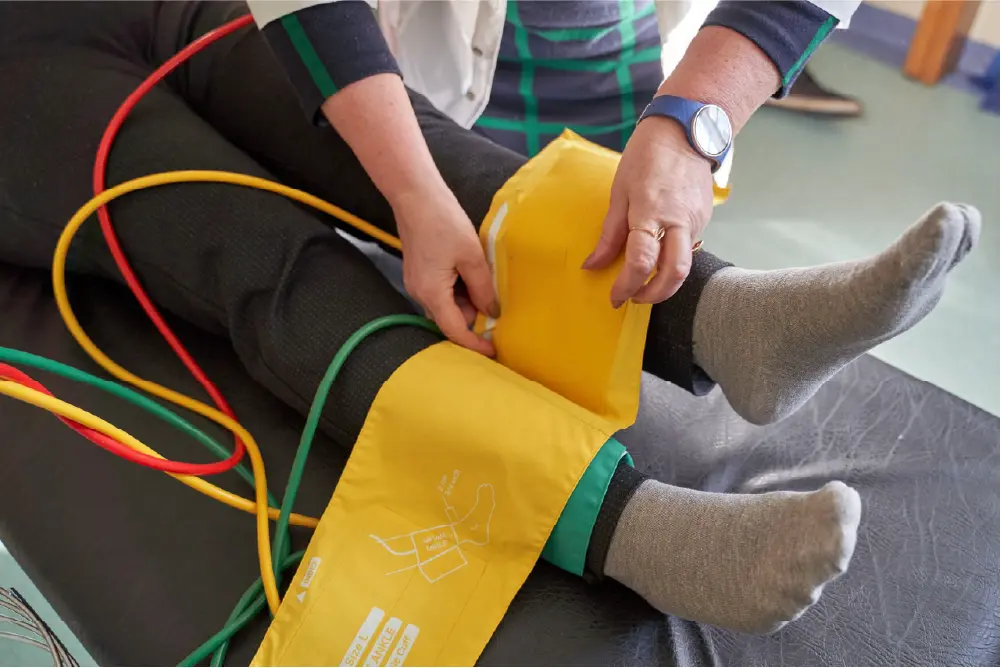
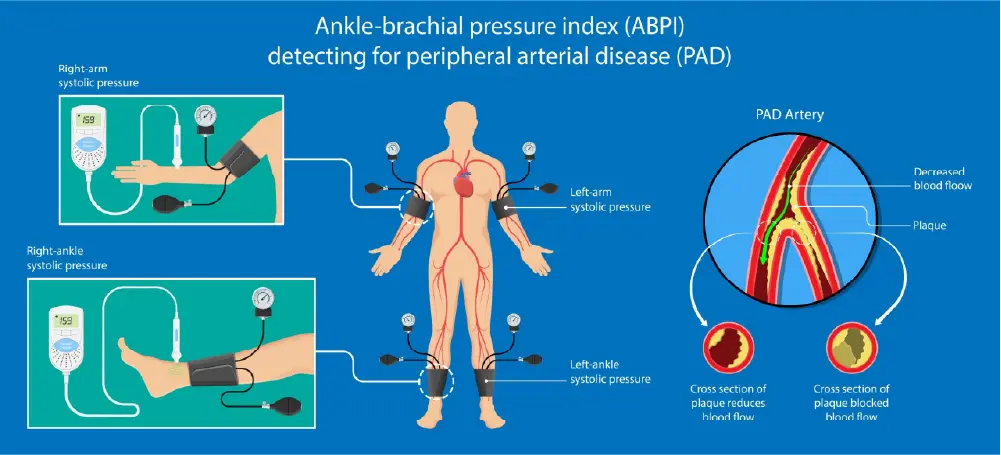
An ankle-brachial index, or ABI, is a simple, non-invasive test used to compare blood pressure in the ankle with blood pressure in the arm. This comparison helps evaluate blood flow to the legs and can help identify peripheral artery disease (PAD), a condition that develops when narrowed arteries reduce circulation to the lower extremities.
Because PAD can increase the risk of leg pain, slow-healing wounds, and more serious cardiovascular complications, ABI testing is often an important first step when symptoms or risk factors suggest poor circulation.

Why ABI Testing Is Performed
ABI testing is commonly used to help diagnose peripheral artery disease (PAD), particularly in patients experiencing symptoms that may be related to reduced blood flow in the legs.
These symptoms can include:
•Leg pain while walking (claudication)
•Cramping, weakness, or numbness
•Wounds on the feet or legs that heal slowly
It may also be recommended for patients who have certain risk factors that can increase the likelihood of developing PAD, such as:
•Smoking
•Diabetes
•High blood pressure
•High cholesterol
•A history of cardiovascular disease
What to Expect During the Test
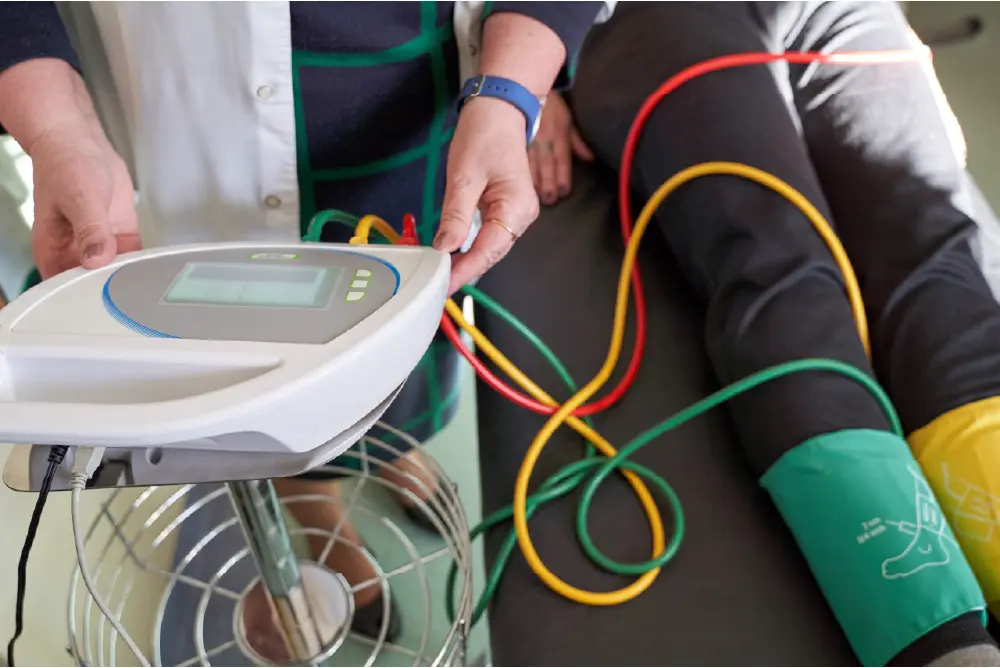
ABI testing is quick and typically painless. During the exam, blood pressure cuffs are placed on the arms and ankles. A provider measures the systolic blood pressure in these areas and calculates a ratio by dividing the ankle pressure by the arm pressure. This number helps show whether blood flow to the legs may be reduced.
In some cases, ABI testing may be performed before and after exercise to identify circulation problems that become more noticeable with activity.

Understanding ABI Results
ABI results can help indicate whether blood flow to the legs is within a normal range or whether PAD may be present. According to the American Heart Association, a normal ABI generally falls between 1.0 and 1.4. A result of 0.90 or lower is considered abnormal and may suggest PAD. In more severe diseases, the value may be less than 0.4.
Results do not stand alone, though. A provider may interpret ABI findings alongside symptoms, medical history, physical examination, and other vascular testing to determine the next steps in care.

When Additional Testing May Be Needed
An ABI test is often an important screening and diagnostic tool, but some patients may need further evaluation. Depending on the results, additional testing may include vascular ultrasound or other imaging studies to better understand circulation and identify the location and severity of arterial narrowing.
Benefits of ABI Testing
- A non-invasive evaluation that does not require surgery
- No recovery time, allowing patients to return to normal activities right away
- A quick, in-office test that provides insight into blood flow in the legs
- Valuable information to help identify reduced circulation or potential PAD
- Support for earlier detection, especially before symptoms progress
- Guidance for more timely and appropriate treatment planning
When to Seek Evaluation
Patients should consider a vascular evaluation if they experience leg pain with walking, leg fatigue, foot wounds that are slow to heal, or other signs of poor circulation. Even when symptoms seem mild, reduced blood flow can affect daily comfort and long-term vascular health. ABI testing can help clarify whether PAD may be contributing to these concerns.
Często zadawane pytania
ABI stands for ankle-brachial index. It is a test that compares blood pressure in the ankle and arm to evaluate circulation in the legs.
ABI testing is generally considered painless and noninvasive. It involves blood pressure cuffs and pressure measurements rather than surgery or needles.
The test is typically quick and may take only a few minutes as part of a routine vascular evaluation.
ABI testing is commonly used to help detect peripheral artery disease by identifying reduced blood flow to the legs.
A normal ABI is generally between 1.0 and 1.4. A result of 0.90 or lower is considered abnormal.
If your ABI result is abnormal, your provider may recommend further vascular evaluation, such as ultrasound or other imaging, along with a treatment plan based on your symptoms and circulation findings.